The Story
Plant Bio
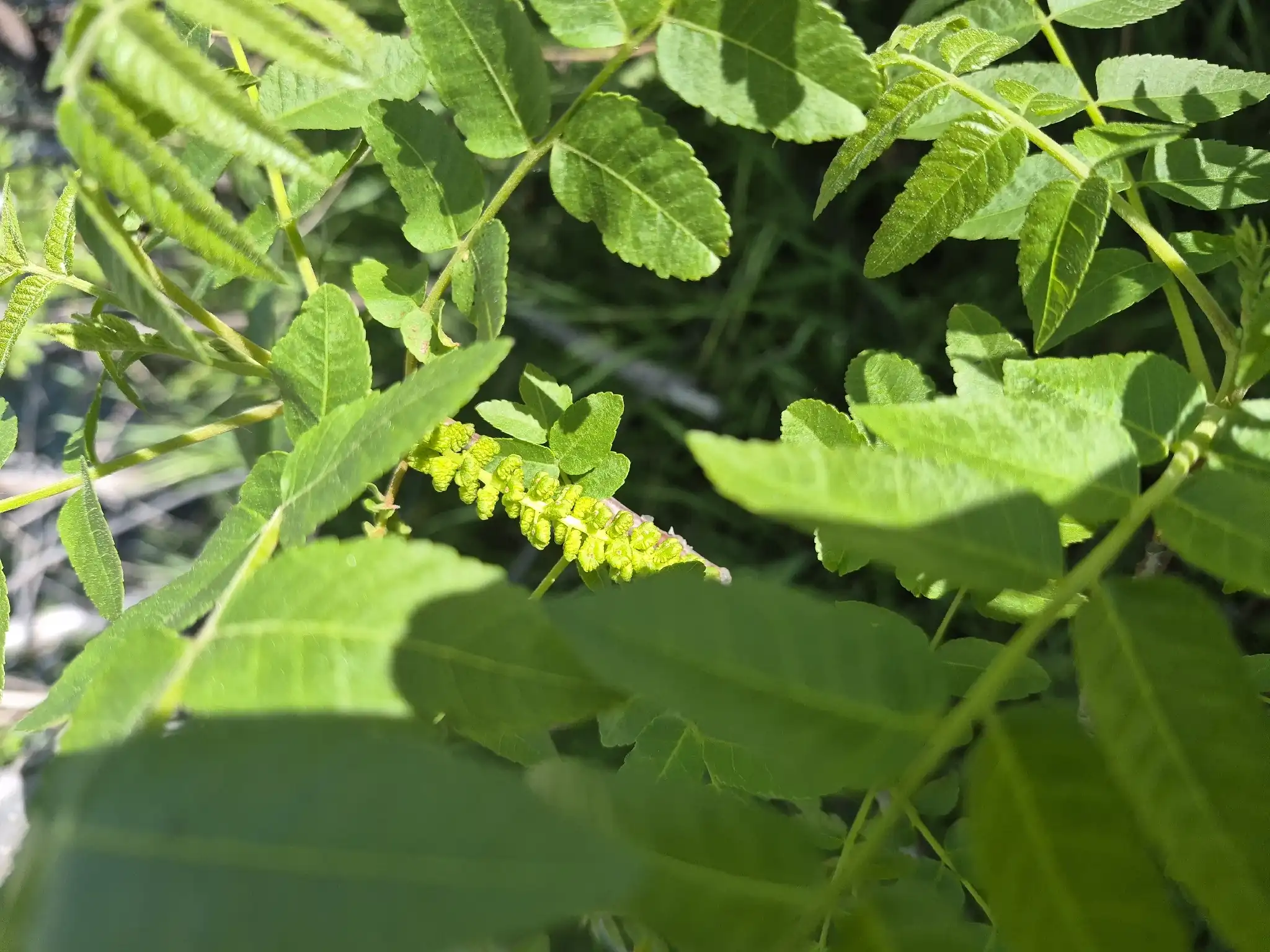
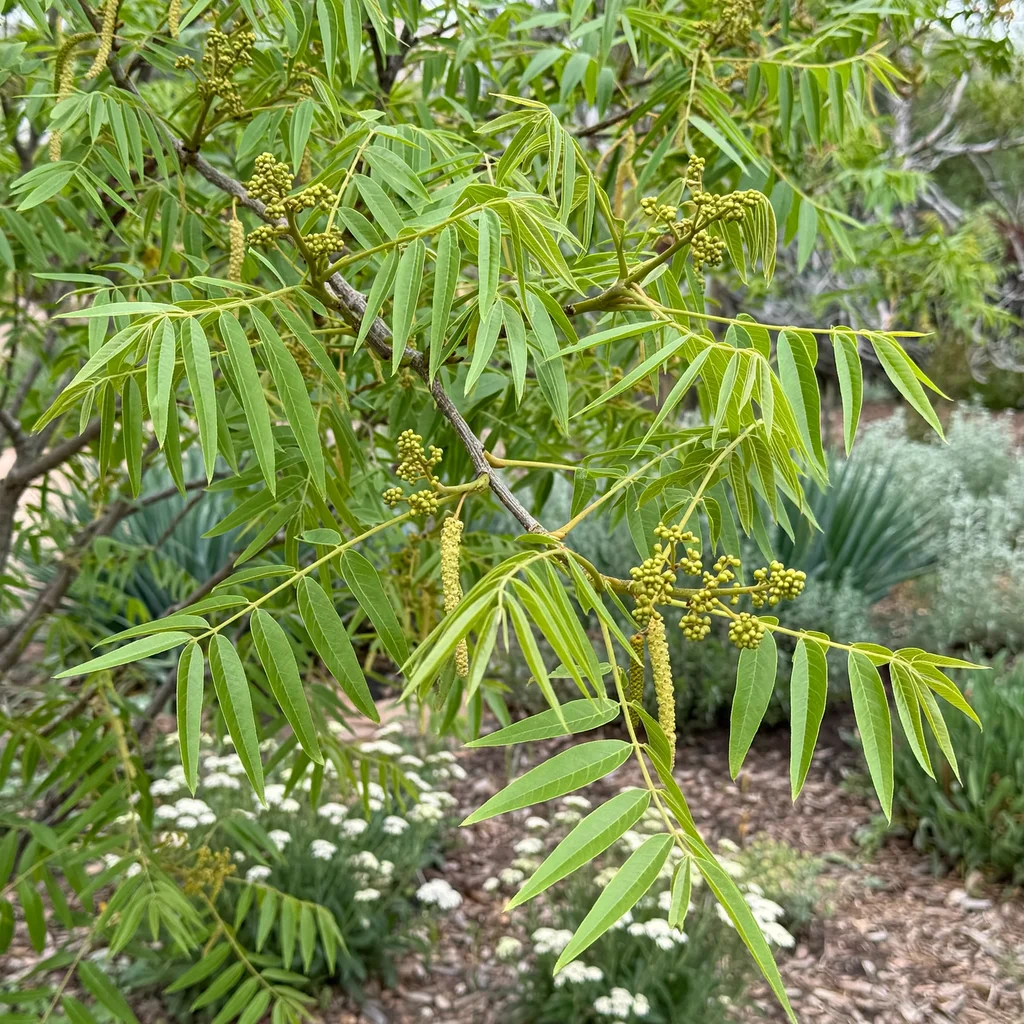
Juglans californica, the Southern California black walnut, is a deciduous tree or large multi-stemmed shrub reaching up to forty feet in height with two to five main trunks branching near the base. Its alternate, pinnately compound leaves carry nine to fifteen lanceolate leaflets with finely serrated margins that emerge pale green in spring.
The species synthesizes juglone in its roots and outer fruit husks, creating an allelopathic zone that suppresses sensitive surrounding vegetation. Slender, drooping yellow-green male catkins appear alongside inconspicuous female flowers before the dense summer canopy matures.
Uses & Benefits:
Essentials
At a Glance
Plant Type
Tree
Height
472"
Width
354"
Light
Full Sun, Partial Sun
Zones
8, 9
Water
Low
Humidity
Low
Lifespan
Perennial
Native To
California, USA
Toxicity
Produces juglone; husk sap causes skin irritation
Bloom period
Spring
In flower about 3 months of the year
Planting
How to Grow
- Select a planting site in full sun or light partial shade with deep, well-draining soil.
- Dig a hole twice as wide as the root ball and set the crown level with the native soil line.
- Water thoroughly at planting to settle the root system, then reduce watering as roots establish.
- Apply a light layer of wood mulch around the base, keeping it several inches away from the trunk.
Pro Tip
Prune strictly in late summer or early fall to avoid sap bleeding, removing dead or crossing branches without cutting hard into old, leafless wood.
Keep It Thriving
Care Guide
Do
- Provide excellent soil drainage to prevent fungal root rots.
- Allow the soil to dry out between deep waterings once the plant is established.
- Wear gloves when handling fresh green husks to avoid mild contact dermatitis.
Don't
- Do not overwater established trees during hot summer months.
- Do not prune hard into old, leafless wood.
- Do not plant susceptible garden crops directly beneath the canopy due to juglone output.
Seasonal Care Calendar
| Task | Jan | Feb | Mar | Apr | May | Jun | Jul | Aug | Sep | Oct | Nov | Dec |
|---|---|---|---|---|---|---|---|---|---|---|---|---|
| Mulch | ||||||||||||
| Pest Check | ||||||||||||
| Propagate | ||||||||||||
| Prune |
Watch Out For
Pests & Diseases
Common Pests
Common Diseases
In the Garden
Landscape Uses & Companions
Landscape Uses
Multiply
Propagation Methods
Good to Know
Common Questions
Southern California Black Walnut questions
What zones can Southern California Black Walnut grow in?
Southern California Black Walnut is hardy in USDA Zones 8–9: in that range it survives winter in the ground. Colder than Zone 8, winters are too cold for it to survive outdoors. Warmer than Zone 9, winter isn't the problem: it prefers colder winters, and summer heat can shorten its life.
Is Southern California Black Walnut deer resistant?
Not reliably. Deer may browse Southern California Black Walnut, especially tender spring growth — plan on repellents or fencing where pressure is high.
When does Southern California Black Walnut bloom?
Southern California Black Walnut typically blooms in spring. Exact timing shifts a week or two with your zone — Sow's bloom calendar maps it to your garden.
Does Southern California Black Walnut need full sun?
Southern California Black Walnut does best in full sun to part shade. In hot climates, afternoon shade keeps blooms fresher longer.
Is Southern California Black Walnut drought tolerant?
Yes — once established (usually after the first full season), Southern California Black Walnut handles dry spells with minimal watering. Water deeply its first year to build the root system that makes that possible.
More Juglans to compare

Keep exploring
Explore the genus
Hardy in your zone?
Grow Southern California Black Walnut with confidence
See it in a design of your actual yard, get zone-matched care reminders, and track it season by season in your garden journal.