The Story
Plant Bio
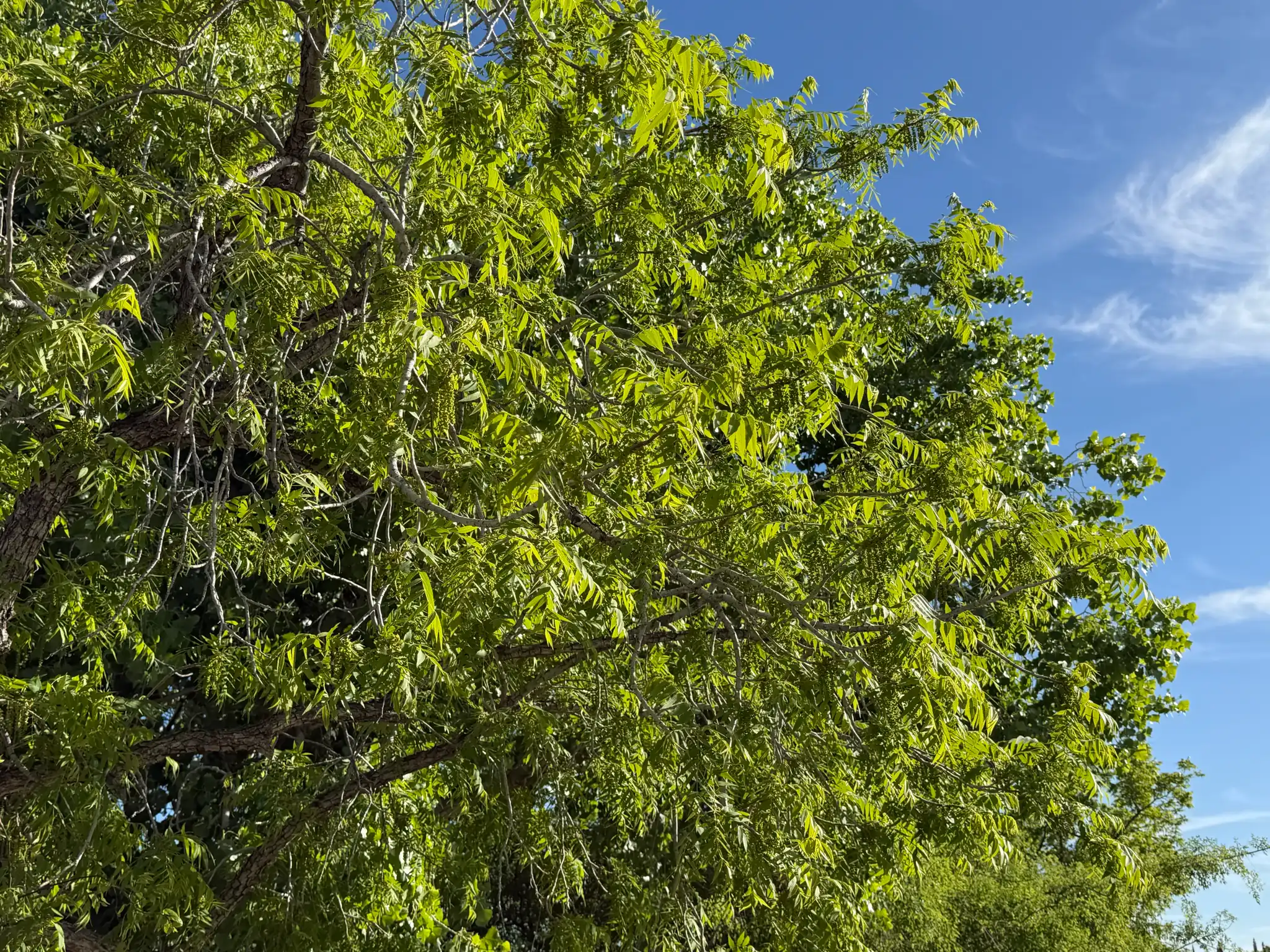
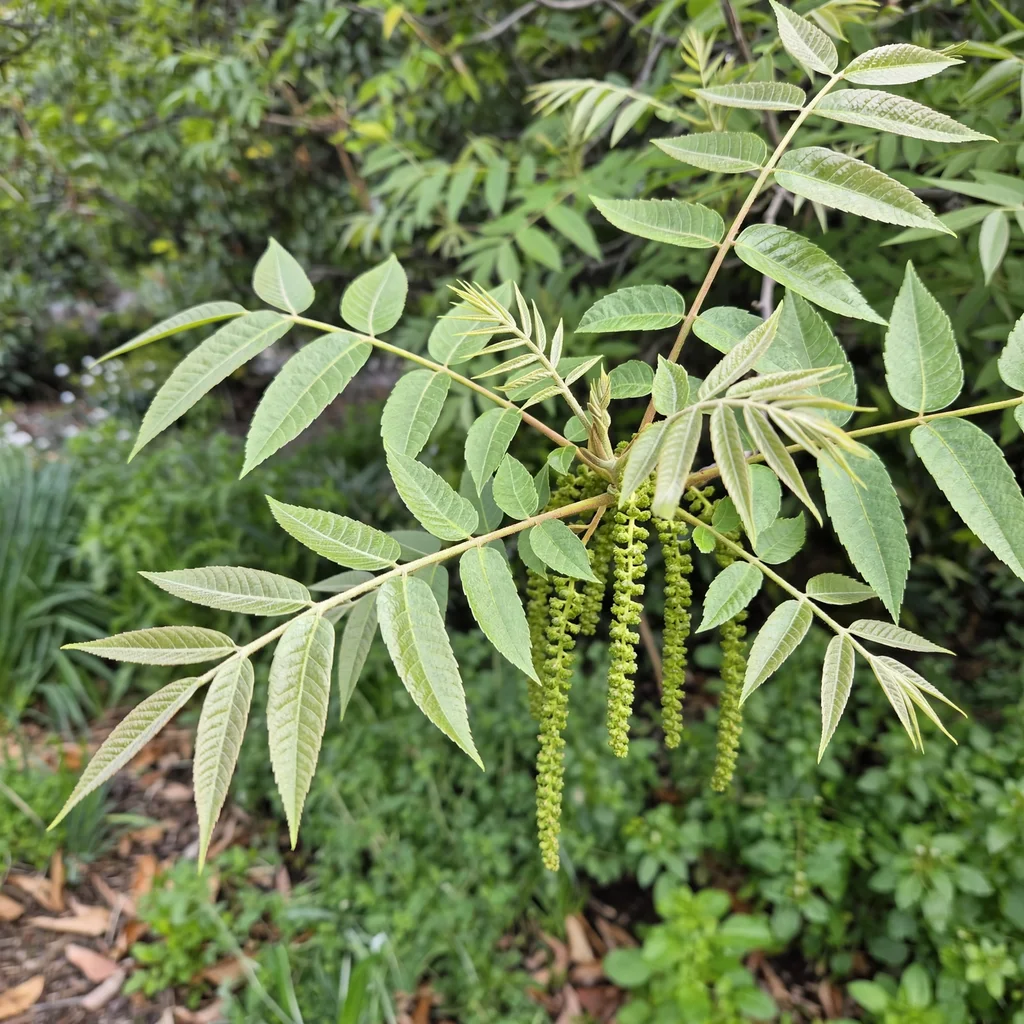
Juglans major, the Arizona walnut, is a deciduous small to medium tree to twenty to fifty feet, with a single straight trunk and stout spreading branches forming an open rounded crown. It is wind-pollinated in spring and sets hard-shelled nuts in fleshy husks that feed birds and other wildlife.
This is the desert Southwest walnut, native from Arizona, New Mexico, Texas, Oklahoma and Utah south through Mexico, where it grows along streams and rocky canyon sides from 1,000 to 7,000 feet. It takes full sun, heat and low water once established, but its roots release juglone that checks nearby plantings and its spring pollen is a severe allergen.
Uses & Benefits:
Essentials
At a Glance
Plant Type
Tree
Height
600"
Width
480"
Light
Full Sun, Partial Sun
Zones
6, 7, 8, 9
Water
Low to medium
Humidity
Low
Lifespan
Long-lived tree
Native To
Southwestern USA to Mexico
Toxicity
Pollen allergen; nuts inedible; juglone allelopathic
Bloom period
Spring – Early summer
In flower about 4 months of the year
Planting
How to Grow
- Plant in full sun with room for a 30- to 50-foot crown in loam or sandy soil.
- Dig the hole as deep as the root ball and twice as wide, backfilling with native soil.
- Water deeply at planting and through the first two summers, then reduce to low to medium water.
- Mulch 2 to 3 inches deep, kept clear of the trunk, and stake only until anchored.
Pro Tip
Site it well clear of vegetable beds and juglone-sensitive plants; the root competition reaches well beyond the crown and the spring pollen is heavy where people gather.
Keep It Thriving
Care Guide
Do
- Give full sun and space for a wide-spreading crown.
- Water deeply during establishment, then cut back to low to medium water.
- Mulch to hold soil moisture and rake up husks for sanitation.
Don't
- Do not plant over septic, paving, or vegetable beds where roots and juglone compete.
- Do not eat the nuts; treat them as wildlife food.
- Do not crowd patios or gathering areas where pollen and husk drop are a nuisance.
Seasonal Care Calendar
| Task | Jan | Feb | Mar | Apr | May | Jun | Jul | Aug | Sep | Oct | Nov | Dec |
|---|---|---|---|---|---|---|---|---|---|---|---|---|
| Harvest | ||||||||||||
| Mulch | ||||||||||||
| Pest Check | ||||||||||||
| Prune |
Watch Out For
Pests & Diseases
Common Pests
Common Diseases
In the Garden
Landscape Uses & Companions
Landscape Uses
Multiply
Propagation Methods
Good to Know
Common Questions
Arizona Walnut questions
What zones can Arizona Walnut grow in?
Arizona Walnut is hardy in USDA Zones 6–9: in that range it survives winter in the ground. Colder than Zone 6, winters are too cold for it to survive outdoors. Warmer than Zone 9, winter isn't the problem: it prefers colder winters, and summer heat can shorten its life.
When does Arizona Walnut bloom?
Arizona Walnut typically blooms from early spring to early summer. Exact timing shifts a week or two with your zone — Sow's bloom calendar maps it to your garden.
Does Arizona Walnut need full sun?
Arizona Walnut does best in full sun to part shade. In hot climates, afternoon shade keeps blooms fresher longer.
Is Arizona Walnut drought tolerant?
Yes — once established (usually after the first full season), Arizona Walnut handles dry spells with minimal watering. Water deeply its first year to build the root system that makes that possible.
More Juglans to compare

Keep exploring
Explore the genus
Hardy in your zone?
Grow Arizona Walnut with confidence
See it in a design of your actual yard, get zone-matched care reminders, and track it season by season in your garden journal.