The Story
Plant Bio
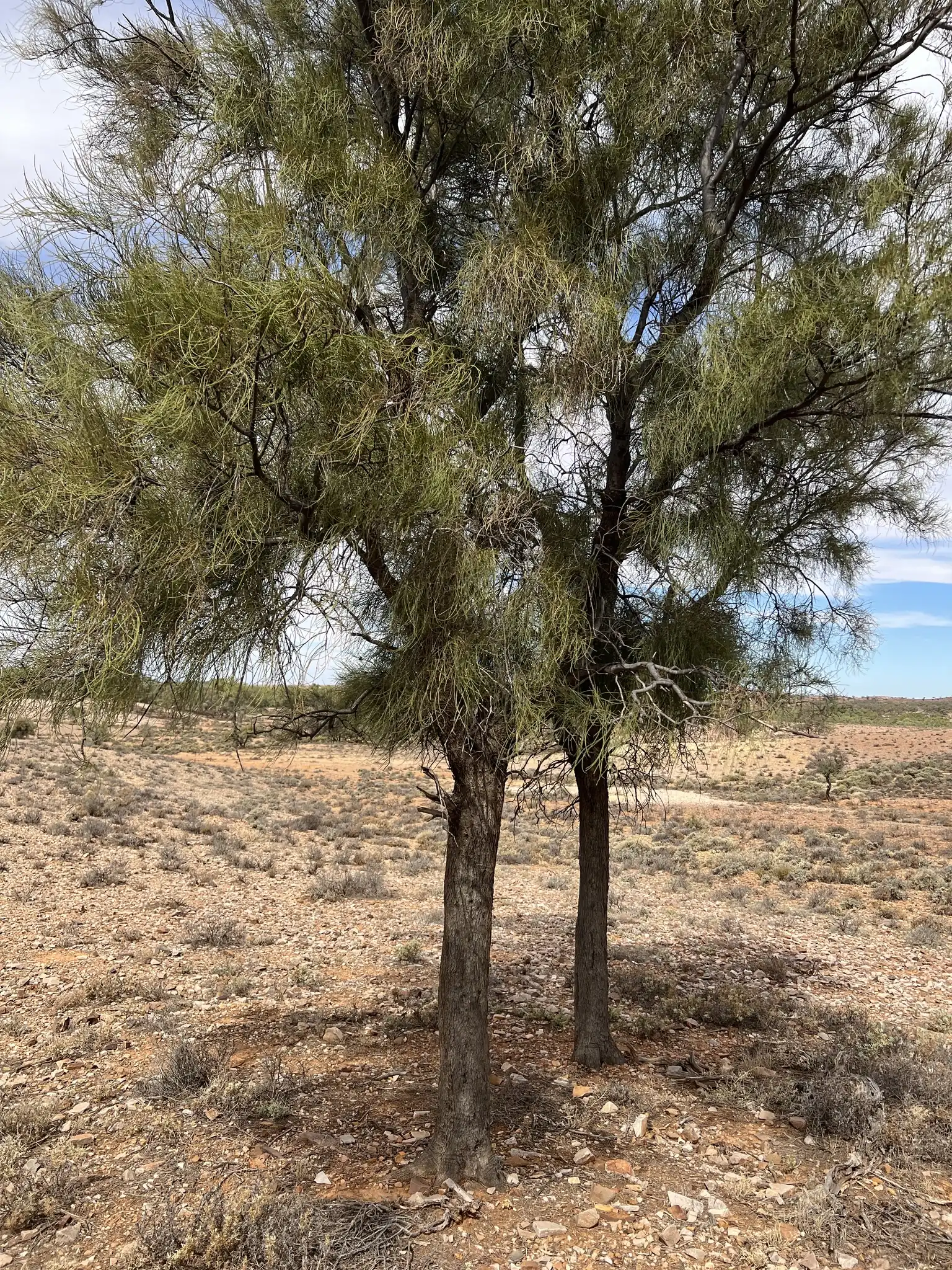
Casuarina cristata, commonly known as belah, is an evergreen tree native to inland eastern Australia that reaches up to sixty feet tall with a columnar to spreading crown and weeping branchlets. Instead of true leaves, it bears jointed green branchlets with whorls of tiny scale-like teeth that perform photosynthesis and conserve moisture.
This species is distinguished by its deeply fissured dark greyish-brown bark and exceptional tolerance for dry, heavy clay soils with high lime content. It produces small catkin-like flowers in winter followed by persistent woody, cone-like seed fruits.
Uses & Benefits:
Essentials
At a Glance
Plant Type
Tree
Height
787"
Width
472"
Light
Full Sun
Zones
8, 9, 10
Water
Low
Humidity
Low to Moderate
Lifespan
Perennial
Native To
Australia
Toxicity
Non-toxic
Bloom period
Winter – Spring
In flower about 6 months of the year
Planting
How to Grow
- Select a planting site in full sun with deep, well-draining soil free from standing water.
- Plant container stock at the same depth it was growing in the pot, firming soil gently around the root ball.
- Water deeply at planting and maintain moderate moisture during the first establishment season.
- Cease routine supplemental irrigation once established, relying on natural rainfall.
Pro Tip
Never cut back into old, leafless brown wood, as stems lack epicormic buds and cannot sprout new growth.
Keep It Thriving
Care Guide
Do
- Plant in full sun and well-draining soil
- Allow soil to dry out thoroughly between deep waterings
- Prune lightly to remove dead or damaged branches
Don't
- Do not plant in wet or waterlogged locations
- Do not prune hard into bare, woody stems
- Do not over-fertilize with high-nitrogen fertilizers
Seasonal Care Calendar
| Task | Jan | Feb | Mar | Apr | May | Jun | Jul | Aug | Sep | Oct | Nov | Dec |
|---|---|---|---|---|---|---|---|---|---|---|---|---|
| Fertilize | ||||||||||||
| Pest Check | ||||||||||||
| Prune | ||||||||||||
| Winter Prep |
Watch Out For
Pests & Diseases
Common Pests
Common Diseases
In the Garden
Landscape Uses & Companions
Landscape Uses
Companion Plants
Multiply
Propagation Methods
Good to Know
Common Questions
Belah questions
What zones can Belah grow in?
Belah is hardy in USDA Zones 8–10: in that range it survives winter in the ground. Colder than Zone 8, winters are too cold for it to survive outdoors.
Is Belah deer resistant?
Not reliably. Deer may browse Belah, especially tender spring growth — plan on repellents or fencing where pressure is high.
When does Belah bloom?
Belah typically blooms from winter to spring. Exact timing shifts a week or two with your zone — Sow's bloom calendar maps it to your garden.
Does Belah need full sun?
Belah does best in full sun (6+ hours).
Is Belah drought tolerant?
Yes — once established (usually after the first full season), Belah handles dry spells with minimal watering. Water deeply its first year to build the root system that makes that possible.
More Casuarina to compare
Keep exploring
Explore the genus
Hardy in your zone?
Grow Belah with confidence
See it in a design of your actual yard, get zone-matched care reminders, and track it season by season in your garden journal.