The Story
Plant Bio
Clerodendrum are evergreen shrubs and twining vines from the warm tropics, grown for opposite leaves and flowers where a showy calyx backs a tubular corolla with long exserted stamens. Many climb by twining soft young stems around support and carry clustered flowers at the shoot tips through the warm months.
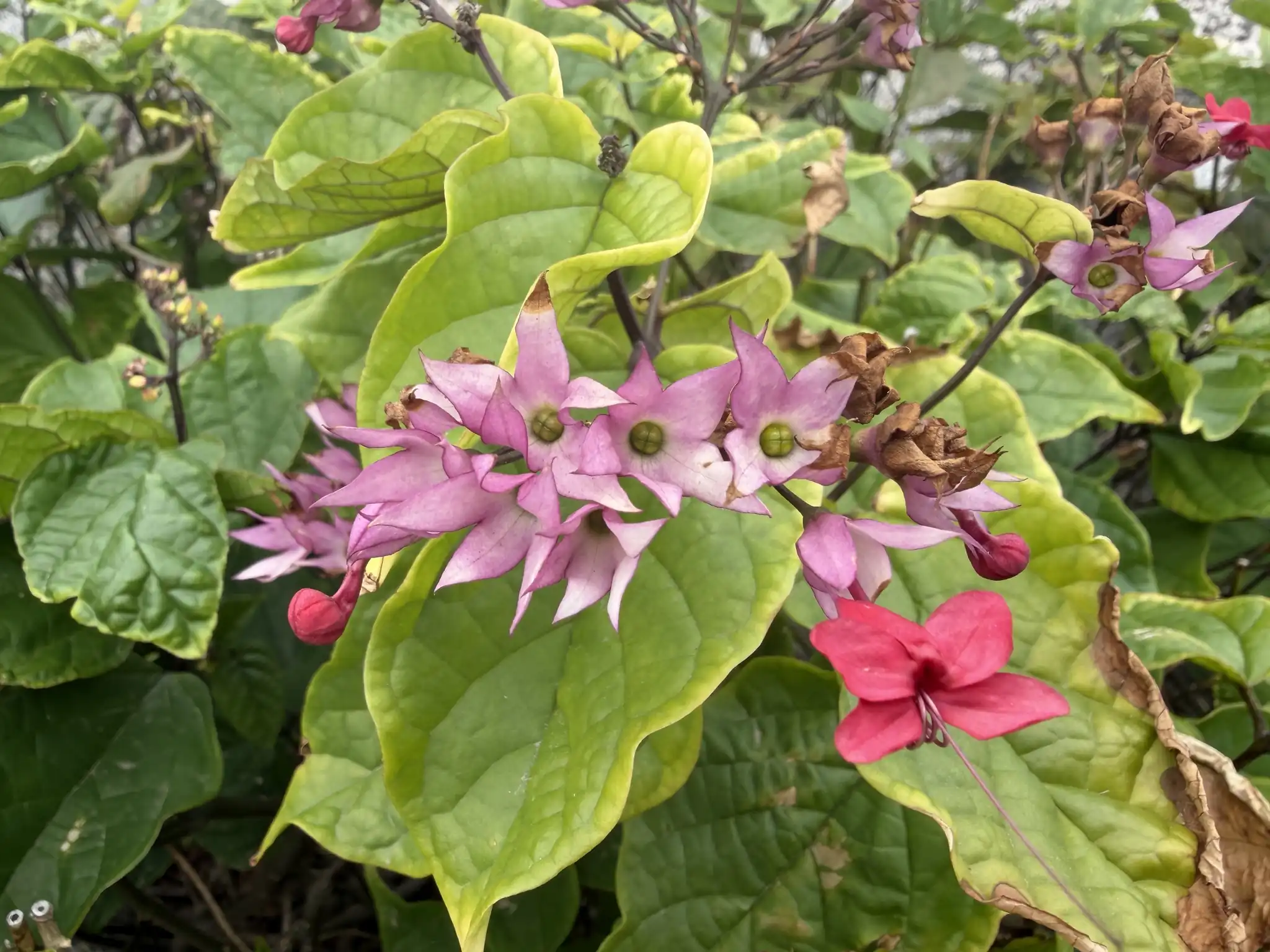
Clerodendrum x speciosum is the garden hybrid of Clerodendrum splendens crossed with Clerodendrum thomsoniae, a vigorous evergreen twiner with dark green deeply veined oval leaves about six inches long. It bears profuse tip clusters of pink to lavender calyces each holding a heart shaped red corolla with long red stamens, a red on pink reversal of the white and red bleeding heart form.
Uses & Benefits:
Essentials
At a Glance
Plant Type
Vine
Height
120"
Width
36"
Light
Full Sun, Partial Sun
Zones
9, 10
Water
Average to moist
Humidity
High
Lifespan
Evergreen vine
Native To
Garden hybrid; no wild range
Toxicity
Unknown
Bloom period
Summer – Fall
In flower about 6 months of the year
Planting
How to Grow
- Plant in full sun to partial shade in fertile rich soil that drains freely, with a fence, trellis or wires for the twining stems.
- Water well at planting, then keep evenly moist in growth and let the top of the mix dry before watering again.
- Feed regularly through the growing season with a high-potash bloom fertilizer.
- In zones below 9, grow in a large pot and move under glass before nights drop below 50F, watering sparingly through winter.
Pro Tip
Tie young shoots to the trellis while soft; once they lignify they hold position and branch to flower. Keep winter pots above 50F and almost dry, since cold wet compost rots the roots faster than drought harms the top.
Keep It Thriving
Care Guide
Do
- Give strong support at planting and tie new shoots early
- Feed regularly in the growing season for continuous bloom
- Inspect new growth weekly for sucking insects
Don't
- Do not leave outdoors through frost
- Do not keep winter roots cold and saturated
- Do not confuse this vine with the shrub Java Glorybower
Seasonal Care Calendar
| Task | Jan | Feb | Mar | Apr | May | Jun | Jul | Aug | Sep | Oct | Nov | Dec |
|---|---|---|---|---|---|---|---|---|---|---|---|---|
| Fertilize | ||||||||||||
| Pest Check | ||||||||||||
| Prune | ||||||||||||
| Stake | ||||||||||||
| Winter Prep |
Watch Out For
Pests & Diseases
Common Pests
Common Diseases
In the Garden
Landscape Uses & Companions
Landscape Uses
Good to Know
Common Questions
Red Bleeding Heart questions
What zones can Red Bleeding Heart grow in?
Red Bleeding Heart is hardy in USDA Zones 9–10: in that range it survives winter in the ground. Colder than Zone 9, grow it in a container you can move to shelter for the winter, or as an annual.
When does Red Bleeding Heart bloom?
Red Bleeding Heart typically blooms from summer to fall. Exact timing shifts a week or two with your zone — Sow's bloom calendar maps it to your garden.
Does Red Bleeding Heart need full sun?
Red Bleeding Heart does best in full sun to part shade. In hot climates, afternoon shade keeps blooms fresher longer.
More Clerodendrum to compare
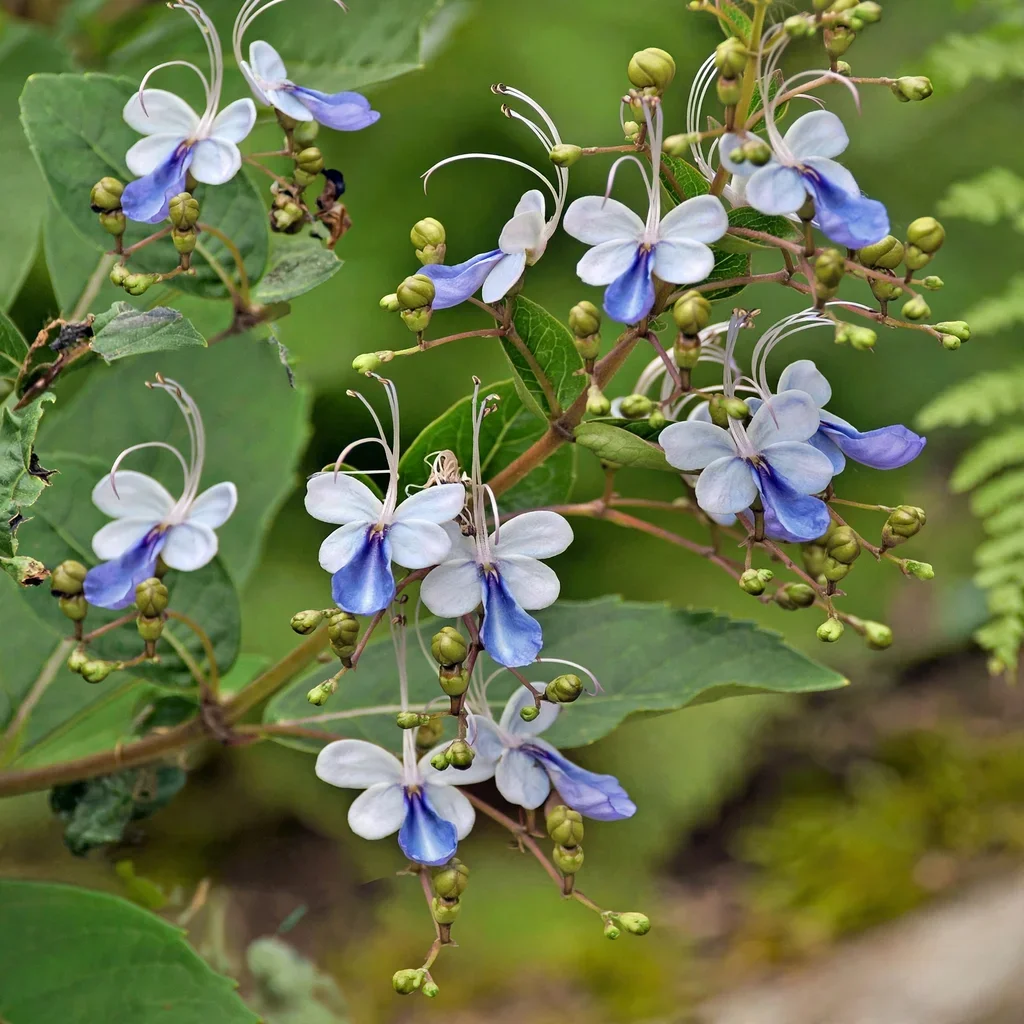
Blue Butterfly Bush
Clerodendrum ugandense
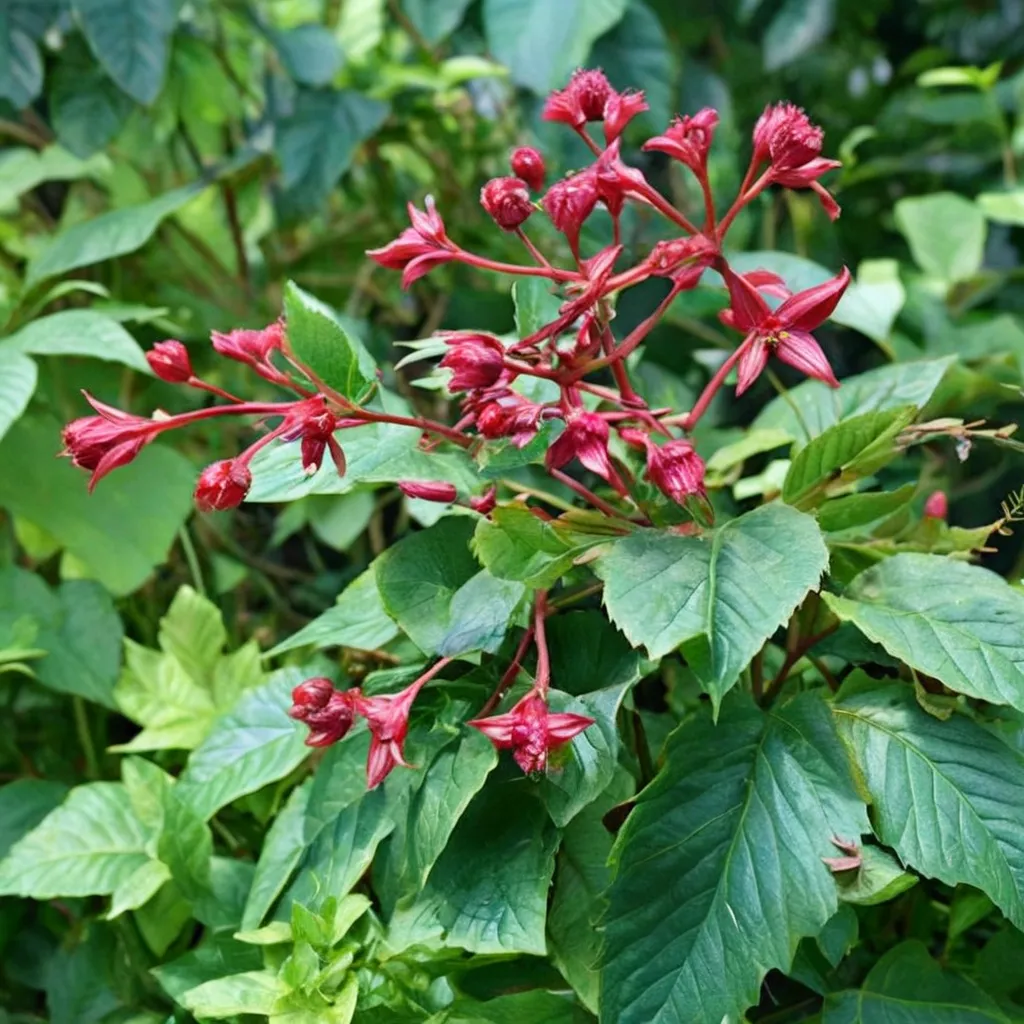
Rose Glory Bower
Clerodendrum speciosissimum 'Arkansas Hardy'
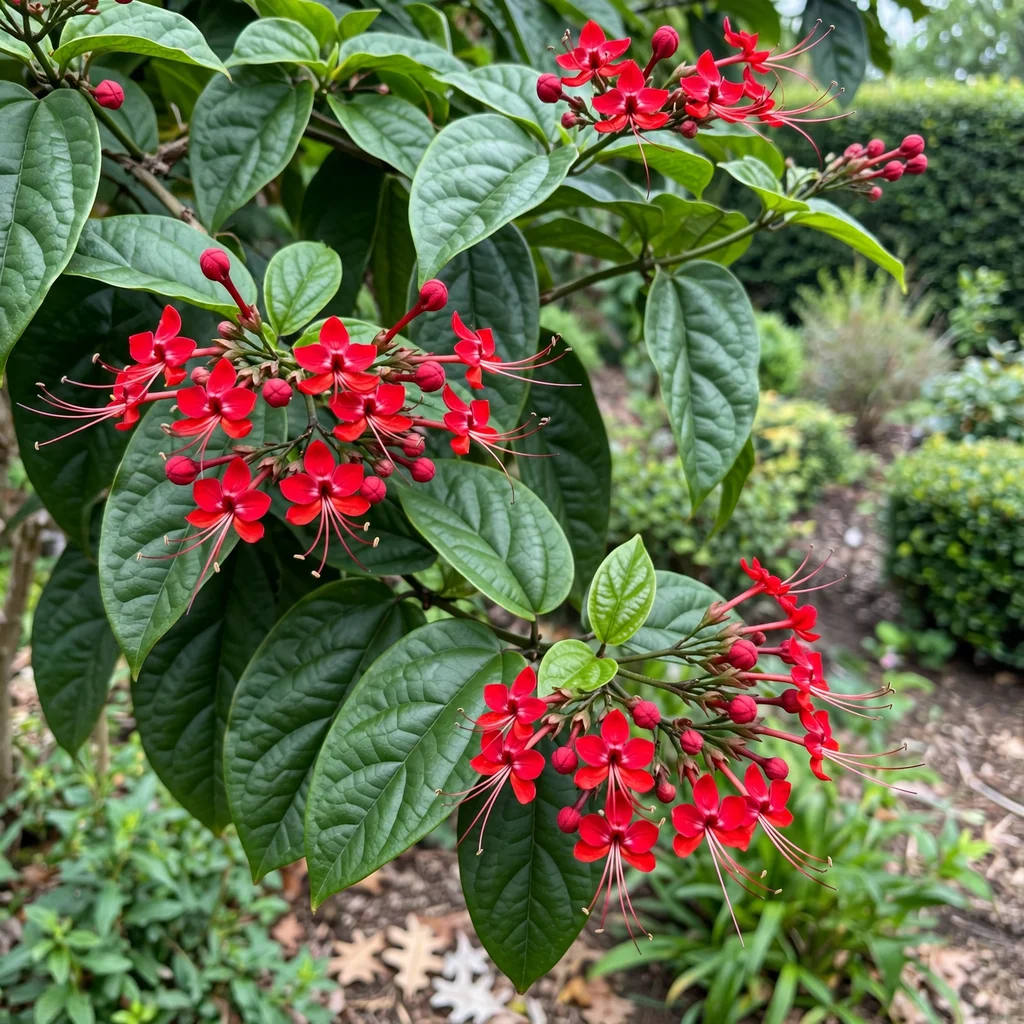
Flaming Glorybower
Clerodendrum splendens
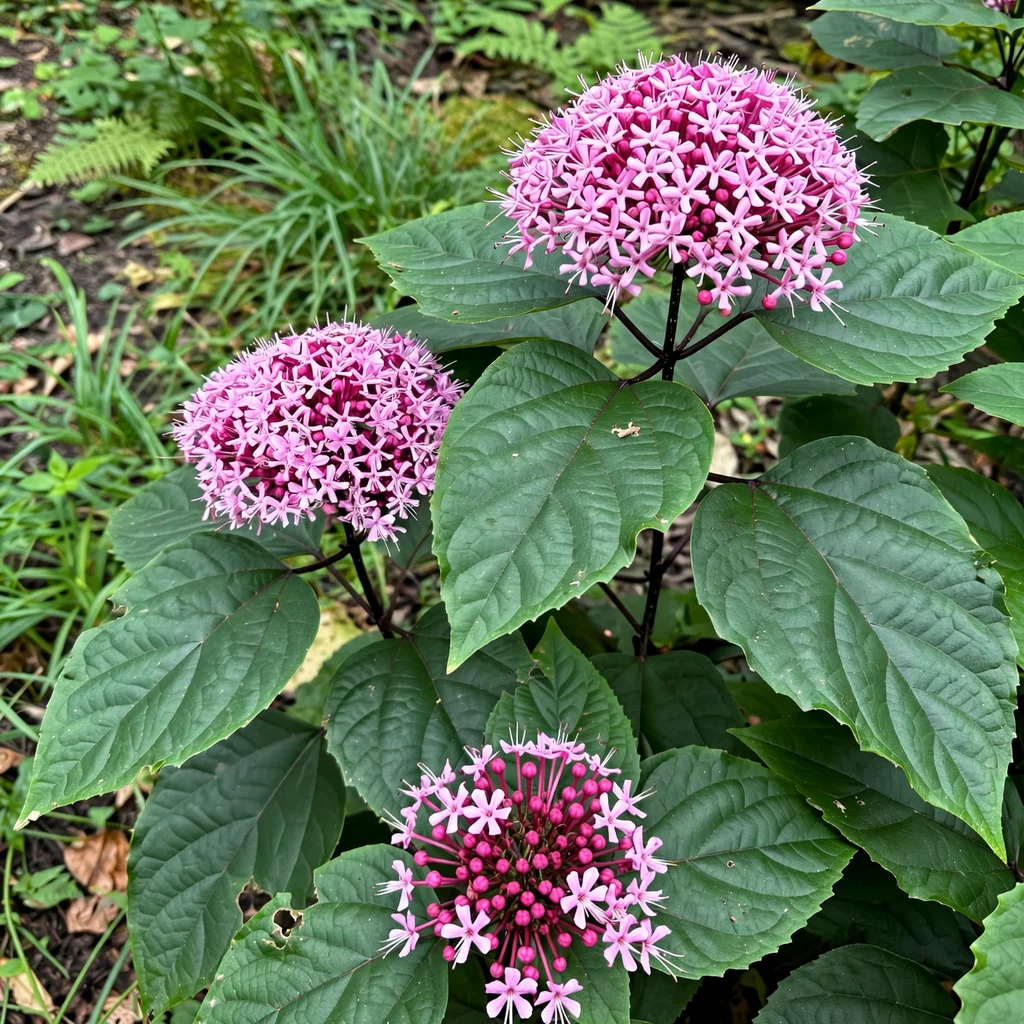
Rose Glorybower
Clerodendrum bungei
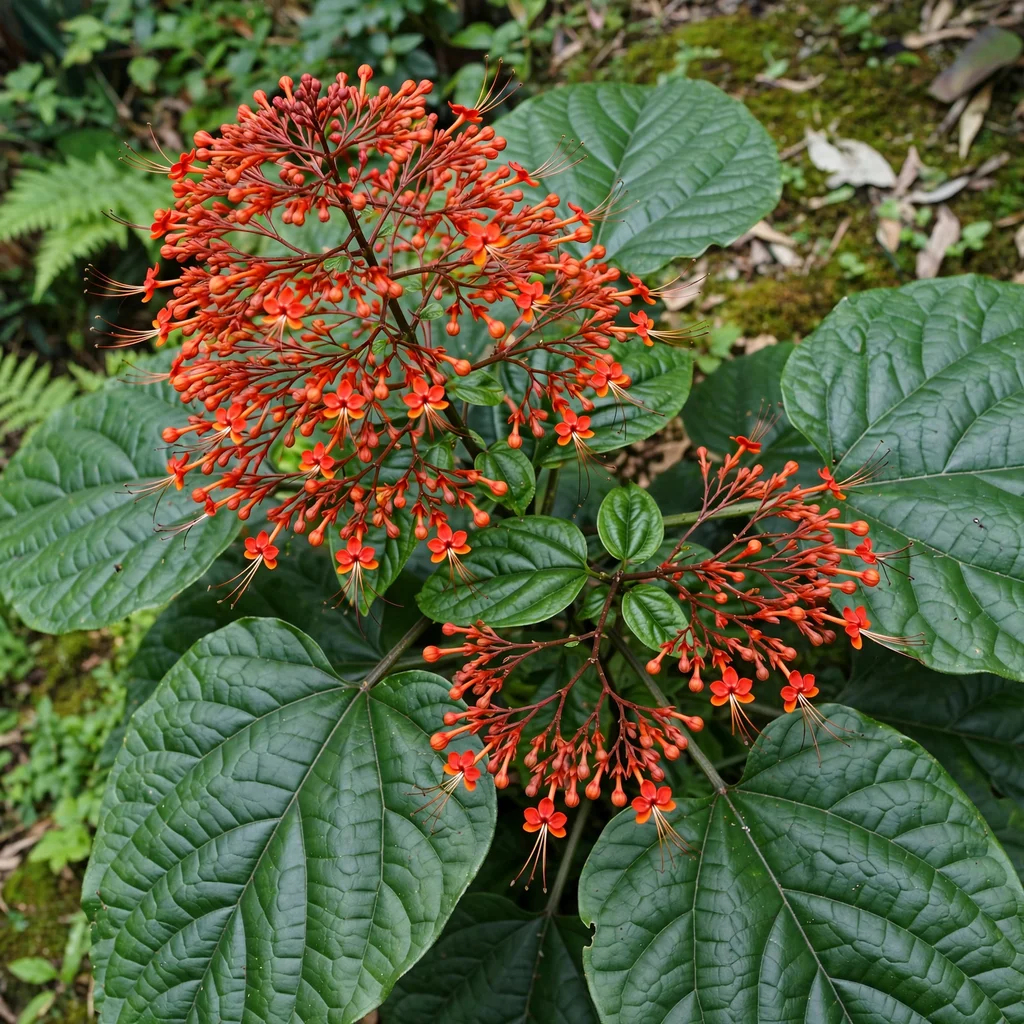
Pagoda Flower
Clerodendrum paniculatum
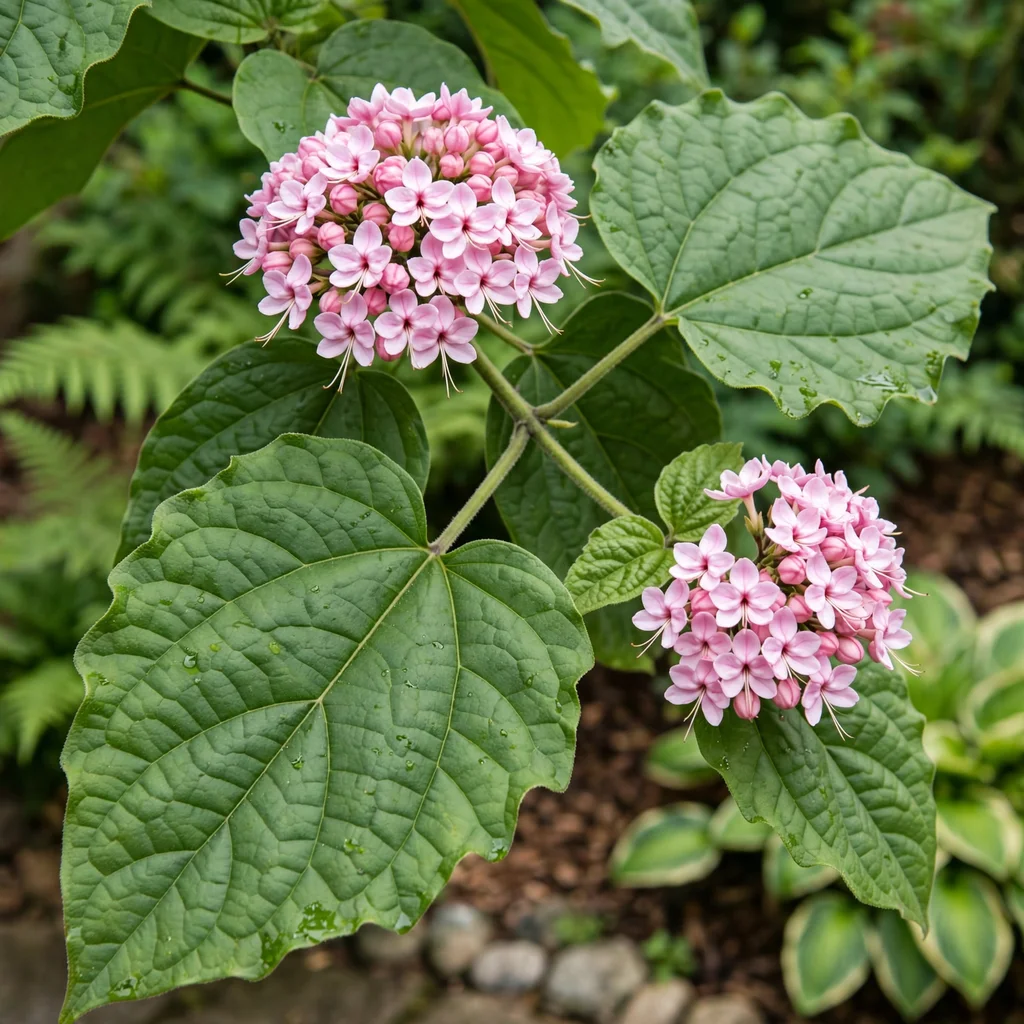
Chinese Glory Bower
Clerodendrum philippinum
Keep exploring
Explore the genus
Hardy in your zone?
Grow Red Bleeding Heart with confidence
See it in a design of your actual yard, get zone-matched care reminders, and track it season by season in your garden journal.