The Story
Plant Bio
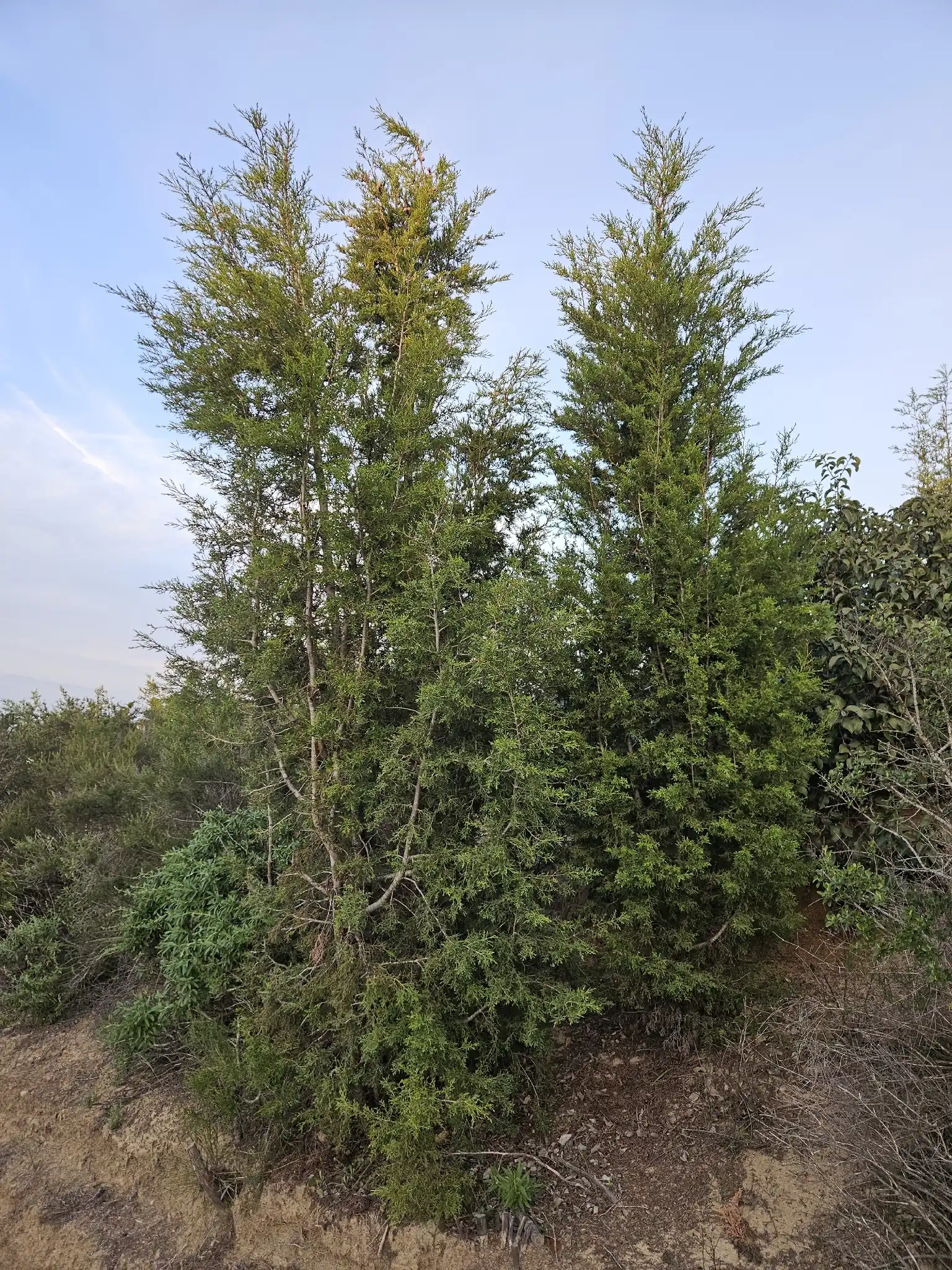
Hesperocyparis forbesii, commonly called Tecate cypress, is an evergreen conifer native to southwestern North America that forms a dense, narrow pyramidal crown when young before maturing into an open, spreading tree. The foliage consists of fragrant, bright green scale-like leaves closely appressed to square twigs, set against distinctive cherry-red and mahogany bark that peels away in smooth paper-thin strips.
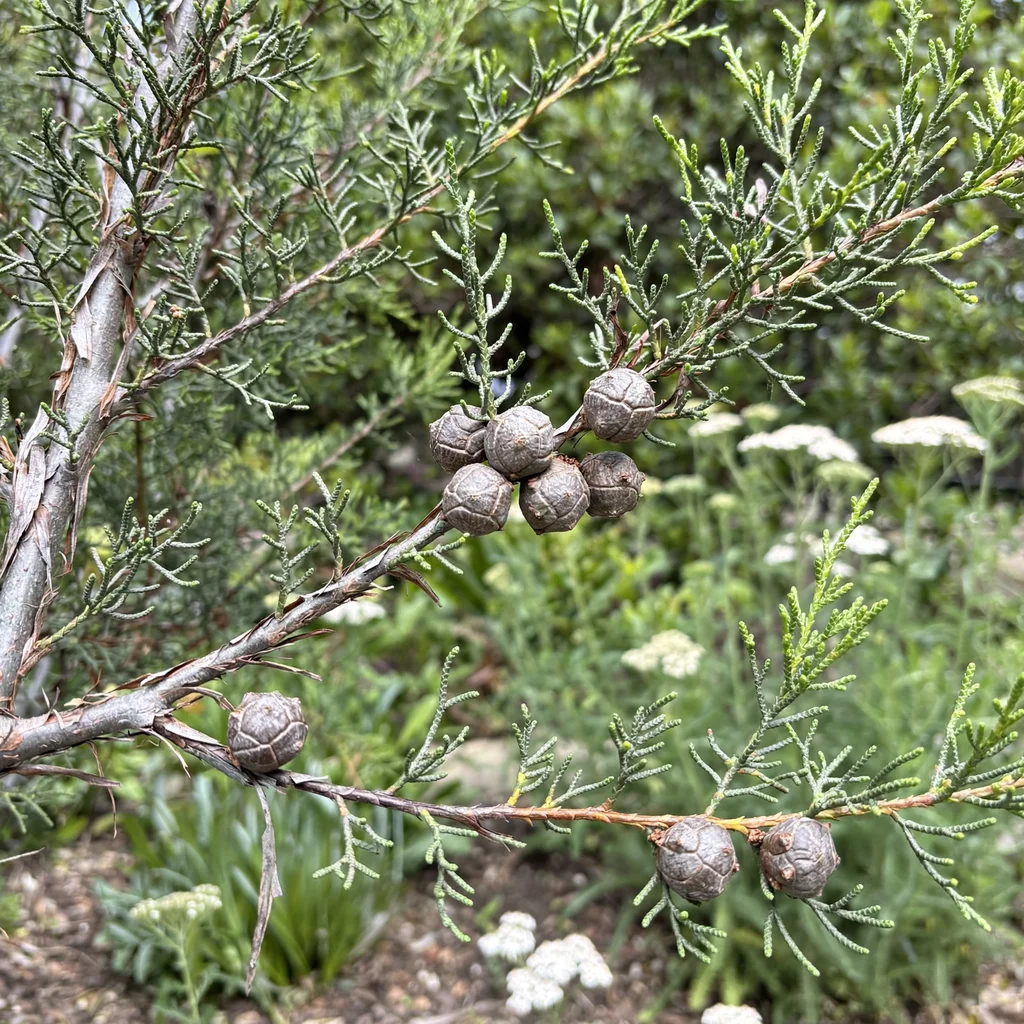
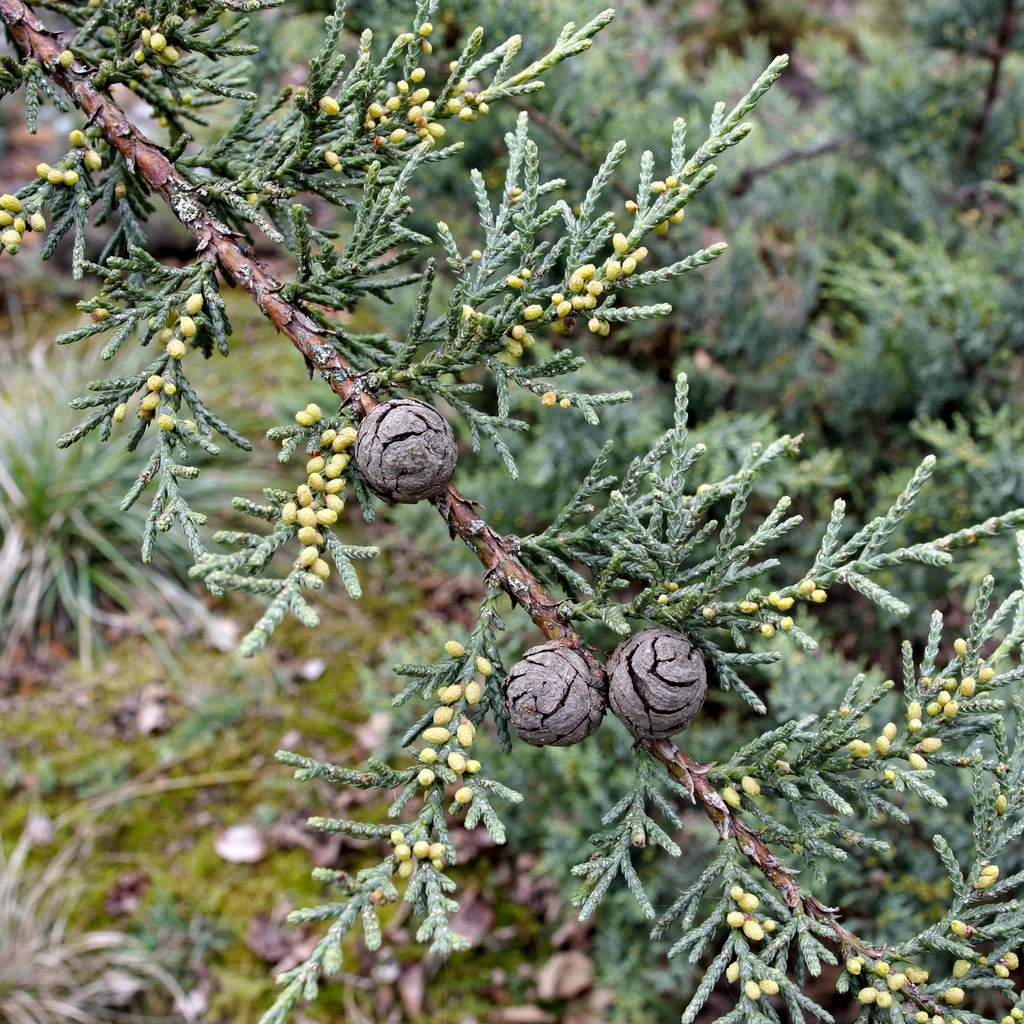
This species produces round, woody serotinous cones roughly one inch in diameter that remain closed on the branches for years until exposed to intense heat or harvested. Its striking multi-toned exfoliating bark reveals polished gray and reddish inner layers, providing outstanding structural visual interest in dry landscapes.
Uses & Benefits:
Essentials
At a Glance
Plant Type
Tree
Height
360"
Width
240"
Light
Full Sun
Zones
9, 10
Water
Low
Humidity
Low to Moderate
Lifespan
Perennial
Native To
Southwestern North America
Toxicity
Non-toxic
Bloom period
Summer – Autumn
In flower about 6 months of the year
Planting
How to Grow
- Select a planting site in full sun with highly permeable soil such as sand, gravel, or coarse loam.
- Dig a planting hole twice as wide as the root ball and equal in depth, keeping the original soil unamended.
- Position the tree so the root collar rests slightly above the surrounding soil level to prevent water pooling.
- Water thoroughly at planting and supply light moisture during the first dry season to establish roots, then discontinue regular watering.
Pro Tip
Provide sharp soil drainage and refrain from summer irrigation once established; excess soil moisture induces fatal Phytophthora root rot and causes structurally weak canopy growth.
Keep It Thriving
Care Guide
Do
- Plant in fast-draining, lean soils on open, sunny slopes.
- Prune sparingly, cutting only green leafy tips to shape hedges.
- Allow the soil to dry out completely between initial waterings.
Don't
- Do not overwater or apply heavy summer irrigation after establishment.
- Do not cut back into old leafless wood, as bare conifer branches will not resprout.
- Do not add high-nitrogen fertilizers, which create weak, floppy growth.
Seasonal Care Calendar
| Task | Jan | Feb | Mar | Apr | May | Jun | Jul | Aug | Sep | Oct | Nov | Dec |
|---|---|---|---|---|---|---|---|---|---|---|---|---|
| Mulch | ||||||||||||
| Pest Check | ||||||||||||
| Plant | ||||||||||||
| Prune |
Watch Out For
Pests & Diseases
Common Pests
Common Diseases
In the Garden
Landscape Uses & Companions
Landscape Uses
Companion Plants
Multiply
Propagation Methods
Good to Know
Common Questions
Tecate Cypress questions
What zones can Tecate Cypress grow in?
Tecate Cypress is hardy in USDA Zones 9–10: in that range it survives winter in the ground. Colder than Zone 9, winters are too cold for it to survive outdoors.
Is Tecate Cypress deer resistant?
Not reliably. Deer may browse Tecate Cypress, especially tender spring growth — plan on repellents or fencing where pressure is high.
When does Tecate Cypress bloom?
Tecate Cypress typically blooms from summer to fall. Exact timing shifts a week or two with your zone — Sow's bloom calendar maps it to your garden.
Does Tecate Cypress need full sun?
Tecate Cypress does best in full sun (6+ hours).
Is Tecate Cypress drought tolerant?
Yes — once established (usually after the first full season), Tecate Cypress handles dry spells with minimal watering. Water deeply its first year to build the root system that makes that possible.
More Hesperocyparis to compare
Keep exploring
Explore the genus
Hardy in your zone?
Grow Tecate Cypress with confidence
See it in a design of your actual yard, get zone-matched care reminders, and track it season by season in your garden journal.