The Story
Plant Bio
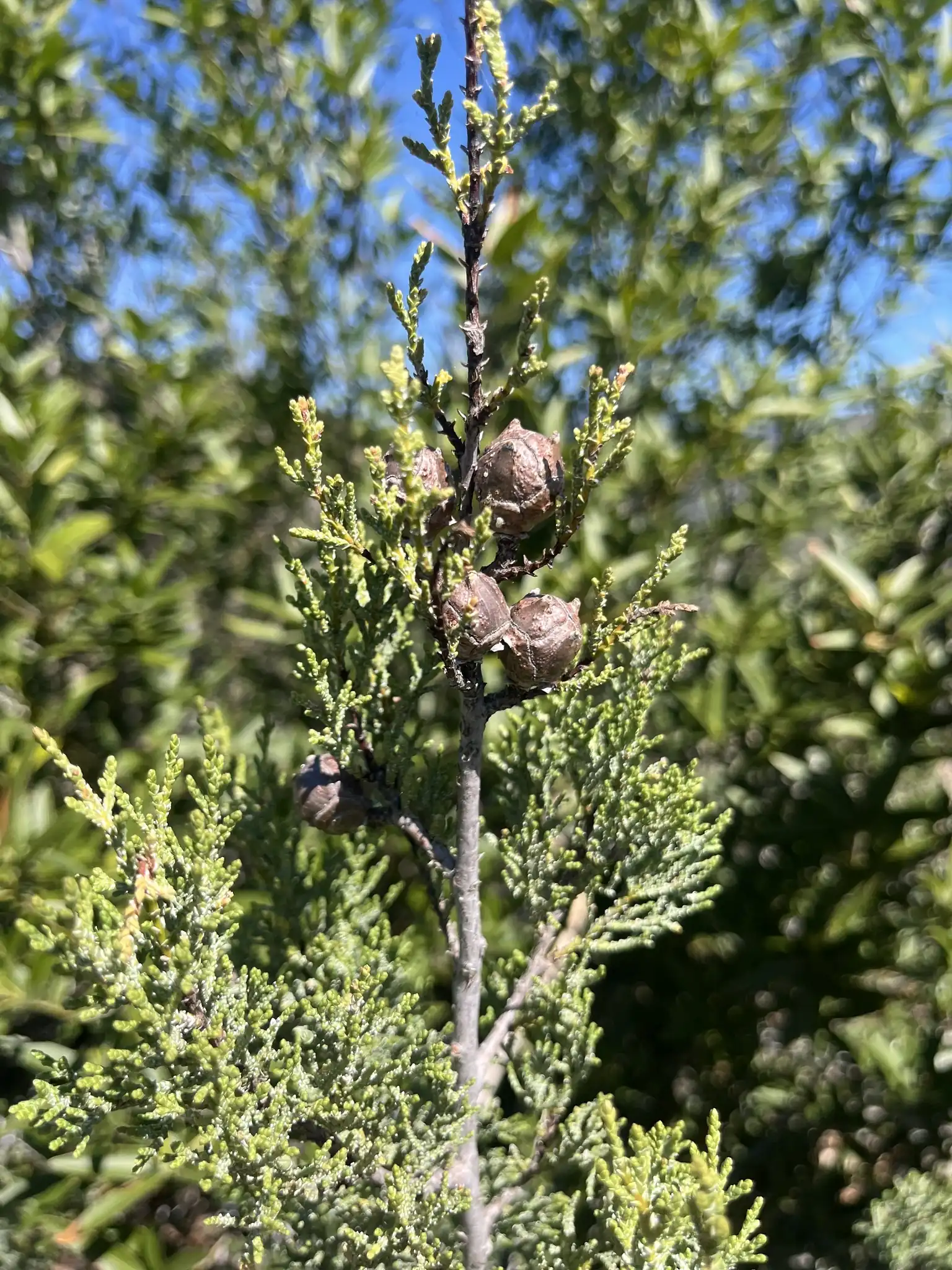
Hesperocyparis macnabiana is an evergreen tree or large shrub reaching 15 to 40 feet in gardens, often with several trunks and a broad spreading crown wider than tall. The foliage is scale-like and aromatic in flat sprays, gray-green to dark green, with tiny pollen cones and woody seed cones to about an inch that stay closed on the tree for years.
It is distinguished by branchlets held in a single flat plane and by its ability to grow in dry serpentine clay-loam and other infertile rock where most conifers stall. Established trees take little to no summer water and hold serotinous cones until fire or heat, regenerating only on bare mineral soil.
Uses & Benefits:
Essentials
At a Glance
Plant Type
Tree
Height
360"
Width
354"
Light
Full Sun
Zones
6, 7, 8, 9, 10
Water
Low - no summer water once established
Humidity
Low - needs dry air
Lifespan
Long-lived
Native To
Northern California
Toxicity
Unknown - cypress pollen allergenic
Bloom period
Fall – Winter
In flower about 6 months of the year
Planting
How to Grow
- Plant in full sun in very well-drained sandy or rocky loam, pH 6.0 to 8.0, with the crown set above grade.
- Water deeply at planting, then shift to wet winters and dry summers with no lawn water nearby.
- Mulch with gravel or lean rock, keeping mulch off the trunk and out of the crown.
- Do not fertilize; it is adapted to low-nutrient serpentine ground.
- Cage seedlings against deer and rodents until the stems are well barked.
Pro Tip
Give it dry infertile sharply drained sun inland and leave it alone; lawn water and coastal humidity kill it faster than drought, and growth slows markedly after about 12 feet.
Keep It Thriving
Care Guide
Do
- Plant in full inland sun with sharp drainage.
- Keep summers dry once established.
- Remove only dead wood in dry weather.
- Protect seedlings from browsing.
Don't
- Do not plant near the coast, lawns, or sprinklers.
- Do not prune back into old leafless wood.
- Do not feed or enrich the soil.
- Do not stand pots in saucers or waterlogged soil.
Seasonal Care Calendar
| Task | Jan | Feb | Mar | Apr | May | Jun | Jul | Aug | Sep | Oct | Nov | Dec |
|---|---|---|---|---|---|---|---|---|---|---|---|---|
| Mulch | ||||||||||||
| Pest Check | ||||||||||||
| Plant | ||||||||||||
| Propagate | ||||||||||||
| Prune |
Watch Out For
Pests & Diseases
Common Pests
Common Diseases
In the Garden
Landscape Uses & Companions
Landscape Uses
Multiply
Propagation Methods
Good to Know
Common Questions
MacNab Cypress questions
What zones can MacNab Cypress grow in?
MacNab Cypress is hardy in USDA Zones 6–10: in that range it survives winter in the ground. Colder than Zone 6, winters are too cold for it to survive outdoors.
When does MacNab Cypress bloom?
MacNab Cypress typically blooms from fall to winter. Exact timing shifts a week or two with your zone — Sow's bloom calendar maps it to your garden.
Does MacNab Cypress need full sun?
MacNab Cypress does best in full sun (6+ hours).
Is MacNab Cypress drought tolerant?
Yes — once established (usually after the first full season), MacNab Cypress handles dry spells with minimal watering. Water deeply its first year to build the root system that makes that possible.
More Hesperocyparis to compare
Keep exploring
Explore the genus
Hardy in your zone?
Grow MacNab Cypress with confidence
See it in a design of your actual yard, get zone-matched care reminders, and track it season by season in your garden journal.