The Story
Plant Bio
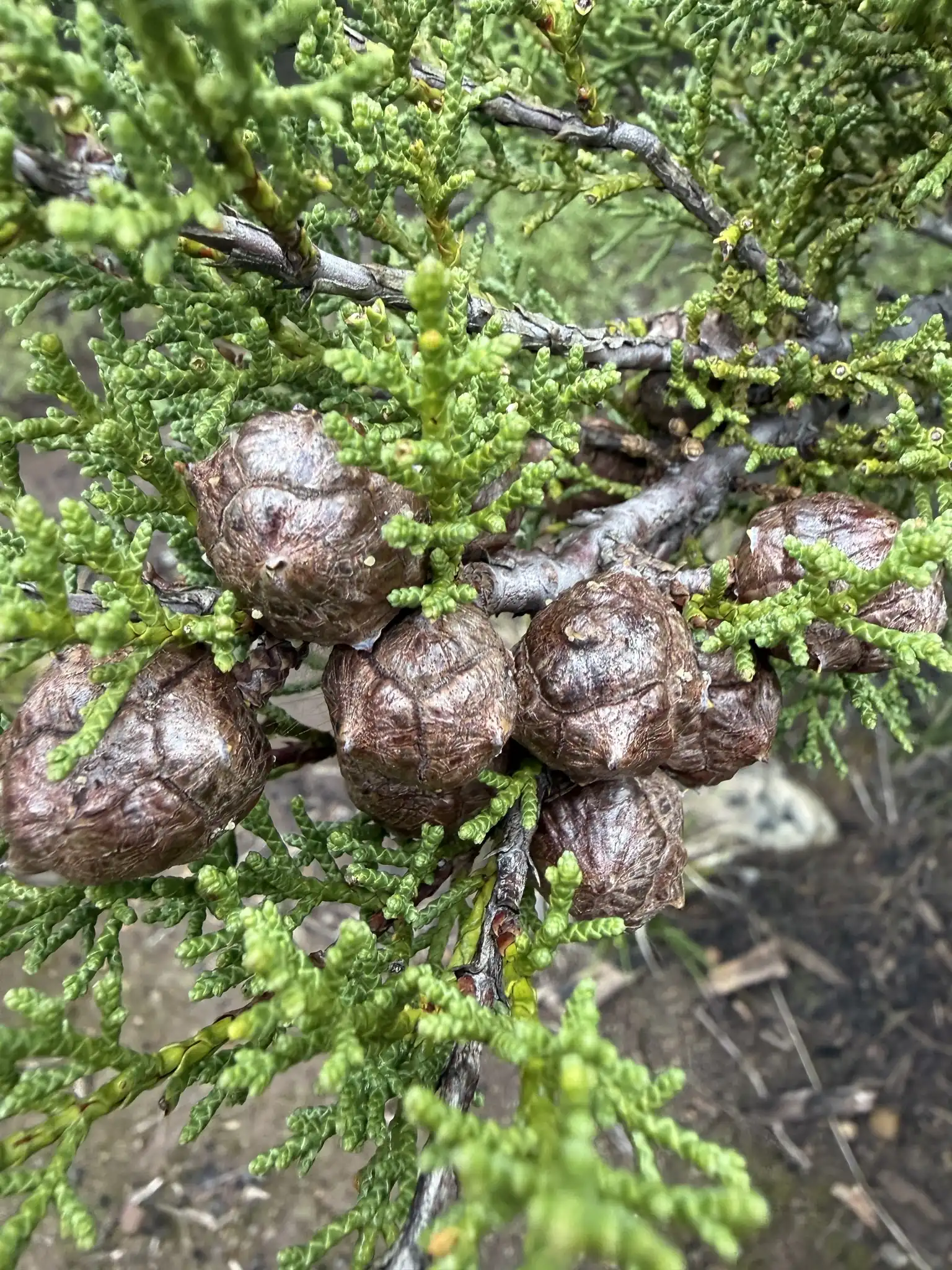
Hesperocyparis sargentii is an evergreen conifer native to California, forming a dense to open crown that ranges from narrow and columnar to broad and windswept depending on site exposure. It bears dull green to glaucous scale-like foliage on stiff branchlets alongside persistent, globose woody seed cones.
This species naturally adapts to serpentine and ultramafic soils where few other trees survive. Its fibrous, deeply furrowed grey-brown bark and extreme drought tolerance make it exceptionally durable in poor, well-draining ground.
Uses & Benefits:
Essentials
At a Glance
Plant Type
Tree
Height
984"
Width
315"
Light
Full Sun
Zones
6, 7, 8, 9, 10
Water
Low
Humidity
Moderate
Lifespan
Perennial
Native To
California, USA
Toxicity
Non-toxic
Planting
How to Grow
- Select a full-sun site with lean, unamended soil and sharp drainage.
- Dig a planting hole as deep as the root container and twice as wide, keeping the root collar level with the surrounding grade.
- Water moderately during the first two establishment seasons, letting the soil dry between applications.
- Cease summer irrigation entirely once established to keep root pathogens at bay.
Pro Tip
Plant in unamended, lean soil with sharp drainage and withhold summer water once established; rich, irrigated garden beds trigger fatal Phytophthora root rot.
Keep It Thriving
Care Guide
Do
- Provide full sun and sharply drained soil.
- Allow soil to dry thoroughly between waterings while young.
Don't
- Do not amend planting holes with compost, rich soil, or heavy fertilizers.
- Never prune hard into old, leafless brown wood.
- Do not irrigate established trees during hot summer months.
Seasonal Care Calendar
| Task | Jan | Feb | Mar | Apr | May | Jun | Jul | Aug | Sep | Oct | Nov | Dec |
|---|---|---|---|---|---|---|---|---|---|---|---|---|
| Pest Check | ||||||||||||
| Plant | ||||||||||||
| Prune | ||||||||||||
| Winter Prep |
Watch Out For
Pests & Diseases
Common Pests
Common Diseases
In the Garden
Landscape Uses & Companions
Landscape Uses
Companion Plants
Multiply
Propagation Methods
Good to Know
Common Questions
Sargent Cypress questions
What zones can Sargent Cypress grow in?
Sargent Cypress is hardy in USDA Zones 6–10: in that range it survives winter in the ground. Colder than Zone 6, winters are too cold for it to survive outdoors.
Is Sargent Cypress deer resistant?
Not reliably. Deer may browse Sargent Cypress, especially tender spring growth — plan on repellents or fencing where pressure is high.
Does Sargent Cypress need full sun?
Sargent Cypress does best in full sun (6+ hours).
Is Sargent Cypress drought tolerant?
Yes — once established (usually after the first full season), Sargent Cypress handles dry spells with minimal watering. Water deeply its first year to build the root system that makes that possible.
More Hesperocyparis to compare
Keep exploring
Explore the genus
Hardy in your zone?
Grow Sargent Cypress with confidence
See it in a design of your actual yard, get zone-matched care reminders, and track it season by season in your garden journal.