The Story
Plant Bio
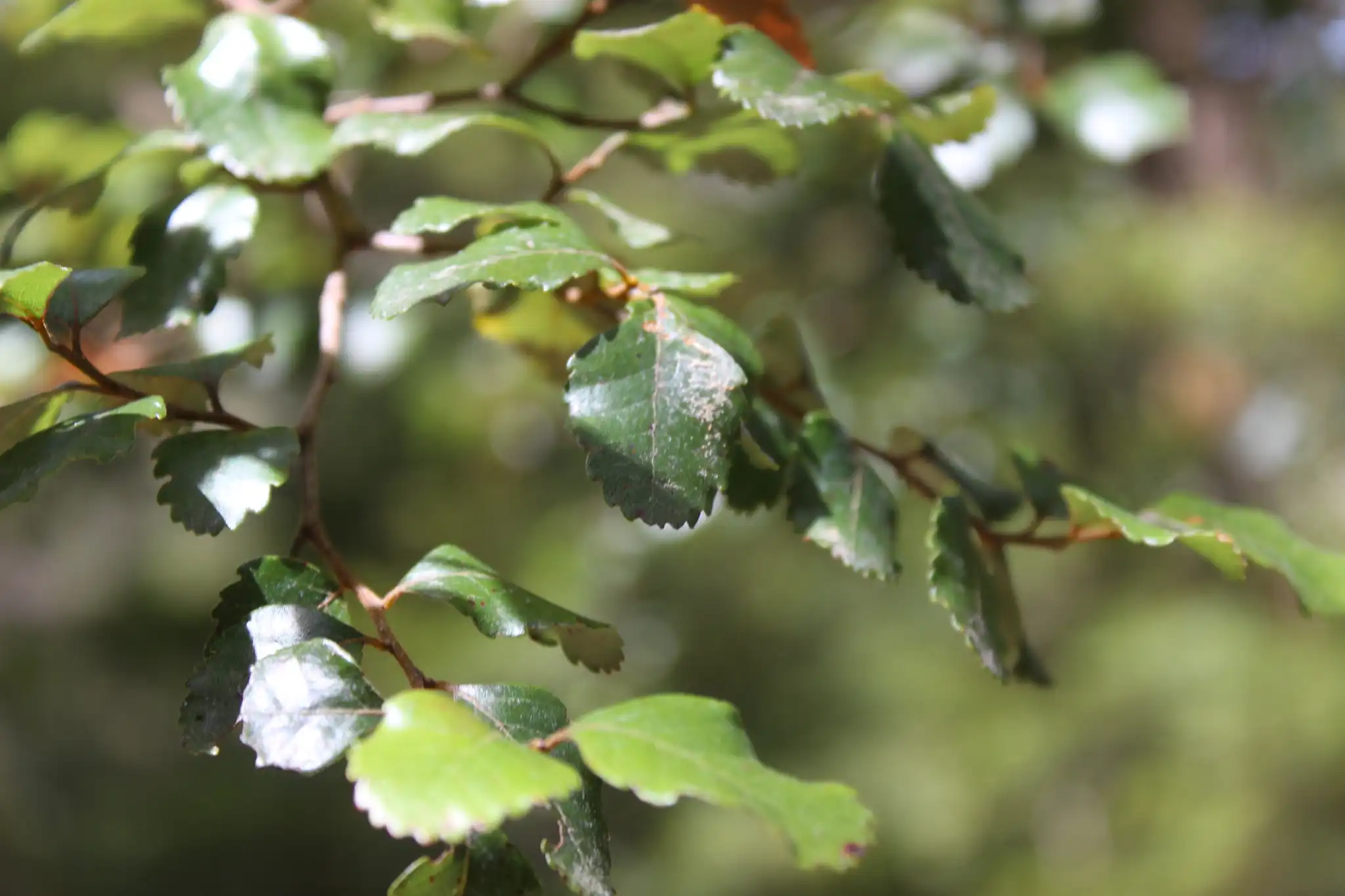
Nothofagus truncata, commonly known as hard beech, is a large forest tree native to New Zealand featuring a straight, dark-fissured trunk and slender, zig-zagging reddish branchlets. Its leathery, pale green leaves have distinctive coarse teeth along the margins and turn rich red before shedding in late winter or spring.
This species is distinguished by its semi-evergreen habit and fan-like foliage that flushes pinkish in spring before maturing to pale green. Unlike true Northern Hemisphere beeches, it produces tiny, wind-pollinated red male flowers and four-lobed fruit cupules holding winged nutlets.
Uses & Benefits:
Essentials
At a Glance
Plant Type
Tree
Height
1200"
Width
600"
Light
Full Sun, Partial Sun
Zones
7, 8, 9
Water
Moderate
Humidity
Moderate
Lifespan
Perennial
Native To
New Zealand
Toxicity
Non-toxic
Bloom period
Spring
In flower about 3 months of the year
Planting
How to Grow
- Select a site with full sun to partial shade and well-draining, mildly acidic to neutral soil.
- Dig a hole twice as wide as the root ball and equal in depth, ensuring the root flare sits flush with the soil surface.
- Backfill with native soil, firm gently to eliminate air pockets, and water deeply to settle the roots.
- Apply a 2- to 3-inch layer of organic mulch around the base, keeping it clear of the trunk bark.
Pro Tip
Avoid heavy structural pruning or planting in stagnant, waterlogged ground; cutting into old leafless wood produces poor, slow regrowth and waterlogged soil rapidly induces fatal root rot.
Keep It Thriving
Care Guide
Do
- Plant in well-drained soil to prevent Phytophthora root rot.
- Prune strictly during the dormant season to remove dead or crossing branches.
- Mulch annually with organic material to preserve soil moisture.
Don't
- Do not cut back into old, leafless wood as epicormic response is extremely weak.
- Do not allow young saplings to sit in standing water or heavy, compacted clay.
- Do not over-fertilize with high-nitrogen synthetic feeds.
Seasonal Care Calendar
| Task | Jan | Feb | Mar | Apr | May | Jun | Jul | Aug | Sep | Oct | Nov | Dec |
|---|---|---|---|---|---|---|---|---|---|---|---|---|
| Fertilize | ||||||||||||
| Mulch | ||||||||||||
| Pest Check | ||||||||||||
| Prune |
Watch Out For
Pests & Diseases
Common Pests
Common Diseases
In the Garden
Landscape Uses & Companions
Landscape Uses
Companion Plants
Multiply
Propagation Methods
Good to Know
Common Questions
Hard Beech questions
What zones can Hard Beech grow in?
Hard Beech is hardy in USDA Zones 7–9: in that range it survives winter in the ground. Colder than Zone 7, winters are too cold for it to survive outdoors. Warmer than Zone 9, winter isn't the problem: it prefers colder winters, and summer heat can shorten its life.
Is Hard Beech deer resistant?
Not reliably. Deer may browse Hard Beech, especially tender spring growth — plan on repellents or fencing where pressure is high.
When does Hard Beech bloom?
Hard Beech typically blooms in spring. Exact timing shifts a week or two with your zone — Sow's bloom calendar maps it to your garden.
Does Hard Beech need full sun?
Hard Beech does best in full sun to part shade. In hot climates, afternoon shade keeps blooms fresher longer.
Is Hard Beech drought tolerant?
Yes — once established (usually after the first full season), Hard Beech handles dry spells with minimal watering. Water deeply its first year to build the root system that makes that possible.
More Nothofagus to compare
Keep exploring
Explore the genus
Hardy in your zone?
Grow Hard Beech with confidence
See it in a design of your actual yard, get zone-matched care reminders, and track it season by season in your garden journal.