The Story
Plant Bio
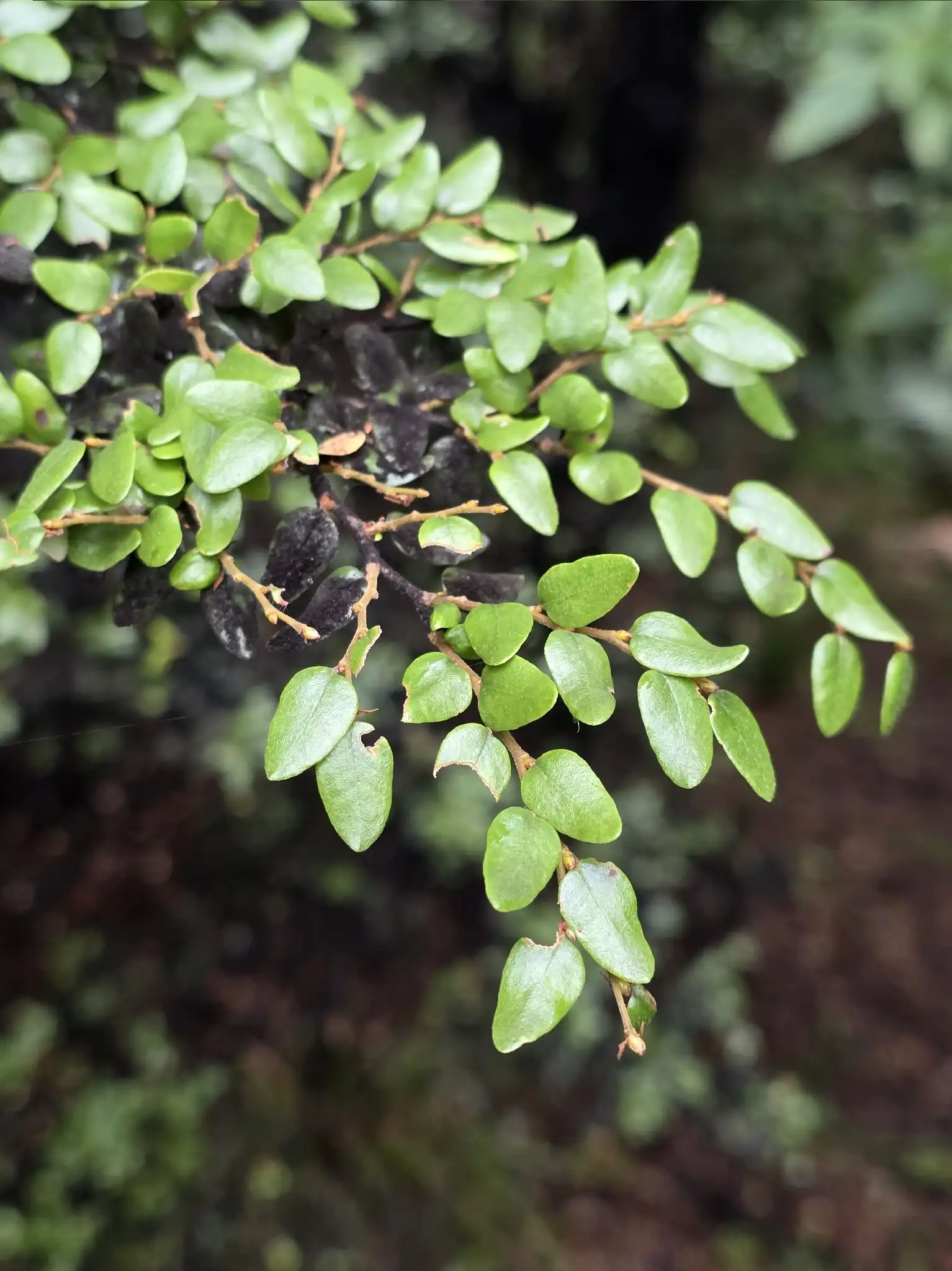
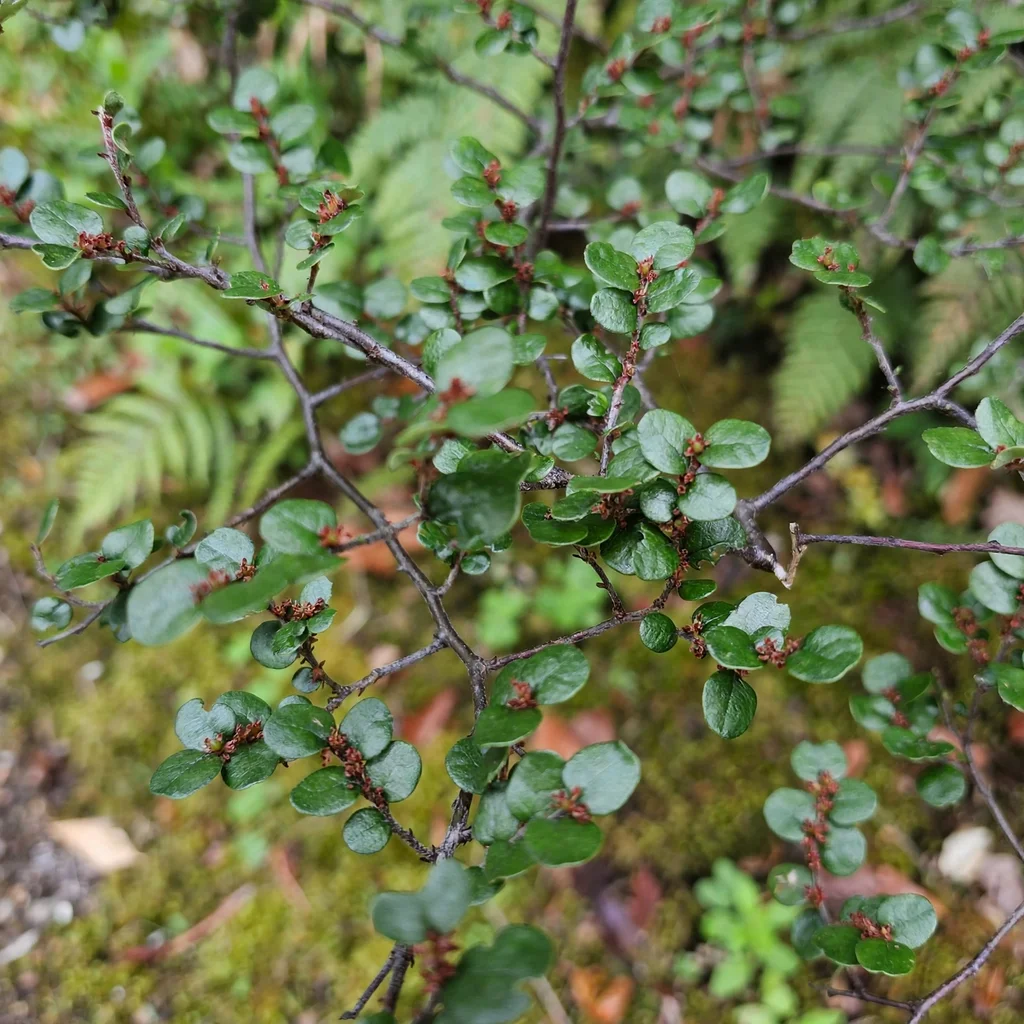
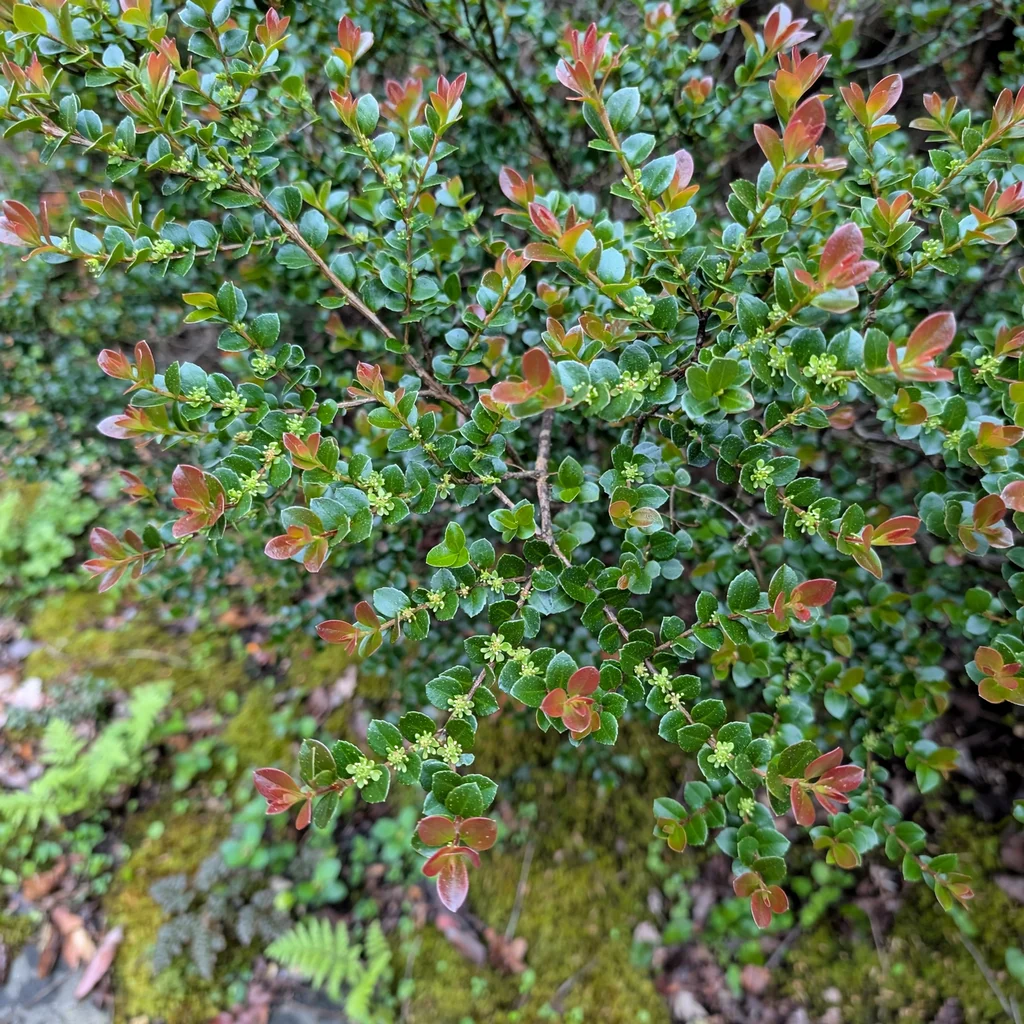
Nothofagus cliffortioides, commonly known as mountain beech, is an evergreen tree native to New Zealand with flexible dark reddish branches and a dense canopy. Its small, glossy dark green leaves feature recurved margins and fine gray pubescence underneath, accompanied by inconspicuous greenish-red spring blooms.
This species exhibits extreme adaptation to exposure, morphing from an upright tree into a stunted or prostrate form in cold alpine wind paths. The stiff, triangular leaves have distinctive pointed tips that curve upward above pale felted undersides.
Uses & Benefits:
Essentials
At a Glance
Plant Type
Tree
Height
787"
Width
315"
Light
Full Sun, Partial Sun
Zones
8, 9
Water
Low to Moderate
Humidity
Low to Moderate
Lifespan
Long-lived
Native To
New Zealand
Toxicity
Non-toxic
Bloom period
Spring
In flower about 3 months of the year
Planting
How to Grow
- Select a planting site in full sun to partial shade with sharply draining acidic or neutral soil.
- Dig a hole twice as wide as the root ball and equal in depth, taking care not to disturb the root system during handling.
- Position the tree so the root crown sits level with the surrounding soil grade.
- Backfill with native soil, firm gently, and water thoroughly to eliminate air pockets.
- Apply a 2-inch layer of organic mulch around the base, keeping it clear of the direct stem.
Pro Tip
Provide sharp drainage and a cool root zone; cutting back into old bare wood kills the stem as it fails to reshoot.
Keep It Thriving
Care Guide
Do
- Ensure excellent soil drainage to prevent fungal root diseases.
- Keep root zones cool and shaded with organic mulch.
- Prune lightly in late winter to remove dead or competing branches.
Don't
- Do not plant in heavy, unamended wet clay where water collects.
- Never cut back into old leafless wood during routine pruning.
- Avoid applying high-nitrogen fertilizers that cause weak growth.
Seasonal Care Calendar
| Task | Jan | Feb | Mar | Apr | May | Jun | Jul | Aug | Sep | Oct | Nov | Dec |
|---|---|---|---|---|---|---|---|---|---|---|---|---|
| Fertilize | ||||||||||||
| Mulch | ||||||||||||
| Pest Check | ||||||||||||
| Prune |
Watch Out For
Pests & Diseases
Common Pests
Common Diseases
In the Garden
Landscape Uses & Companions
Landscape Uses
Companion Plants
Multiply
Propagation Methods
Good to Know
Common Questions
Mountain Beech questions
What zones can Mountain Beech grow in?
Mountain Beech is hardy in USDA Zones 8–9: in that range it survives winter in the ground. Colder than Zone 8, winters are too cold for it to survive outdoors. Warmer than Zone 9, winter isn't the problem: it prefers colder winters, and summer heat can shorten its life.
Is Mountain Beech deer resistant?
Not reliably. Deer may browse Mountain Beech, especially tender spring growth — plan on repellents or fencing where pressure is high.
When does Mountain Beech bloom?
Mountain Beech typically blooms in spring. Exact timing shifts a week or two with your zone — Sow's bloom calendar maps it to your garden.
Does Mountain Beech need full sun?
Mountain Beech does best in full sun to part shade. In hot climates, afternoon shade keeps blooms fresher longer.
Is Mountain Beech drought tolerant?
Yes — once established (usually after the first full season), Mountain Beech handles dry spells with minimal watering. Water deeply its first year to build the root system that makes that possible.
More Nothofagus to compare
Keep exploring
Explore the genus
Hardy in your zone?
Grow Mountain Beech with confidence
See it in a design of your actual yard, get zone-matched care reminders, and track it season by season in your garden journal.