The Story
Plant Bio
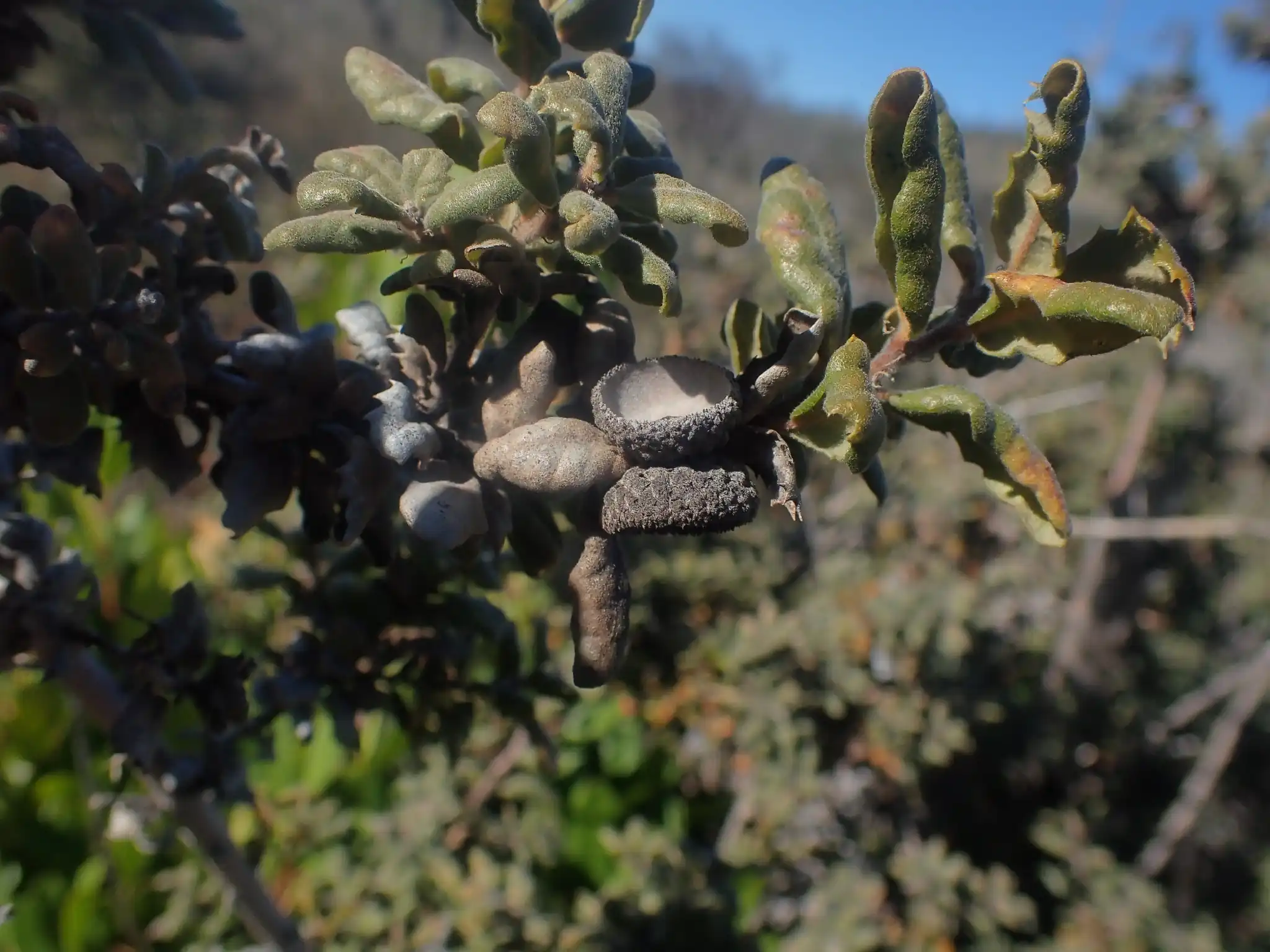
Quercus durata is a slow-growing, low-mounding evergreen shrub native to the chaparral and foothill woodlands of California. It features small, leathery leaves with wavy margins and woolly undersides, topped in spring by inconspicuous yellowish-green catkins and bumpy-cupped acorns.
Endemic to California, this species is uniquely adapted to nutrient-poor serpentine and ultramafic soils where few other woody plants survive. Its rigid, convex foliage holds up to extreme heat, severe drought, and exposure to coastal salt air without wilting or scorching.
Uses & Benefits:
Essentials
At a Glance
Plant Type
Shrub
Height
144"
Width
120"
Light
Full Sun, Partial Sun
Zones
8, 9, 10
Water
Low
Humidity
Low to Moderate
Lifespan
Perennial
Native To
California, USA
Toxicity
Toxic if ingested in large quantities
Bloom period
Spring
In flower about 3 months of the year
Planting
How to Grow
- Select a site in full sun or partial shade with lean, fast-draining soil.
- Dig a planting hole equal in depth to the root ball and twice as wide.
- Position the plant so the root crown sits slightly above the surrounding soil line.
- Backfill with native soil without adding compost, manure, or fertilizers.
- Water thoroughly at planting, then water sparingly during the first summer only to establish roots.
Pro Tip
Plant in lean, sharply drained soil and withhold summer irrigation once established, as warm, saturated soil promotes fatal Phytophthora root rot.
Keep It Thriving
Care Guide
Do
- Provide excellent drainage using coarse, mineral-rich, or rocky soils.
- Allow the soil to dry out completely between occasional deep waterings during initial establishment.
- Prune minimally, strictly to shape or remove dead wood in late winter.
Don't
- Do not apply heavy organic mulches or soil amendments around the root zone.
- Do not irrigate during warm summer months once the plant is established.
- Do not sheer into old, leafless wood, as regrowth from old branches is poor.
Seasonal Care Calendar
| Task | Jan | Feb | Mar | Apr | May | Jun | Jul | Aug | Sep | Oct | Nov | Dec |
|---|---|---|---|---|---|---|---|---|---|---|---|---|
| Pest Check | ||||||||||||
| Plant | ||||||||||||
| Propagate | ||||||||||||
| Prune |
Watch Out For
Pests & Diseases
Common Pests
Common Diseases
In the Garden
Landscape Uses & Companions
Landscape Uses
Multiply
Propagation Methods
Good to Know
Common Questions
Leather Oak questions
What zones can Leather Oak grow in?
Leather Oak is hardy in USDA Zones 8–10: in that range it survives winter in the ground. Colder than Zone 8, grow it in a container you can move to shelter for the winter.
Is Leather Oak deer resistant?
Yes — Leather Oak is rated deer-resistant. Deer typically pass it over, though extreme hunger can override any plant's defenses.
When does Leather Oak bloom?
Leather Oak typically blooms in spring. Exact timing shifts a week or two with your zone — Sow's bloom calendar maps it to your garden.
Does Leather Oak need full sun?
Leather Oak does best in full sun to part shade. In hot climates, afternoon shade keeps blooms fresher longer.
Is Leather Oak drought tolerant?
Yes — once established (usually after the first full season), Leather Oak handles dry spells with minimal watering. Water deeply its first year to build the root system that makes that possible.
More Quercus to compare
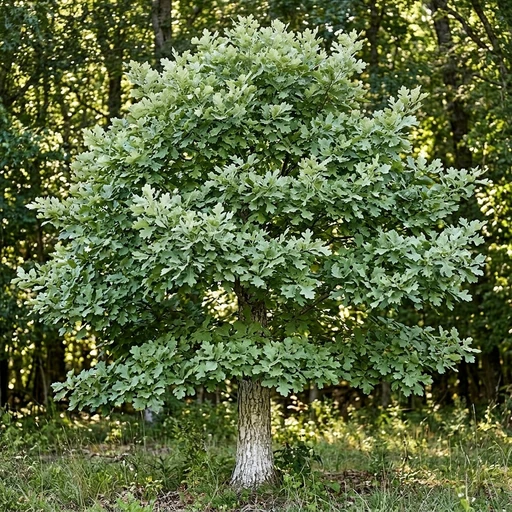
White Oak
Quercus alba
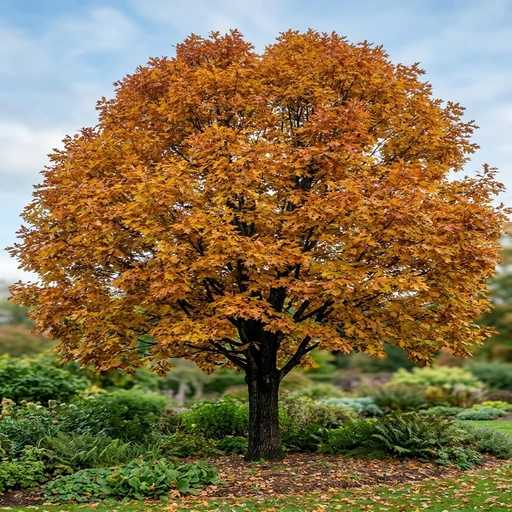
Black Oak
Quercus velutina
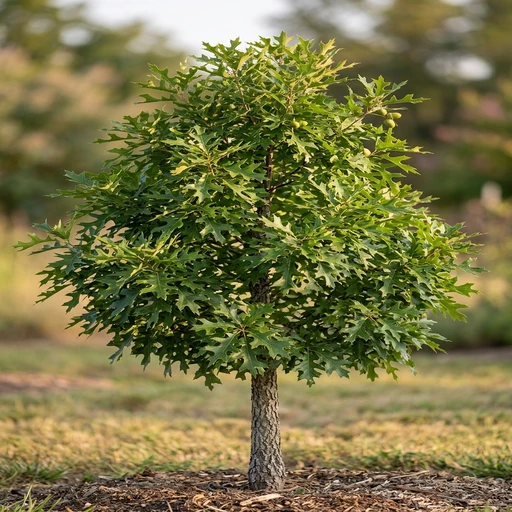
Nuttall Oak
Quercus texana
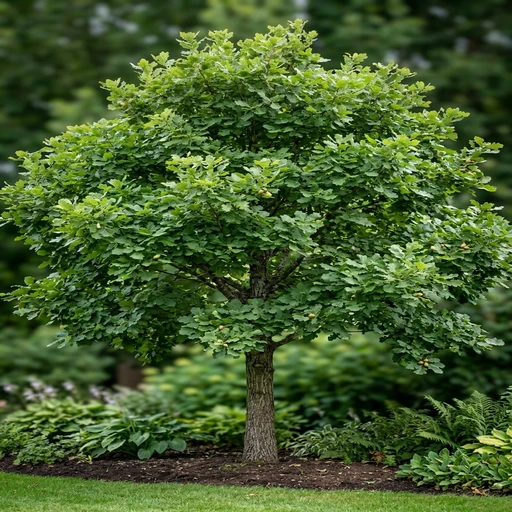
English Oak
Quercus robur
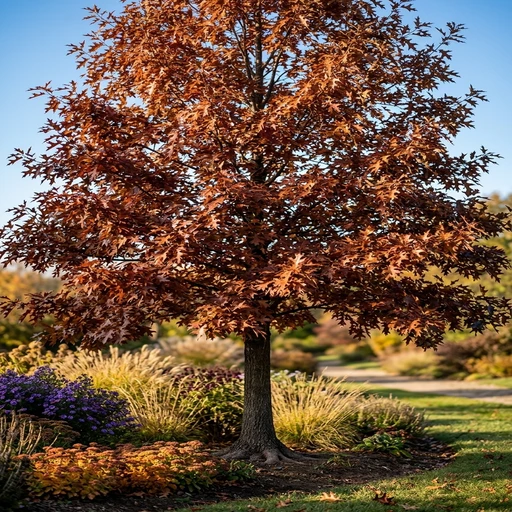
Pin Oak
Quercus palustris
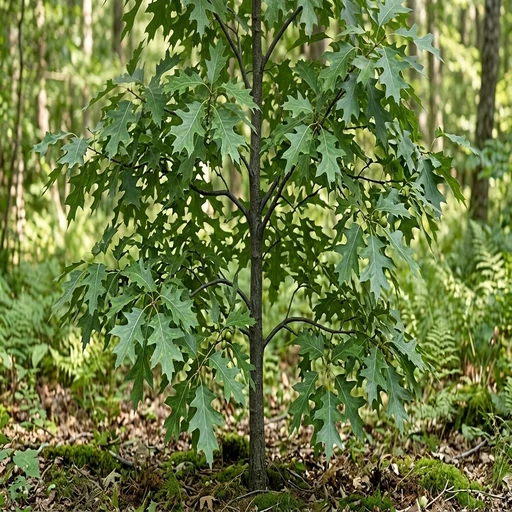
Scarlet Oak
Quercus coccinea
Keep exploring
Explore the genus
Hardy in your zone?
Grow Leather Oak with confidence
See it in a design of your actual yard, get zone-matched care reminders, and track it season by season in your garden journal.