The Story
Plant Bio
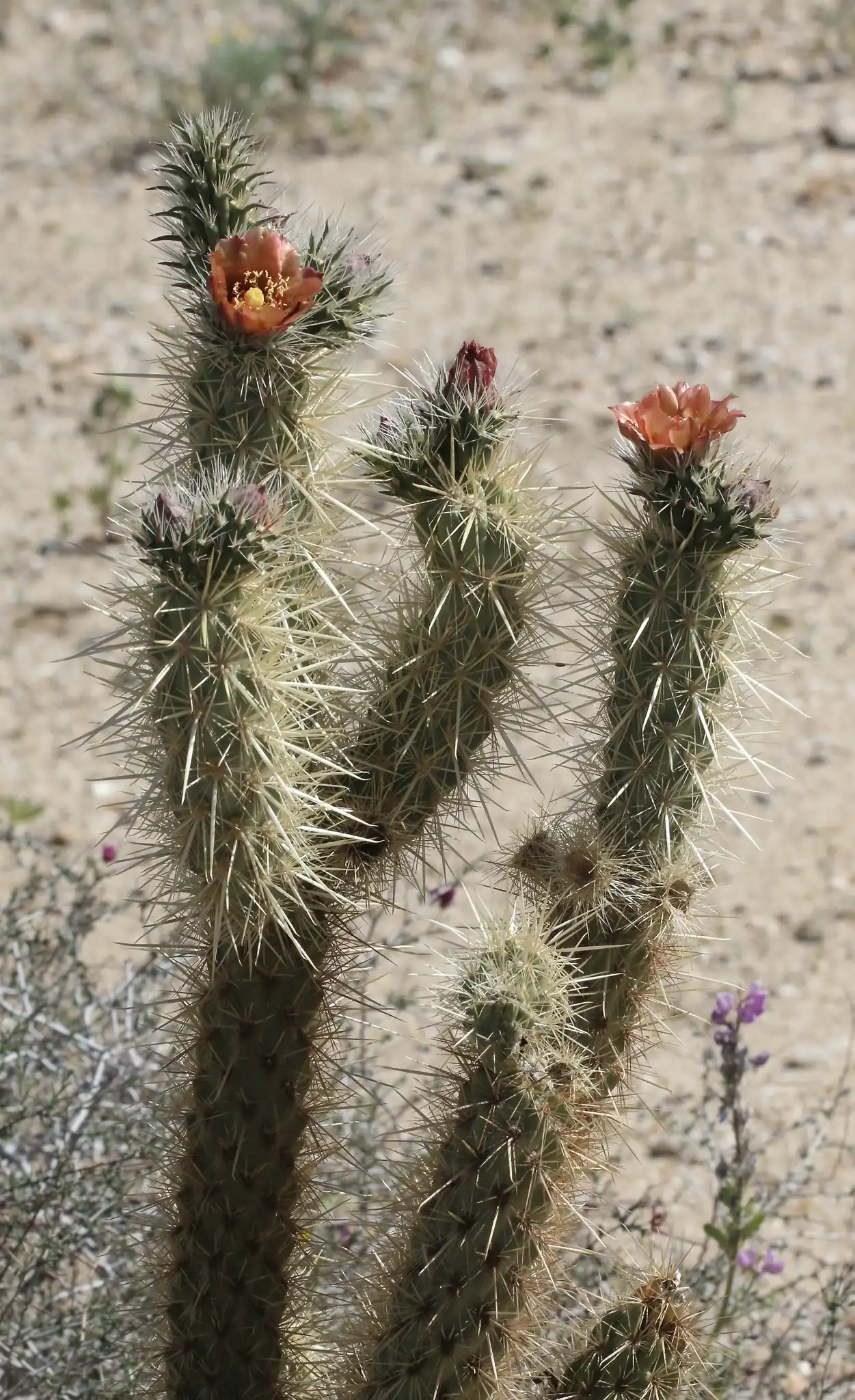
Cylindropuntia wolfii is an erect, densely branched stem-succulent shrub native to the Sonoran Desert. Its cylindrical stem joints feature prominent tubercles covered in golden to pale brown barbed spines that turn dark brown with papery sheaths as they age.
Solitary flowers open at the segment tips during spring, displaying colors from greenish-yellow to dark burgundy red with distinct red styles. The woolly stem joints bear vestigial leaves that shed early as the green cladodes mature.
Uses & Benefits:
Essentials
At a Glance
Plant Type
Cactus Succulent
Height
79"
Width
59"
Light
Full Sun
Zones
8, 9, 10
Water
Low
Humidity
Low
Lifespan
Perennial
Native To
North America
Toxicity
Non-toxic (spiny/irritant)
Bloom period
Spring
In flower about 3 months of the year
Planting
How to Grow
- Plant in full sun using coarse, highly porous mineral sand or gravel with fast drainage.
- Water thoroughly at planting, then allow the substrate to dry completely between infrequent summer waterings.
- Withhold water entirely through the winter months to prevent root decay during cold spells.
- Handle with thick leather cactus gloves or long metal tongs to avoid barbed spines.
Pro Tip
Avoid heavy pruning into old, leafless woody trunk sections, as re-sprouting from mature wood is exceptionally poor.
Keep It Thriving
Care Guide
Do
- Provide unshaded, full-sun exposure and mineral-dominant drainage.
- Keep soil completely dry during winter cold snaps.
- Use heavy leather gloves or tongs whenever handling stem joints.
Don't
- Do not allow standing water or poorly draining organic soil near the roots.
- Do not cut deeply into bare, old woody trunks.
- Do not plant near high-traffic walkways or paths where spines cause injury.
Seasonal Care Calendar
| Task | Jan | Feb | Mar | Apr | May | Jun | Jul | Aug | Sep | Oct | Nov | Dec |
|---|---|---|---|---|---|---|---|---|---|---|---|---|
| Fertilize | ||||||||||||
| Pest Check | ||||||||||||
| Spring Cleanup | ||||||||||||
| Winter Prep |
Watch Out For
Pests & Diseases
Common Pests
Common Diseases
In the Garden
Landscape Uses & Companions
Landscape Uses
Multiply
Propagation Methods
Good to Know
Common Questions
Wolf's Cholla questions
What zones can Wolf's Cholla grow in?
Wolf's Cholla is hardy in USDA Zones 8–10: in that range it survives winter in the ground. Colder than Zone 8, grow it in a container you can move to shelter for the winter, or as an annual.
Is Wolf's Cholla deer resistant?
Yes — Wolf's Cholla is rated deer-resistant. Deer typically pass it over, though extreme hunger can override any plant's defenses.
When does Wolf's Cholla bloom?
Wolf's Cholla typically blooms in spring. Exact timing shifts a week or two with your zone — Sow's bloom calendar maps it to your garden.
Does Wolf's Cholla need full sun?
Wolf's Cholla does best in full sun (6+ hours).
Is Wolf's Cholla drought tolerant?
Yes — once established (usually after the first full season), Wolf's Cholla handles dry spells with minimal watering. Water deeply its first year to build the root system that makes that possible.
More Cylindropuntia to compare
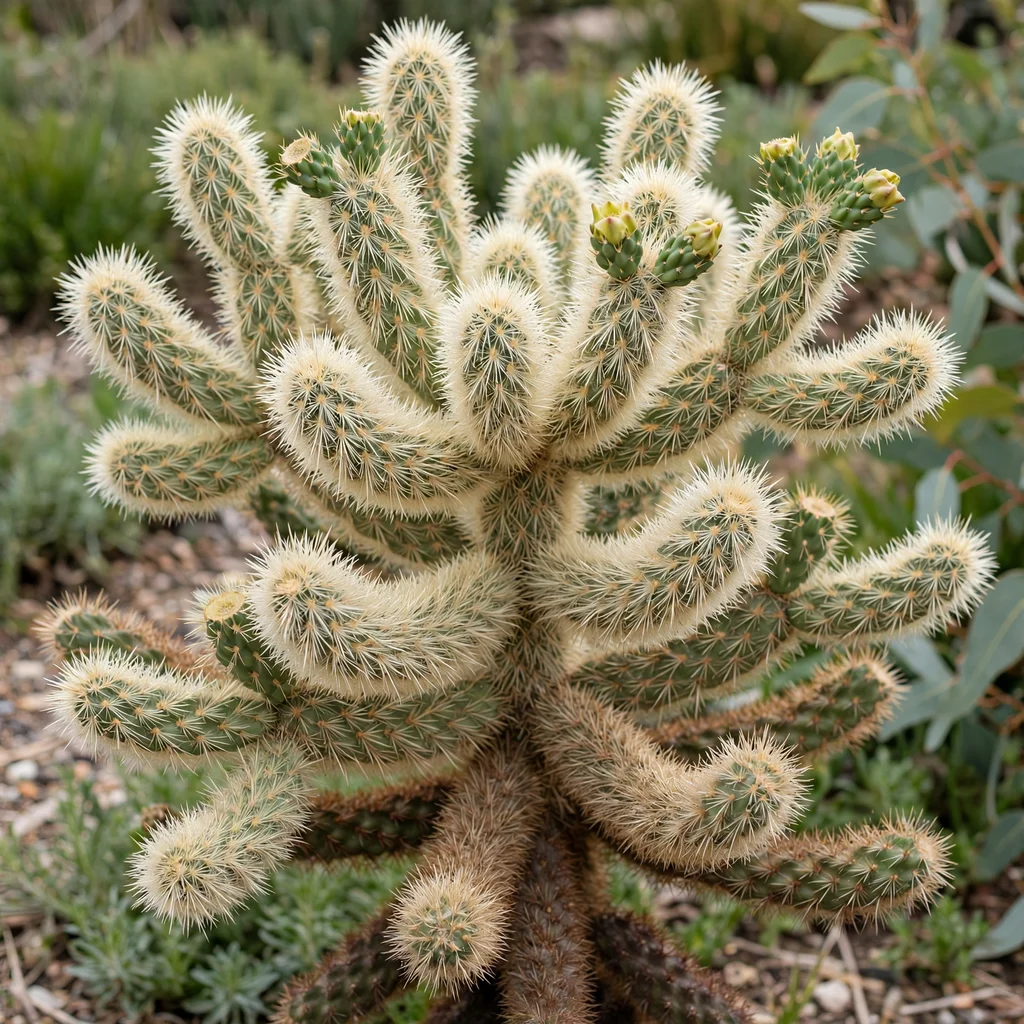
Teddybear Cholla
Cylindropuntia bigelovii
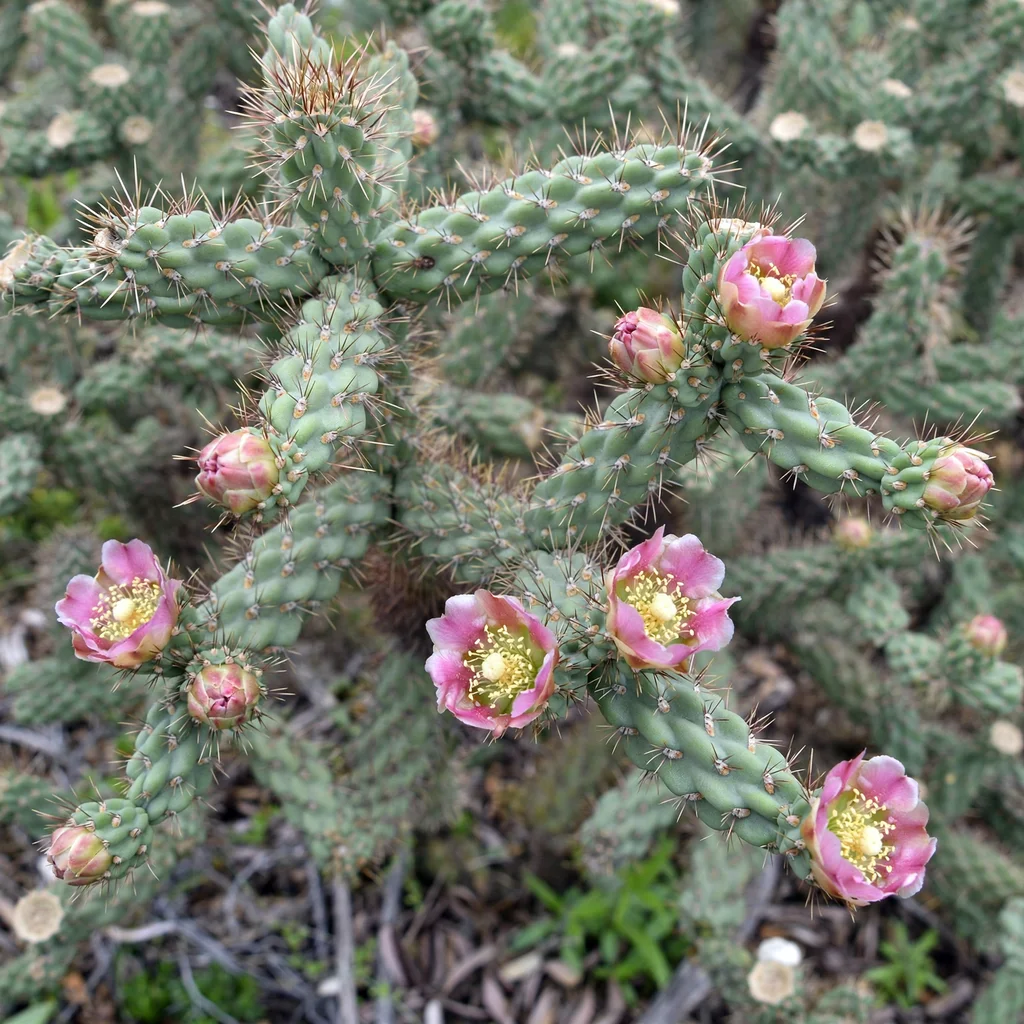
Coast Cholla
Cylindropuntia prolifera
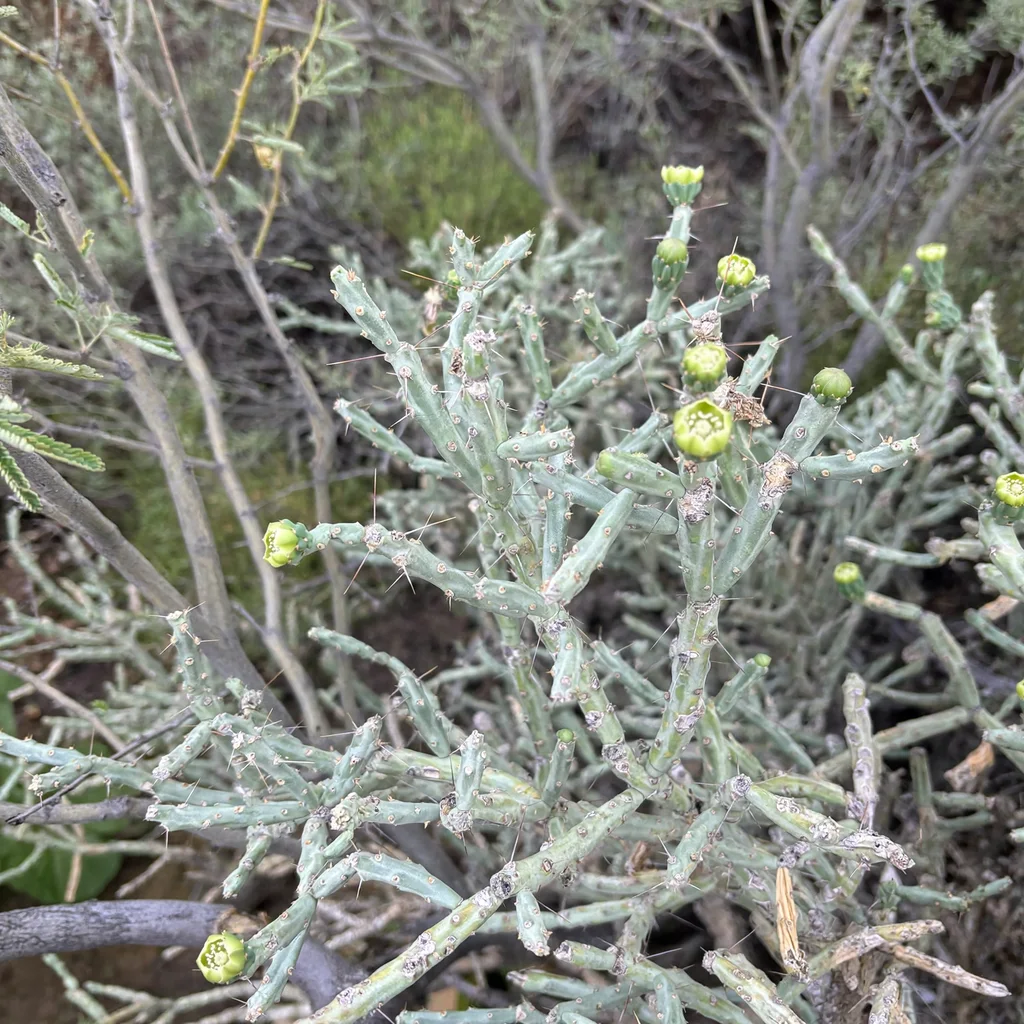
Arizona Pencil Cholla
Cylindropuntia arbuscula
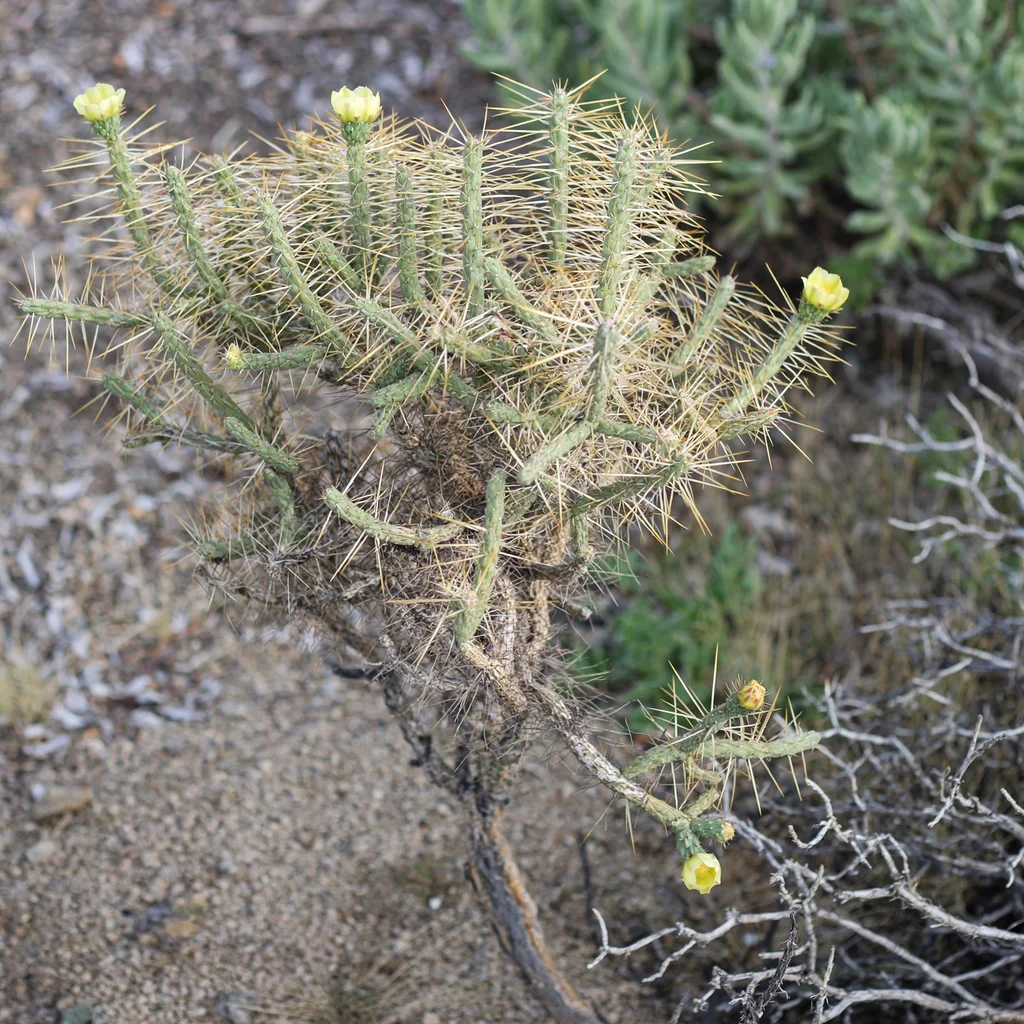
Diamond Cholla
Cylindropuntia ramosissima
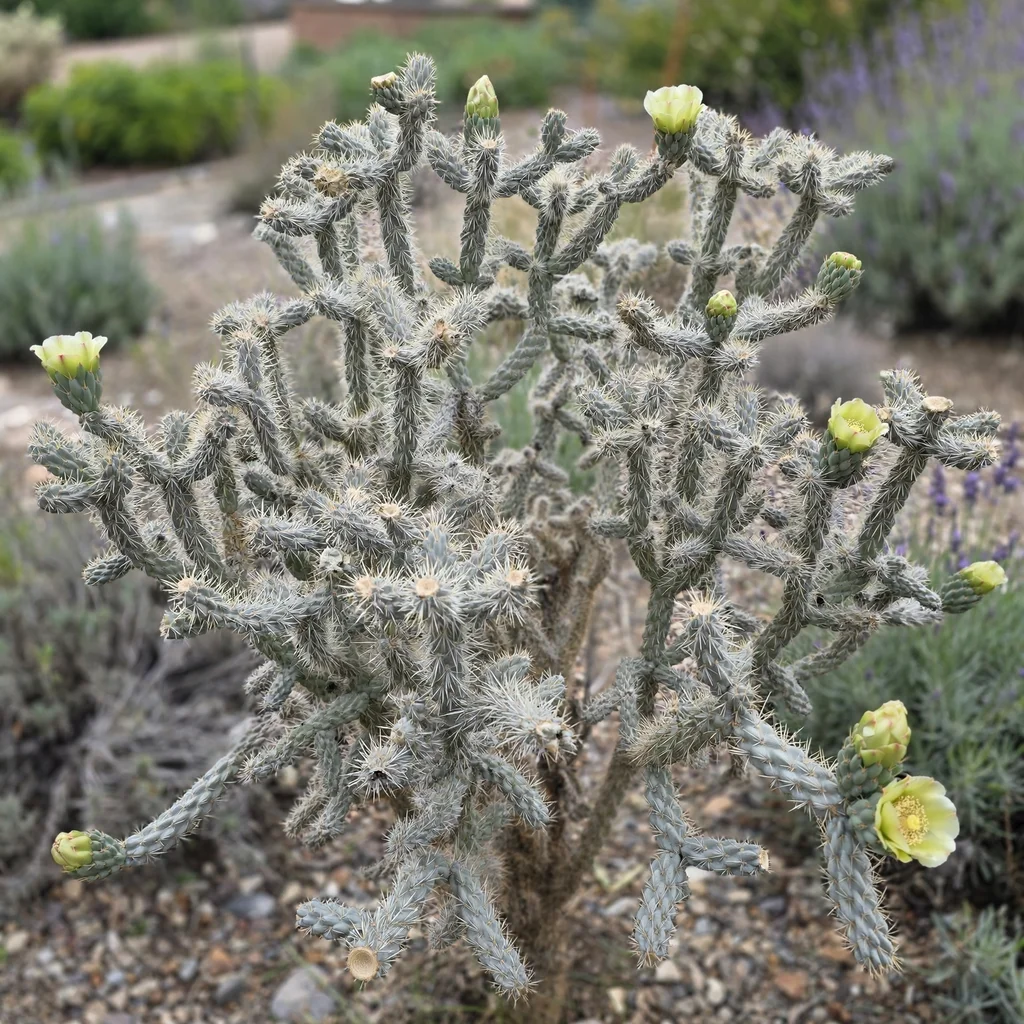
Silver cholla
Cylindropuntia echinocarpa
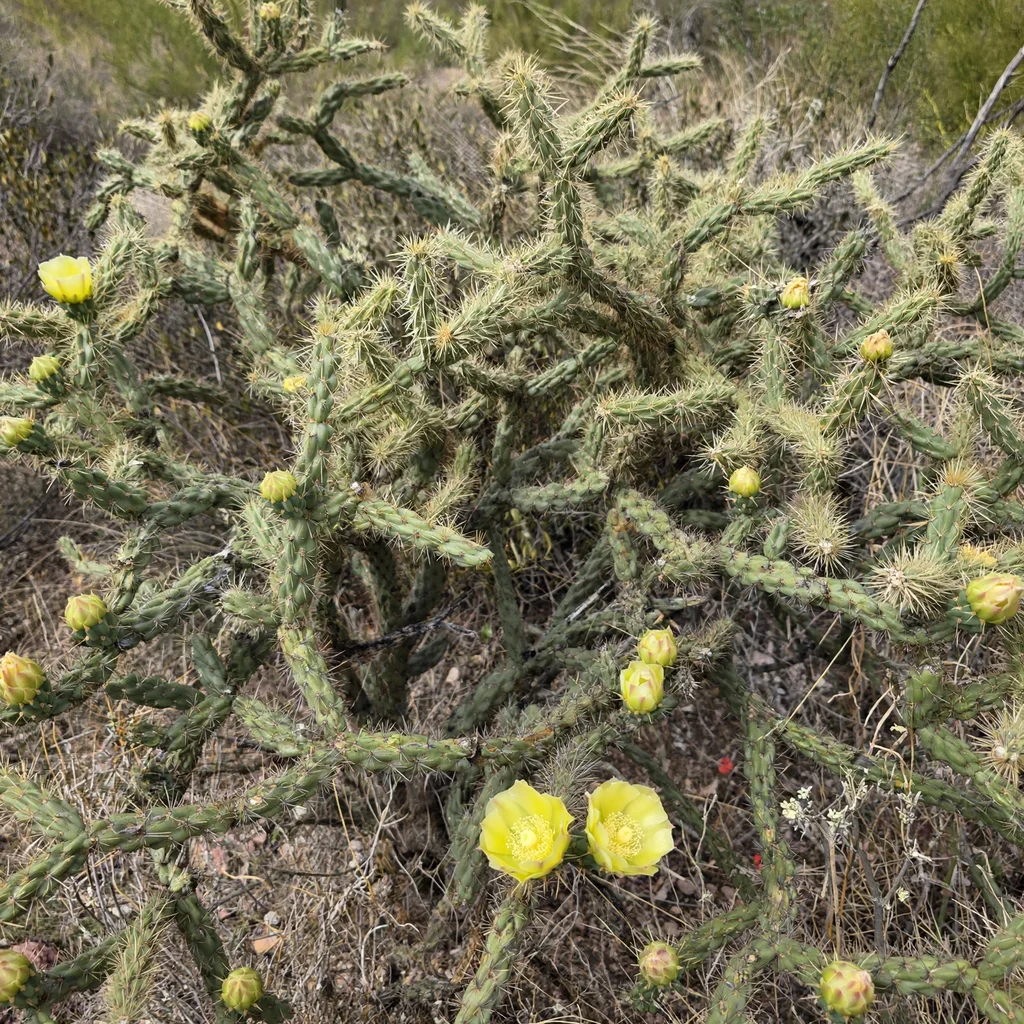
Buckhorn Cholla
Cylindropuntia acanthocarpa
Keep exploring
Explore the genus
Hardy in your zone?
Grow Wolf's Cholla with confidence
See it in a design of your actual yard, get zone-matched care reminders, and track it season by season in your garden journal.