The Story
Plant Bio
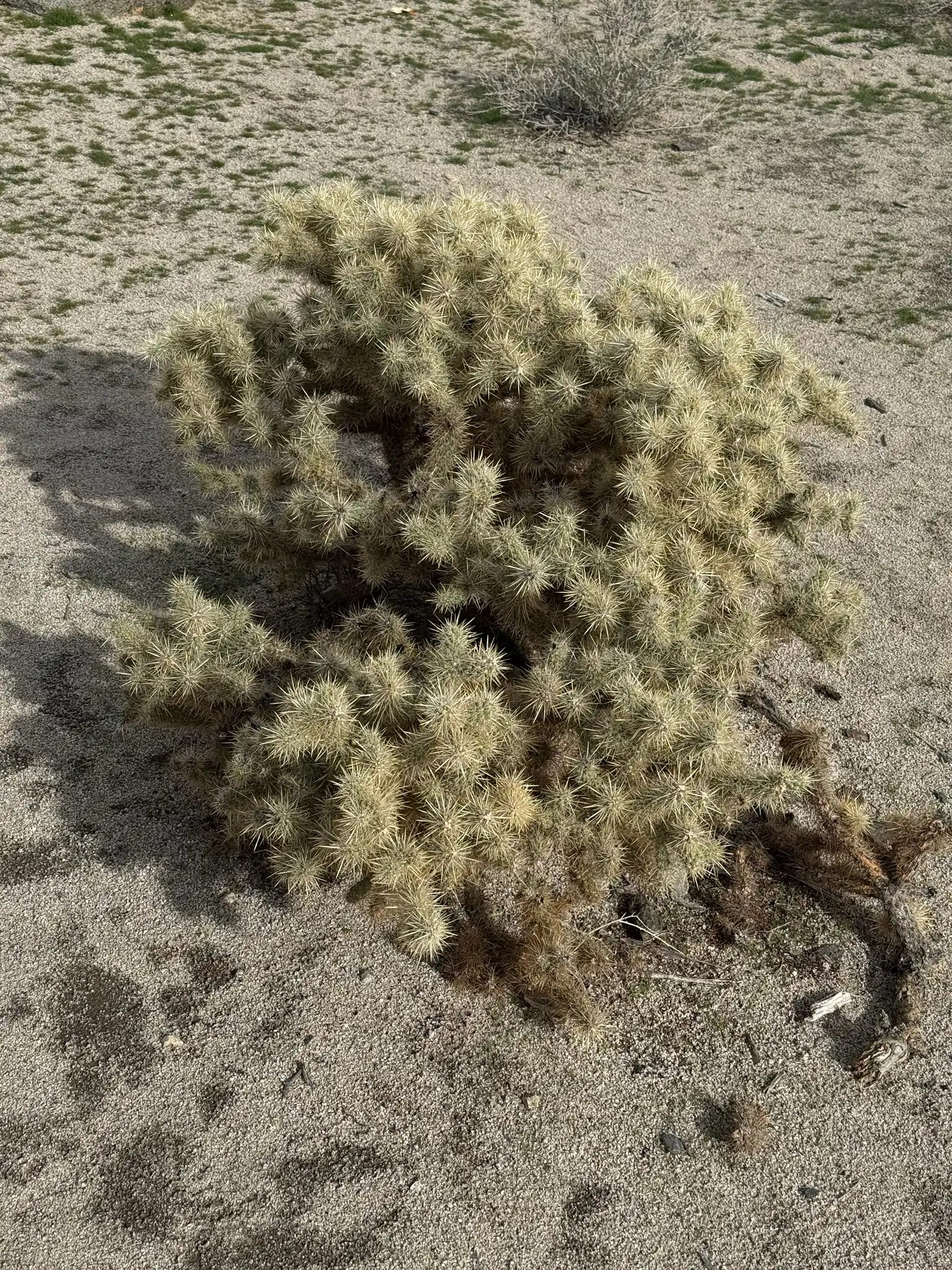
Cylindropuntia echinocarpa, commonly known as silver cholla, is an upright desert cactus featuring a short central trunk with spreading, branching cylindrical stem segments native to North American deserts. The stems are densely covered in prominent green tubercles bearing sharp, straight spines encased in papery sheaths that reflect a silvery-gray or golden sheen.
In spring, terminal greenish-yellow flowers open across the branch tips, producing nectar for native bees and hummingbirds. The fierce, barbed spine canopy creates protected roosting and nesting cover for desert songbirds like the cactus wren.
Uses & Benefits:
Essentials
At a Glance
Plant Type
Cactus Succulent
Height
79"
Width
79"
Light
Full Sun
Zones
8, 9, 10
Water
Low
Humidity
Low
Lifespan
Perennial
Native To
North America
Toxicity
Barbed spines and glochids cause severe skin puncture and irritation
Bloom period
Spring – Early summer
In flower about 4 months of the year
Planting
How to Grow
- Select an outdoor site in full sun with sharp, fast-draining mineral, sandy, or gravelly soil.
- Plant at the exact depth the specimen grew in its original container, anchoring firmly without burying upper stem joints.
- Water lightly once upon planting to settle soil, then withhold water completely until new terminal growth appears.
- Avoid overhead irrigation and let natural precipitation handle water needs once established.
Pro Tip
Plant in coarse gravel or sand and maintain strict winter dry conditions; damp soil combined with cold temperatures rapidly triggers root rot.
Keep It Thriving
Care Guide
Do
- Provide unrestricted, direct sun year-round.
- Ensure total soil drainage away from the main root crown.
- Wear heavy leather gloves and handle with metal tongs during planting.
Don't
- Do not plant in heavy clay or rich, moisture-retentive potting compost.
- Do not water during winter dormant periods.
- Do not grow indoors or in high-humidity humid enclosures where air circulation is low.
Seasonal Care Calendar
| Task | Jan | Feb | Mar | Apr | May | Jun | Jul | Aug | Sep | Oct | Nov | Dec |
|---|---|---|---|---|---|---|---|---|---|---|---|---|
| Fertilize | ||||||||||||
| Pest Check | ||||||||||||
| Prune | ||||||||||||
| Winter Prep |
Watch Out For
Pests & Diseases
Common Pests
Common Diseases
In the Garden
Landscape Uses & Companions
Landscape Uses
Multiply
Propagation Methods
Good to Know
Common Questions
Silver cholla questions
What zones can Silver cholla grow in?
Silver cholla is hardy in USDA Zones 8–10: in that range it survives winter in the ground. Colder than Zone 8, grow it in a container you can move to shelter for the winter, or as an annual.
Is Silver cholla deer resistant?
Yes — Silver cholla is rated deer-resistant. Deer typically pass it over, though extreme hunger can override any plant's defenses.
When does Silver cholla bloom?
Silver cholla typically blooms from early spring to early summer. Exact timing shifts a week or two with your zone — Sow's bloom calendar maps it to your garden.
Does Silver cholla need full sun?
Silver cholla does best in full sun (6+ hours).
Is Silver cholla drought tolerant?
Yes — once established (usually after the first full season), Silver cholla handles dry spells with minimal watering. Water deeply its first year to build the root system that makes that possible.
More Cylindropuntia to compare
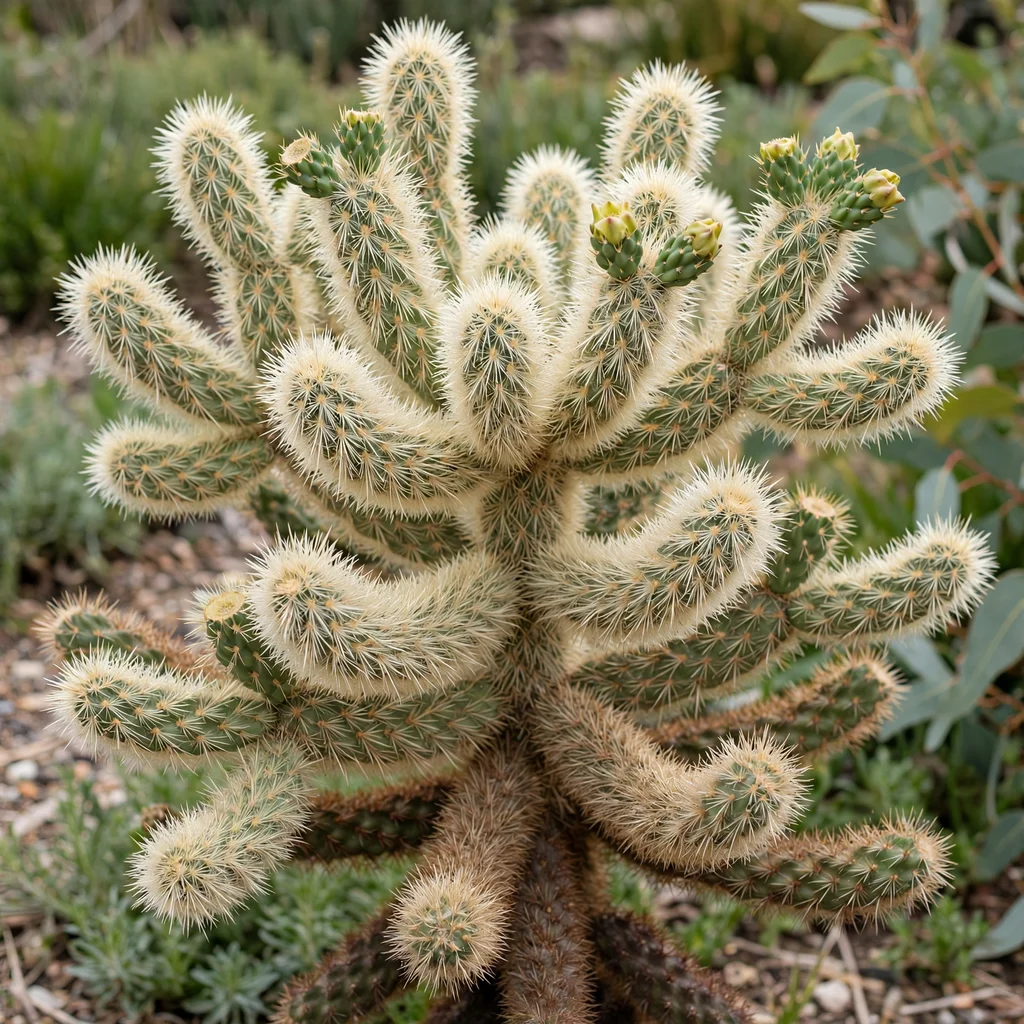
Teddybear Cholla
Cylindropuntia bigelovii
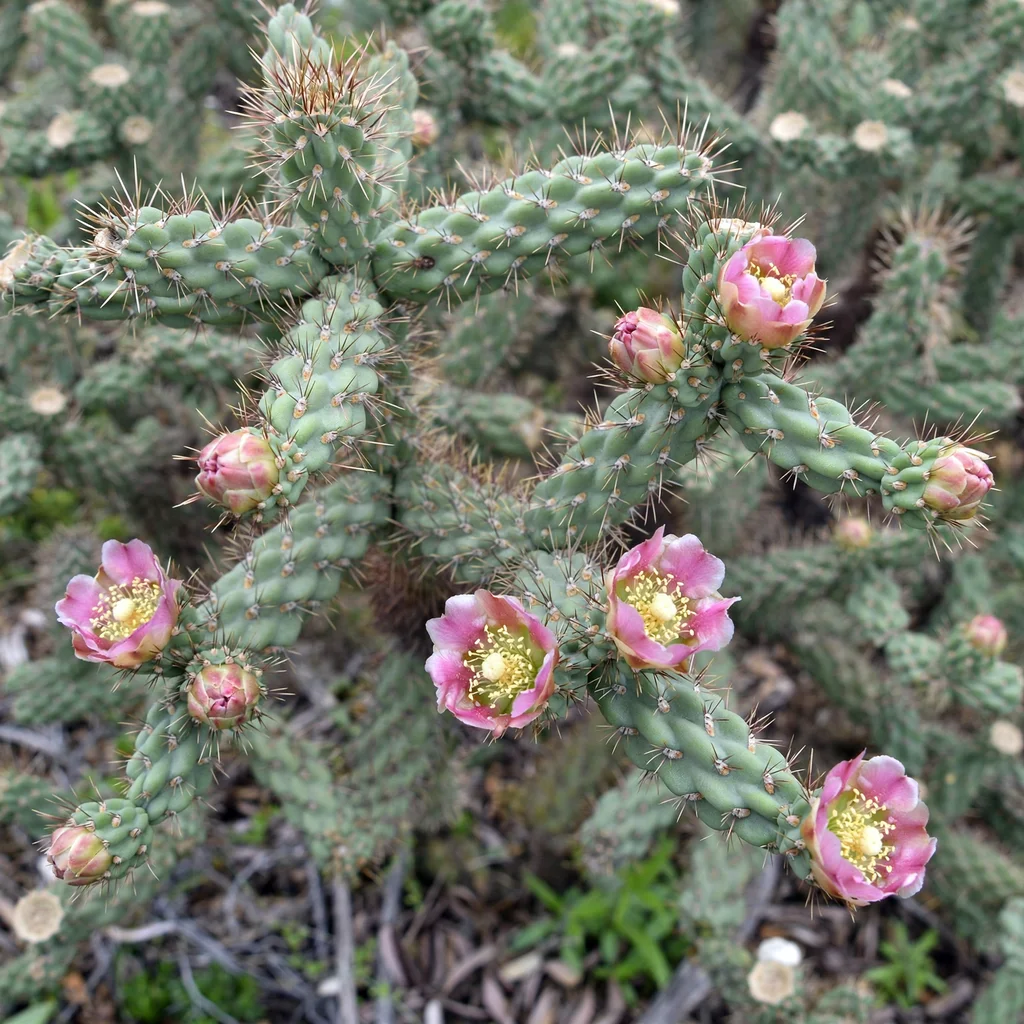
Coast Cholla
Cylindropuntia prolifera
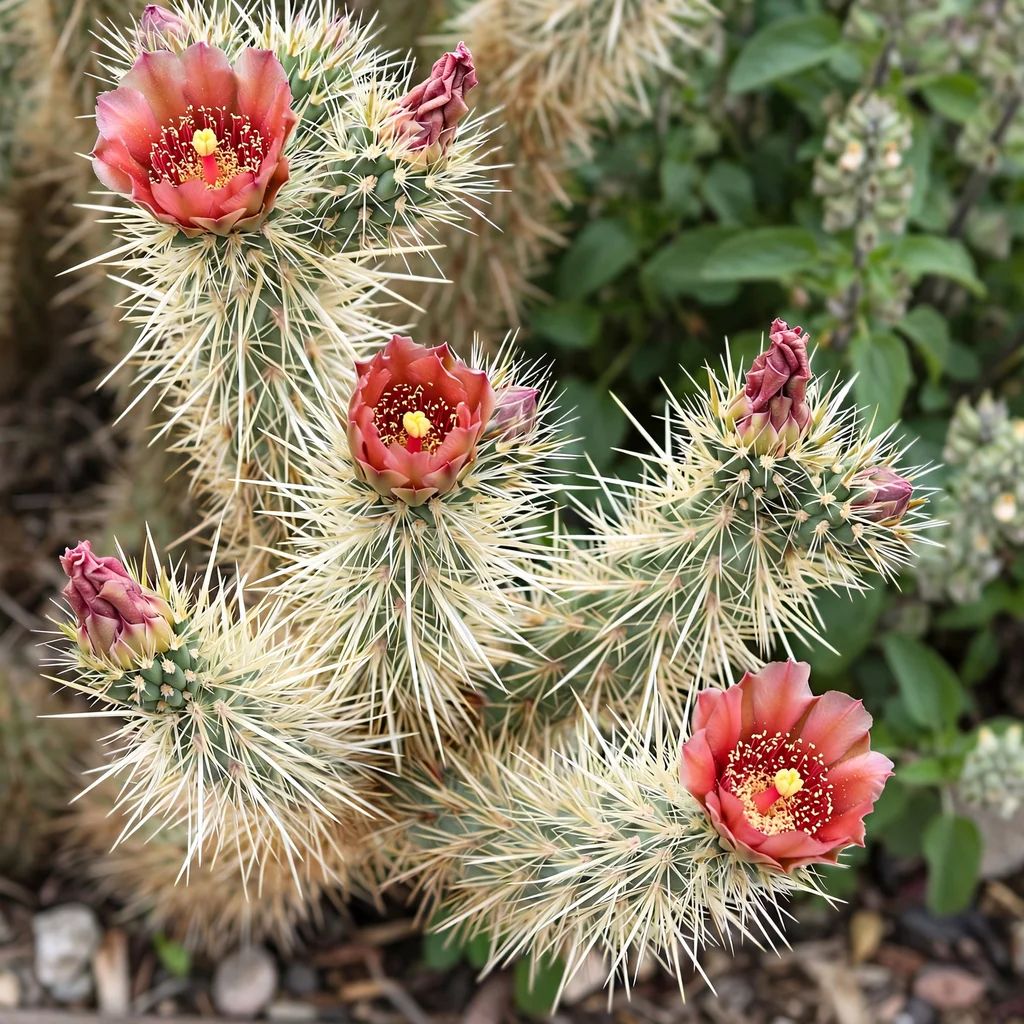
Wolf's Cholla
Cylindropuntia wolfii
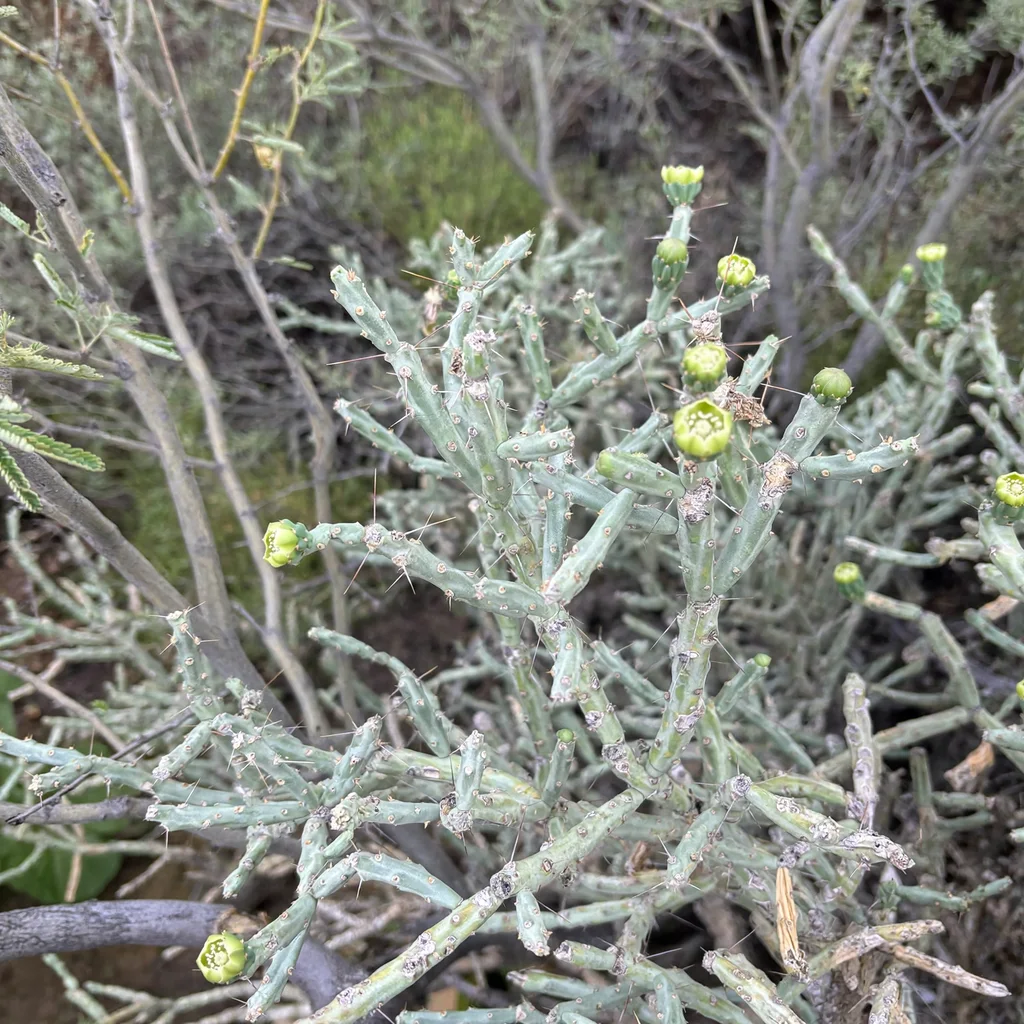
Arizona Pencil Cholla
Cylindropuntia arbuscula
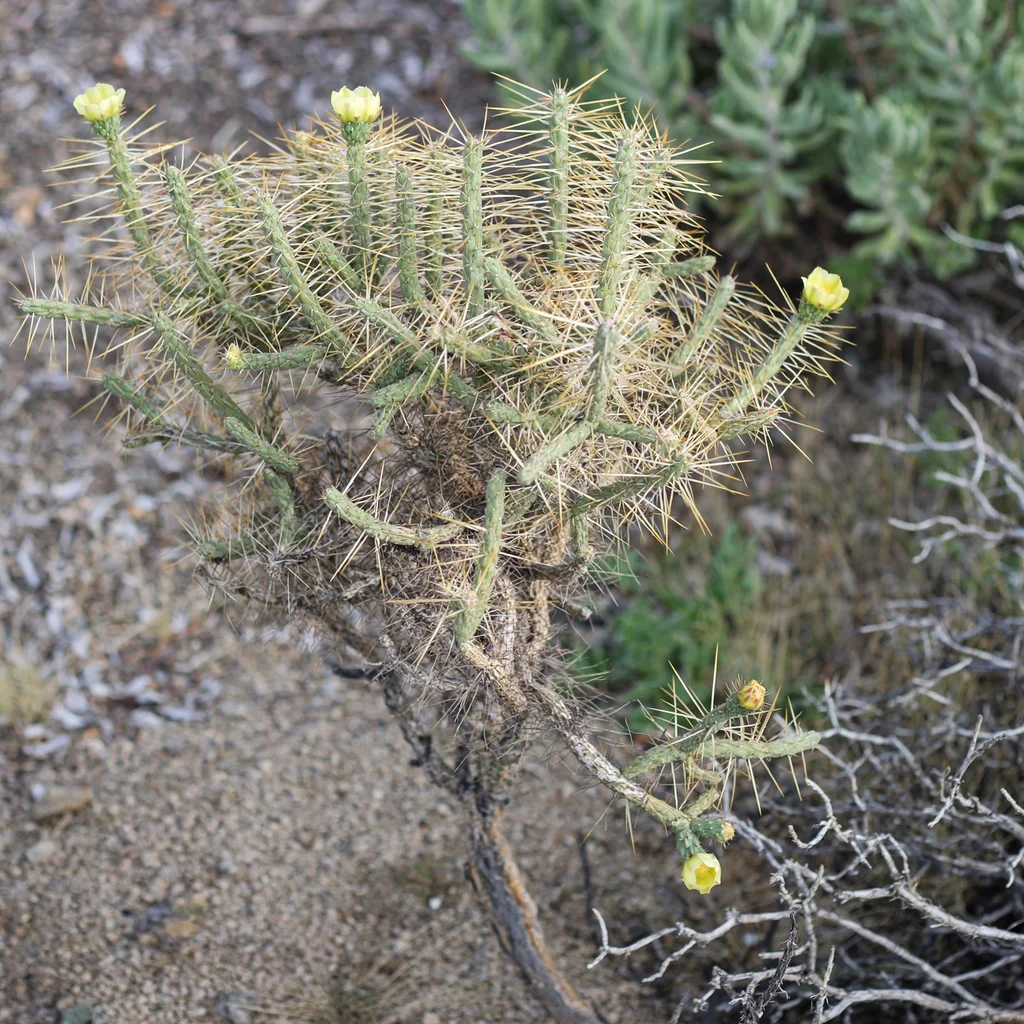
Diamond Cholla
Cylindropuntia ramosissima
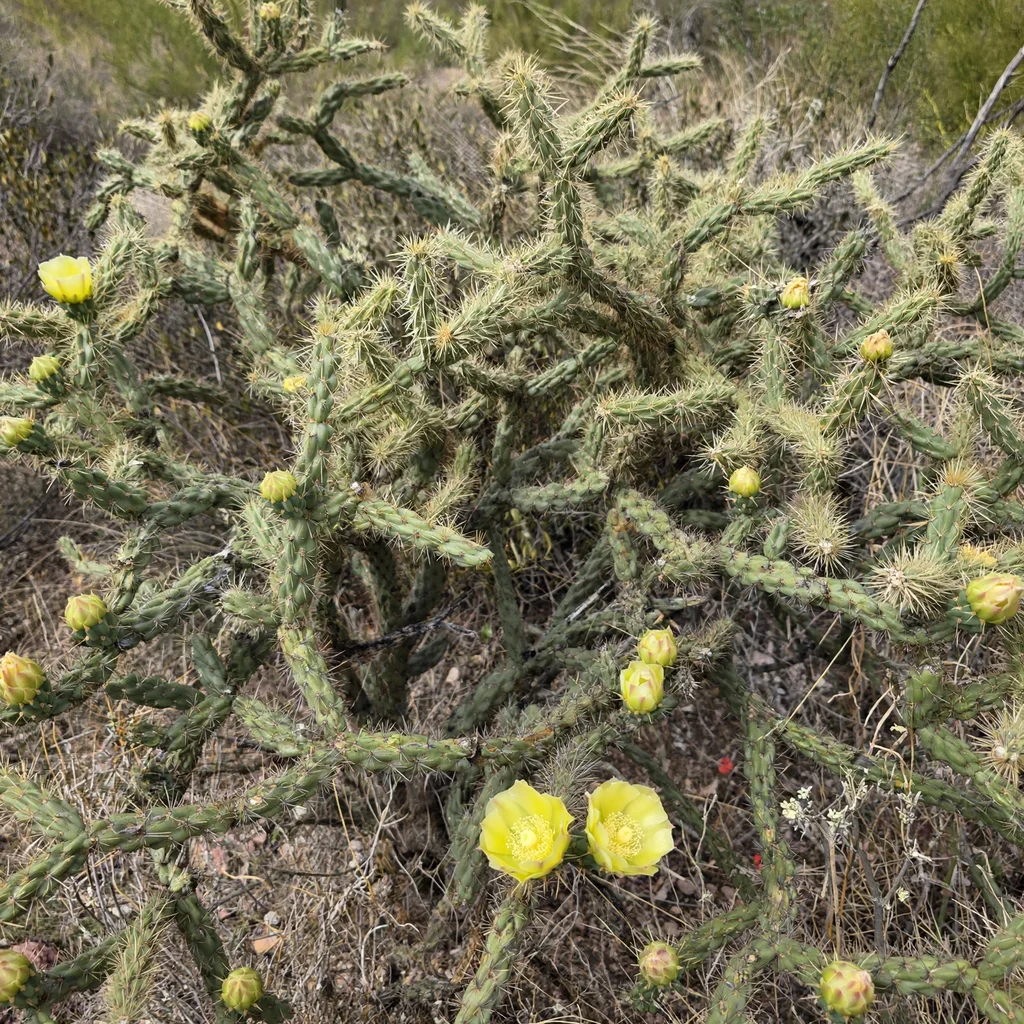
Buckhorn Cholla
Cylindropuntia acanthocarpa
Keep exploring
Explore the genus
Hardy in your zone?
Grow Silver cholla with confidence
See it in a design of your actual yard, get zone-matched care reminders, and track it season by season in your garden journal.