The Story
Plant Bio
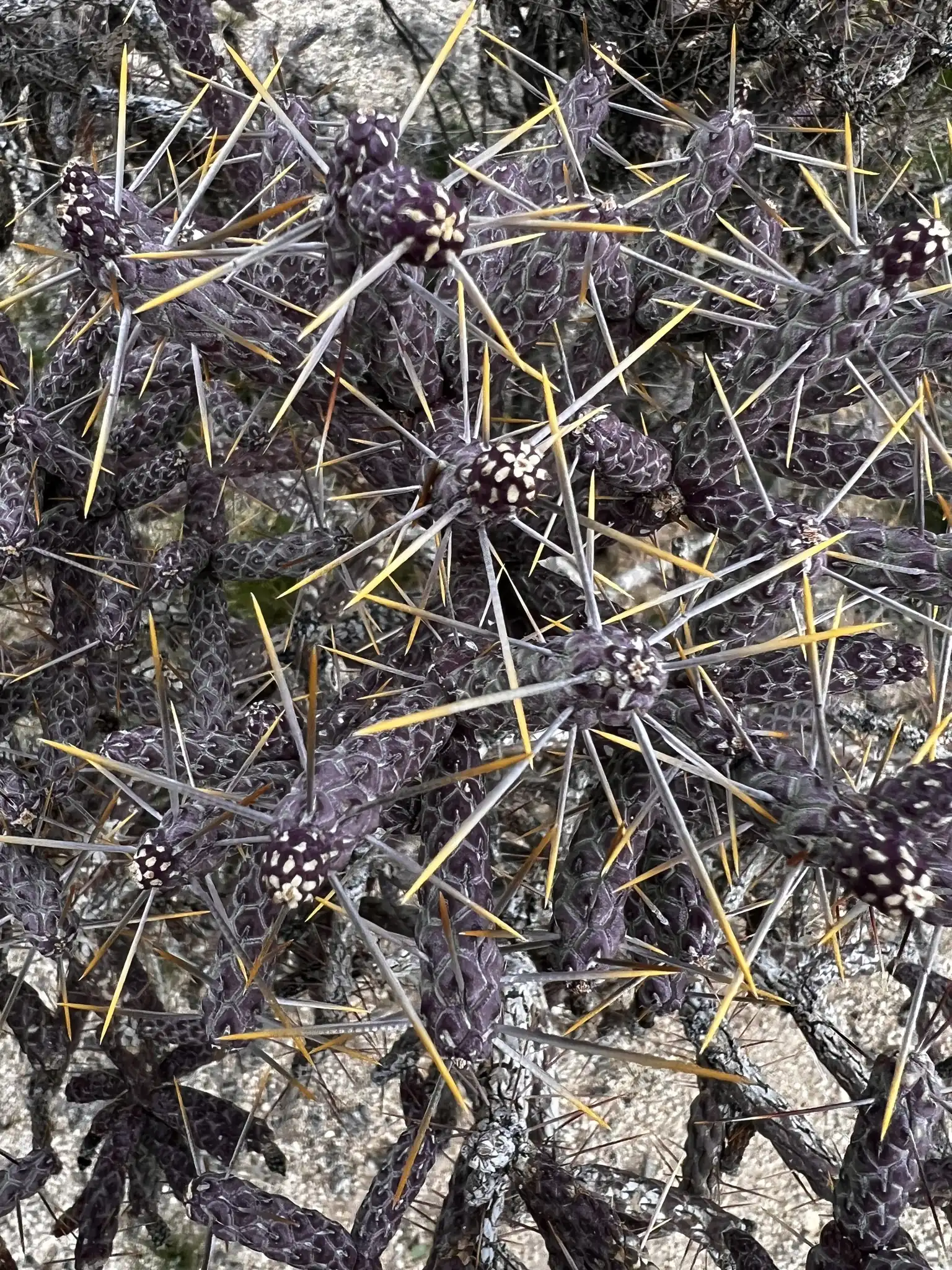
Cylindropuntia ramosissima, known as the diamond cholla, is a heavily branched desert cactus forming an open shrub up to six feet tall with slender, pencil-thick stem segments. The blue-green stems are patterned with flattened, diamond-shaped tubercles and bear occasional long, papery-sheathed spines along the upper tips.
Solitary, greenish-yellow to bronze flowers bloom near the segment ends in late spring and summer, followed by dry, spiny seed capsules. As the stem segments age, they dry to a distinctive silvery-gray color, while detached joints root easily wherever they fall.
Uses & Benefits:
Essentials
At a Glance
Plant Type
Cactus Succulent
Height
79"
Width
79"
Light
Full Sun
Zones
8, 9, 10
Water
Low
Humidity
Low
Lifespan
Perennial
Native To
North America
Toxicity
Non-toxic systemically, sharp spines cause physical injury
Bloom period
Spring – Summer
In flower about 6 months of the year
Planting
How to Grow
- Plant in mineral-rich, extremely fast-draining soil composed primarily of coarse sand, pumice, or gravel.
- Select a site that receives full sun all day and remains free of standing winter water.
- Water deeply during warm spring and summer growth periods only when the root zone has dried out completely.
- Withhold all irrigation during fall and winter to allow stems to harden against cold temperatures.
Pro Tip
Position in full sun with sharp, gritty drainage, and withhold all water through winter freezing spells to prevent fatal root rot.
Keep It Thriving
Care Guide
Do
- Wear thick leather gloves and use heavy tongs when handling or positioning stem segments.
- Provide a fully exposed, sun-drenched planting location with excellent air circulation.
- Allow soil to dry out thoroughly between waterings.
Don't
- Do not apply water during winter or extended cool, wet weather.
- Do not plant in heavy clay or moisture-retentive organic soil mixes.
- Do not prune into old wood, as re-sprouting from bare mature stems is weak.
Seasonal Care Calendar
| Task | Jan | Feb | Mar | Apr | May | Jun | Jul | Aug | Sep | Oct | Nov | Dec |
|---|---|---|---|---|---|---|---|---|---|---|---|---|
| Fertilize | ||||||||||||
| Pest Check | ||||||||||||
| Propagate | ||||||||||||
| Prune | ||||||||||||
| Winter Prep |
Watch Out For
Pests & Diseases
Common Pests
Common Diseases
In the Garden
Landscape Uses & Companions
Landscape Uses
Multiply
Propagation Methods
Good to Know
Common Questions
Diamond Cholla questions
What zones can Diamond Cholla grow in?
Diamond Cholla is hardy in USDA Zones 8–10: in that range it survives winter in the ground. Colder than Zone 8, grow it in a container you can move to shelter for the winter, or as an annual.
Is Diamond Cholla deer resistant?
Yes — Diamond Cholla is rated deer-resistant. Deer typically pass it over, though extreme hunger can override any plant's defenses.
When does Diamond Cholla bloom?
Diamond Cholla typically blooms from spring to summer. Exact timing shifts a week or two with your zone — Sow's bloom calendar maps it to your garden.
Does Diamond Cholla need full sun?
Diamond Cholla does best in full sun (6+ hours).
Is Diamond Cholla drought tolerant?
Yes — once established (usually after the first full season), Diamond Cholla handles dry spells with minimal watering. Water deeply its first year to build the root system that makes that possible.
More Cylindropuntia to compare
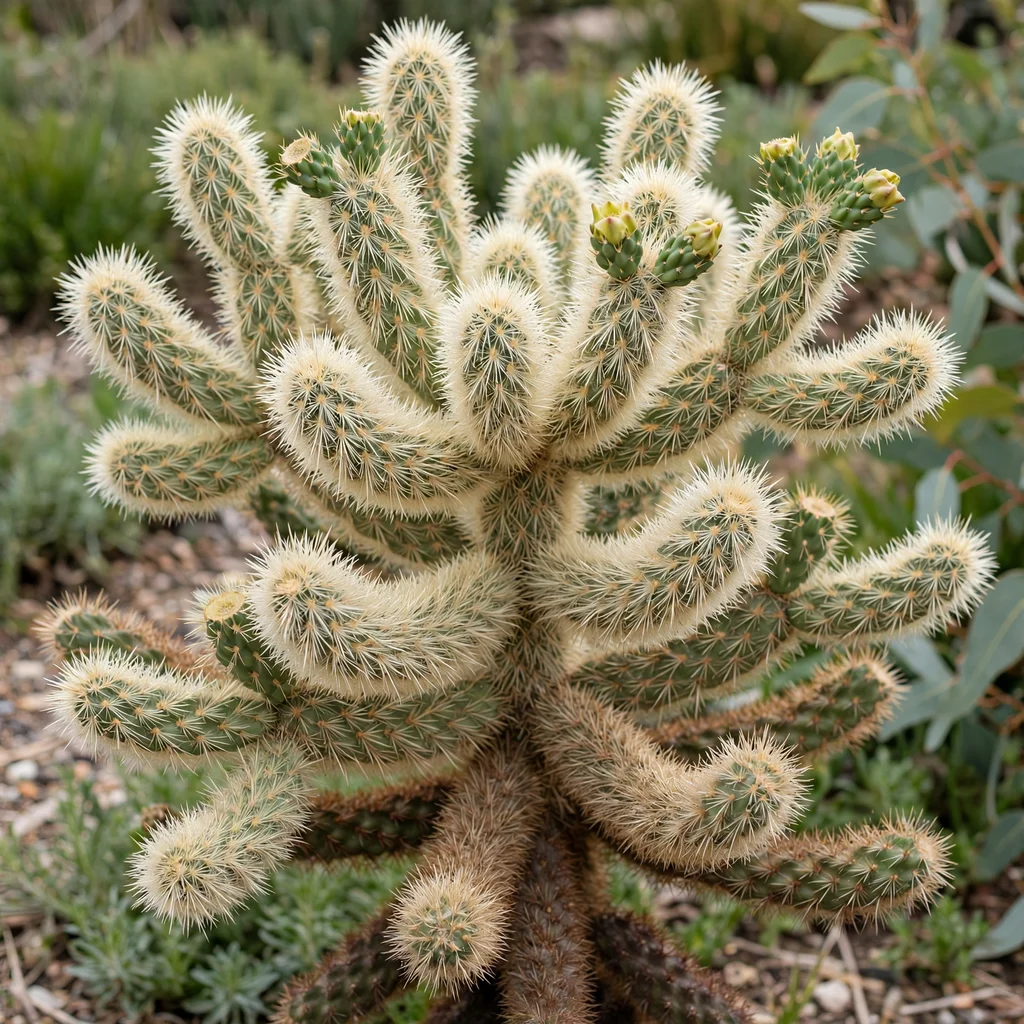
Teddybear Cholla
Cylindropuntia bigelovii
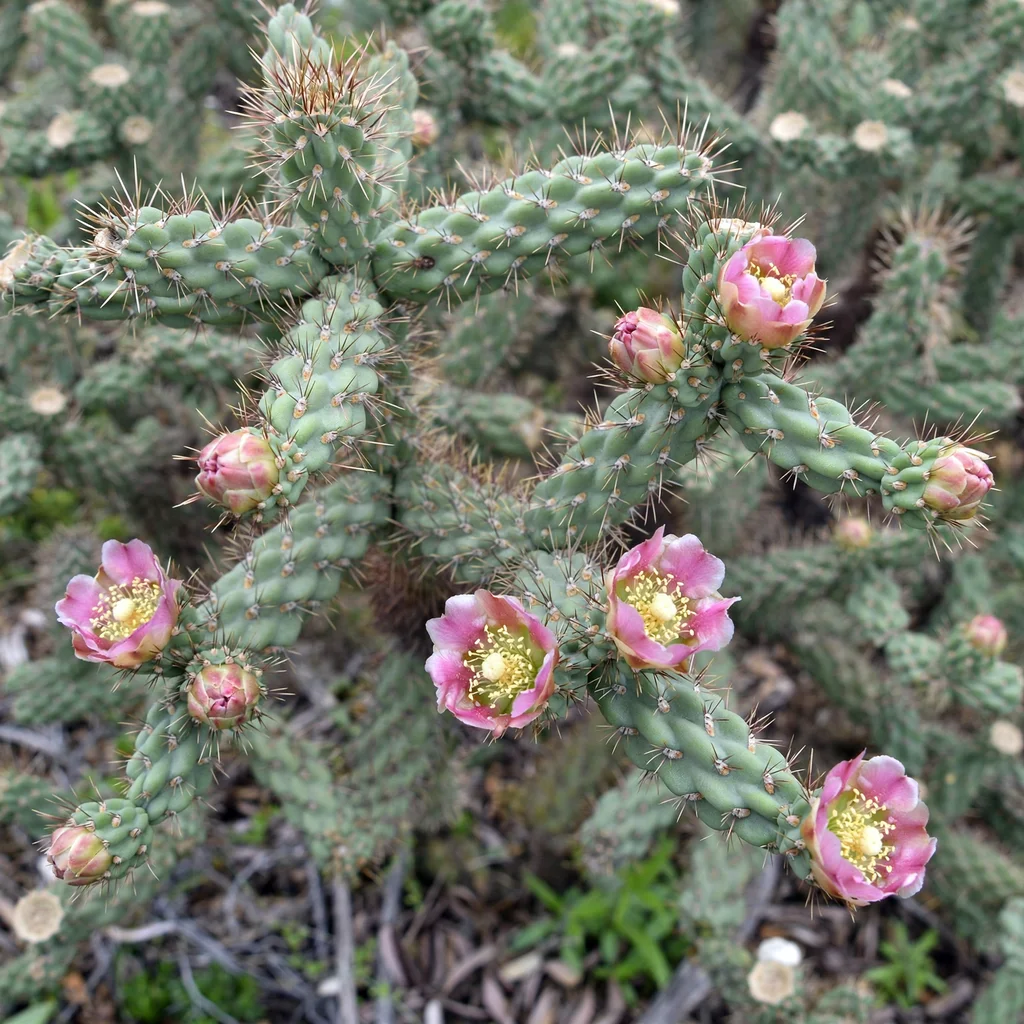
Coast Cholla
Cylindropuntia prolifera
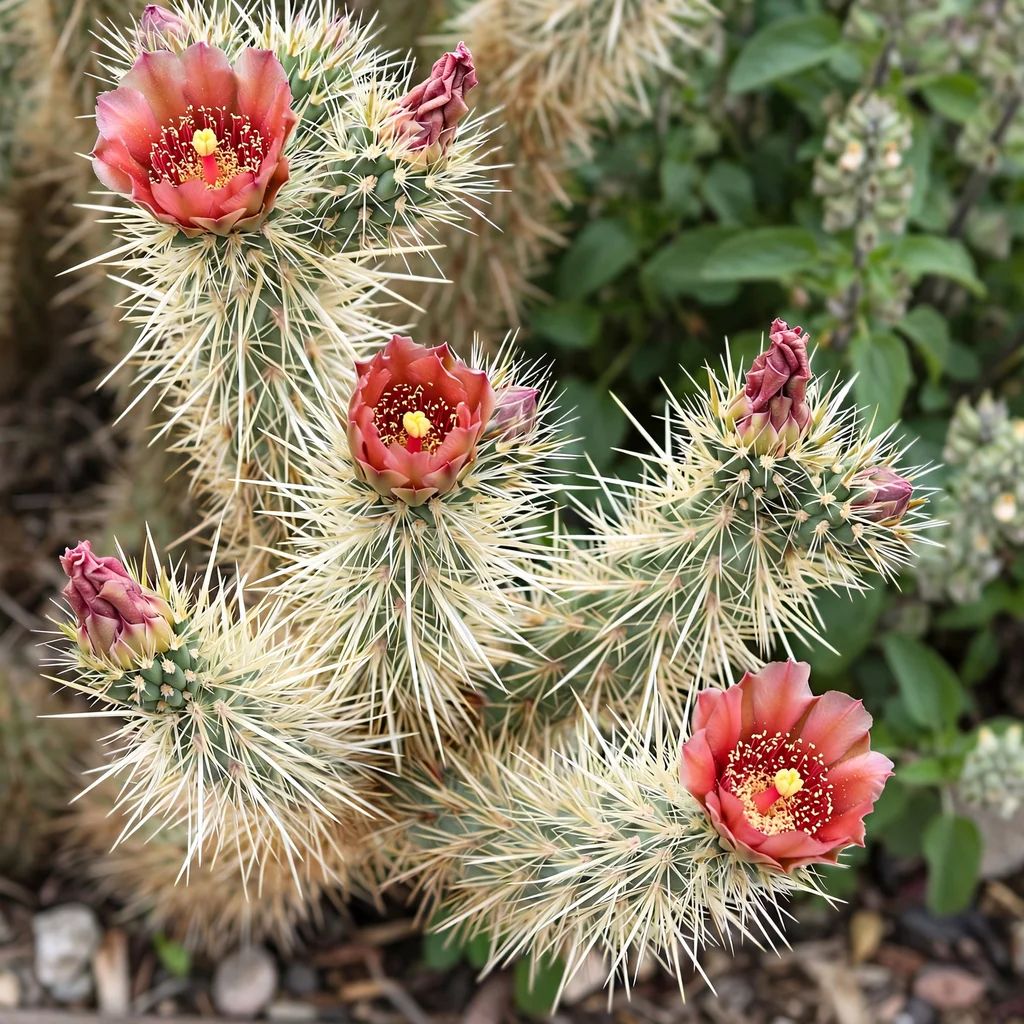
Wolf's Cholla
Cylindropuntia wolfii
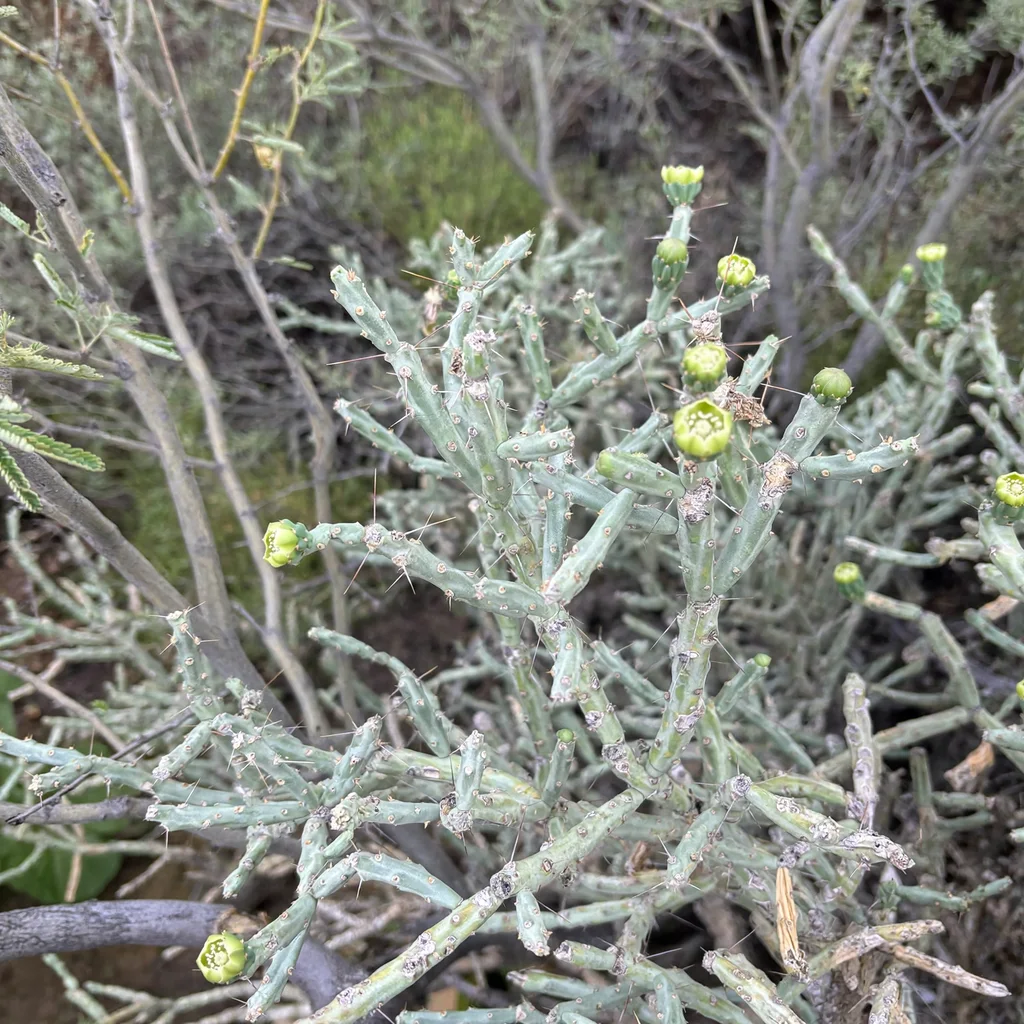
Arizona Pencil Cholla
Cylindropuntia arbuscula
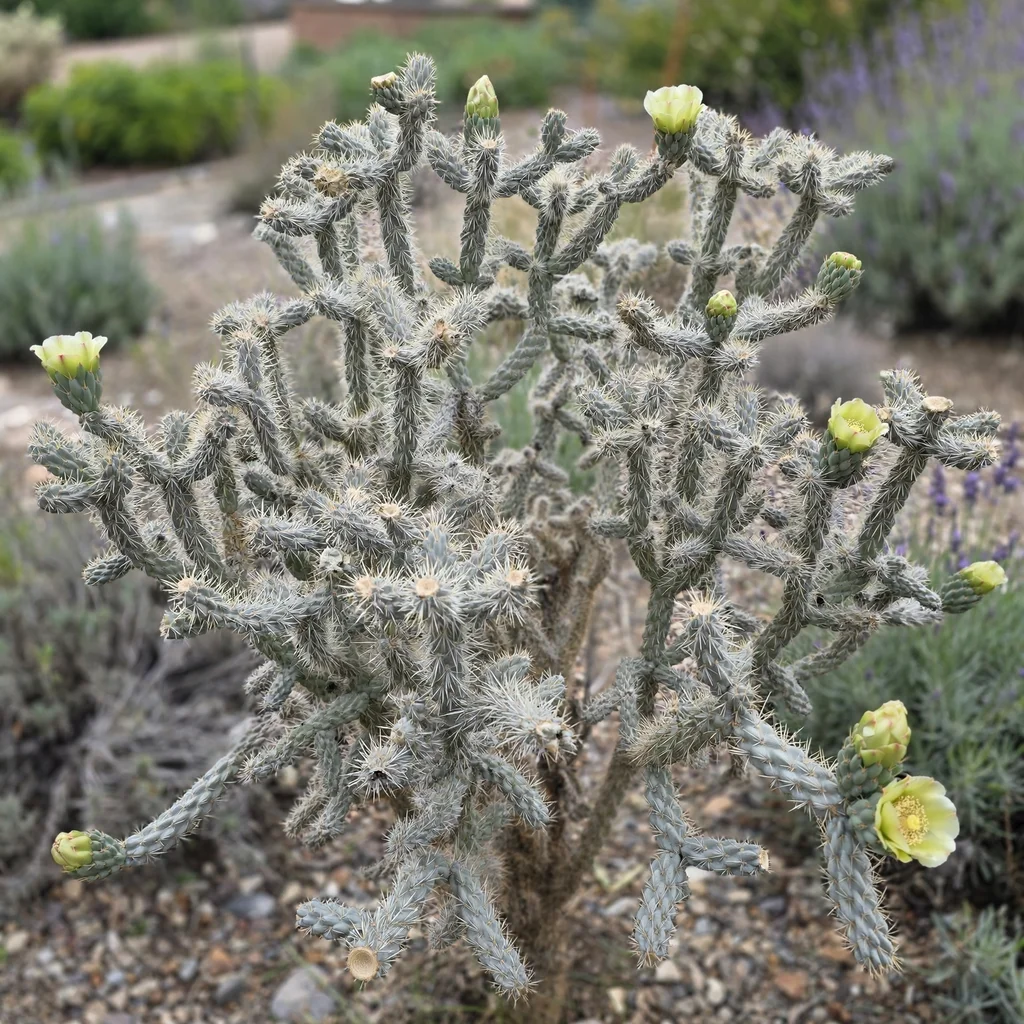
Silver cholla
Cylindropuntia echinocarpa
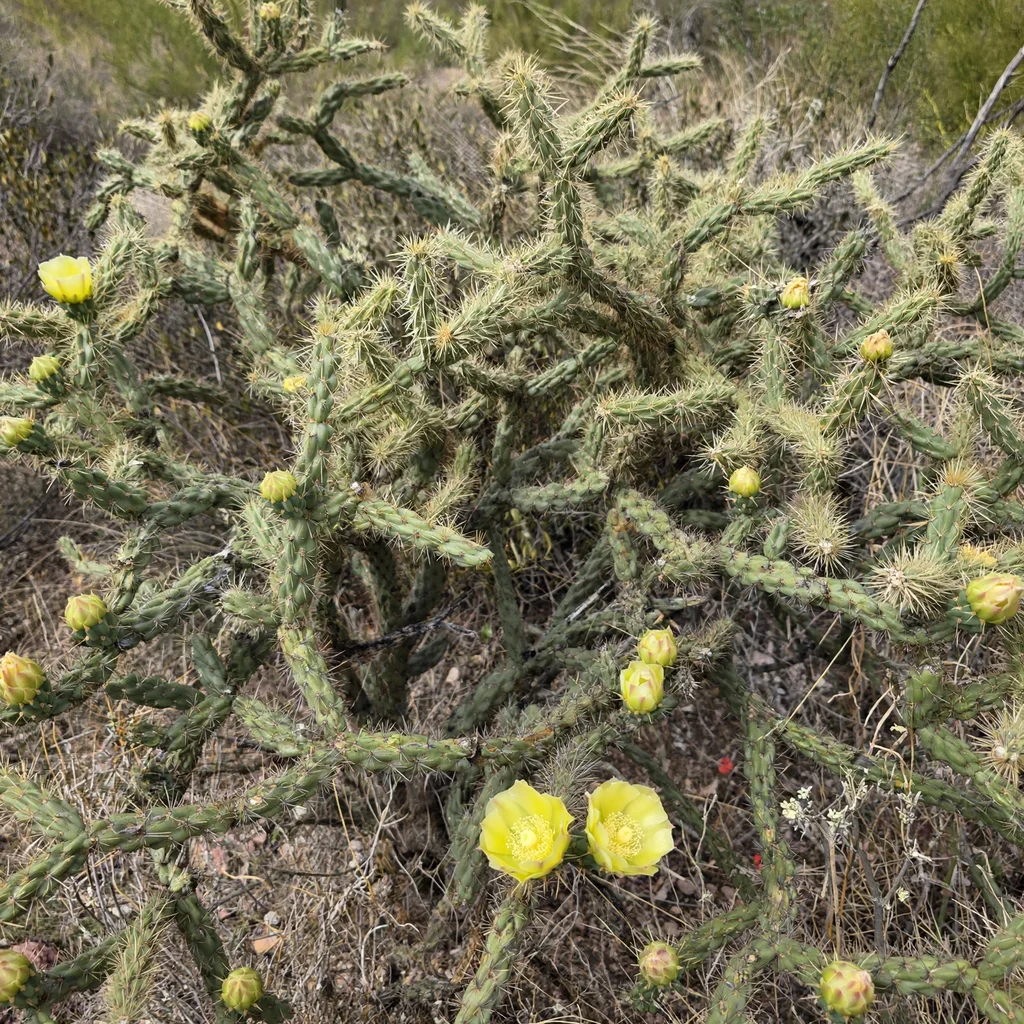
Buckhorn Cholla
Cylindropuntia acanthocarpa
Keep exploring
Explore the genus
Hardy in your zone?
Grow Diamond Cholla with confidence
See it in a design of your actual yard, get zone-matched care reminders, and track it season by season in your garden journal.