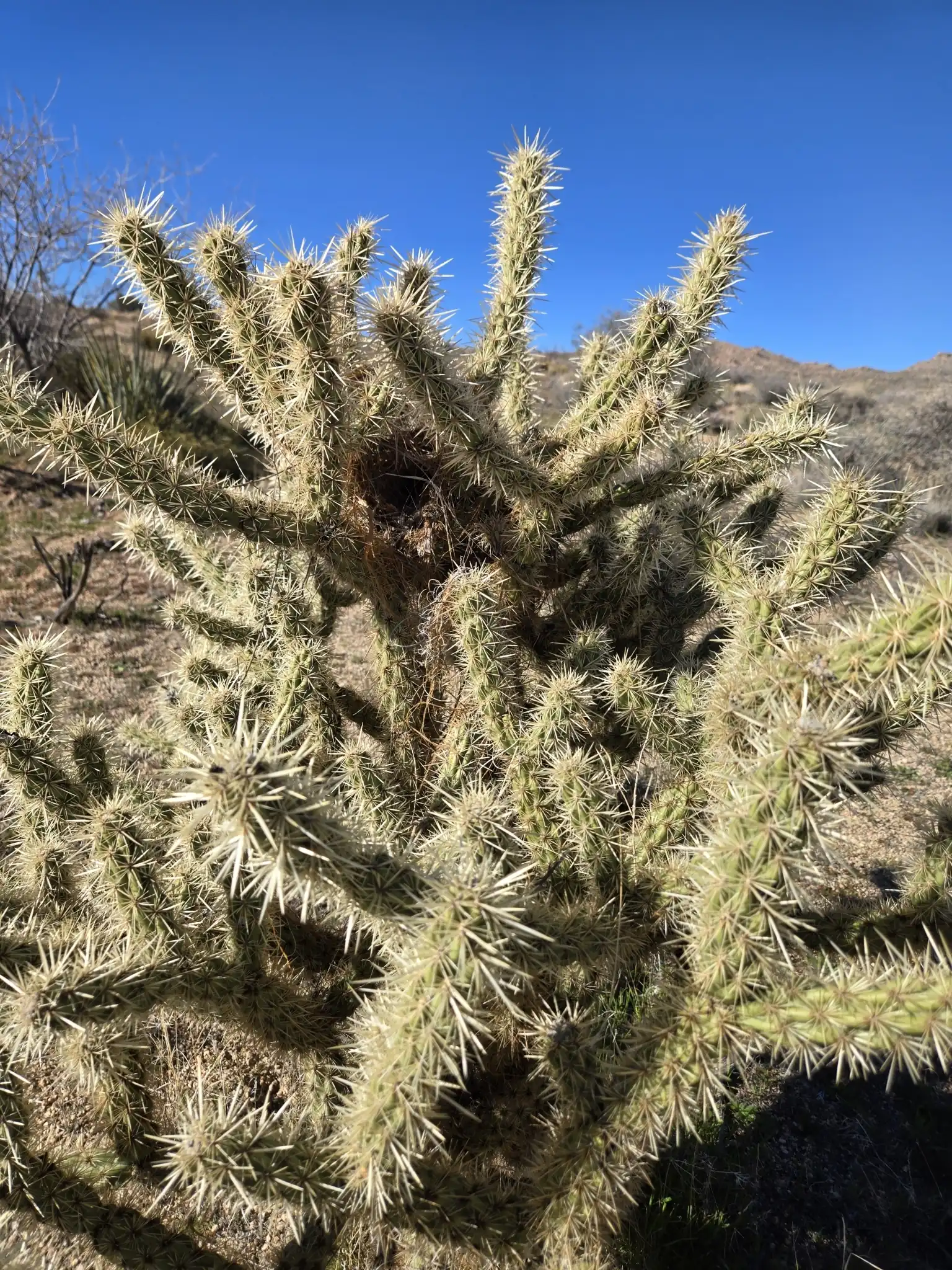
The Story
Plant Bio
Cylindropuntia acanthocarpa is a treelike desert cactus native to the arid southwestern United States and northwestern Mexico. It forms a densely branched structure of cylindrical, jointed stem segments covered in sharp spines that carry papery sheaths.
Terminal flowers opening in late spring range from yellow to red and attract both native bees and hummingbirds. Detached stem joints easily anchor into loose desert substrate, allowing the plant to spread vegetatively across dry gravelly soils.
Uses & Benefits:
Essentials
At a Glance
Plant Type
Cactus Succulent
Height
106"
Width
94"
Light
Full Sun
Zones
8, 9, 10
Water
Low
Humidity
Low
Lifespan
Perennial
Native To
Southwestern United States, Northwestern Mexico
Toxicity
Non-toxic, severe mechanical hazard
Bloom period
Spring – Late spring
In flower about 3 months of the year
Planting
How to Grow
- Plant in a location receiving at least six hours of direct sunlight daily.
- Prepare a soil mix consisting of equal parts coarse sand, pumice, and native mineral soil to guarantee drainage.
- Water thoroughly at installation, then withhold water until fresh growth appears on top segments.
- Limit supplemental watering to once every three to four weeks during heat spells in midsummer, relying on natural rainfall during winter.
Pro Tip
Always handle stems using heavy leather welder's gloves and long metal tongs to prevent microscopic, barbed glochids from embedding in skin.
Keep It Thriving
Care Guide
Do
- Ensure planting beds are sloped or raised to prevent water pooling around the root crown.
- Use metal tongs to hold stem joints stable during propagation or transplanting.
- Allow soil to dry out completely between watering applications.
Don't
- Do not plant near high-traffic walkways or pet areas due to easily detached, barbed spines.
- Do not amend the soil with moisture-retentive peat moss or organic compost.
- Do not water during cold winter dormancy periods.
Seasonal Care Calendar
| Task | Jan | Feb | Mar | Apr | May | Jun | Jul | Aug | Sep | Oct | Nov | Dec |
|---|---|---|---|---|---|---|---|---|---|---|---|---|
| Fertilize | ||||||||||||
| Pest Check | ||||||||||||
| Propagate | ||||||||||||
| Prune |
Watch Out For
Pests & Diseases
Common Pests
Common Diseases
In the Garden
Landscape Uses & Companions
Landscape Uses
Multiply
Propagation Methods
Good to Know
Common Questions
Buckhorn Cholla questions
What zones can Buckhorn Cholla grow in?
Buckhorn Cholla is hardy in USDA Zones 8–10: in that range it survives winter in the ground. Colder than Zone 8, grow it in a container you can move to shelter for the winter, or as an annual.
Is Buckhorn Cholla deer resistant?
Yes — Buckhorn Cholla is rated deer-resistant. Deer typically pass it over, though extreme hunger can override any plant's defenses.
When does Buckhorn Cholla bloom?
Buckhorn Cholla typically blooms in spring. Exact timing shifts a week or two with your zone — Sow's bloom calendar maps it to your garden.
Does Buckhorn Cholla need full sun?
Buckhorn Cholla does best in full sun (6+ hours).
Is Buckhorn Cholla drought tolerant?
Yes — once established (usually after the first full season), Buckhorn Cholla handles dry spells with minimal watering. Water deeply its first year to build the root system that makes that possible.
More Cylindropuntia to compare
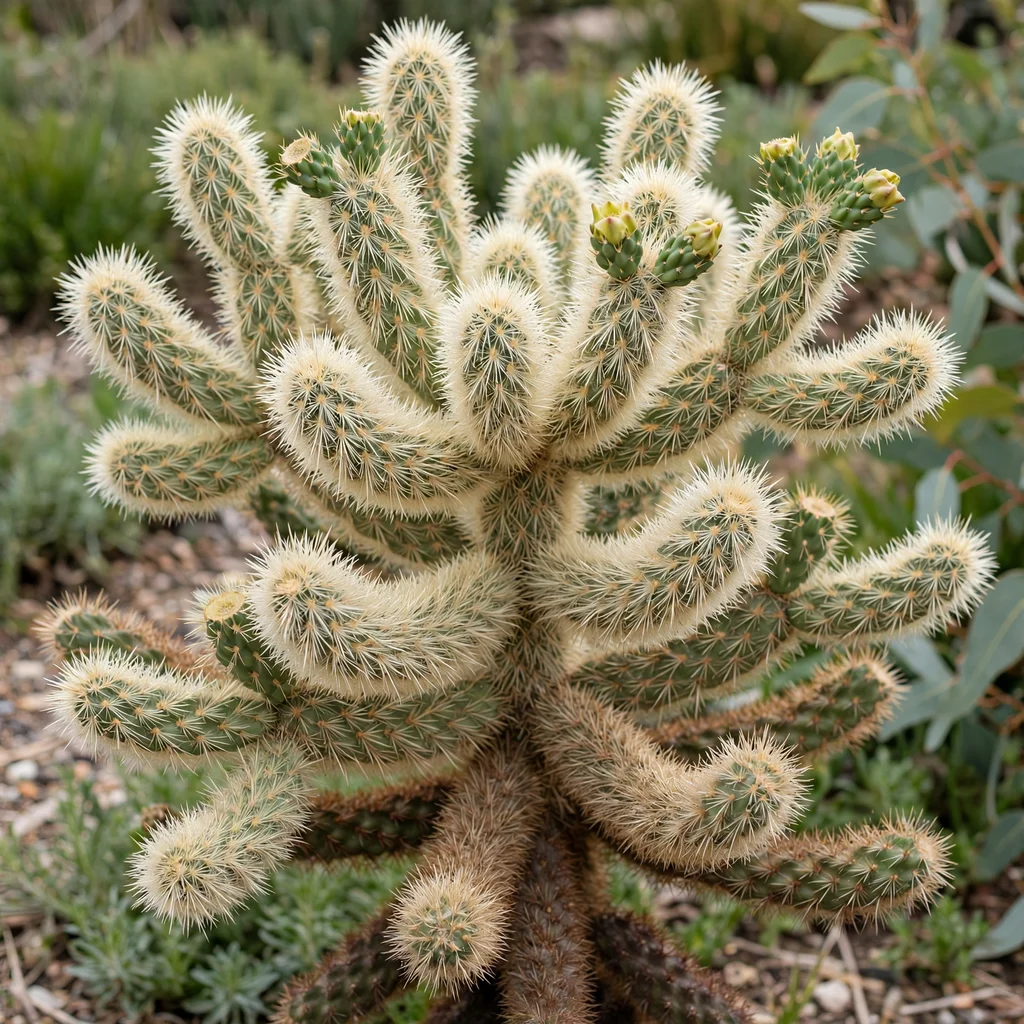
Teddybear Cholla
Cylindropuntia bigelovii
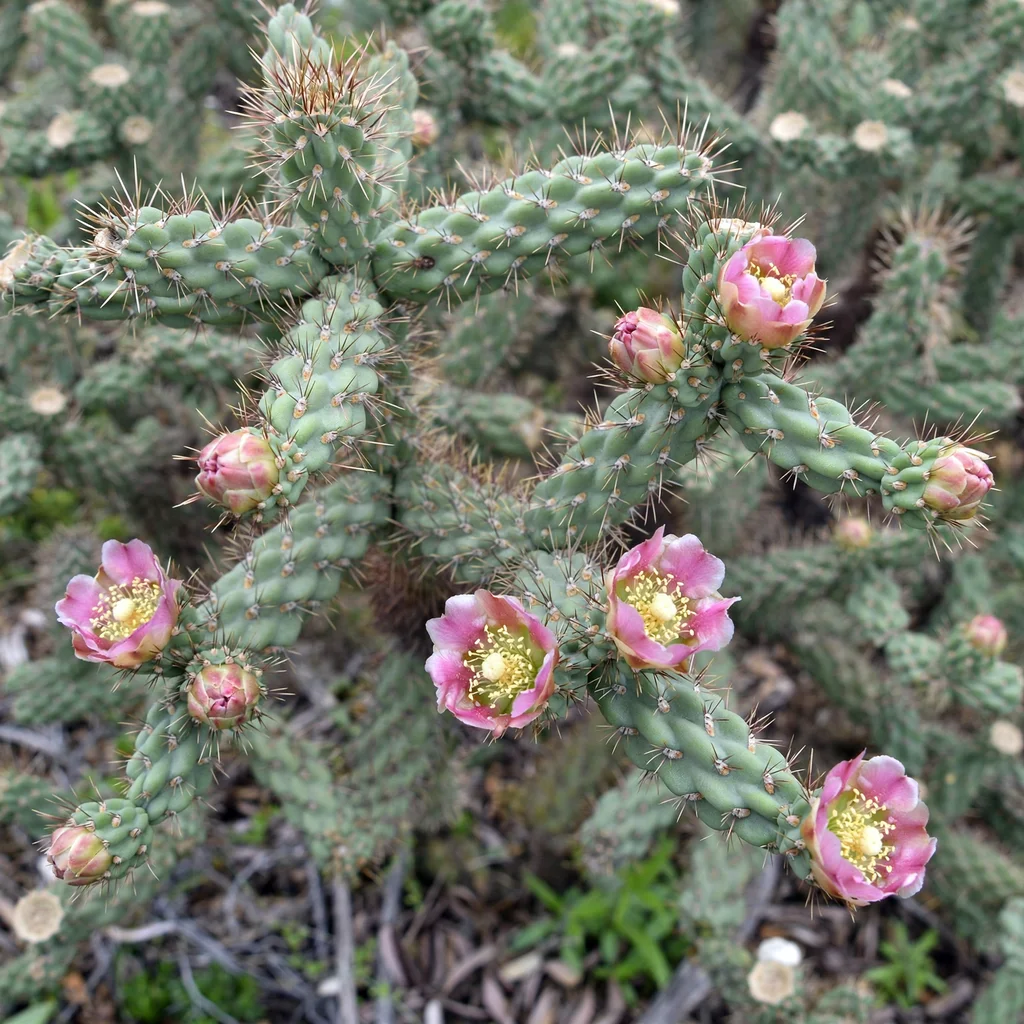
Coast Cholla
Cylindropuntia prolifera
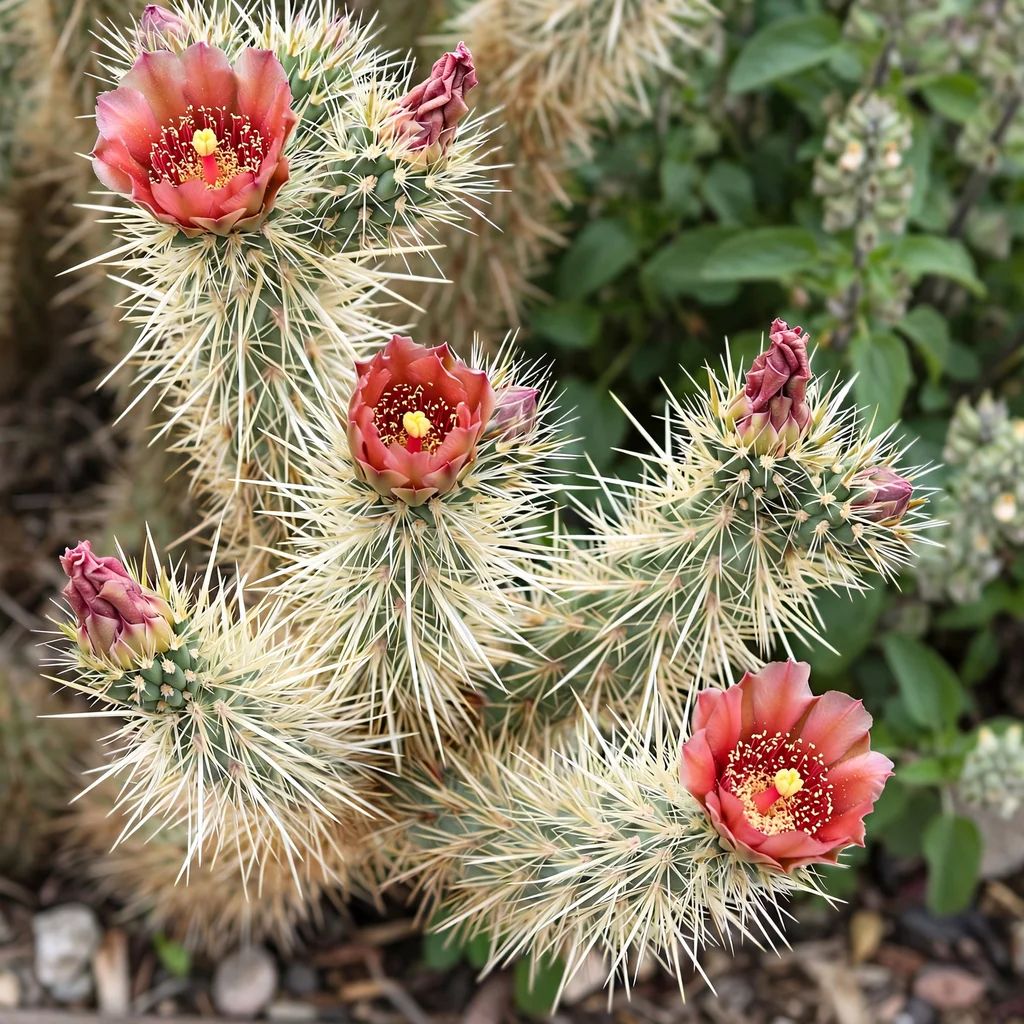
Wolf's Cholla
Cylindropuntia wolfii
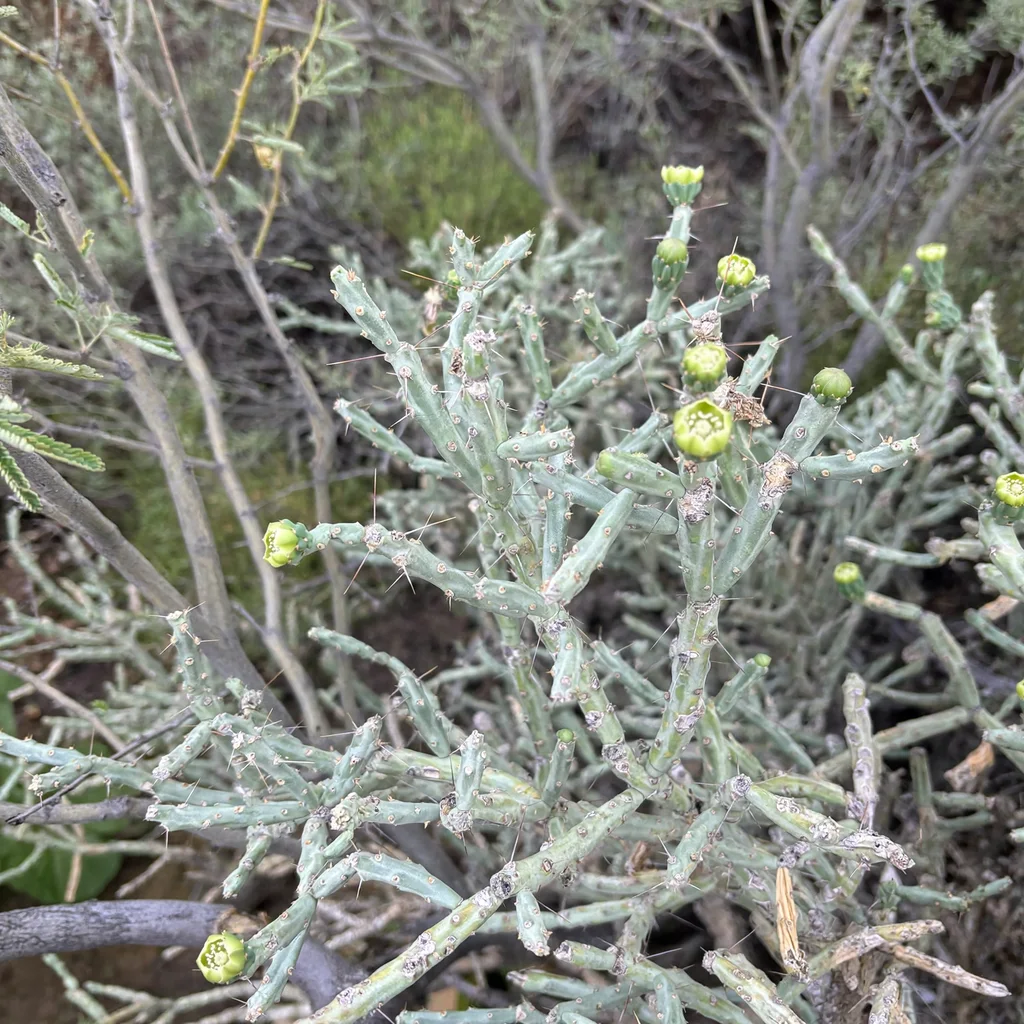
Arizona Pencil Cholla
Cylindropuntia arbuscula
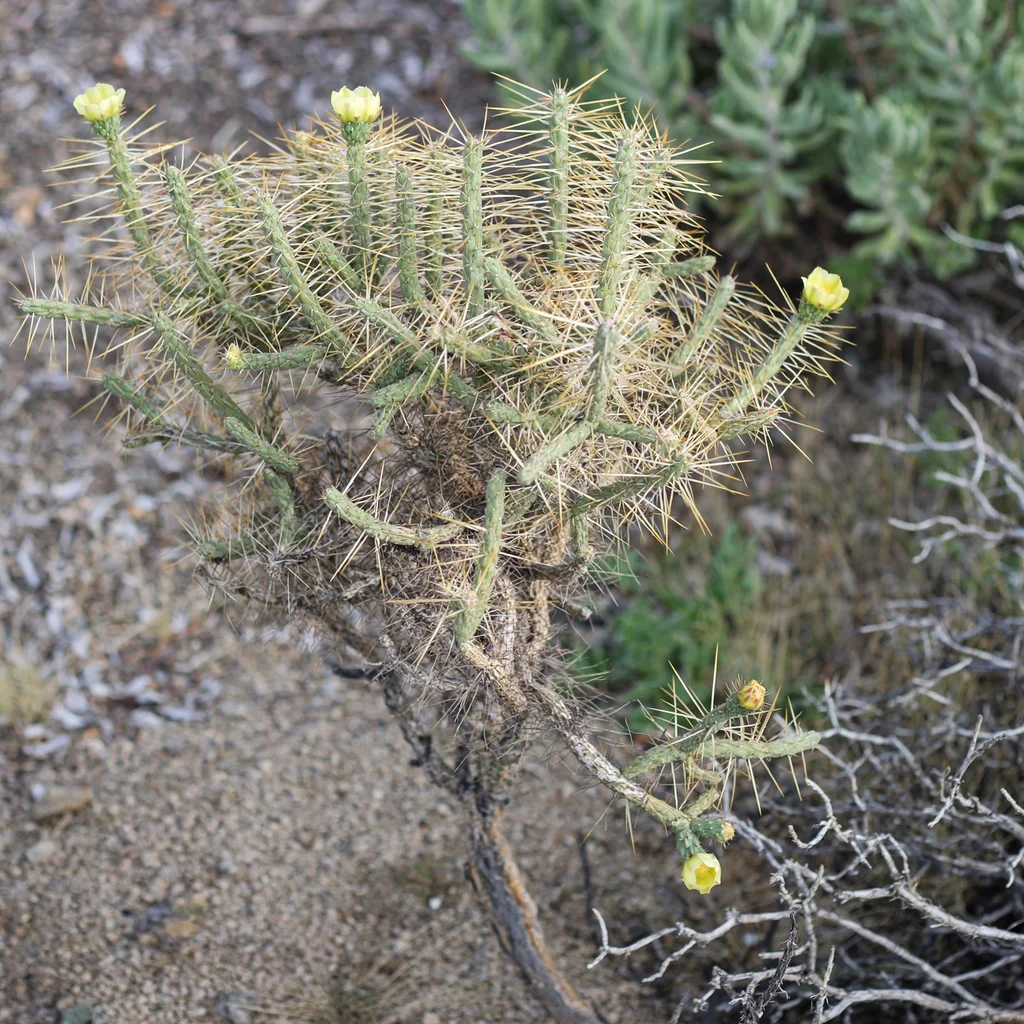
Diamond Cholla
Cylindropuntia ramosissima
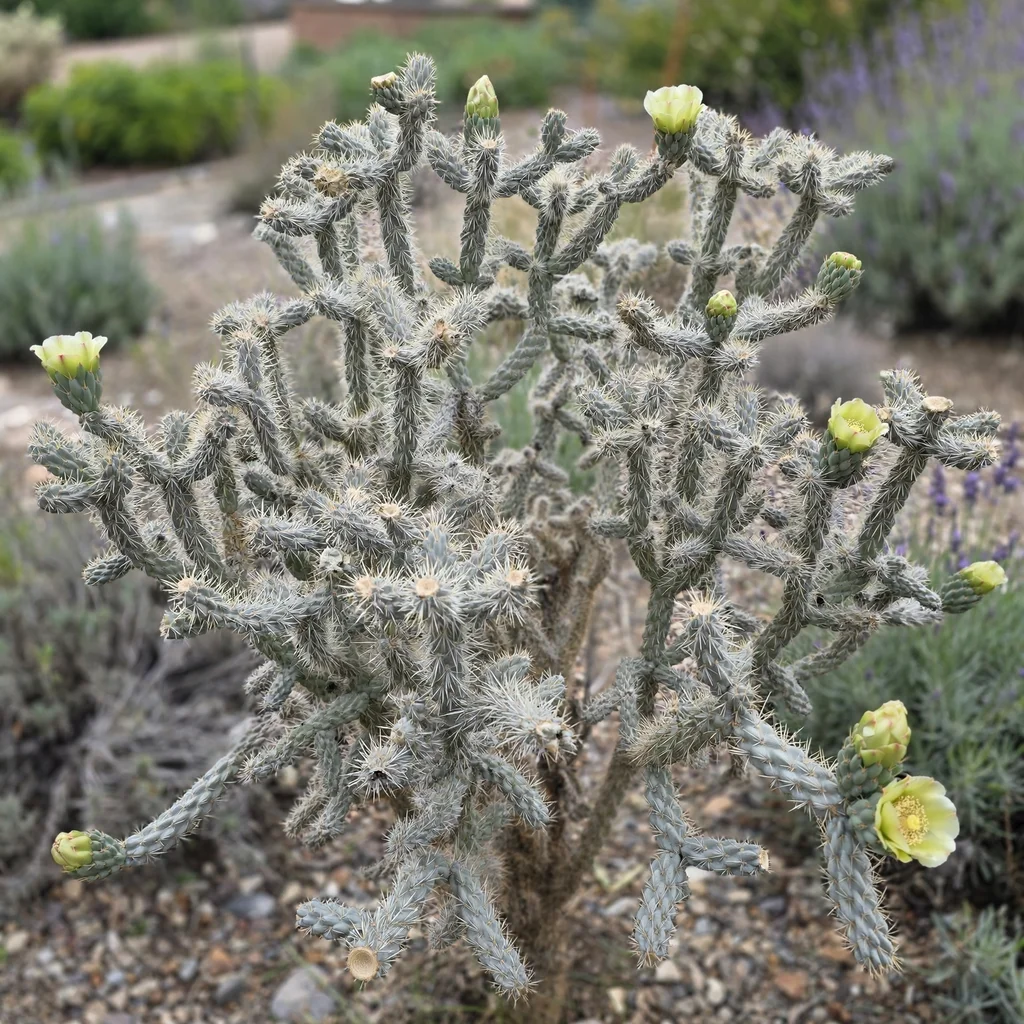
Silver cholla
Cylindropuntia echinocarpa
Keep exploring
Explore the genus
Hardy in your zone?
Grow Buckhorn Cholla with confidence
See it in a design of your actual yard, get zone-matched care reminders, and track it season by season in your garden journal.