The Story
Plant Bio
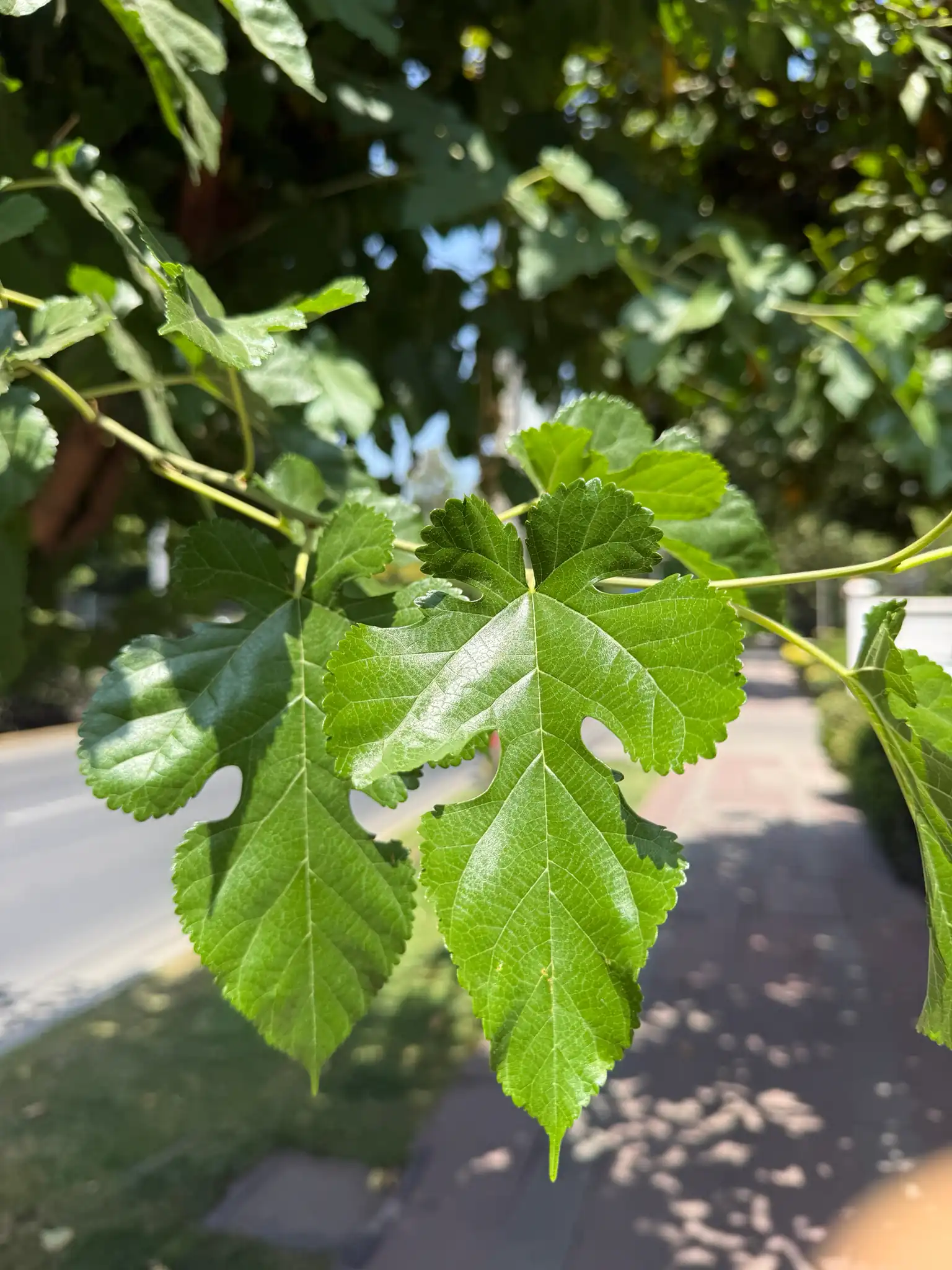
Morus alba, the white mulberry, is a fast-growing short-lived deciduous tree reaching 30 to 50 feet with a broad crown and shallow surface roots. The leaves are variable, unlobed to deeply lobed, and are the food of the silkworm Bombyx mori; the flowers are inconspicuous wind-pollinated catkins borne in spring followed by summer fruit.
Plants sold as Morus x alba are Morus alba and its garden hybrids rather than a separate hybrid species, grown for tolerance of heat, drought, alkaline soil and air pollution. In North America it is set apart by bird-sown invasiveness, severe wind-borne pollen that is heaviest from fruitless male trees, and hybridization that threatens the native red mulberry.
Uses & Benefits:
Essentials
At a Glance
Plant Type
Tree
Height
600"
Width
480"
Light
Full Sun, Partial Sun
Zones
4, 5, 6, 7, 8, 9
Water
Medium
Humidity
Average
Lifespan
Short-lived
Native To
China
Toxicity
Toxic unripe fruit and sap
Bloom period
Spring – Summer
In flower about 6 months of the year
Planting
How to Grow
- Plant in full sun with room for a 40-foot spread and surface roots, away from walks, pipes and foundations.
- Dig the hole twice as wide as the root ball, set the crown level, backfill with native soil and water deeply.
- Mulch 2 to 3 inches, keeping mulch off the trunk, and water through the first summer.
- Prune only in late fall to winter to shape and to remove weak forks and crossing wood.
- If fruiting, pick only fully ripe fruit and clean up fallen fruit to limit seedlings and wildlife spread.
Pro Tip
Prune in late fall or winter while fully dormant; spring cuts bleed heavily and topping creates multiple weak attachments that fail.
Keep It Thriving
Care Guide
Do
- Plant in full sun in rich, moist but well-drained soil.
- Water deeply the first year, then rely on drought tolerance.
- Clean up fallen fruit promptly to limit seedlings and pests.
Don't
- Don't plant where fruit drop, surface roots or seedlings will be a problem.
- Don't prune in spring when cuts bleed, and don't top the crown.
- Don't eat unripe fruit and don't let pets or children chew leaves, bark or milky sap.
Seasonal Care Calendar
| Task | Jan | Feb | Mar | Apr | May | Jun | Jul | Aug | Sep | Oct | Nov | Dec |
|---|---|---|---|---|---|---|---|---|---|---|---|---|
| Harvest | ||||||||||||
| Mulch | ||||||||||||
| Pest Check | ||||||||||||
| Prune |
Watch Out For
Pests & Diseases
Common Pests
Common Diseases
In the Garden
Landscape Uses & Companions
Landscape Uses
Companion Plants
Multiply
Propagation Methods
Good to Know
Common Questions
White Mulberry questions
What zones can White Mulberry grow in?
White Mulberry is hardy in USDA Zones 4–9: in that range it survives winter in the ground. Warmer than Zone 9, winter isn't the problem: it prefers colder winters, and summer heat can shorten its life.
Is White Mulberry deer resistant?
Not reliably. Deer may browse White Mulberry, especially tender spring growth — plan on repellents or fencing where pressure is high.
When does White Mulberry bloom?
White Mulberry typically blooms from spring to summer. Exact timing shifts a week or two with your zone — Sow's bloom calendar maps it to your garden.
Does White Mulberry need full sun?
White Mulberry does best in full sun to part shade. In hot climates, afternoon shade keeps blooms fresher longer.
Is White Mulberry drought tolerant?
Yes — once established (usually after the first full season), White Mulberry handles dry spells with minimal watering. Water deeply its first year to build the root system that makes that possible.
More Morus to compare
Keep exploring
Explore the genus
Grow White Mulberry with confidence
See it in a design of your actual yard, get zone-matched care reminders, and track it season by season in your garden journal.