The Story
Plant Bio
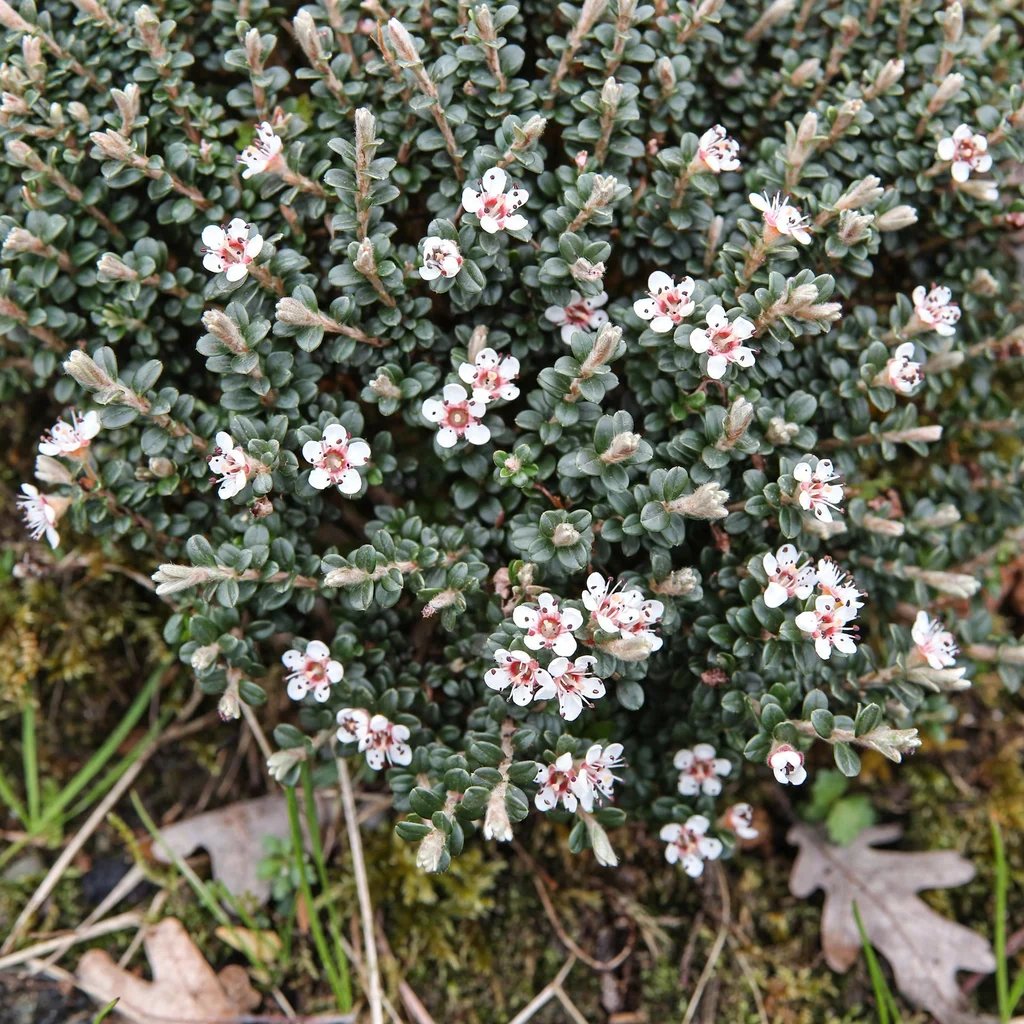
Cotoneaster buxifolius, the box-leaved cotoneaster, is a low spreading mounded evergreen to semi-evergreen shrub reaching one to three feet tall and three to six feet wide, with small box-like dull gray-green leaves that are hairy above and gray-felted beneath. White clustered flowers open on old wood in spring to early summer, followed by red to orange-red berries that persist through fall and winter.
Young shoots carry a whitish to pale-brown down, and the tiny leaves hold their boxwood look through winter in mild climates. Nursery stock sold under this name is often Cotoneaster prostratus variety lanatus, while the true wild plant is a very scrubby montane bush from the Nilgiri Hills that tolerates drought and cold below 0F once established.
Uses & Benefits:
Essentials
At a Glance
Plant Type
Shrub
Height
24"
Width
54"
Light
Full Sun
Zones
5, 6, 7, 8, 9, 10
Water
Low
Humidity
Average
Lifespan
Long-lived shrub
Native To
Nilgiri Hills, India to SW China
Toxicity
Toxic - berries cause GI upset
Bloom period
Spring – Summer
In flower about 6 months of the year
Planting
How to Grow
- Set in full sun where air moves freely to keep foliage dry.
- Dig a hole as deep as the container and twice as wide in well-drained soil.
- Backfill, firm gently, and water deeply to settle roots.
- Mulch with 2 inches of bark, keeping mulch clear of stems.
- Water sparingly after the first season; established plants need very little supplemental water.
Pro Tip
Plant in full sun in well-drained soil and leave it to mound; it flowers and fruits best with minimal pruning and resents cutting into old bare wood.
Keep It Thriving
Care Guide
Do
- Give full sun for heaviest bloom and berry set.
- Prune out blackened fire-blight shoots promptly.
- Leave berries for birds through fall and winter.
Don't
- Do not overwater or plant in soggy soil.
- Do not shear repeatedly or cut hard into old leafless wood.
- Do not eat berries; all parts can cause vomiting and diarrhea.
Seasonal Care Calendar
| Task | Jan | Feb | Mar | Apr | May | Jun | Jul | Aug | Sep | Oct | Nov | Dec |
|---|---|---|---|---|---|---|---|---|---|---|---|---|
| Mulch | ||||||||||||
| Pest Check | ||||||||||||
| Plant | ||||||||||||
| Prune |
Watch Out For
Pests & Diseases
Common Pests
Common Diseases
In the Garden
Landscape Uses & Companions
Landscape Uses
Multiply
Propagation Methods
Good to Know
Common Questions
Box-Leaved Cotoneaster questions
What zones can Box-Leaved Cotoneaster grow in?
Box-Leaved Cotoneaster is hardy in USDA Zones 5–10: in that range it survives winter in the ground. Colder than Zone 5, grow it in a container you can move to shelter for the winter.
When does Box-Leaved Cotoneaster bloom?
Box-Leaved Cotoneaster typically blooms from spring to summer. Exact timing shifts a week or two with your zone — Sow's bloom calendar maps it to your garden.
Does Box-Leaved Cotoneaster need full sun?
Box-Leaved Cotoneaster does best in full sun (6+ hours).
Is Box-Leaved Cotoneaster drought tolerant?
Yes — once established (usually after the first full season), Box-Leaved Cotoneaster handles dry spells with minimal watering. Water deeply its first year to build the root system that makes that possible.
More Cotoneaster to compare
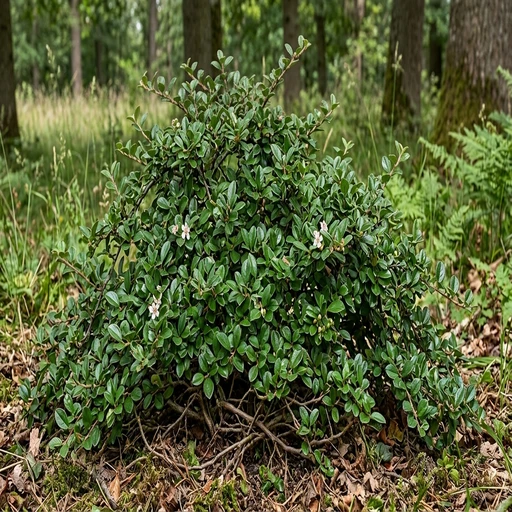
Streibs Findling Cotoneaster
Cotoneaster dammeri 'Streibs Findling'
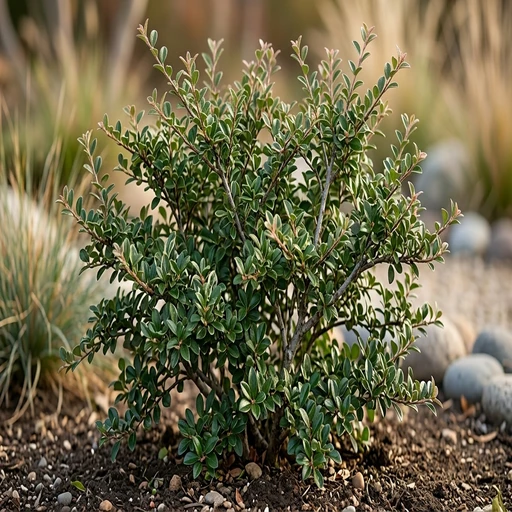
Autumn Inferno Cotoneaster
Cotoneaster salicifolius 'Autumn Inferno'
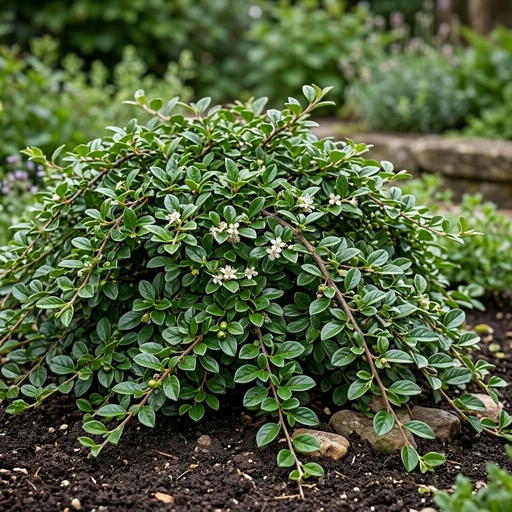
Lowfast Bearberry Cotoneaster
Cotoneaster dammeri 'Lowfast'
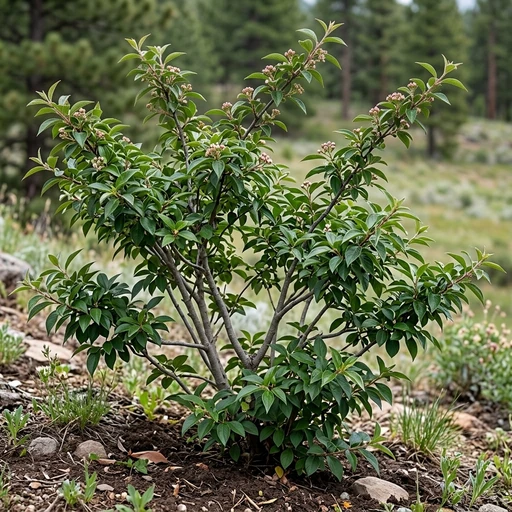
Peking Cotoneaster
Cotoneaster acutifolius
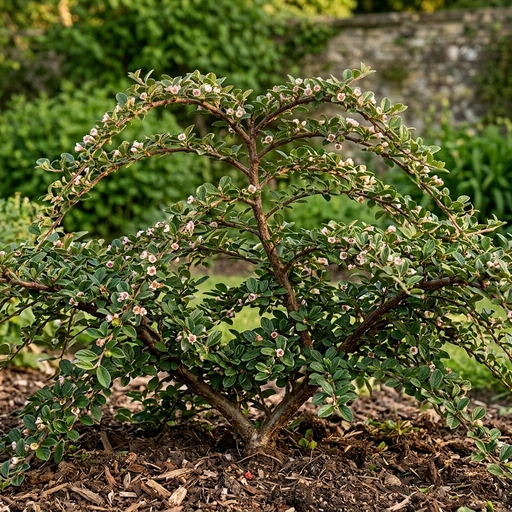
Hessei Rockspray Cotoneaster
Cotoneaster horizontalis 'Hessei'
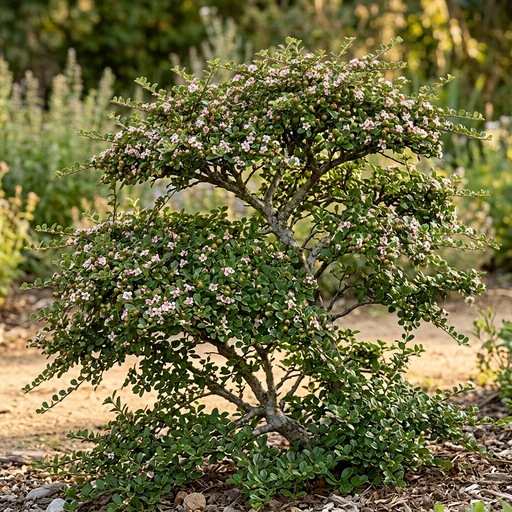
Rockspray Cotoneaster
Cotoneaster horizontalis
Keep exploring
Explore the genus
Grow Box-Leaved Cotoneaster with confidence
See it in a design of your actual yard, get zone-matched care reminders, and track it season by season in your garden journal.