The Story
Plant Bio
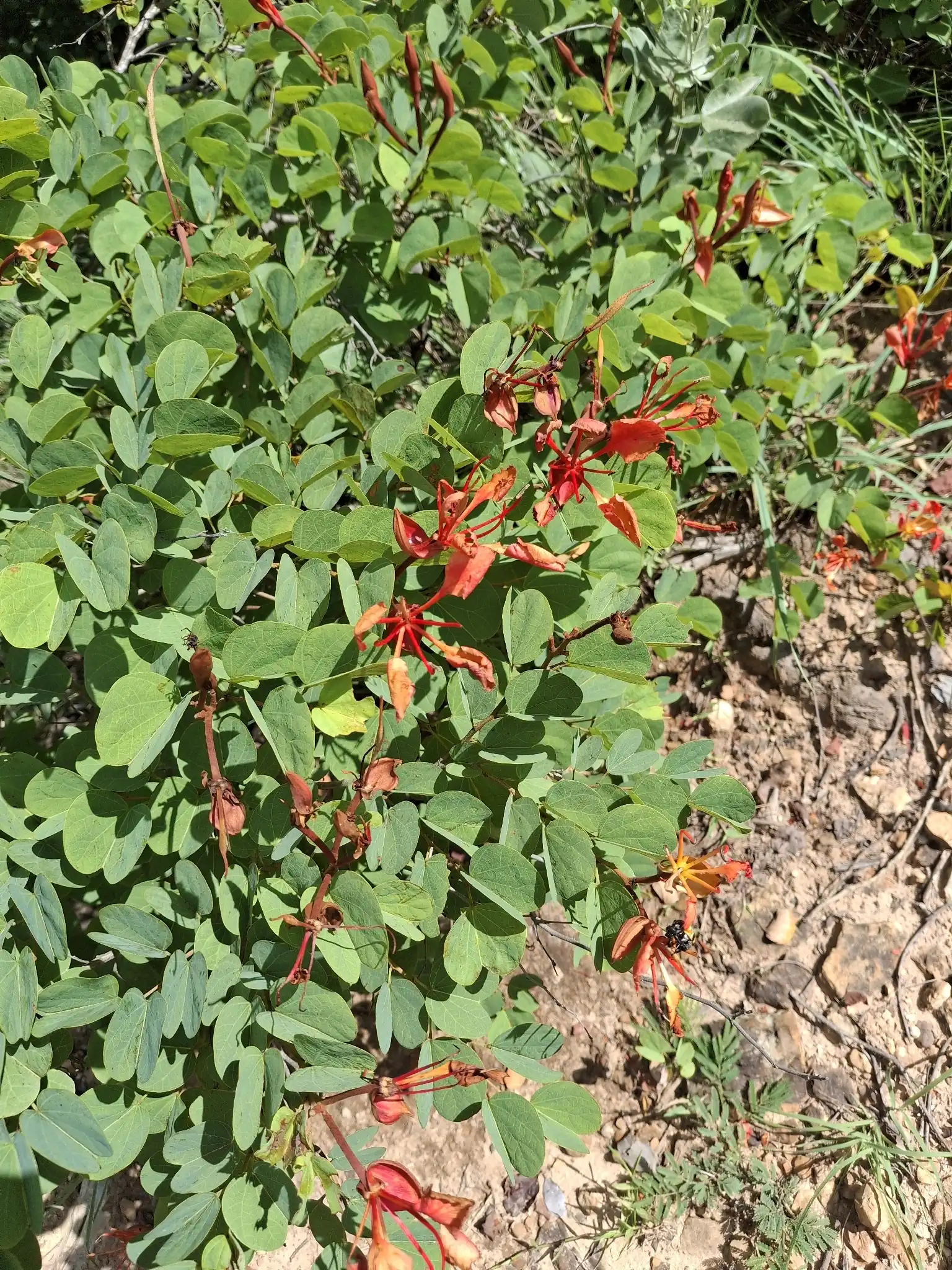
Bauhinia galpinii, commonly known as red orchid bush, is a dense, sprawling evergreen shrub native to eastern and southern Africa. It produces deeply bilobed, heart-shaped leaves resembling butterfly wings and features long arching branches that can be trained as a climber or allowed to cascade.
Unlike tree-form Bauhinia species that bloom in early spring, this scandent shrub produces loose sprays of brick-red to salmon, orchid-like flowers continuously from midsummer into fall. As a nitrogen-fixing legume, it thrives in low-fertility soils and displays high drought tolerance once established.
Uses & Benefits:
Essentials
At a Glance
Plant Type
Shrub
Height
120"
Width
180"
Light
Full Sun, Partial Sun
Zones
9, 10
Water
Low to Moderate
Humidity
Tolerant
Lifespan
Perennial
Native To
Eastern and Southern Africa
Toxicity
Uncertain
Bloom period
Mid summer – Fall
In flower about 5 months of the year
Planting
How to Grow
- Choose a location in full sun with fertile, fast-draining soil and ample room for the wide, arching canopy.
- Dig a planting hole twice as wide as the root ball and set the crown level with the surrounding soil line.
- Water deeply and regularly during the first growing season until the root system is fully established.
- Provide a sturdy trellis or wall mount if training the stems into a climbing form.
- Prune heavily after flowering to control overall size and spur dense branching for the next bloom cycle.
Pro Tip
Prune immediately after flowering in late fall to shape the canopy and prevent the arching stems from invading neighboring plants.
Keep It Thriving
Care Guide
Do
- Plant in light, fast-draining soil in full sun.
- Protect young plants from frost during their first two to three years.
- Prune aggressively after flowering to maintain shape.
Don't
- Do not allow soil to remain waterlogged or soggy.
- Do not over-fertilize with nitrogen fertilizers, as the roots fix atmospheric nitrogen.
- Do not leave tender young growth unprotected during cold winter spells.
Seasonal Care Calendar
| Task | Jan | Feb | Mar | Apr | May | Jun | Jul | Aug | Sep | Oct | Nov | Dec |
|---|---|---|---|---|---|---|---|---|---|---|---|---|
| Fertilize | ||||||||||||
| Pest Check | ||||||||||||
| Prune | ||||||||||||
| Winter Prep |
Watch Out For
Pests & Diseases
Common Pests
Common Diseases
In the Garden
Landscape Uses & Companions
Landscape Uses
Multiply
Propagation Methods
Good to Know
Common Questions
Red Orchid Bush questions
What zones can Red Orchid Bush grow in?
Red Orchid Bush is hardy in USDA Zones 9–10: in that range it survives winter in the ground. Colder than Zone 9, grow it in a container you can move to shelter for the winter.
When does Red Orchid Bush bloom?
Red Orchid Bush typically blooms from mid-summer to late fall. Exact timing shifts a week or two with your zone — Sow's bloom calendar maps it to your garden.
Does Red Orchid Bush need full sun?
Red Orchid Bush does best in full sun to part shade. In hot climates, afternoon shade keeps blooms fresher longer.
Is Red Orchid Bush drought tolerant?
Yes — once established (usually after the first full season), Red Orchid Bush handles dry spells with minimal watering. Water deeply its first year to build the root system that makes that possible.
More Bauhinia to compare
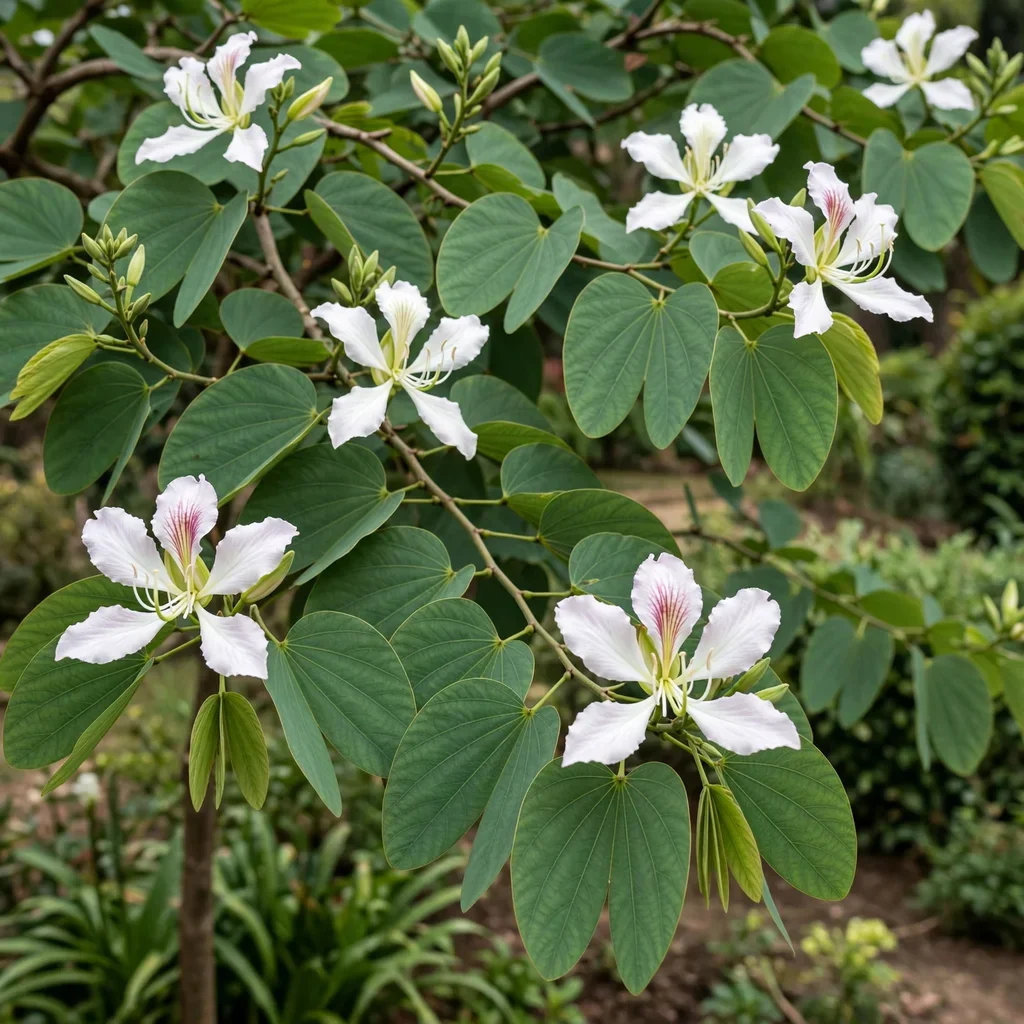
Brazilian Orchid Tree Bauhinia forficata
Bauhinia forficata
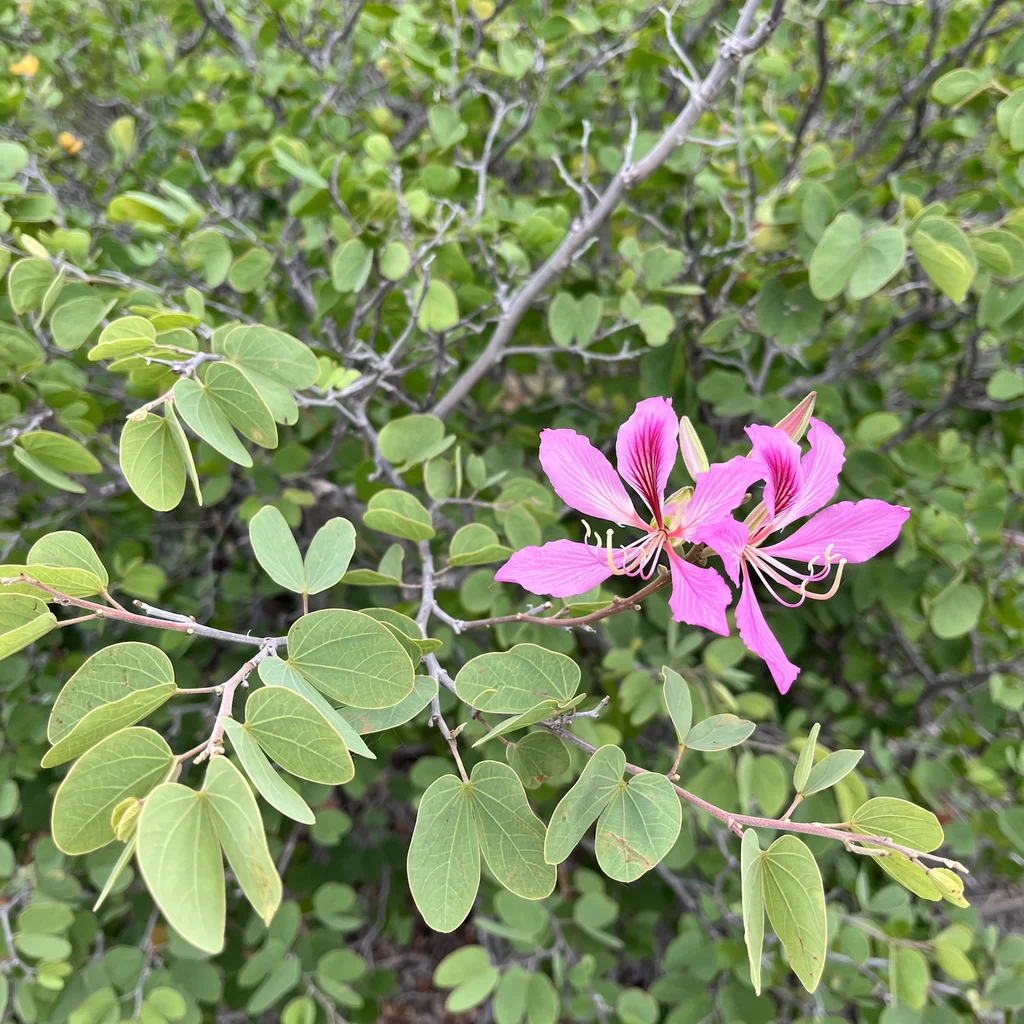
Anacacho Orchid Tree
Bauhinia lunarioides
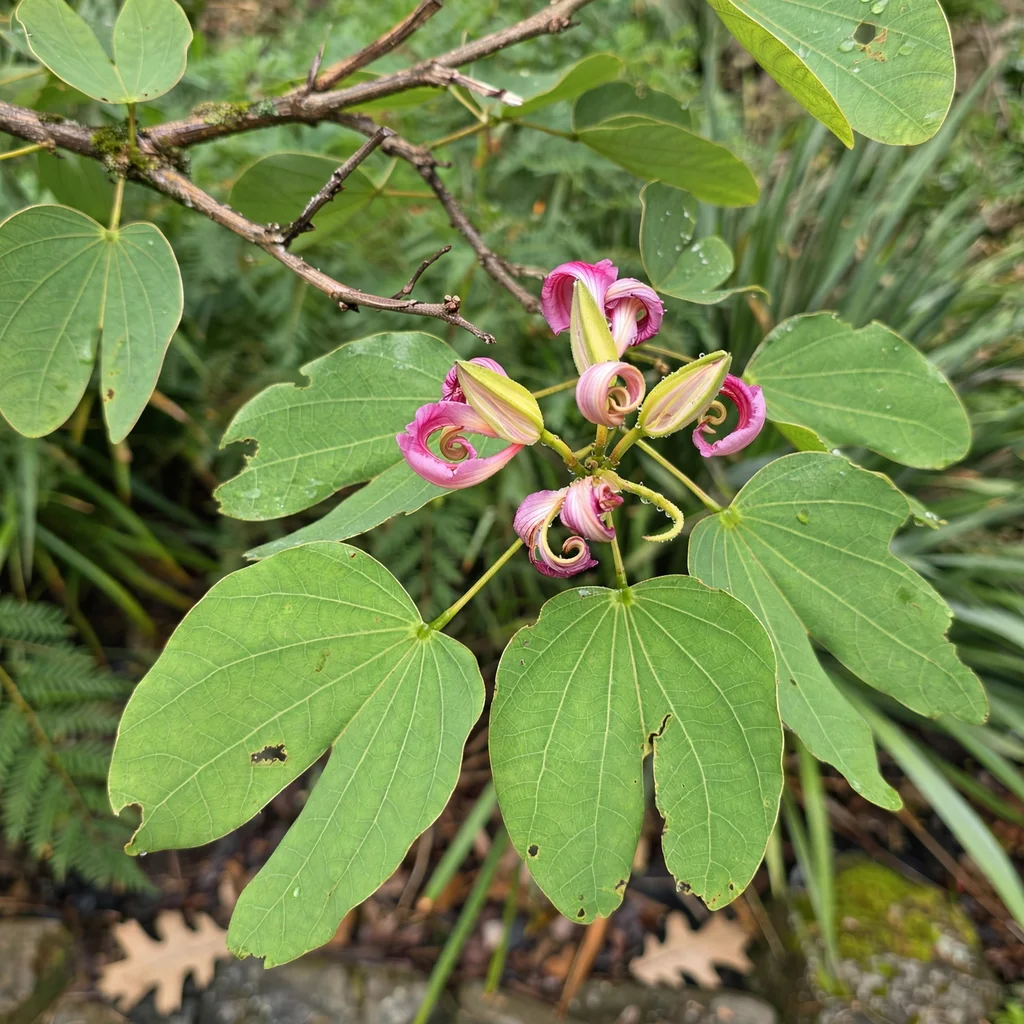
Chihuahuan Orchid Tree
Bauhinia macranthera
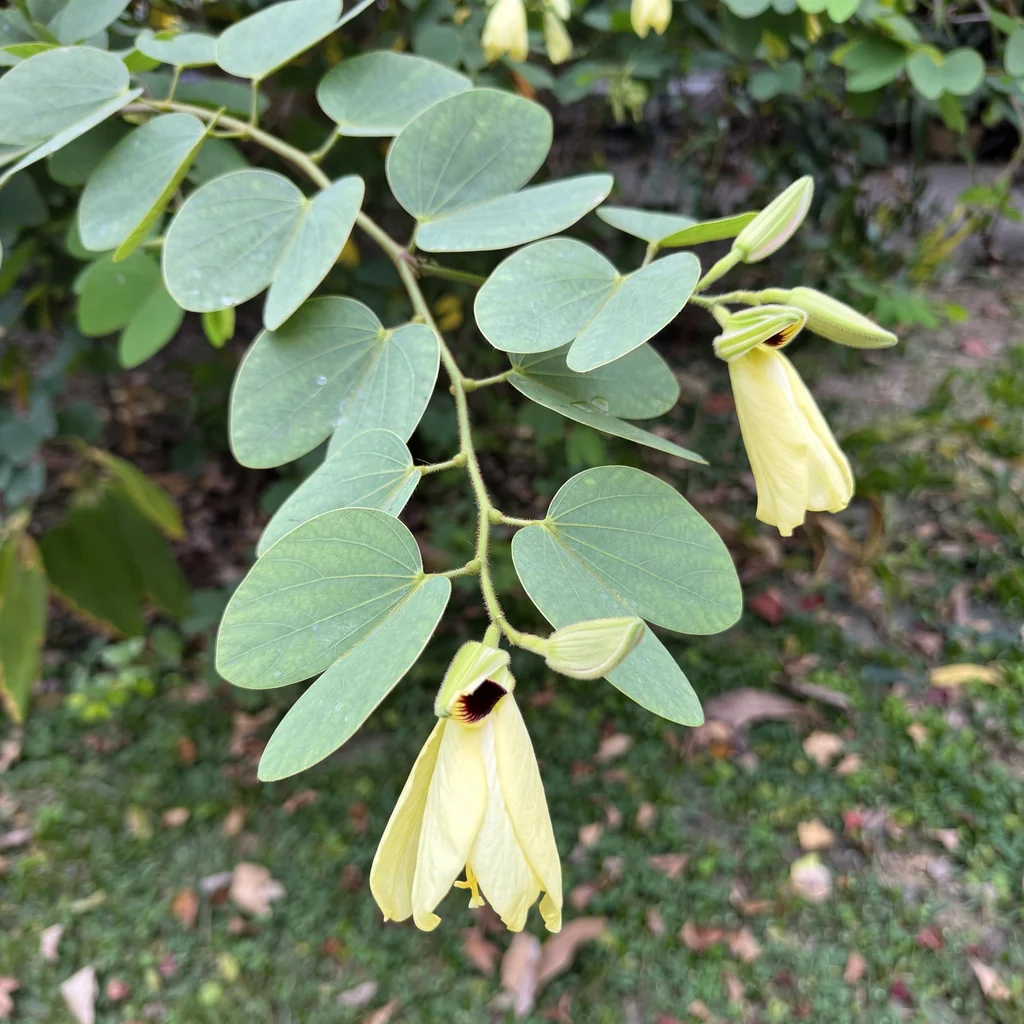
Yellow Bauhinia
Bauhinia tomentosa
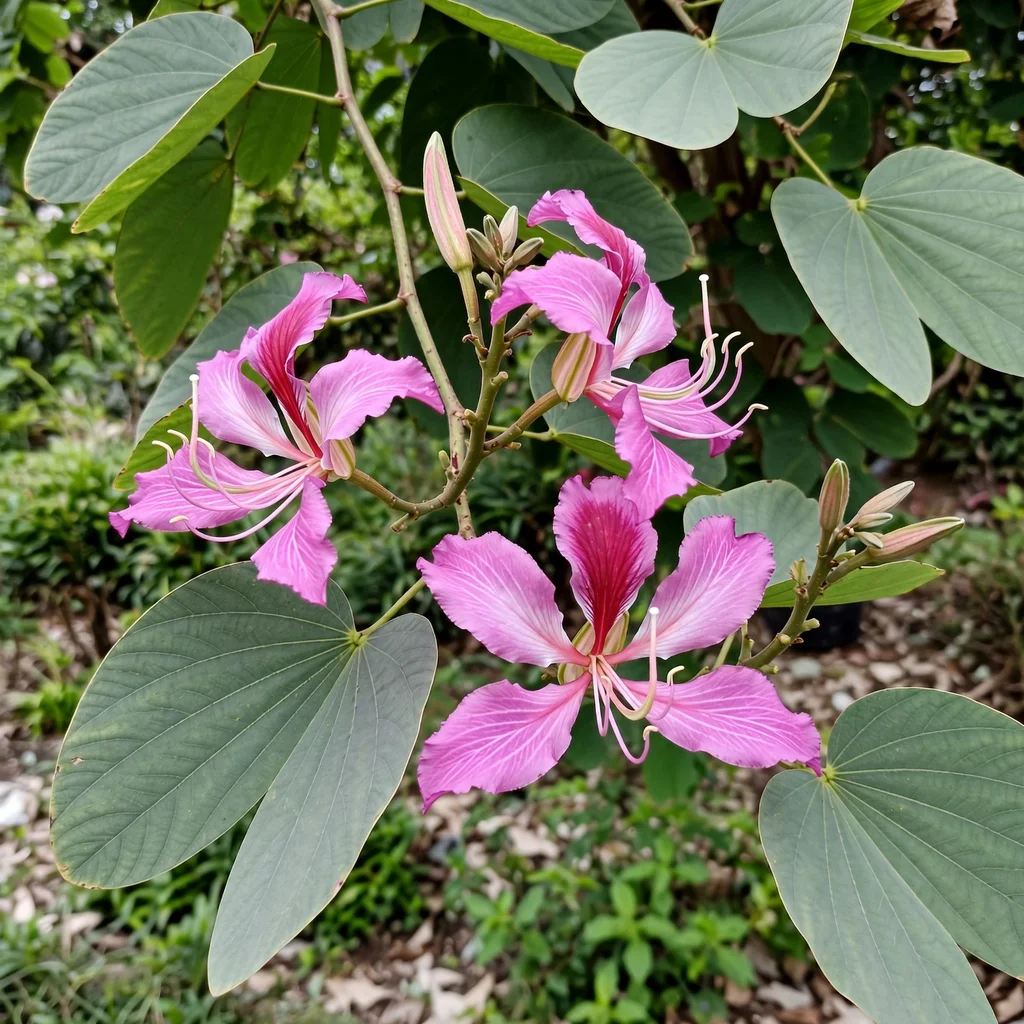
Hong Kong Orchid Tree
Bauhinia x blakeana
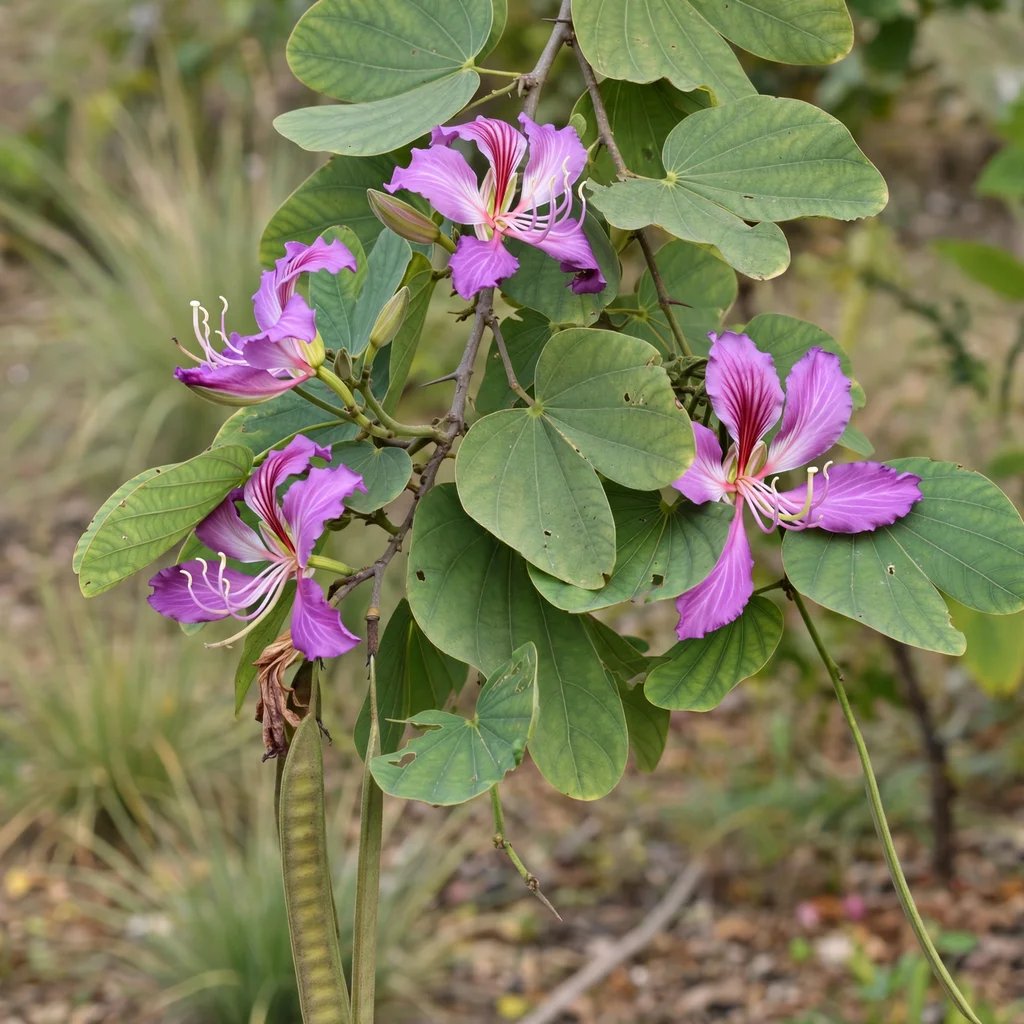
Purple Orchid-Tree
Bauhinia purpurea
Keep exploring
Explore the genus
Hardy in your zone?
Grow Red Orchid Bush with confidence
See it in a design of your actual yard, get zone-matched care reminders, and track it season by season in your garden journal.