The Story
Plant Bio
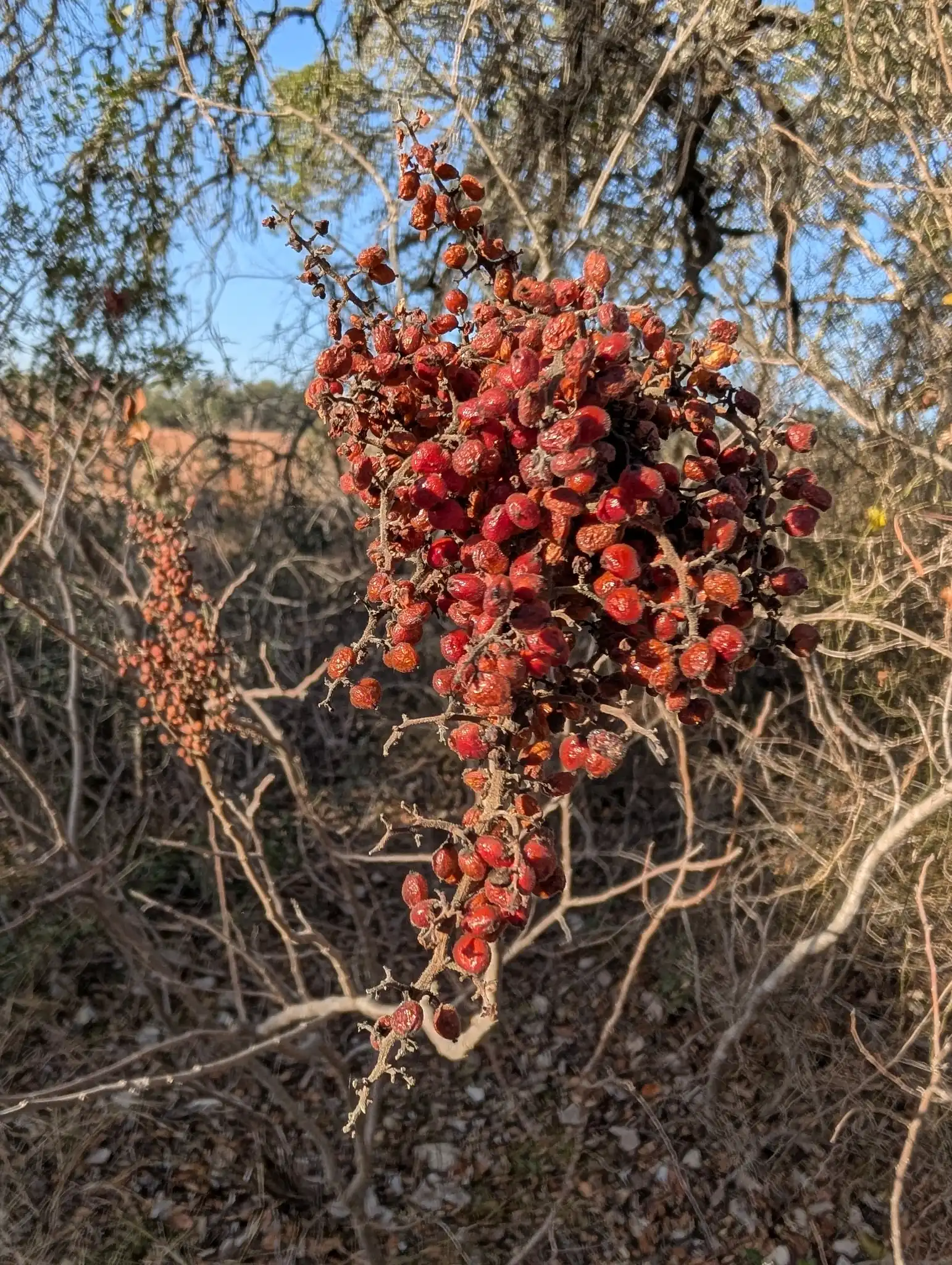
Rhus lanceolata is a deciduous North American sumac forming a loose suckering small tree or large shrub 12 to 18 feet tall. Leaves are alternate and pinnately compound to 12 inches long, with 7 to 15 narrow lance-shaped leaflets on a winged rachis, dark green above and paler and fuzzy beneath.
It is distinguished by entire-margined lanceolate leaflets and a distinctly winged leaf stalk, turning clear red in fall. Plants are dioecious, with only female plants carrying terminal pyramids of fuzzy red drupes through fall and winter, and it thrives on thin alkaline limestone where many trees fail.
Uses & Benefits:
Essentials
At a Glance
Plant Type
Shrub
Height
216"
Width
180"
Light
Full Sun, Partial Sun
Zones
5, 6, 7, 8, 9
Water
Low
Humidity
Unknown
Lifespan
Long-lived woody perennial
Native To
Texas, Oklahoma, Arizona, New Mexico and northern Mexico
Toxicity
Seeds and plant parts poisonous if ingested; not a skin irritant like poison sumac
Bloom period
Late spring – Late summer
In flower about 4 months of the year
Planting
How to Grow
- Set in full sun to partial shade in well-drained sand, loam, clay, or rocky limestone.
- Plant at the same depth as in the container with room for suckers to spread outward.
- Water deeply through the first season, then taper off once roots are established.
- Mulch lightly to conserve moisture and keep mowers away from emerging suckers.
Pro Tip
Give it room to sucker into a thicket and include a female plant if winter fruit is wanted, as male plants never fruit.
Keep It Thriving
Care Guide
Do
- Do site it where spreading suckers can form a colony without invading paths.
- Do leave female fruit panicles standing for winter birds.
- Do protect young stems from deer browsing until bark hardens.
Don't
- Do not plant in soggy or poorly drained soil.
- Do not eat the fruit or foliage; plant parts are poisonous if ingested.
- Do not confuse it with poison sumac; this species does not cause skin blistering.
Seasonal Care Calendar
| Task | Jan | Feb | Mar | Apr | May | Jun | Jul | Aug | Sep | Oct | Nov | Dec |
|---|---|---|---|---|---|---|---|---|---|---|---|---|
| Mulch | ||||||||||||
| Pest Check | ||||||||||||
| Plant | ||||||||||||
| Prune |
Watch Out For
Pests & Diseases
Common Pests
Common Diseases
In the Garden
Landscape Uses & Companions
Landscape Uses
Multiply
Propagation Methods
Good to Know
Common Questions
Prairie Sumac questions
What zones can Prairie Sumac grow in?
Prairie Sumac is hardy in USDA Zones 5–9: in that range it survives winter in the ground. Colder than Zone 5, grow it in a container you can move to shelter for the winter. Warmer than Zone 9, winter isn't the problem: it prefers colder winters, and summer heat can shorten its life.
Is Prairie Sumac deer resistant?
Not reliably. Deer may browse Prairie Sumac, especially tender spring growth — plan on repellents or fencing where pressure is high.
When does Prairie Sumac bloom?
Prairie Sumac typically blooms from late spring to late summer. Exact timing shifts a week or two with your zone — Sow's bloom calendar maps it to your garden.
Does Prairie Sumac need full sun?
Prairie Sumac does best in full sun to part shade. In hot climates, afternoon shade keeps blooms fresher longer.
Is Prairie Sumac drought tolerant?
Yes — once established (usually after the first full season), Prairie Sumac handles dry spells with minimal watering. Water deeply its first year to build the root system that makes that possible.
More Rhus to compare
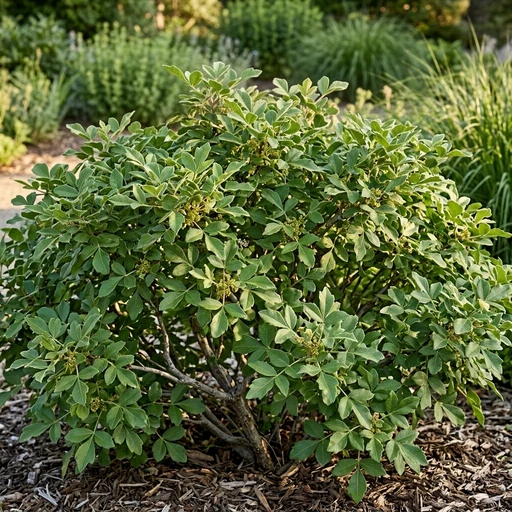
Gro-Low Fragrant Sumac
Rhus aromatica 'Gro-Low'
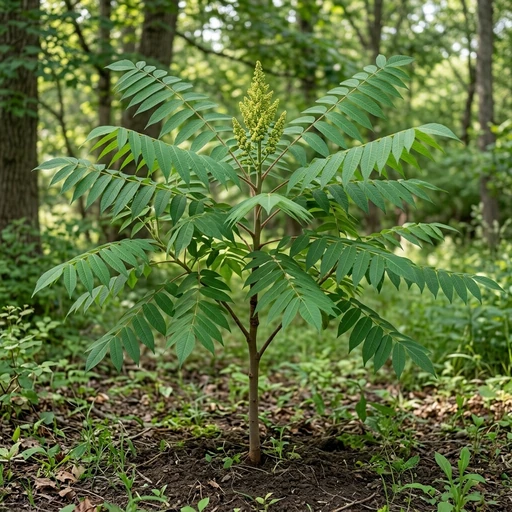
Smooth Sumac
Rhus glabra
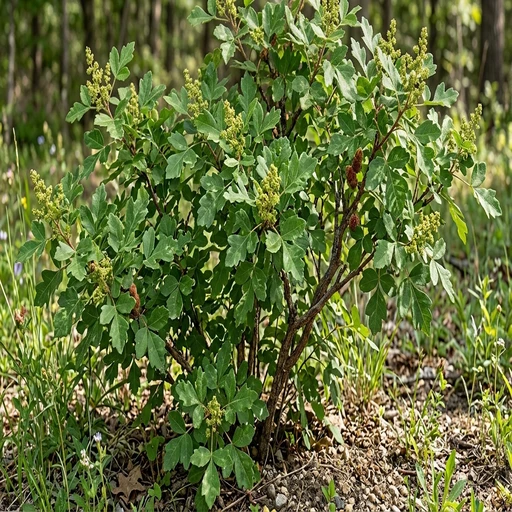
Fragrant Sumac
Rhus aromatica
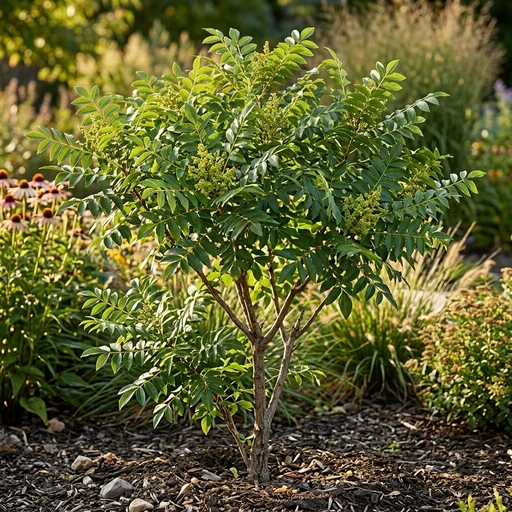
Shining Sumac
Rhus copallinum
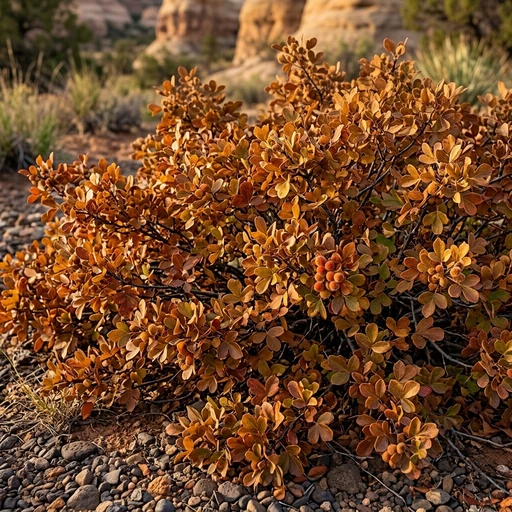
Autumn Amber Prostrate Three-leaf Sumac
Rhus trilobata 'Autumn Amber'
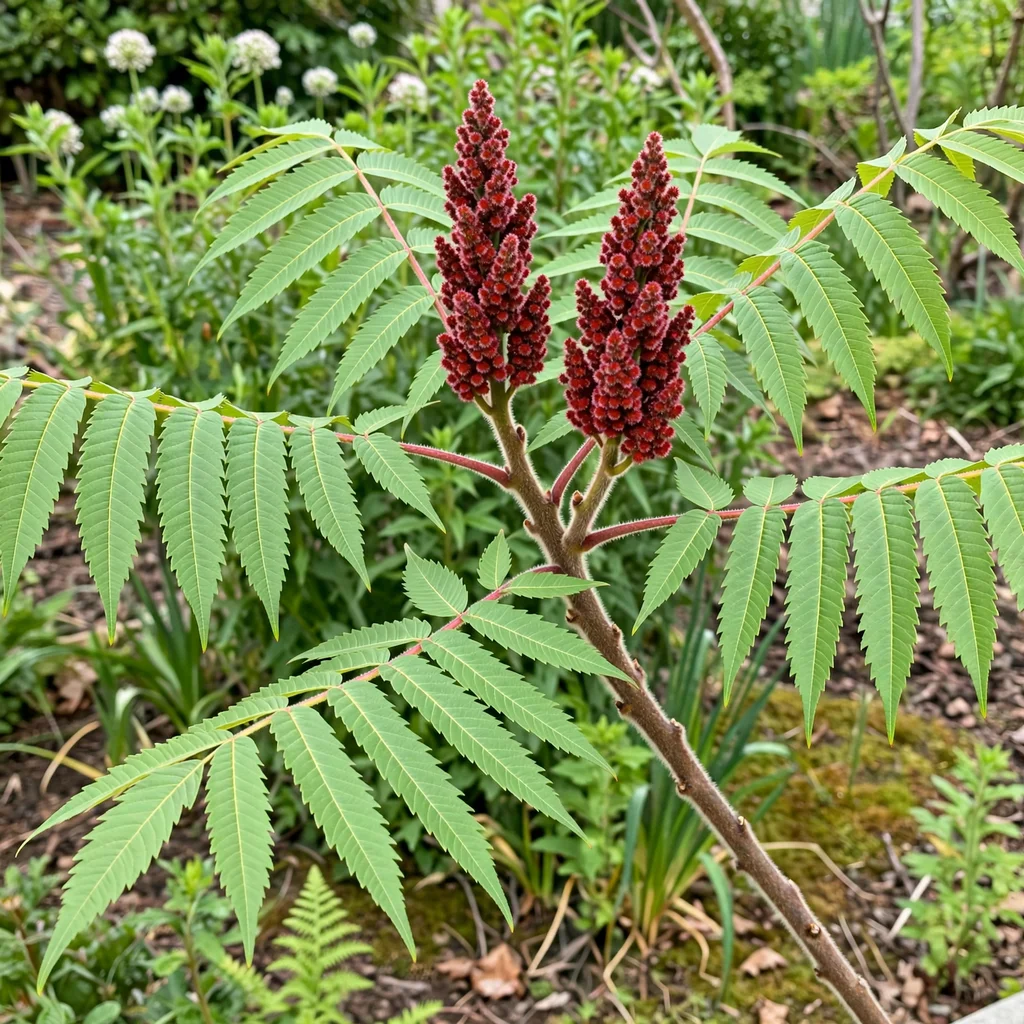
Staghorn Sumac
Rhus typhina
Keep exploring
Explore the genus
Hardy in your zone?
Grow Prairie Sumac with confidence
See it in a design of your actual yard, get zone-matched care reminders, and track it season by season in your garden journal.