The Story
Plant Bio
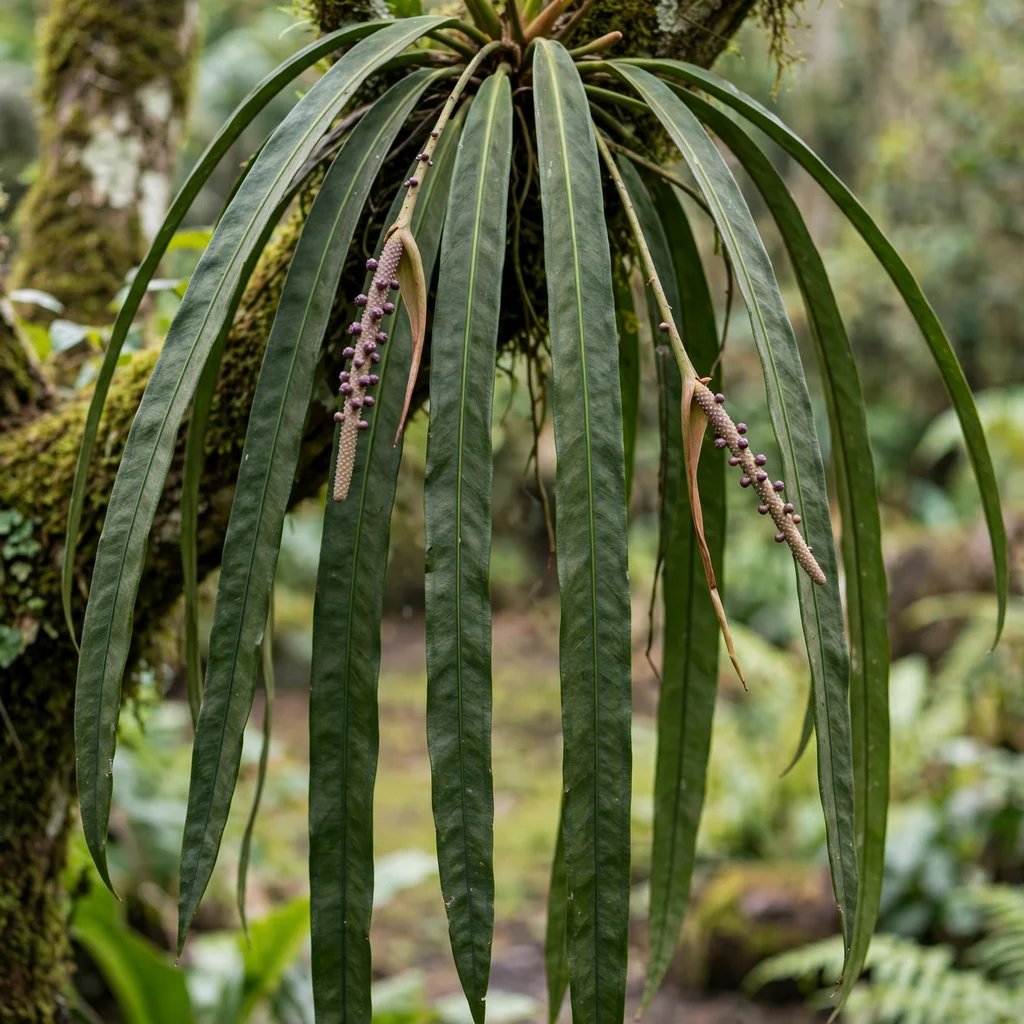
Anthurium vittariifolium is an epiphytic tropical perennial native to lower elevation moist forests of the Amazon basin. It grows naturally attached to tree trunks and branches, forming a pendulous rosette of foliage.
This species is distinguished by its extremely long, narrow, dark green leathery leaves that can hang up to eight feet downwards. Unlike showy spathe-flowering anthuriums, it is grown for its dramatic trailing habit and non-ornamental pink fruiting spikes.
Uses & Benefits:
Essentials
At a Glance
Plant Type
Tropical
Height
94"
Width
12"
Light
Partial Sun, Shade
Zones
9, 10
Water
Keep moist but well-drained
Humidity
60-70%
Lifespan
Perennial
Native To
Colombia, Ecuador, Peru, Brazil North
Toxicity
Toxic to humans and pets
Bloom period
Year round
In flower about 12 months of the year
Planting
How to Grow
- Pot into a hanging container using a well-draining mixture of orchid bark, peat moss, perlite, and potting soil.
- Place in a warm location receiving bright, filtered indirect light while shielding from direct sunlight.
- Maintain ambient relative humidity above 50 percent using a room humidifier or pebble tray.
- Water thoroughly when the top two inches of potting medium feel dry to the touch, allowing excess water to drain completely.
- Wipe leathery foliage periodically with a damp cloth to remove dust and deter sap-sucking insects.
Pro Tip
Position the plant high in a hanging basket to accommodate the long downward leaf growth, and plant in a highly porous coarse aroid substrate to prevent root rot.
Keep It Thriving
Care Guide
Do
- Keep ambient humidity high to avoid dry brown leaf tips.
- Allow the top layer of substrate to dry out slightly between waterings.
- Wear gloves when handling or pruning to protect skin from calcium oxalate sap.
Don't
- Do not expose foliage to direct sunlight, which scorches the leathery leaves.
- Do not allow the pot to sit in standing water or remain soggy.
- Do not hard-prune healthy stems; remove only yellowed or dying leaves.
Seasonal Care Calendar
| Task | Jan | Feb | Mar | Apr | May | Jun | Jul | Aug | Sep | Oct | Nov | Dec |
|---|---|---|---|---|---|---|---|---|---|---|---|---|
| Fertilize | ||||||||||||
| Pest Check | ||||||||||||
| Prune | ||||||||||||
| Winter Prep |
Watch Out For
Pests & Diseases
Common Pests
Common Diseases
In the Garden
Landscape Uses & Companions
Landscape Uses
Companion Plants
Multiply
Propagation Methods
Good to Know
Common Questions
Strapleaf Anthurium questions
What zones can Strapleaf Anthurium grow in?
Strapleaf Anthurium is hardy in USDA Zones 9–10: in that range it survives winter in the ground. Colder than Zone 9, grow it in a container you can move to shelter for the winter, or as an annual.
When does Strapleaf Anthurium bloom?
Strapleaf Anthurium typically blooms year-round. Exact timing shifts a week or two with your zone — Sow's bloom calendar maps it to your garden.
Does Strapleaf Anthurium need full sun?
Strapleaf Anthurium does best in part shade.
More Anthurium to compare
Keep exploring
Explore the genus
Hardy in your zone?
Grow Strapleaf Anthurium with confidence
See it in a design of your actual yard, get zone-matched care reminders, and track it season by season in your garden journal.