The Story
Plant Bio
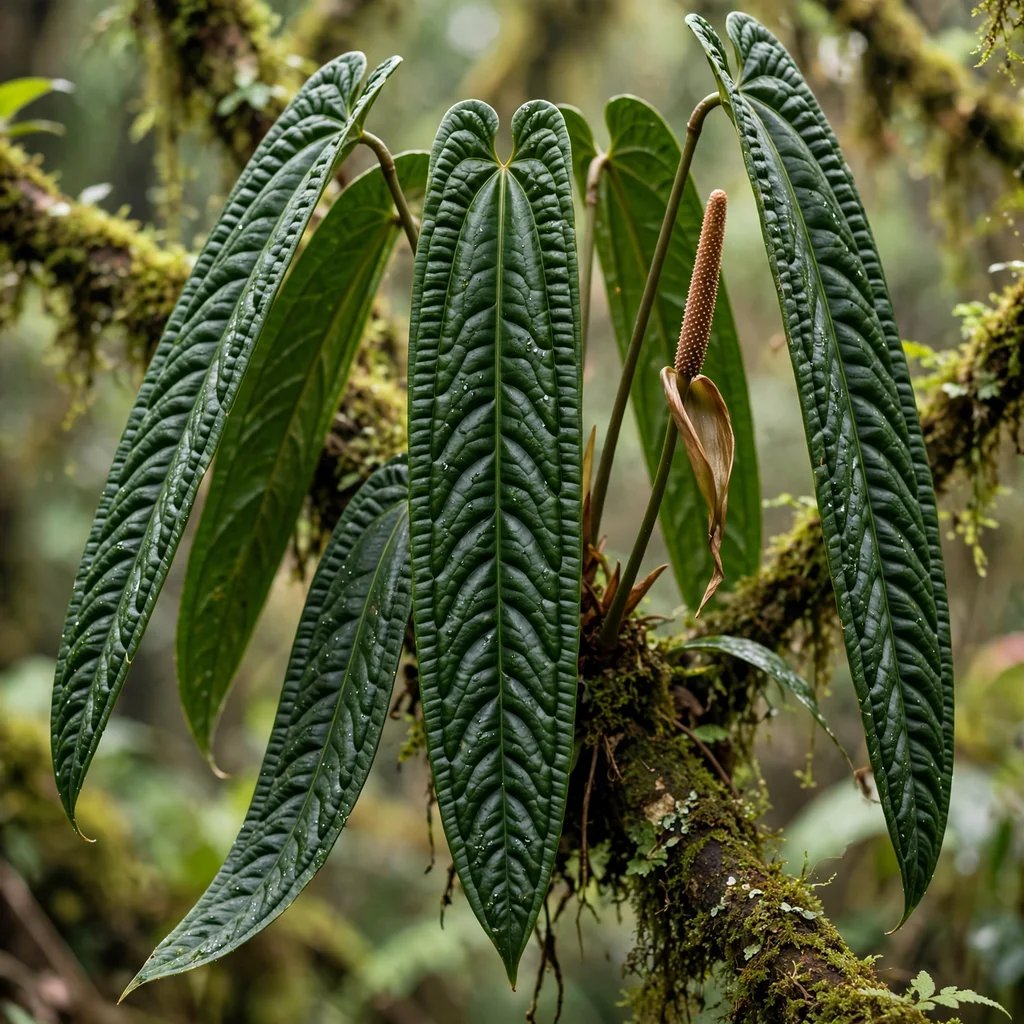
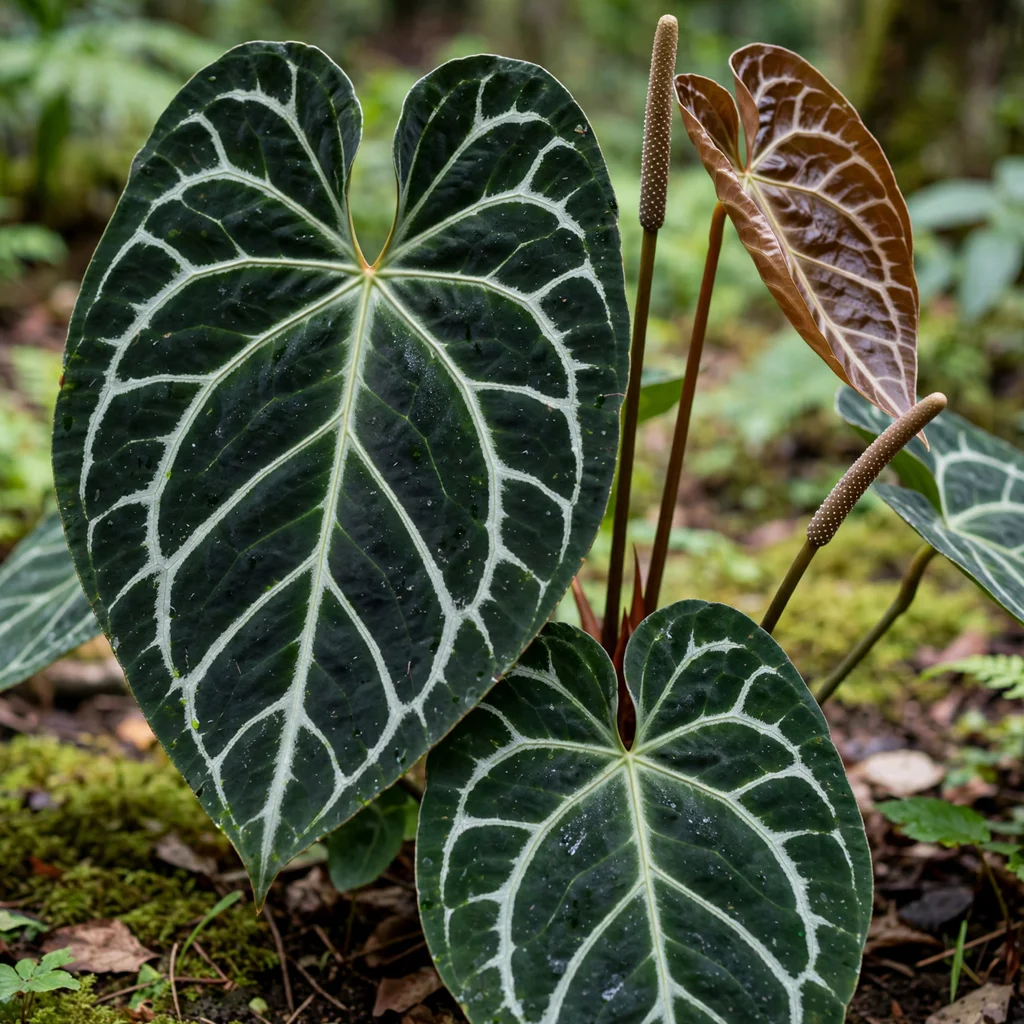
Anthurium veitchii is an epiphytic evergreen subshrub from the wet rainforest canopies of Colombia, forming a short stem with terete petioles and long arching to pendulous strap-like leaves. The bloom is a typical aroid inflorescence with a slender pale spathe and cylindrical spadix on an upright peduncle, produced sporadically in warmth and secondary to the foliage.
The elongate-oblong blades are leathery dark green and heavily corrugated, with closely spaced primary lateral veins that quilt the surface into ripples. New growth emerges light green bronze-tinged before hardening to pendent straps that reach 2 to 6 feet in humid greenhouse air.
Uses & Benefits:
Essentials
At a Glance
Plant Type
Tropical
Height
71"
Width
47"
Light
Partial Sun, Shade
Water
Consistently moist, never waterlogged
Humidity
High, 60-80% or higher
Lifespan
Perennial, long-lived indoors
Native To
Colombia (Antioquia and Choco)
Toxicity
Toxic if ingested; sap is a skin irritant
Bloom period
Spring – Summer
In flower about 6 months of the year
Planting
How to Grow
- Give bright filtered indirect light; keep out of direct sun, which scorches the blades.
- Pot in a coarse aerated aroid mix of orchid bark, perlite, charcoal and peat or coir at pH 5.5 to 6.5, with the stem above the surface.
- Water to keep the mix consistently moist but never soggy; empty the saucer so roots never stand in water.
- Hold humidity at 60 to 80 percent or higher and temperatures above 50 degrees F; cold below 50 degrees damages leaves and frost kills the plant.
- Feed with balanced water-soluble fertilizer at half strength every 4 to 6 weeks in spring and summer only.
- Wipe the corrugated leaves every few weeks to remove dust and check topsoil moisture before watering again.
Pro Tip
Set the stem proud of a coarse bark perlite charcoal and coir mix and never bury it; dense potting soil holds water around the epiphytic roots and triggers fatal rot.
Keep It Thriving
Care Guide
Do
- Provide 60 to 80 percent humidity with good air movement
- Use an open bark-based mix with sharp drainage and high oxygen at the roots
- Wipe leaves regularly to remove dust and deter pests
Don't
- Do not place in direct sun or below 50 degrees F
- Do not overwater or leave the pot standing in a saucer of water
- Do not bury the stem, cut into old leafless stems, or handle unfurling leaves roughly
Seasonal Care Calendar
| Task | Jan | Feb | Mar | Apr | May | Jun | Jul | Aug | Sep | Oct | Nov | Dec |
|---|---|---|---|---|---|---|---|---|---|---|---|---|
| Fertilize | ||||||||||||
| Pest Check | ||||||||||||
| Propagate | ||||||||||||
| Prune |
Watch Out For
Pests & Diseases
Common Pests
Common Diseases
In the Garden
Landscape Uses & Companions
Landscape Uses
Companion Plants
Multiply
Propagation Methods
Good to Know
Common Questions
King Anthurium questions
When does King Anthurium bloom?
King Anthurium typically blooms from spring to summer. Exact timing shifts a week or two with your zone — Sow's bloom calendar maps it to your garden.
Does King Anthurium need full sun?
King Anthurium does best in part shade.
More Anthurium to compare
Keep exploring
Explore the genus
Grow King Anthurium with confidence
See it in a design of your actual yard, get zone-matched care reminders, and track it season by season in your garden journal.