The Story
Plant Bio
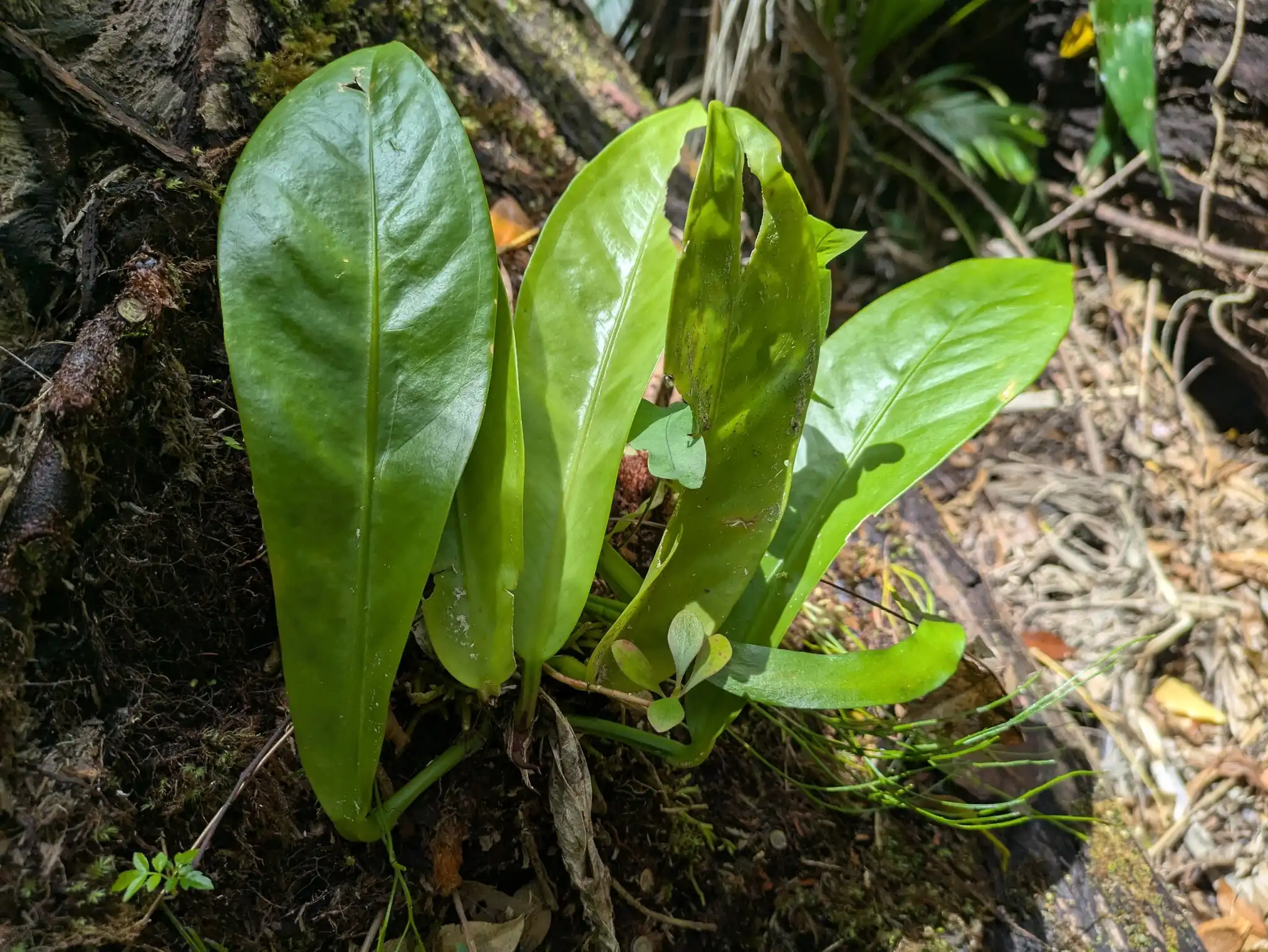
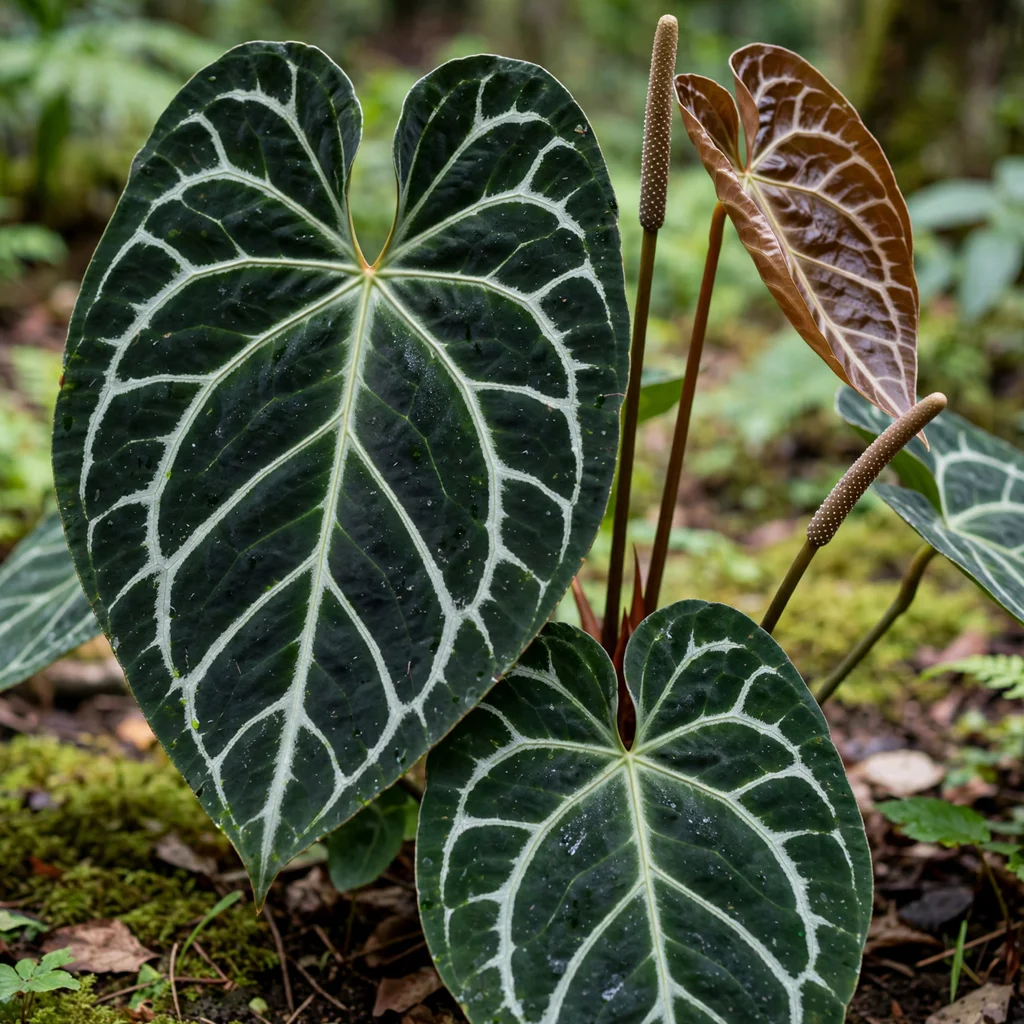
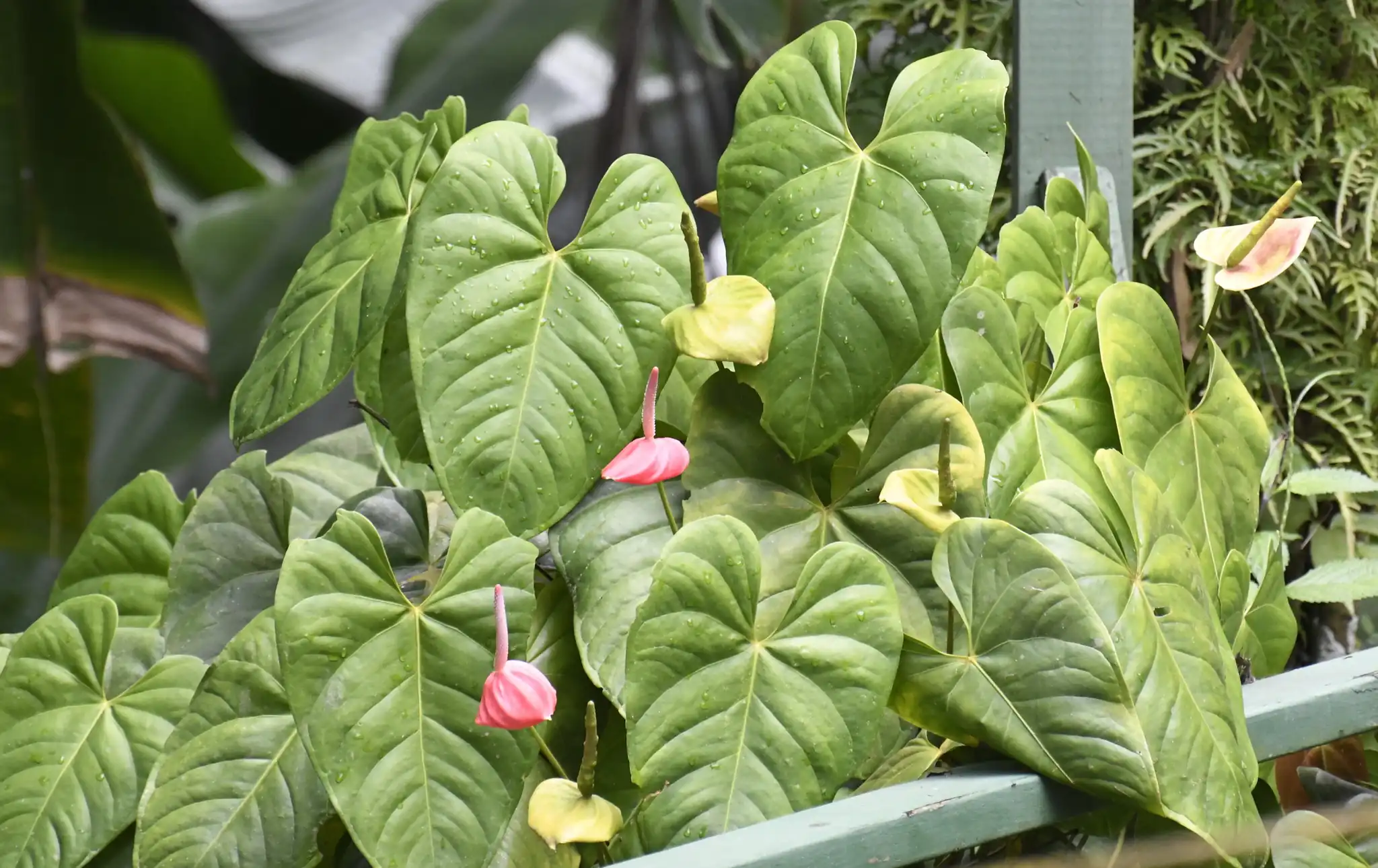
Anthurium hookeri is a stemless bird's-nest aroid from humid forests of the Caribbean and northern South America, forming a dense rosette terrestrially or as an epiphyte with short internodes and thick roots. The leaves are large oblanceolate paddles of glossy dark green, dotted with black glands on both faces and carried on lanceolate cataphylls.
True plants are distinguished by nine to fifteen primary veins per side with evenly spaced interprimary veins in a ladder-like pattern, and new leaves that unroll supervolute, bright green before hardening dark. The bloom is a persistent pale green spathe tinged purple around a violet-purple cylindroid spadix that ripens to white berries, produced year-round in the tropics and sporadically indoors.
Uses & Benefits:
Essentials
At a Glance
Plant Type
Tropical
Height
30"
Width
30"
Light
Partial Sun, Shade
Zones
10
Water
Evenly moist
Humidity
High (60-80%)
Lifespan
Long-lived evergreen perennial
Native To
Caribbean and northern South America
Toxicity
Toxic to people and pets
Bloom period
Year round
In flower about 12 months of the year
Planting
How to Grow
- Grow indoors in bright indirect light with no direct sun, which scorches the paddles.
- Hold temperatures 65 to 75F with 60 to 80 percent humidity and steady airflow around the leaves.
- Pot in a loose well-drained aroid mix of bark, perlite and peat; keep evenly moist but never soggy.
- Feed lightly with dilute liquid fertilizer only during spring and summer growth.
- Repot every 2 to 3 years when root-bound; wipe leaves clean and remove only dead outer leaves.
Pro Tip
Keep the crown snug in a coarse open aroid mix and water only when the top inch dries; oversized pots and constant wetness rot the root mass.
Keep It Thriving
Care Guide
Do
- Provide bright indirect light and high humidity with airflow
- Water when the top inch dries, keeping the mix evenly moist
- Feed lightly during active growth only
- Repot every 2 to 3 years when root-bound
Don't
- Do not place in direct sun
- Do not overwater or overpot into a large container
- Do not hard-prune the crown bare or cut into leafless stem
Seasonal Care Calendar
| Task | Jan | Feb | Mar | Apr | May | Jun | Jul | Aug | Sep | Oct | Nov | Dec |
|---|---|---|---|---|---|---|---|---|---|---|---|---|
| Fertilize | ||||||||||||
| Pest Check | ||||||||||||
| Propagate | ||||||||||||
| Prune | ||||||||||||
| Winter Prep |
Watch Out For
Pests & Diseases
Common Pests
Common Diseases
In the Garden
Landscape Uses & Companions
Landscape Uses
Multiply
Propagation Methods
Good to Know
Common Questions
Bird's Nest Anthurium questions
What zones can Bird's Nest Anthurium grow in?
Bird's Nest Anthurium is hardy in USDA Zone 10: in that range it survives winter in the ground. Colder than Zone 10, grow it in a container you can move to shelter for the winter, or as an annual.
Is Bird's Nest Anthurium deer resistant?
Yes — Bird's Nest Anthurium is rated deer-resistant. Deer typically pass it over, though extreme hunger can override any plant's defenses.
When does Bird's Nest Anthurium bloom?
Bird's Nest Anthurium typically blooms year-round. Exact timing shifts a week or two with your zone — Sow's bloom calendar maps it to your garden.
Does Bird's Nest Anthurium need full sun?
Bird's Nest Anthurium does best in part shade.
More Anthurium to compare
Keep exploring
Explore the genus
Hardy in your zone?
Grow Bird's Nest Anthurium with confidence
See it in a design of your actual yard, get zone-matched care reminders, and track it season by season in your garden journal.