The Story
Plant Bio
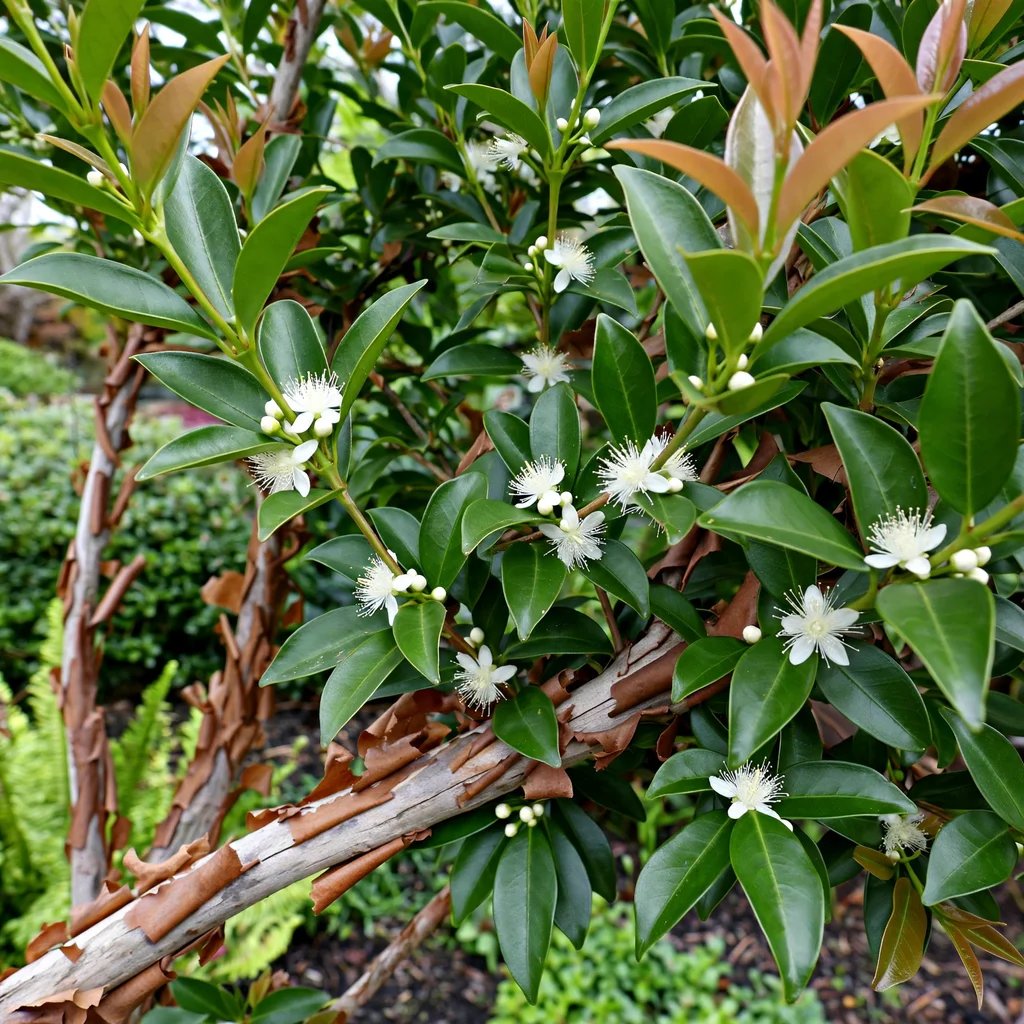
Plinia cauliflora, still sold as Myrciaria cauliflora, is a slow-growing evergreen tree of the myrtle family from the humid coastal forests of southern and eastern Brazil that reaches 13 to 16 feet in Florida gardens. New growth emerges coppery-green and matures to glossy dark green, while mature bark peels in reddish-brown flakes to expose pale gray wood.
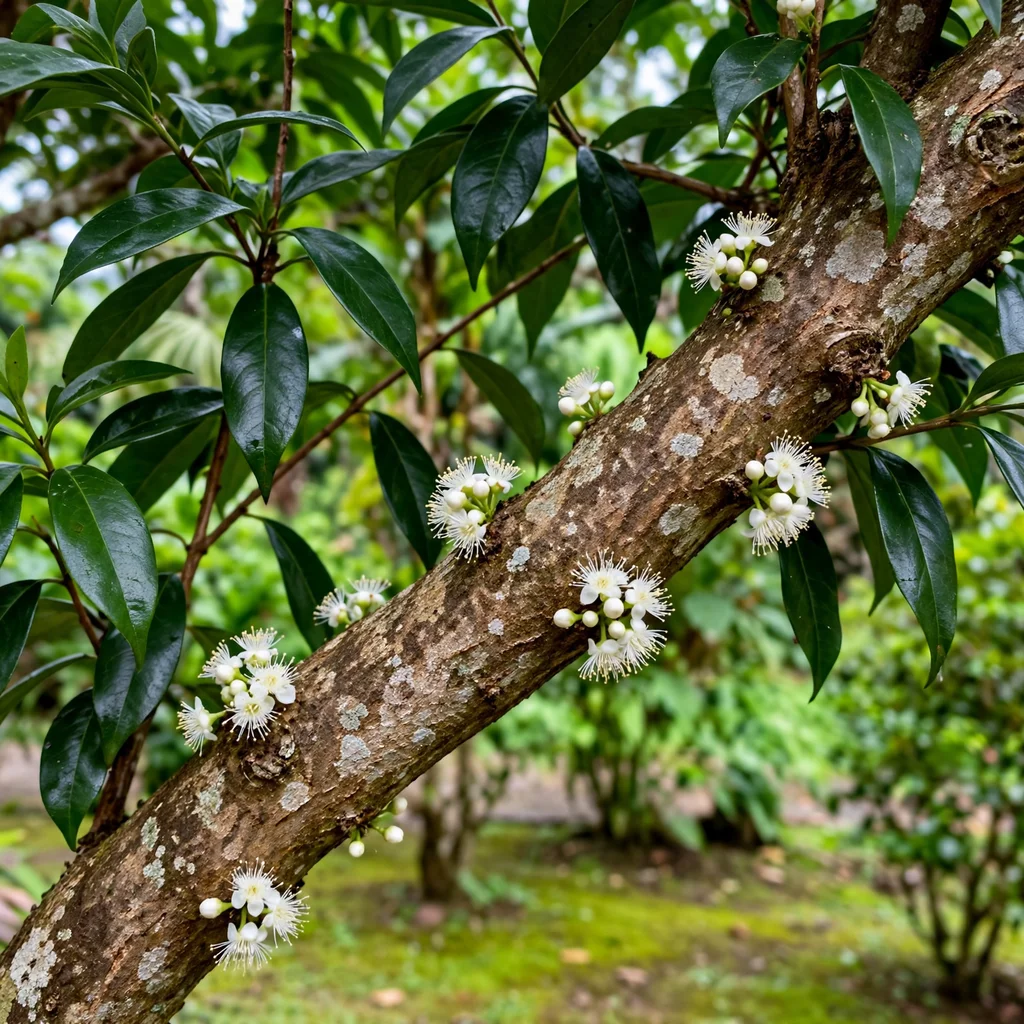
Flowers and fruit form directly on the trunk and stout limbs, with clusters of small scented white flowers with prominent stamens opening in spring and sporadically through the year. Fruit follows in about 25 days, ripening from green to purple-black grape-like berries with sweet-tart white pulp eaten fresh or made into jam and wine.
Uses & Benefits:
Essentials
At a Glance
Plant Type
Tree
Height
192"
Width
144"
Light
Full Sun, Partial Sun
Zones
9, 10
Water
High
Humidity
High
Lifespan
Long-lived tree
Native To
Southern and eastern Brazil
Toxicity
Non-toxic - edible fruit
Bloom period
Spring – Year round
In flower about 10 months of the year
Planting
How to Grow
- Plant in spring in deep rich well-drained acid soil pH 5.5 to 6.5 in full sun or partial shade.
- Set the rootball so the crown sits 2 to 3 inches above grade for runoff, backfill with lime-free soil and water in.
- Mulch 3 inches deep to hold moisture, keeping mulch clear of the trunk to show the bark.
- Water deeply to keep soil evenly moist and feed with complete fertilizer plus trace elements three times a year on alkaline soils.
- Pick fruit as it turns from green to purple-black and refrigerate at once; fresh fruit spoils within two days.
Pro Tip
Plant the crown 2 to 3 inches high in lime-free acid soil, keep water even and leave low limbs unpruned; burying the crown rots the roots, alkaline soil starves the leaves, and shearing removes the flowering wood while fruit takes five to eight years.
Keep It Thriving
Care Guide
Do
- Keep soil evenly moist with deep watering in dry weather
- Grow in lime-free acid soil and mulch to conserve moisture
- Net ripening fruit if birds and squirrels take it
Don't
- Do not plant in salty or coastal soil
- Do not bury the crown or leave roots waterlogged
- Do not shear low trunk limbs that carry flowers and fruit
Seasonal Care Calendar
| Task | Jan | Feb | Mar | Apr | May | Jun | Jul | Aug | Sep | Oct | Nov | Dec |
|---|---|---|---|---|---|---|---|---|---|---|---|---|
| Fertilize | ||||||||||||
| Harvest | ||||||||||||
| Mulch | ||||||||||||
| Pest Check | ||||||||||||
| Plant |
Watch Out For
Pests & Diseases
Common Pests
Common Diseases
In the Garden
Landscape Uses & Companions
Landscape Uses
Multiply
Propagation Methods
Good to Know
Common Questions
Jaboticaba questions
What zones can Jaboticaba grow in?
Jaboticaba is hardy in USDA Zones 9–10: in that range it survives winter in the ground. Colder than Zone 9, winters are too cold for it to survive outdoors.
When does Jaboticaba bloom?
Jaboticaba typically blooms year-round. Exact timing shifts a week or two with your zone — Sow's bloom calendar maps it to your garden.
Does Jaboticaba need full sun?
Jaboticaba does best in full sun to part shade. In hot climates, afternoon shade keeps blooms fresher longer.
More Myrciaria to compare
Keep exploring
Explore the genus
Hardy in your zone?
Grow Jaboticaba with confidence
See it in a design of your actual yard, get zone-matched care reminders, and track it season by season in your garden journal.