The Story
Plant Bio
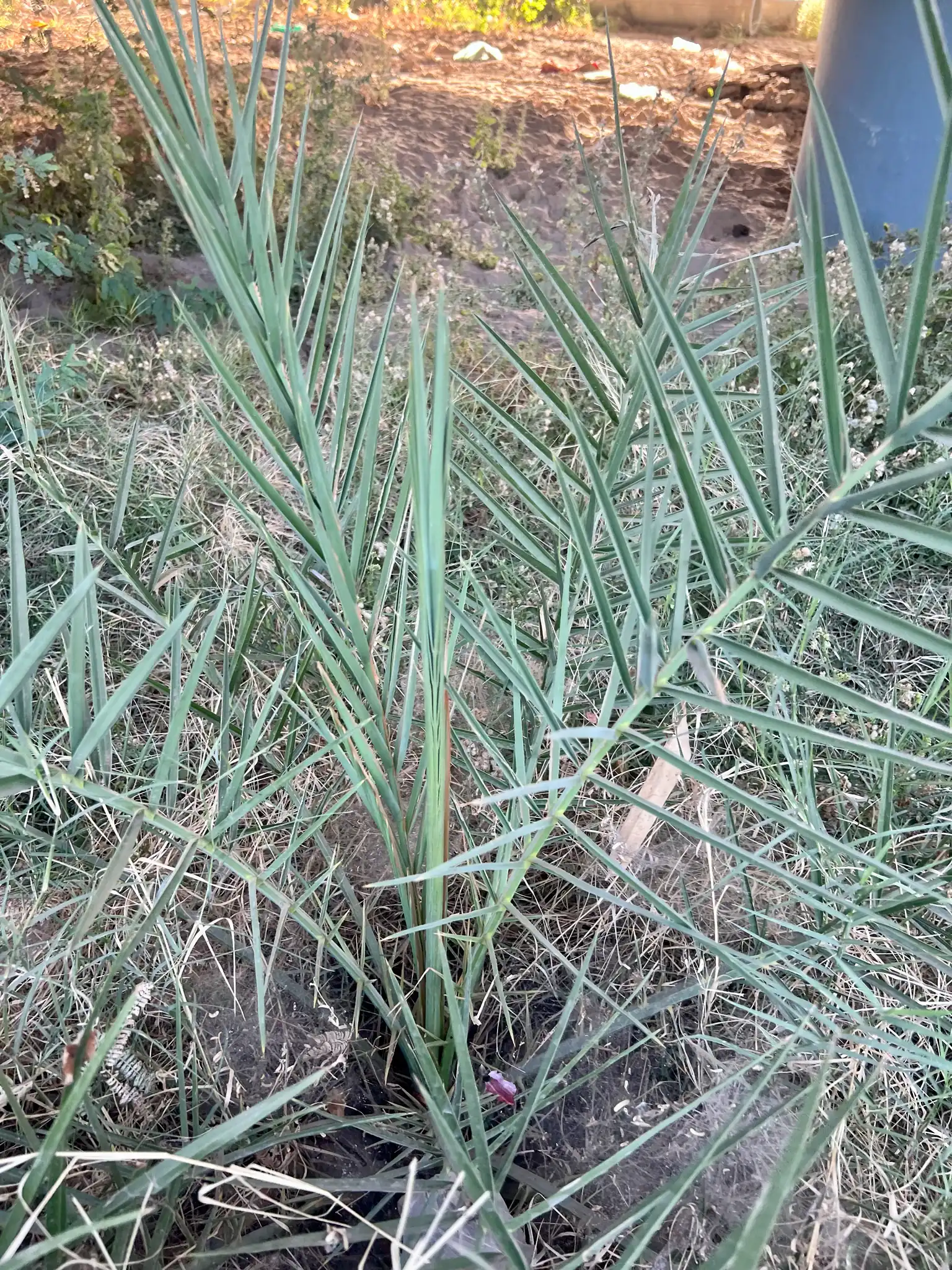
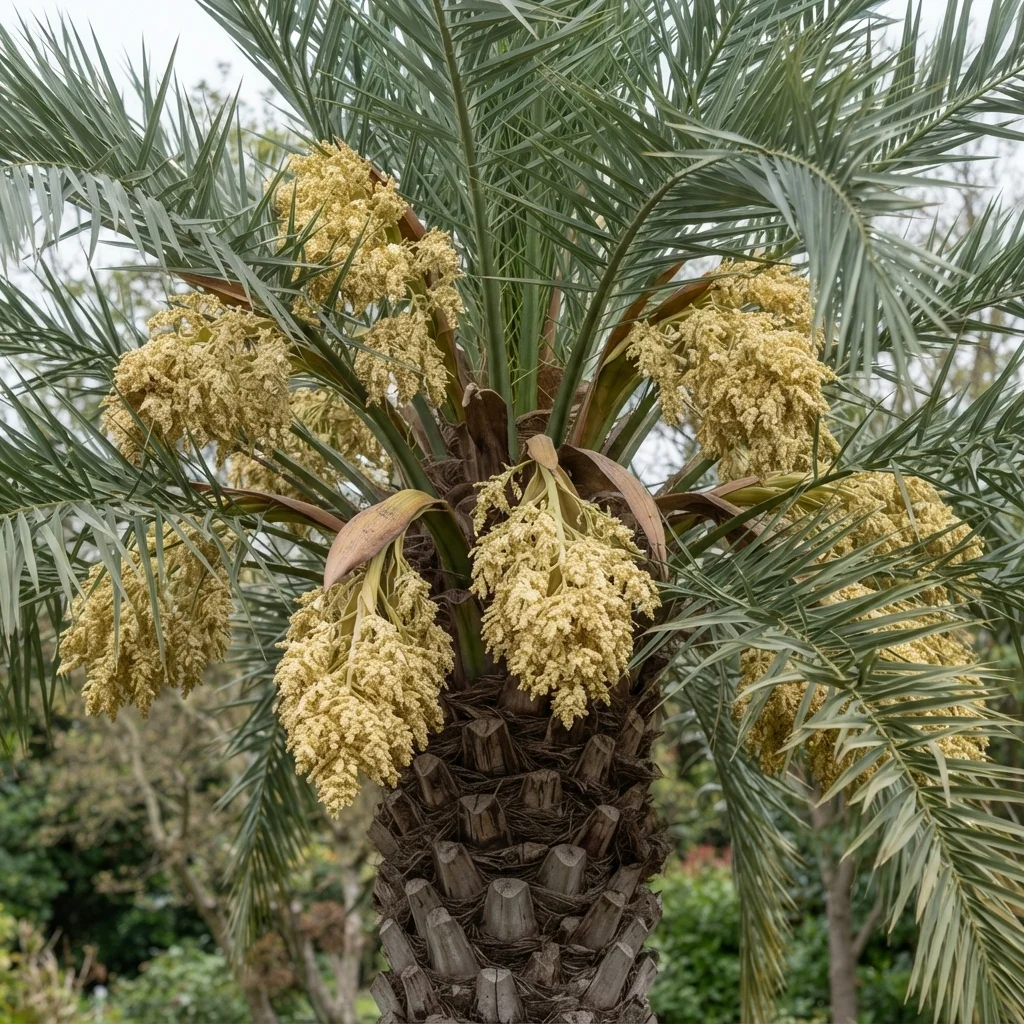
Phoenix sylvestris, the wild date palm, is a solitary single-stemmed palm reaching 40 to 50 feet tall with a 10- to 15-foot crown of pinnate blue-green to silvery-green fronds to 10 feet long. The stout trunk keeps a diamond pattern of old leaf-base scars and forms aerial roots at the base with age beneath a dense rounded crown.
Trees are dioecious, with heavily branched 3-foot yellow inflorescences of small white flowers among the leaves that form hanging clusters of 1-inch oblong fruit ripening from orange to dark red-purple on female trees. The petioles to 3 feet long are armed with sharp spines and the leaflets to 18 inches long show the strongest silver color in full direct sun.
Uses & Benefits:
Essentials
At a Glance
Plant Type
Tree
Height
600"
Width
180"
Light
Full Sun
Zones
8, 9, 10
Water
Moderate, drought tolerant once established
Humidity
Average
Lifespan
Long-lived palm
Native To
India, Pakistan, Nepal, Bangladesh, Myanmar and Andaman Islands
Toxicity
Non-toxic fruit; spiny petioles and highly allergenic male pollen
Marketplace
Where to Buy
Shipping costs Year-round shipping Free shipping
Planting
How to Grow
- Plant in full direct sun with at least 15 feet of clear space for the crown in well-drained sandy soil after frost risk passes.
- Set the root ball level with surrounding grade and water deeply after planting.
- Water regularly through the first two growing seasons for fastest growth, then reduce once established.
- Remove only fully brown dead fronds and leave green fronds; avoid wounding the trunk.
- Do not plant where lethal yellowing or Texas Phoenix palm decline is active in the neighborhood.
Pro Tip
Site in full sun with room for the full crown to expand and water regularly while young; established trees tolerate drought but grow faster with steady water.
Keep It Thriving
Care Guide
Do
- Plant in full sun in well-drained sandy soil
- Water regularly for best growth though established plants tolerate drought
- Give room for a 10- to 15-foot crown and keep spiny petioles clear of paths
Don't
- Don't plant where lethal yellowing or Texas Phoenix palm decline is present
- Don't cut live green fronds or wound the trunk
- Don't plant a male tree where airborne pollen will be a problem
Seasonal Care Calendar
| Task | Jan | Feb | Mar | Apr | May | Jun | Jul | Aug | Sep | Oct | Nov | Dec |
|---|---|---|---|---|---|---|---|---|---|---|---|---|
| Mulch | ||||||||||||
| Pest Check | ||||||||||||
| Plant | ||||||||||||
| Prune | ||||||||||||
| Winter Prep |
Watch Out For
Pests & Diseases
Common Pests
Common Diseases
In the Garden
Landscape Uses & Companions
Landscape Uses
Multiply
Propagation Methods
Good to Know
Common Questions
Wild Date Palm questions
What zones can Wild Date Palm grow in?
Wild Date Palm is hardy in USDA Zones 8–10: in that range it survives winter in the ground. Colder than Zone 8, winters are too cold for it to survive outdoors.
Does Wild Date Palm need full sun?
Wild Date Palm does best in full sun (6+ hours).
Is Wild Date Palm drought tolerant?
Yes — once established (usually after the first full season), Wild Date Palm handles dry spells with minimal watering. Water deeply its first year to build the root system that makes that possible.
More Phoenix to compare
Keep exploring
Explore the genus
Hardy in your zone?
Grow Wild Date Palm with confidence
See it in a design of your actual yard, get zone-matched care reminders, and track it season by season in your garden journal.