The Story
Plant Bio
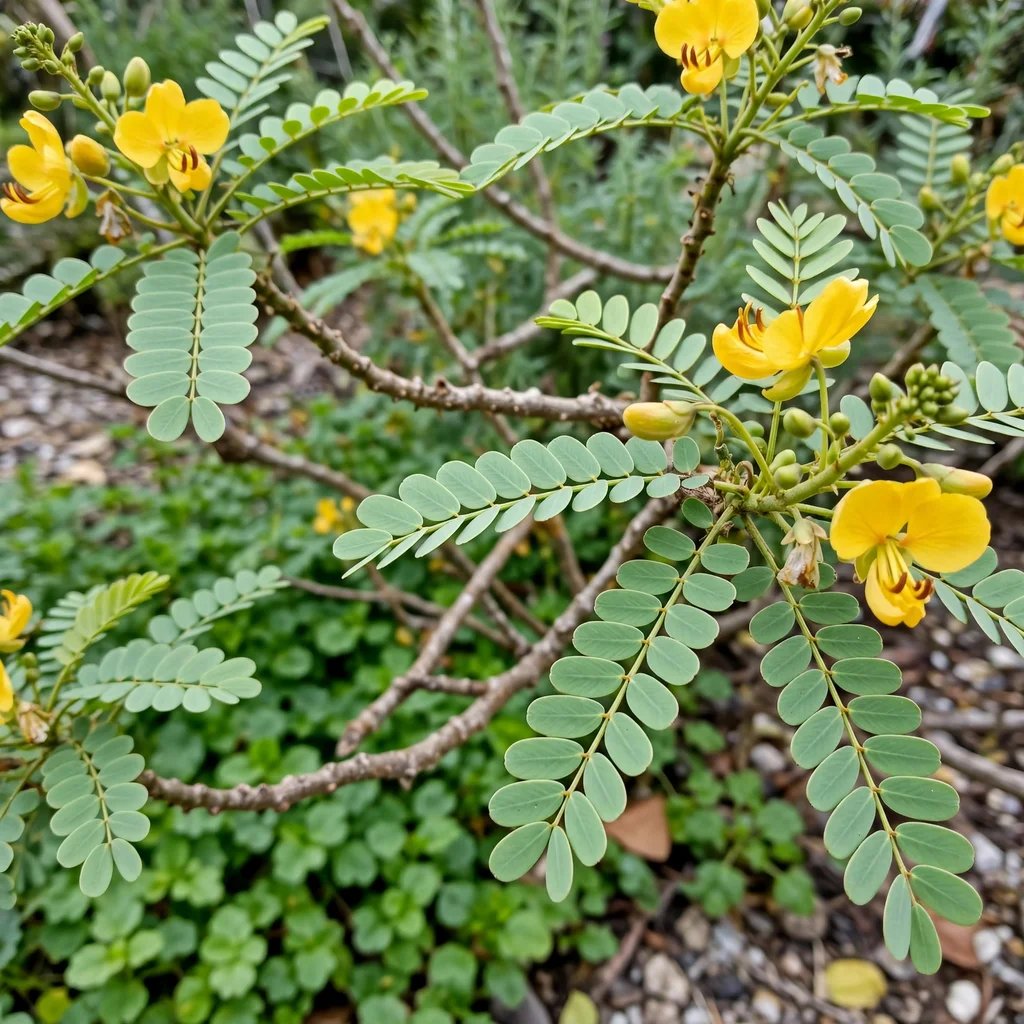
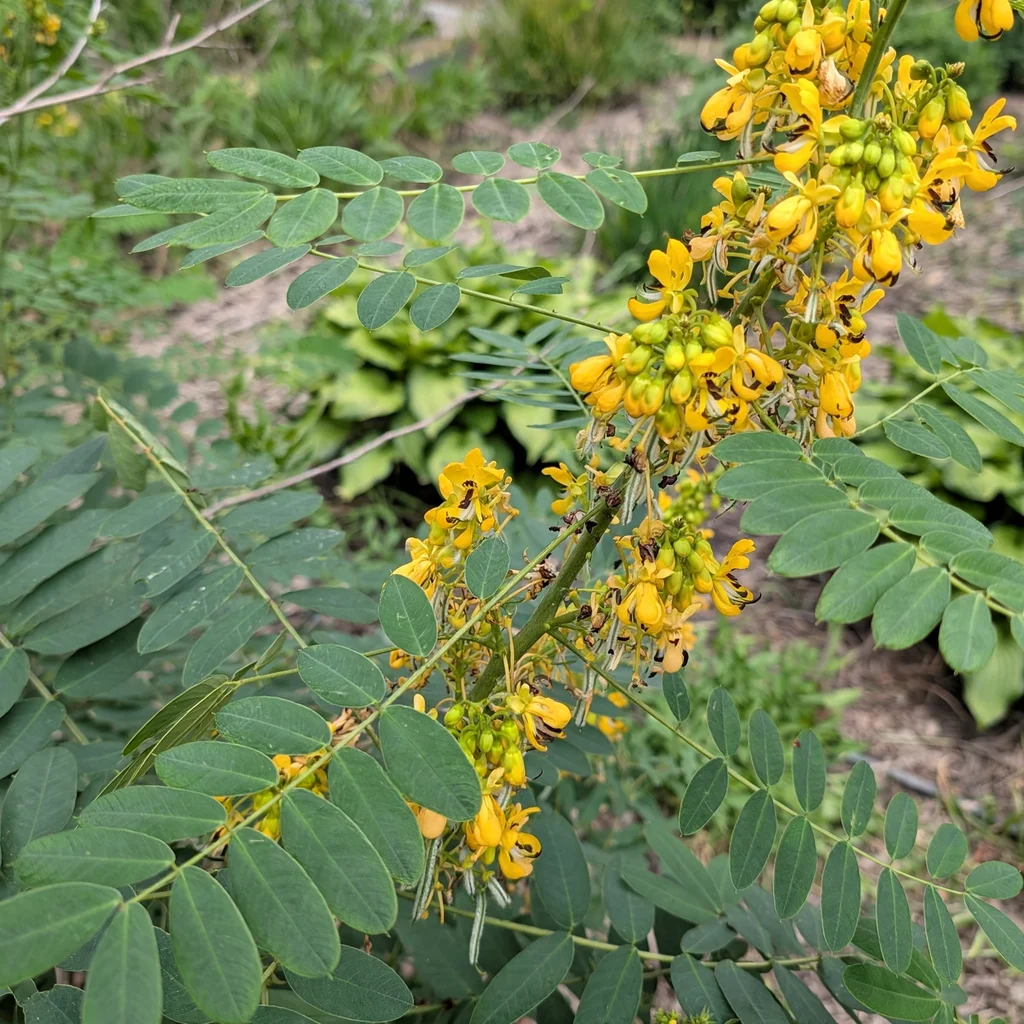
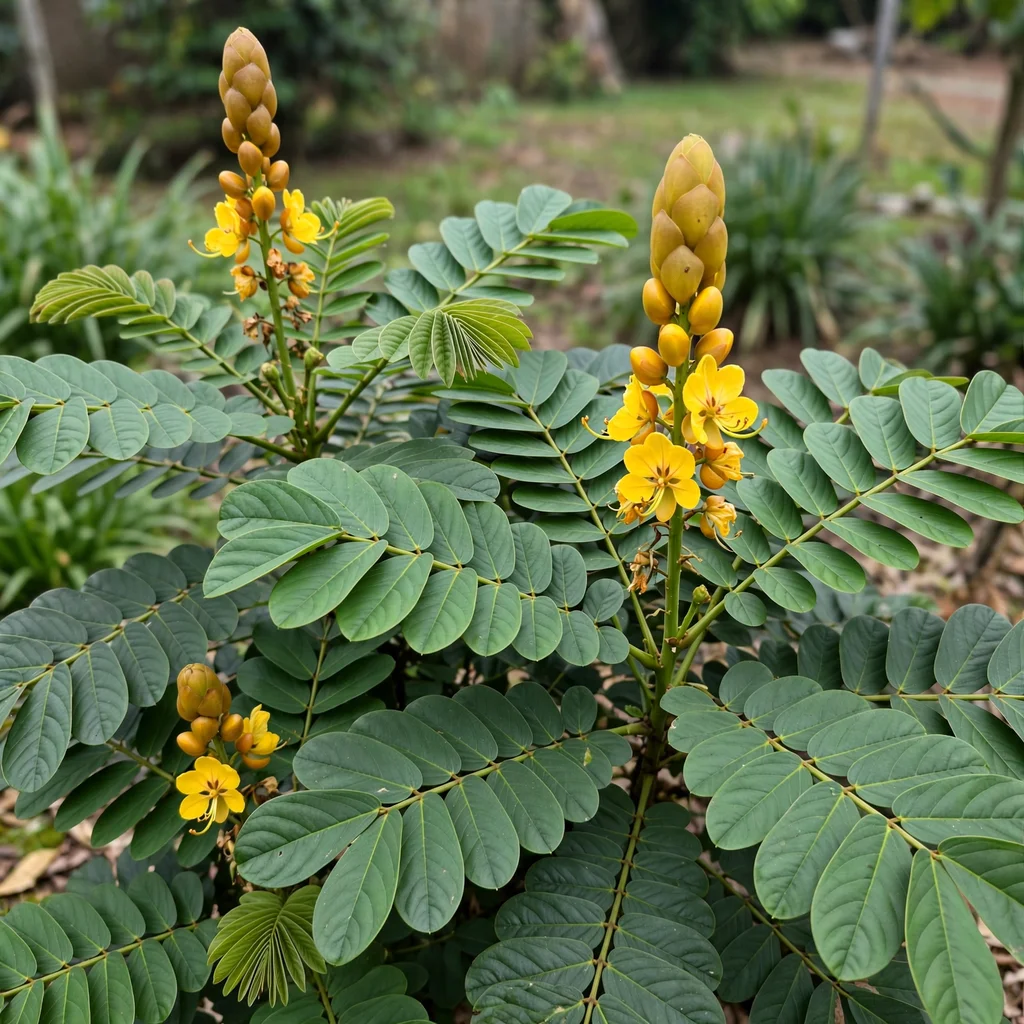
Senna mexicana is an evergreen shrub in the pea family with pinnately compound leaves of small light-green oval leaflets on upright, multistemmed, clumping stems. The flowers are bright yellow and five-petalled, borne in elongated racemes to about 12 inches long that open through the year where frost-free.
In Florida it is grown as var. chapmanii, Bahama cassia, a 2 to 4 foot sprawling shrub spreading 3 to 6 feet wide from pine rocklands and coastal hammock edges on dry calcareous sand and rock. It flowers nearly year-round in frost-free ground and serves as a larval host for cloudless sulphur and sleepy orange butterflies, whose caterpillars can strip the foliage without ending the display.
Uses & Benefits:
Essentials
At a Glance
Plant Type
Shrub
Height
48"
Width
72"
Light
Full Sun, Partial Sun
Zones
10
Water
Low
Humidity
Unknown
Lifespan
Short-lived shrub
Native To
Florida, Mexico, Caribbean, Central and South America
Toxicity
Toxic if ingested
Bloom period
Year round
In flower about 12 months of the year
Planting
How to Grow
- Plant in spring in full sun in dry, well-drained sandy or rocky soil with pH above 7.0.
- Dig the hole no deeper than the pot and twice as wide, then backfill with native soil only.
- Water to settle, then water sparingly until established; keep winter drainage sharp and never leave roots standing wet.
- Mulch lightly with gravel or pine fines, keeping mulch clear of the stems.
- Allow spent pods to drop so seedlings replace short-lived stems.
Pro Tip
Do not spray caterpillar feeding; plant only in frost-free, sharply drained alkaline soil and let seedlings replace this short-lived shrub.
Keep It Thriving
Care Guide
Do
- Plant in full sun with sharp drainage and alkaline rockland soil.
- Leave sulphur caterpillars to feed and pupate.
- Allow reseeding to replace short-lived plants.
Don't
- Do not spray insecticide for caterpillar defoliation.
- Do not plant in wet, heavy clay or acid soil.
- Do not expect survival below freezing; plant only where frost is absent.
Seasonal Care Calendar
| Task | Jan | Feb | Mar | Apr | May | Jun | Jul | Aug | Sep | Oct | Nov | Dec |
|---|---|---|---|---|---|---|---|---|---|---|---|---|
| Pest Check | ||||||||||||
| Plant | ||||||||||||
| Propagate | ||||||||||||
| Prune |
Watch Out For
Pests & Diseases
Common Pests
Common Diseases
In the Garden
Landscape Uses & Companions
Landscape Uses
Multiply
Propagation Methods
Good to Know
Common Questions
Mexican Senna questions
What zones can Mexican Senna grow in?
Mexican Senna is hardy in USDA Zone 10: in that range it survives winter in the ground. Colder than Zone 10, grow it in a container you can move to shelter for the winter.
When does Mexican Senna bloom?
Mexican Senna typically blooms year-round. Exact timing shifts a week or two with your zone — Sow's bloom calendar maps it to your garden.
Does Mexican Senna need full sun?
Mexican Senna does best in full sun to part shade. In hot climates, afternoon shade keeps blooms fresher longer.
Is Mexican Senna drought tolerant?
Yes — once established (usually after the first full season), Mexican Senna handles dry spells with minimal watering. Water deeply its first year to build the root system that makes that possible.
More Senna to compare
Keep exploring
Explore the genus
Hardy in your zone?
Grow Mexican Senna with confidence
See it in a design of your actual yard, get zone-matched care reminders, and track it season by season in your garden journal.