Quick answer
Most leafy, flowerless hydrangeas are bigleaf, oakleaf or mountain types that lost the buds on last year's stems: to pruning after about August 1, to a winter cold enough to kill bigleaf stems (1°F to -11°F, -17°C to -24°C), or to frost after leaf-out. Smooth and panicle types flower on new growth, so check for too little sun, excess nitrogen, a hard summer cut or youth.
Key facts
- Flower on last year's stems
- Bigleaf, mountain, oakleaf and climbing
- Flower on this year's shoots
- Smooth and panicle
- Bigleaf buds form
- August to September
- Bigleaf pruning deadline
- Right after flowering, by about August 1
- Bigleaf stems killed, midwinter
- 1°F to -11°F (-17°C to -24°C), by cultivar
- Bigleaf and mountain cold limit by March 1
- About 21°F to 25°F (-6°C to -4°C), down from -11°F to 0°F (-24°C to -18°C) in early January
- Sun for good flowering
- About 5 hours of direct sun in the South, 6 to 8 farther north; panicles often best in full sun
- New plants
- Often bloom little until year 2 or 3
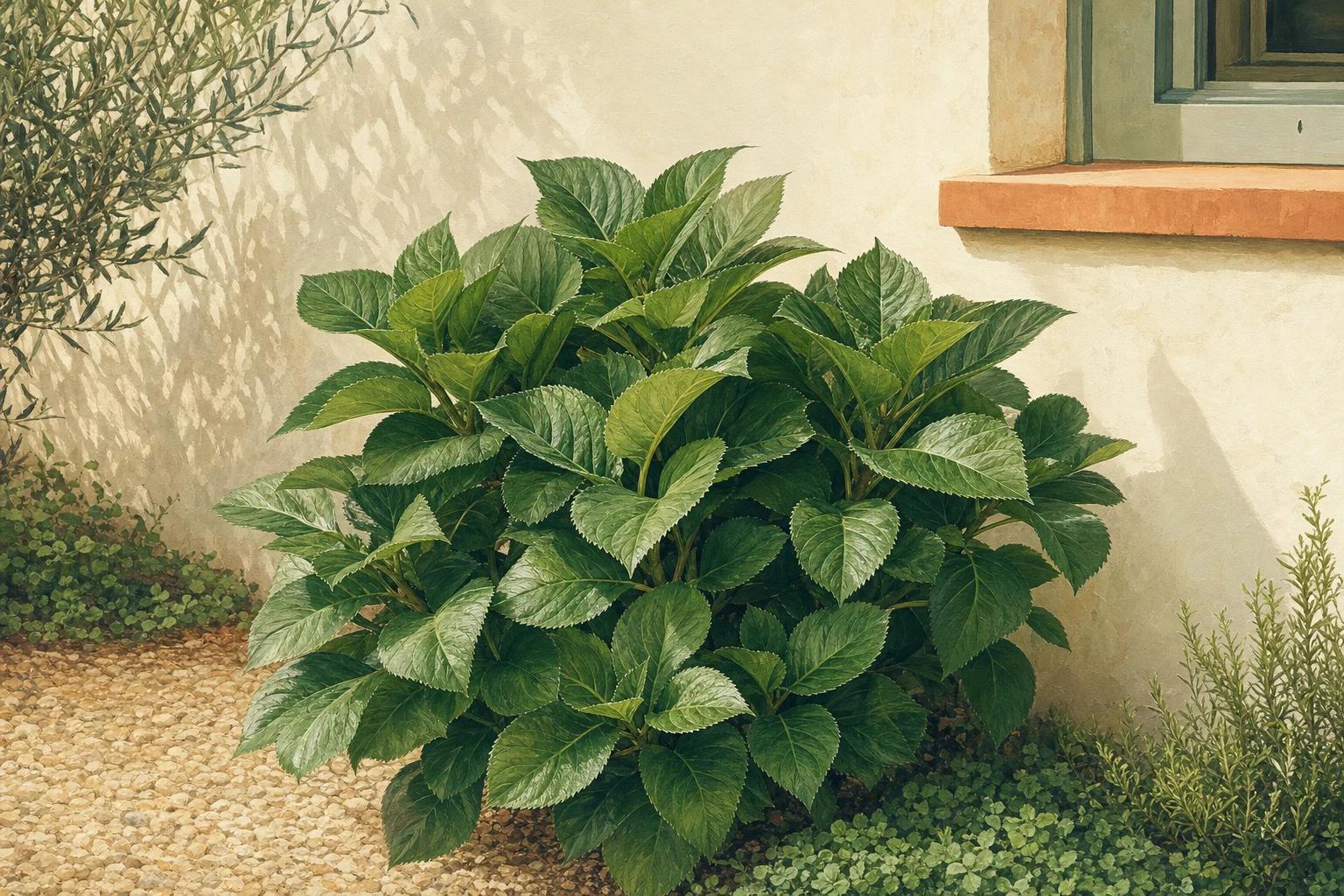
A hydrangea that leafs out well and then never flowers has lost its flower buds, not its health. Bigleaf, mountain and oakleaf hydrangeas carry next summer's flowers through winter inside buds at the tips of this year's stems. A fall trim, a hard freeze or a frost after early leaf-out can erase a whole season while the leaf buds carry on untouched.
Smooth and panicle hydrangeas build their flowers on shoots that grow the same spring, which makes them far harder to stop. When one of those stays green, the usual suspects are deep shade, too much nitrogen, a hard summer cut or a plant still settling in. Work out which group yours belongs to, find your symptom in the table, then read the section that explains it.
Start with where your hydrangea makes its buds
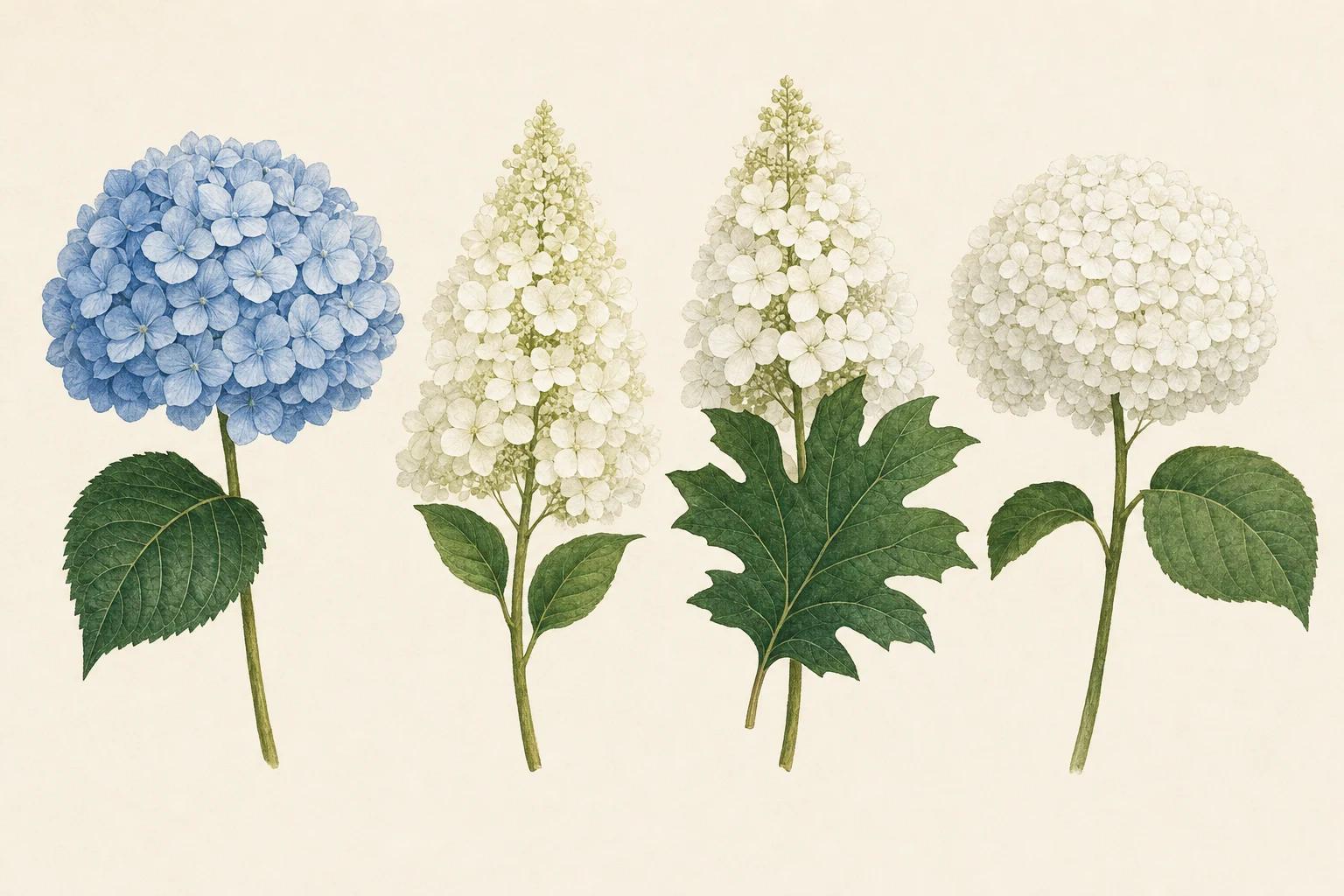
Whether a hydrangea flowers on old wood or new wood decides which causes are even possible. Old wood is a stem that grew last year and held its flower buds through winter. New wood is a shoot that grows this spring and flowers at its tip a few months later.
| Type | Flowers on | Cold-hardy to | Loses flowers to |
|---|---|---|---|
| Bigleaf (H. macrophylla) | Old wood; rebloomers on old and new | Zone 6; protect in Zone 5 | Late pruning, winter cold, spring frost |
| Mountain (H. serrata) | Old wood; rebloomers on old and new | Zone 6; some cultivars Zone 5 | The same causes, less often |
| Oakleaf (H. quercifolia) | Old wood only | Zone 5 | Late pruning; lows below -10°F (-23°C) |
| Smooth (H. arborescens) | New wood | Zone 3 | Shade, hard summer cuts |
| Panicle (H. paniculata) | New wood | Zone 3 | Shade, hard summer cuts |
Zone floors are for the species; named cultivars can differ, as the mountain row shows.
Climbing hydrangea (H. anomala subsp. petiolaris) also flowers on old wood, but it needs little pruning, and its usual reason for not flowering is youth: it can take years to start.
If the tag is long gone, flower color is a clue. Flowers that turn blue in acid soil (about pH 5.0 to 5.5) and pink at pH 6.0 or above belong to a bigleaf or mountain hydrangea, though white cultivars of both stay white. A potted hydrangea that arrived as an Easter or Mother's Day gift is usually a bigleaf. Our guide to changing hydrangea color explains the soil chemistry behind the color shift.
Reblooming bigleaf and mountain cultivars, sold in series such as Endless Summer, Let's Dance and Tuff Stuff, form flowers on both old and new wood, which gives them a second chance after a bad winter. The types of hydrangeas guide covers each group in more depth.
Match what you see to the cause
Read the plant before you change anything: where the leaves emerge, where any flowers sit and what the stems look like all point to a cause. Several causes can stack up in one year, so check every row that fits.
| What you see | Likely cause | How to confirm | First move |
|---|---|---|---|
| Full leaves, no flowers, on an old-wood type | Pruned between August and spring | It was cut back in fall, winter or early spring | No cuts from August on |
| Leaves only from the base; upper stems brittle | Winter killed stems and buds | Scratched bark shows brown, no green | Cut to live buds; protect or replace |
| Flowers only near the ground | Exposed buds froze; snow saved the low ones | Blooms sit below last winter's snow depth | Cage it next winter |
| Shoots or buds blackened in spring | Frost after early leaf-out | A warm spell, then a freeze | Cover on frost nights |
| Lush, dark green leaves, few flowers | Excess nitrogen | Frequent feeding, or a fed lawn alongside | Stop feeding; test the soil |
| Thin flowering on a healthy plant | Too much shade | Under about 5 hours of direct sun (6 in the North) | Thin the shade or move it |
| Fewer flowers after a dry late summer or fall | Drought during bud set | Wilting or dry soil from August on | Water and mulch through fall |
| Buds form, then brown or dry before opening | Frost as buds expand, or dry soil | A freeze after leaf-out, or wilting | Cover on frost nights; water |
| Smooth or panicle with few, late flowers | Cut hard in summer | It was cut back while in growth | Prune only in late winter or early spring |
| Stem tips bitten off | Deer | Ragged tips; deer seen nearby | Fence or net the shrub |
| Planted or transplanted 1 to 3 years ago | Still establishing | Young, otherwise healthy plant | Wait |
| Gift plant or old cultivar never flowers in Zone 4 or 5 | Not hardy enough | A florist plant, 'Nikko Blue' or 'Forever Pink' | Replace it |
The first four rows apply mainly to old-wood types; the nitrogen, shade, drought, deer and age rows apply to every hydrangea.
Pruning at the wrong time
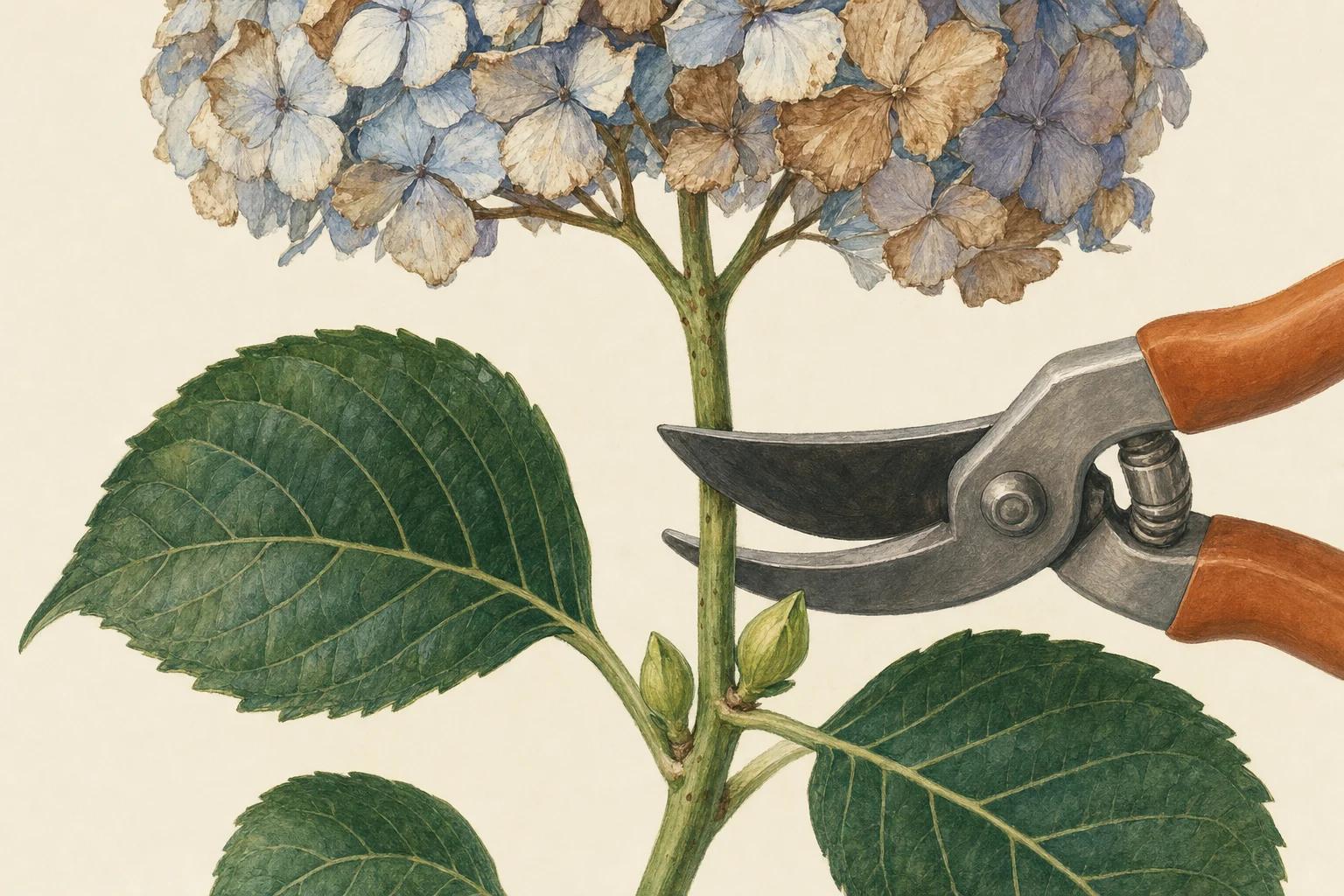
Badly timed pruning is the most common reason hydrangeas fail to flower, and old-wood types are the ones it hurts most. A bigleaf hydrangea forms next year's flower buds in August and September. A cut in fall removes them outright, and a March trim costs that summer's display just as surely, because the buds being cut are the flowers. That is why the pruning window for bigleaf closes around August 1.
Prune for shape and size right after flowering. In spring, remove only wood that winter killed, which shows once new leaves appear (step 3 of the plan below). In the North, that spring cleanup is often the only pruning a bigleaf needs.
On a mature bigleaf, mountain or oakleaf hydrangea more than four years old, you can take about a third of the oldest stems to the ground each year right after flowering to keep it vigorous. Oakleaf needs little more than that, plus removal of weak or winter-damaged stems in early spring. In spring, leave every mountain hydrangea stem until new growth shows which buds are alive, and do any thinning right after it flowers. Climbing hydrangea needs little or no pruning at all.
A routine fall or early-spring cut-back by a landscape crew strips the flower buds from an old-wood hydrangea. Tell whoever maintains your beds to leave bigleaf, mountain and oakleaf hydrangeas uncut from August until new leaves appear.
Smooth and panicle hydrangeas
Smooth and panicle hydrangeas flower on the current year's shoots, so a cut in late winter or early spring still leaves time for flowers that summer. Their risk runs the other way. Hard pruning in summer reduces flowering, and a heavily cut panicle blooms later than you expect. Give a young smooth hydrangea a season or two before cutting it hard; after that, cut it back in late winter or early spring, or leave it alone for a bigger shrub. Month-by-month timing for every type is in our guide on when to prune hydrangeas.
Winter cold and late spring frost
Cold is the other big bud-killer, and flower buds die at temperatures that leave leaf buds unharmed, so a winter-damaged bigleaf can return fully leafed with no flowers. Bigleaf is reliably hardy to Zone 6 and needs protection in Zone 5. Some cultivars carry a Zone 4 rating and still suffer winter damage there. Nor is this only a northern problem: in South Carolina, winter injury is the leading reason bigleaf hydrangeas fail to flower.
How cold is too cold
| Plant and timing | Cold limit | What happens |
|---|---|---|
| Bigleaf stems, midwinter | 1°F to -11°F (-17°C to -24°C), by cultivar | Colder kills stems and their buds |
| Bigleaf and mountain, Cape Cod, February 2023 | -8°F (-22°C) after 10+ hours below 0°F (-18°C) | Bigleaf stems killed to near the ground; mountain hurt less |
| Hardiest bigleaf and mountain cultivars, early January | About -11°F (-24°C) | Peak hardiness |
| Endless Summer, early January | About 0°F (-18°C) | Least hardy of ten cultivars tested |
| The ten cultivars, March 1 | About 21°F to 25°F (-6°C to -4°C) | Most hardiness already lost |
| Oakleaf, midwinter | Below -10°F (-23°C) | Some buds die; below -20°F (-29°C), all of them |
Thresholds from midwinter stem tests, the February 2023 Cape Cod freeze and a ten-cultivar hardiness study; the limit for any one plant depends on cultivar and how well it hardened off in fall.
Three lessons come out of these numbers. First, bigleaf stems die at 1°F to -11°F (-17°C to -24°C) depending on cultivar, and flower buds, which are more tender, can be lost at milder lows. In the 2023 Cape Cod freeze, bigleaf stems died to or near the ground, mountain hydrangeas suffered less, and smooth, panicle and oakleaf hydrangeas escaped injury.
Second, when the cold arrives matters as much as how deep it goes. The toughest selections, such as the mountain hydrangea 'Bluebird' and the bigleaf 'Mme. Emile Mouillère', shrug off about -11°F (-24°C) in early January, yet by March 1 their limit has climbed to about 21°F (-6°C). A hard freeze in March can therefore do more harm than a far colder night in January.
Third, fall counts too. An early freeze before the plant is fully dormant can injure developing buds, and Endless Summer hardens off later in autumn than most of the other cultivars tested.
Reading the damage
Three signs point to cold rather than pruning. Upper stems are brittle and brown under the bark while new shoots sprout from the base. Flowers open only near the ground, from buds that sat under insulating snow. Or a few flowers appear partway down stems whose tips died, because the lower buds on a bigleaf stem can still flower when the tip bud is lost.
Late spring frost
Bigleaf hydrangeas leaf out early, and once dormancy breaks their flower buds lose most of their cold tolerance. A shrub against a wall or fence that holds heat starts growing sooner still, which widens the window for frost damage. If shoots blacken after a freeze, wait for new growth and cut back to live buds; new shoots will replace them, and a rebloomer can still flower on those. Frost covers are step 2 of the plan below, and potted plants have their own winter routine in our guide to hydrangeas in pots.
Winter protection and its limits
In Zone 5 and colder, a leaf-filled cage around each bigleaf (step 9) is the protection that works. It raises the odds without guaranteeing anything: in a severe winter, even a well-wrapped plant can die to the ground or skip flowering. Where that happens more years than not, the answer is a hardier plant, covered below.
What fails where
| Region | What most often stops flowering | What helps most |
|---|---|---|
| Zones 3 to 5 (Iowa, northern New England) | Winter kills bigleaf buds and stems; even Endless Summer often loses its buds | Panicle and smooth types; cages for bigleaf |
| Coastal New England | Rare deep freezes, such as February 2023 | Rebloomers, with new-wood types as a backstop |
| Mid-Atlantic | Frost after early leaf-out; gift plants that are not hardy | Frost covers; hardy cultivars |
| Southeast | Winter injury, still the top cause in South Carolina; dry soil in late fall or winter | Morning sun with afternoon shade; steady water |
Causes and fixes by region; the symptom table above shows which one fits your shrub.
Shade, nitrogen and dry soil
When a hydrangea of any type looks healthy but flowers thinly year after year, check its light, its feeding and how dry it gets from late summer on.
Too much shade
In the South, hydrangeas flower best with about 5 hours of direct sun, mostly in the morning; farther north, where afternoons are cooler, 6 to 8 hours gives the most flowers. Smooth, oakleaf, bigleaf and climbing hydrangeas flower well in partial shade and poorly in deeper shade. Panicle hydrangeas need at least part sun and often do best in full sun. Hot afternoon sun is the opposite problem for bigleaf, so a hot, dry, exposed spot is no cure for shade.
Count the hours of direct sun on a clear summer day rather than guessing. If flowering tapered off over several years, check whether nearby trees now shade the shrub. Thin the canopy or move the shrub, because no fertilizer or pruning makes up for missing light.
Too much nitrogen
Nitrogen builds leaves, not flowers, so a hydrangea fed often with a high-nitrogen fertilizer turns deep green and flowers sparsely. The extra nitrogen may not be yours: lawn fertilizer is nitrogen-rich and washes into nearby beds, and runoff from the rest of the yard adds more.
A hydrangea needs only a light, balanced program, and some beds need none. The standard southern schedule is a balanced fertilizer such as 10-10-10 in March, May and July, at about 2 cups (470 mL) per 100 square feet (9.3 m²) of bed. Per plant, the equivalent is about 1/4 cup (60 mL) of 8-8-8, 10-10-10 or 13-13-13 for a small shrub and 1 to 2 cups (240 to 470 mL) for a very large one at each feeding. A soil test tells you whether the bed needs anything at all.
Skip the high-phosphorus bloom booster unless a soil test shows phosphorus is low. Most garden soils already hold enough, and an excess suppresses beneficial mycorrhizal fungi. On bigleaf hydrangeas, extra phosphorus also ties up aluminum and pushes flowers toward pink.
Dry soil while buds form
Drought cuts flowering even when the leaves look fine, and after a severe dry spell the effect can last into the following years. The months that matter most run from August, when bigleaf buds begin to form, through winter, since dry soil in late fall or winter also costs flowers. Bigleaf and smooth hydrangeas are the thirstiest types. The watering routine is step 7 of the plan.
A young plant or browsing deer
A young shrub only needs time; browsing animals need a barrier.
Newly planted or transplanted shrubs
Most hydrangeas, including ones you have just moved, need to establish before they flower well and may bloom little for their first two to three years. A new bigleaf spends its first season building roots and stems. Climbing hydrangea is the slowest and can take years to start. A healthy shrub planted or transplanted less than three years ago needs patience rather than a fix; after its third summer, look at the other causes.
Deer and rabbits
Hydrangeas are not deer resistant. Bigleaf, smooth, panicle, oakleaf and climbing hydrangeas are all rated as occasionally severely damaged. Deer browse them year-round. When they eat the stem tips of an old-wood type in winter, they take the flower buds with them, exactly as a badly timed cut would. On smooth and panicle hydrangeas, summer browsing removes that year's developing flowers. Where deer feed regularly, fence or net the shrub so they cannot reach its stem tips. Rabbits chew hydrangea stems in winter as well, and a wire ring stops them (step 8).
The wrong hydrangea for your zone
If an old-wood bigleaf fails most years in Zone 4 or 5 despite good care, the plant is the problem. In Zone 5, a reblooming bigleaf or mountain hydrangea improves the odds; in Zone 4, or wherever flowers fail most years, switch to a panicle or smooth hydrangea. Older cultivars such as 'Nikko Blue' and 'Forever Pink' often fail in Zones 4 and 5 because winter kills their old wood. Florist hydrangeas given at Easter or Mother's Day are usually bigleafs that are not reliably winter hardy in Zone 6 and colder, so in a cold zone treat one as a temporary pot plant.
| Cultivar | Type | Flowers on | What to expect |
|---|---|---|---|
| Endless Summer The Original | Bigleaf | Old and new wood | Sold as Zone 4 hardy; northern winters often kill its old-wood buds |
| BloomStruck | Bigleaf | Old and new wood | Flowers more reliably than older bigleafs in Zones 4 and 5 |
| Twist-n-Shout | Bigleaf | Old and new wood | Also more dependable in Zones 4 and 5 |
| Blushing Bride | Bigleaf | Old and new wood | Endless Summer series; more dependable in Zones 4 and 5 |
| Let's Dance series | Bigleaf | Old and new wood | Reblooming series; its new-wood flowers come late |
| Tuff Stuff | Mountain | Old and new wood | Hardier than bigleaf; still worth protecting in the North |
| Little Lime | Panicle | New wood | Zones 3 to 9; 3 to 5 feet (0.9 to 1.5 m); part sun to sun |
| Annabelle | Smooth | New wood | Zones 3 to 9; flowers in part shade; heads droop when wet |
| Incrediball | Smooth | New wood | A favored smooth hydrangea in the upper Midwest |
Rebloomers hedge against cold and pruning mistakes; new-wood types sidestep both.
What rebloomers fix, and what they don't
Reblooming (remontant) bigleaf and mountain cultivars flower on old and new wood, so a bad winter, a late freeze or a mistimed cut costs only the early flowers. Endless Summer 'Bailmer' is one, and the Endless Summer series flowers whether you prune it or not. The catch is timing: flowers on new wood come much later than old-wood flowers, often not until late summer or fall. After a severe northern winter, a handful of flowers on an Endless Summer is a good result.
Panicle and smooth hydrangeas
For flowers every year on a cold or difficult site, choose a panicle hydrangea. It is very cold hardy and flowers reliably year after year, which is why it is the commonest hydrangea in northern New England. The trade-off is that no panicle gives you blue flowers or the flat lacecap heads of a bigleaf. Smooth hydrangeas fill the same role in partial shade. Check any replacement against your zone with Sow's plant hardiness checker before you buy.
Your 12-month plan to get flowers back
The plan follows the flower bud's year, from the day winter protection comes off to the day it goes back on. Start wherever the calendar finds you.
- Leave winter protection on until buds swell (early spring). Take cages off only once the buds begin to expand or the danger of frost has passed. Removing them on the first warm day exposes buds to the late freezes that do the most harm.
- Cover leafed-out bigleafs on frost nights (spring). When a night near freezing is forecast, drape the shrub with a sheet or other fabric, never plastic. Move potted hydrangeas against a sheltered wall or into a garage or shed overnight.
- Judge the damage once new leaves show (mid-spring). Scratch the bark: live stems are green underneath, dead ones brown. Cut 1/4 inch (6 mm) above the first set of live buds and take stems that are dead all the way down off at the base. Cutting before growth starts risks removing buds that survived.
- Fix the light (spring). If the shrub gets less than about 5 hours of direct sun in the South, or 6 to 8 hours farther north (panicles often do best in full sun), thin the branches shading it or move it somewhere brighter. Shade is a cause no feeding can offset.
- Feed only if a soil test calls for it (March to July). Keep lawn fertilizer and spreaders away from the bed, and use a balanced fertilizer at the measured rates above, never a high-nitrogen feed.
- Shape old-wood types right after they bloom (summer). Finish pruning bigleaf, mountain and oakleaf hydrangeas by about August 1 so the buds that form in late summer stay on the plant. Leave smooth and panicle hydrangeas until late winter or early spring.
- Water through bud set (August through fall). Give about 1 inch (2.5 cm) of water a week from rain or irrigation, and keep 2 to 3 inches (5 to 8 cm) of mulch over the roots. In southern summer heat, water deeply once a week, or twice a week on sandy soil.
- Guard the stems from browsing (fall). Surround bigleaf stems with a ring of hardware cloth 4 feet (1.2 m) tall, or put up wire fencing 24 inches (60 cm) tall, to keep rabbits off. Where deer feed, fence or net every type, since they browse hydrangeas year-round.
- Cage bigleafs before winter (late fall, Zone 5 and colder). Once the shrub is dormant, drive stakes around it, wrap them with burlap, chicken wire or mesh, and fill the cylinder with dry leaves or straw.
What to expect next season
How fast flowers return depends on what stopped them. If pruning was the cause, a shrub left uncut from August onward has its buds intact and should flower the following summer, provided winter and spring frost spare them. A young plant often starts flowering properly in its second or third year.
Cold damage takes longer. A bigleaf killed to the ground rarely produces flower buds that season, but clearing out the dead stems makes room for vigorous new shoots that carry the next year's flowers. A reblooming bigleaf that lost its old-wood buds can still flower on new wood, later than usual, in late summer or fall. After a severe drought, expect recovery to take more than one season.
Even with good siting and care, some years bring few bigleaf flowers because of winter or spring weather, and a cool summer can reduce or delay bloom. If that happens in most years rather than some, switch to a new-wood type.
Hydrangeas are toxic to dogs, cats and horses and can cause vomiting, diarrhea and depression if eaten. Bag or compost prunings rather than leaving them where pets or horses graze.
For the rest of the year's care, see our hydrangea growing guide, and map where a replacement shrub will get the sun it needs with Sow's garden planner.
From the Sow catalog
Hydrangeas in the Sow catalog
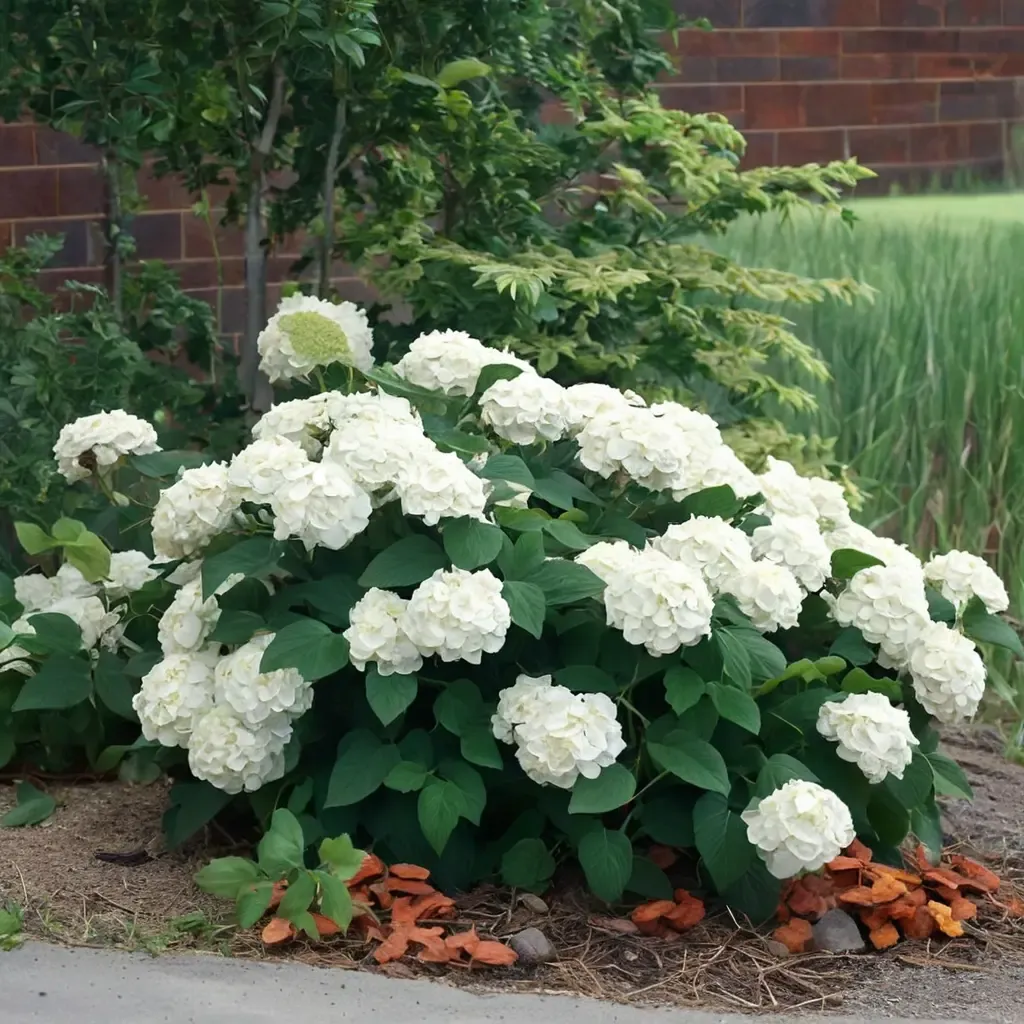
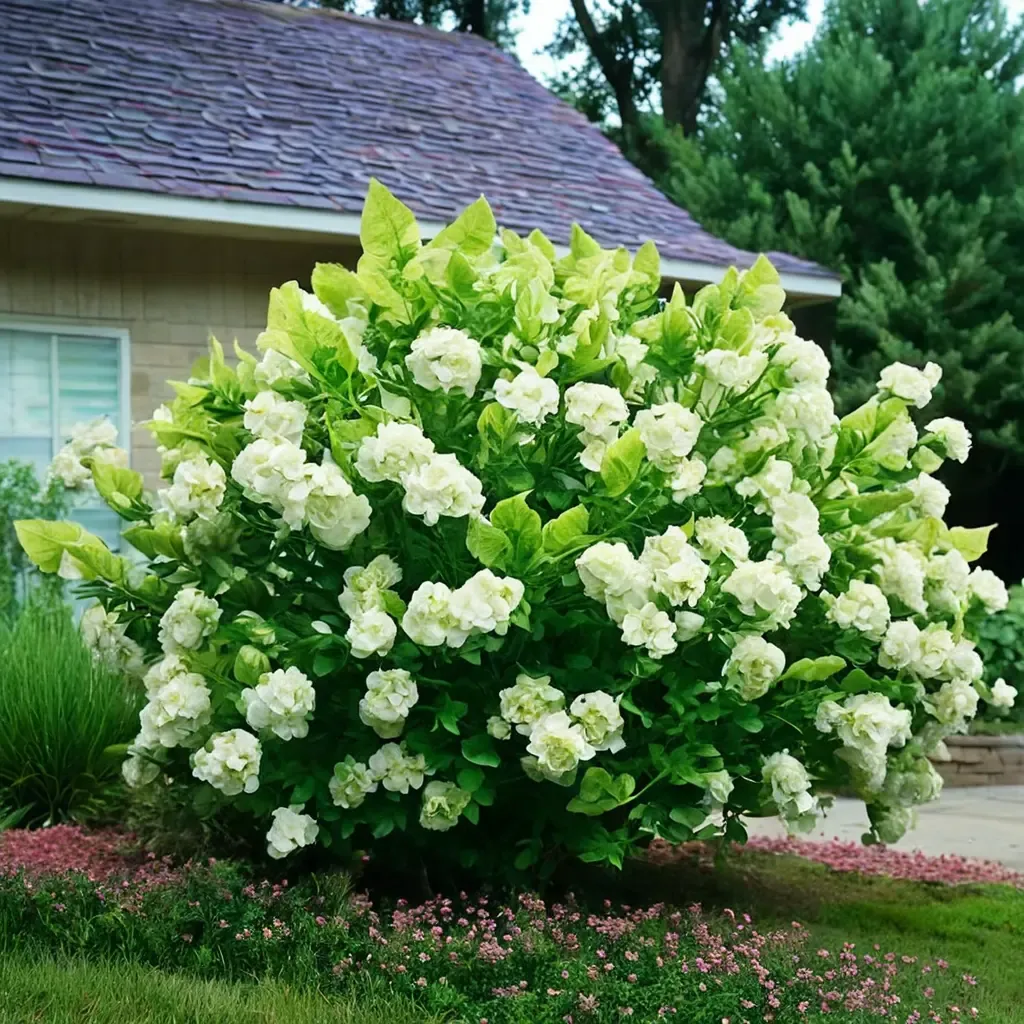
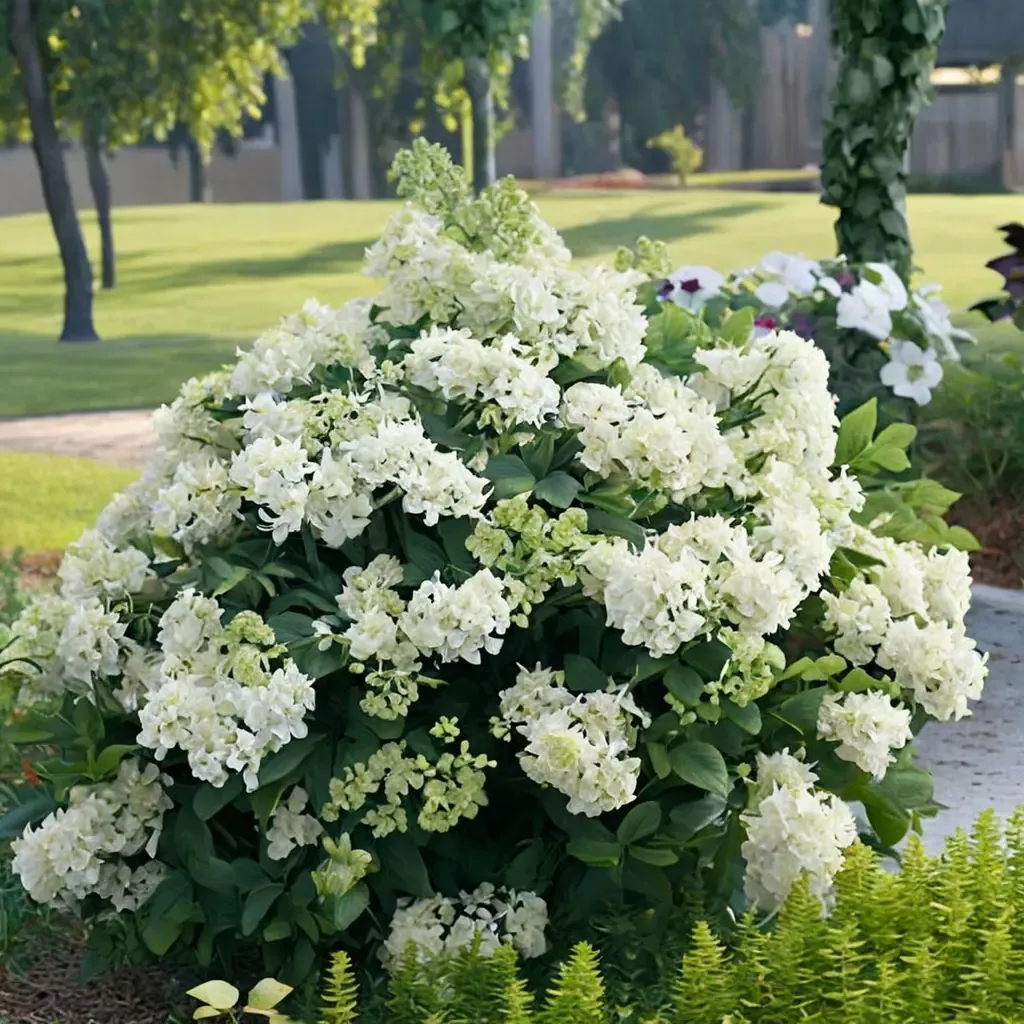
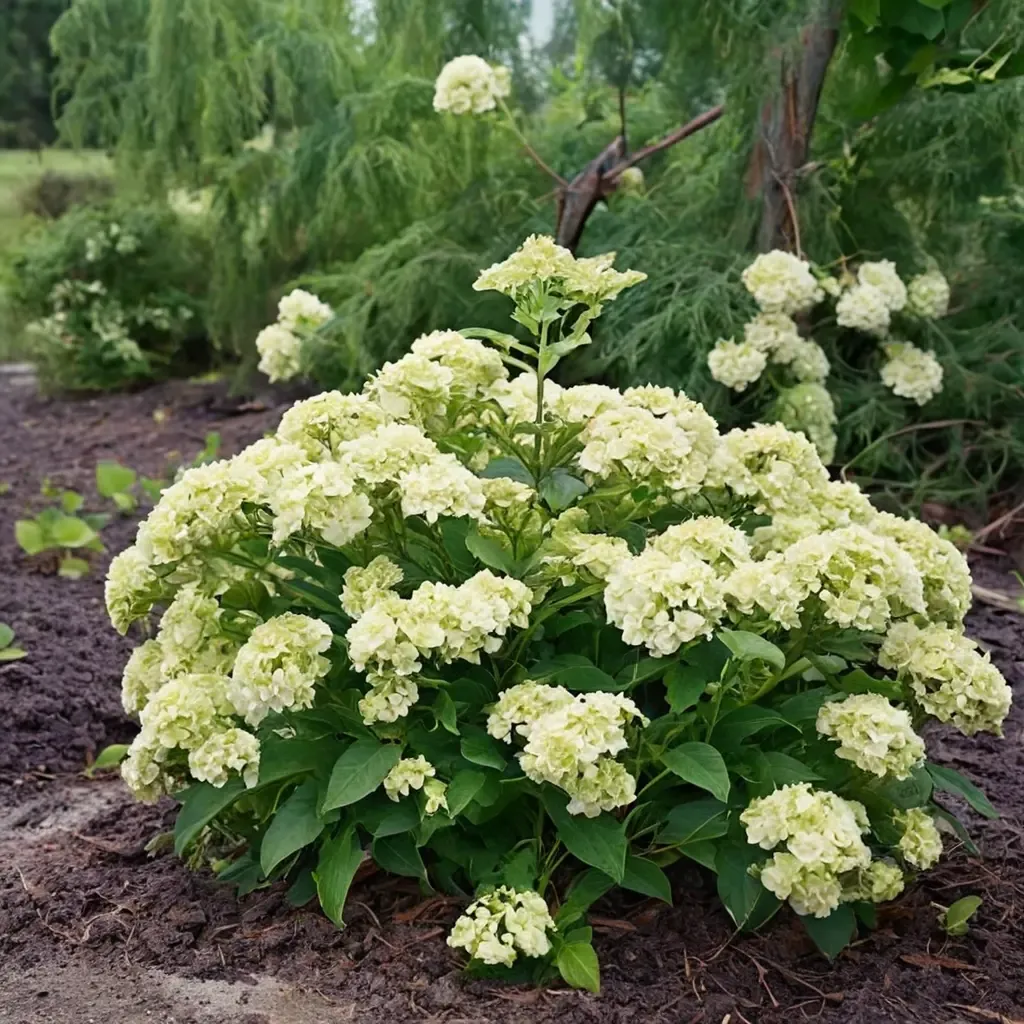
Sow tracks 127 Hydrangea varieties, hardy across USDA Zones 4 to 9 between them. These are the 8 gardeners save most. Each one opens its own page with its zone range, sun, mature size and, where a nursery lists it, today's price.
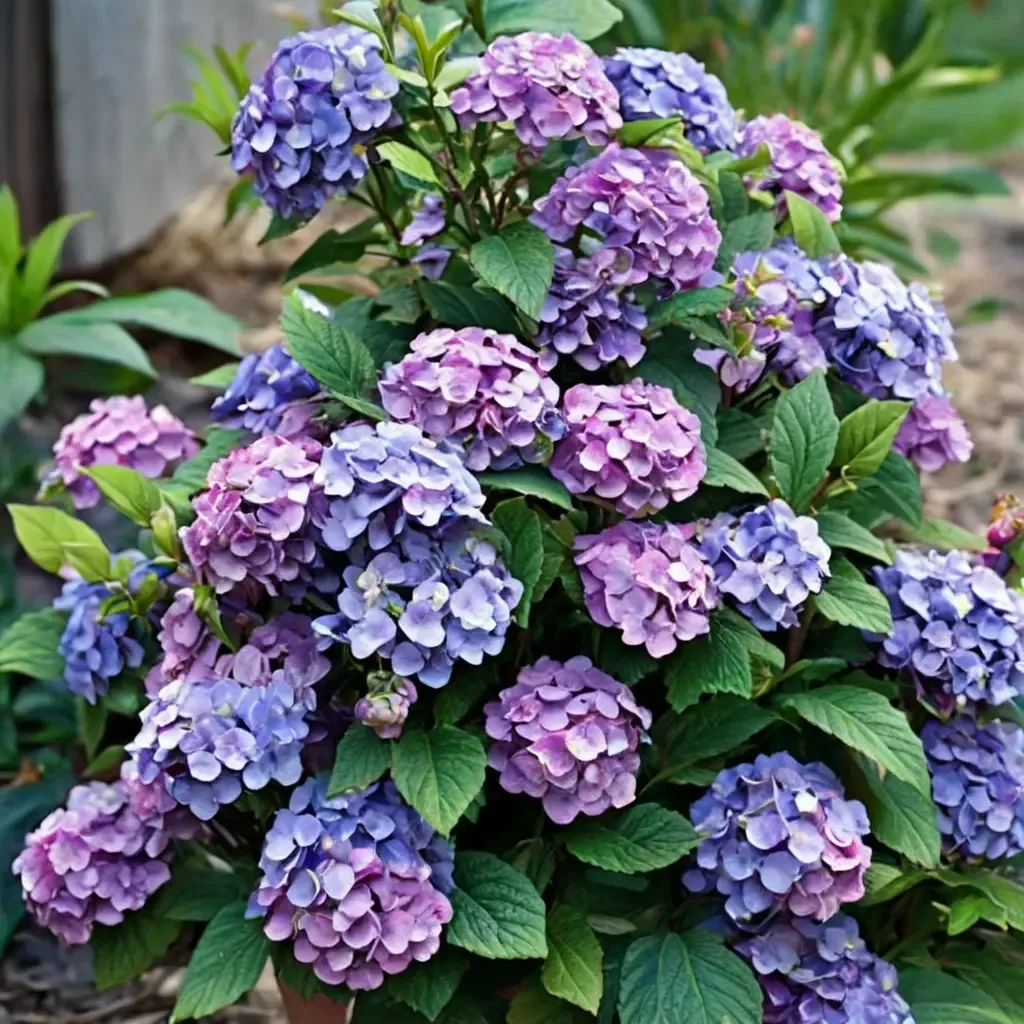
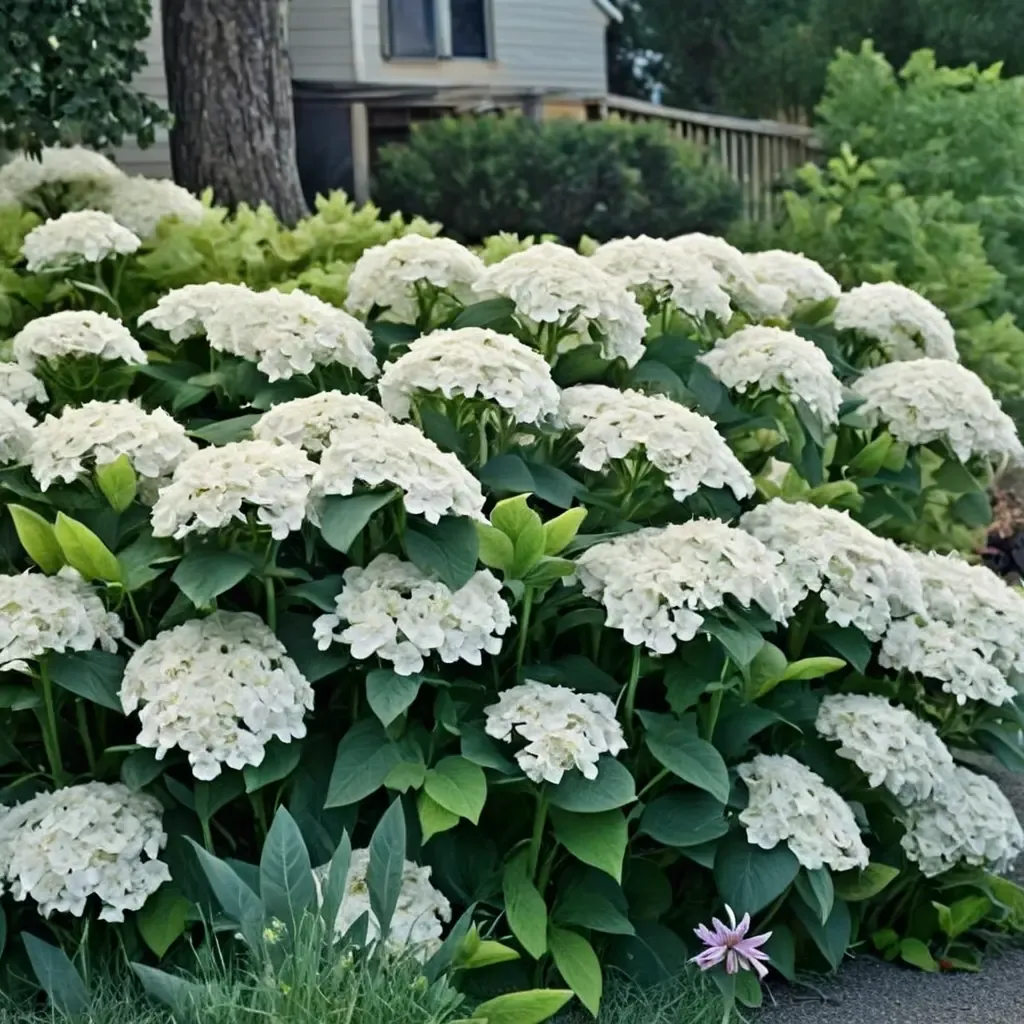
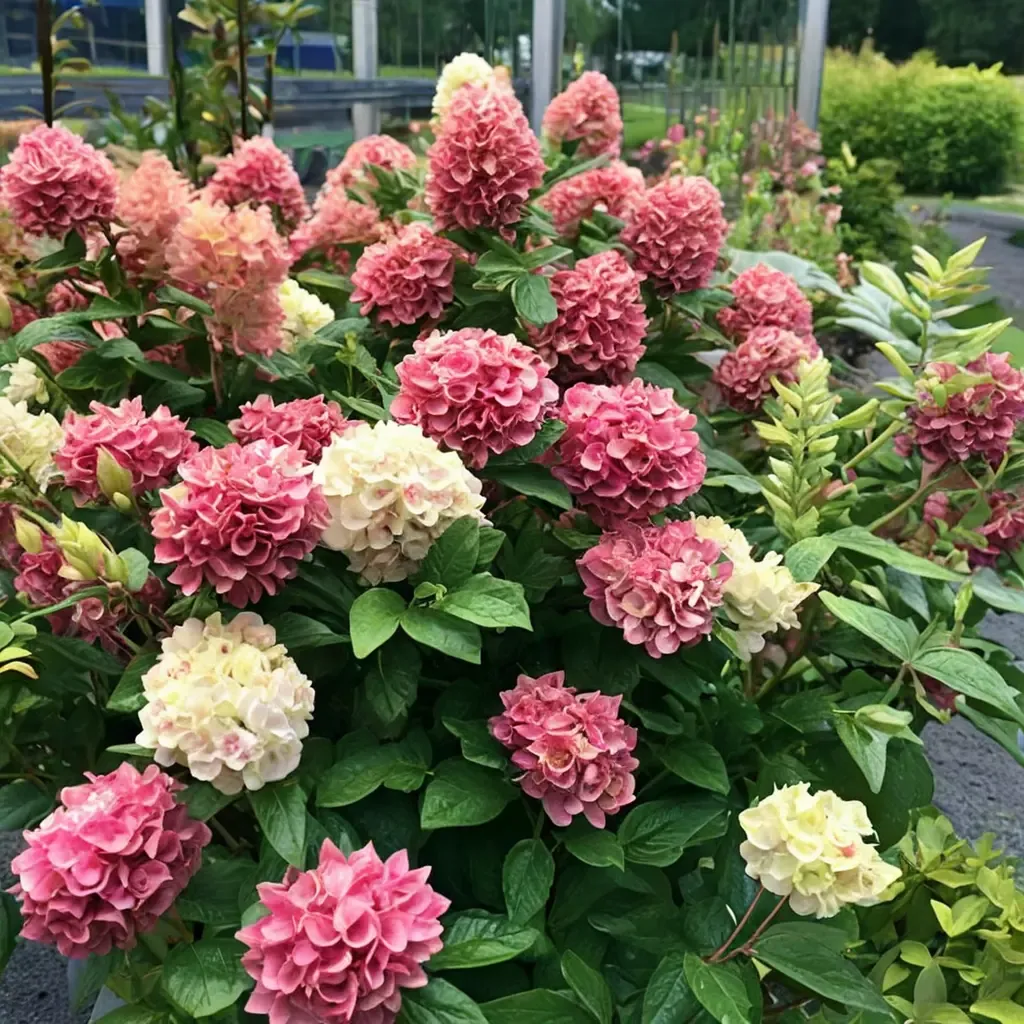
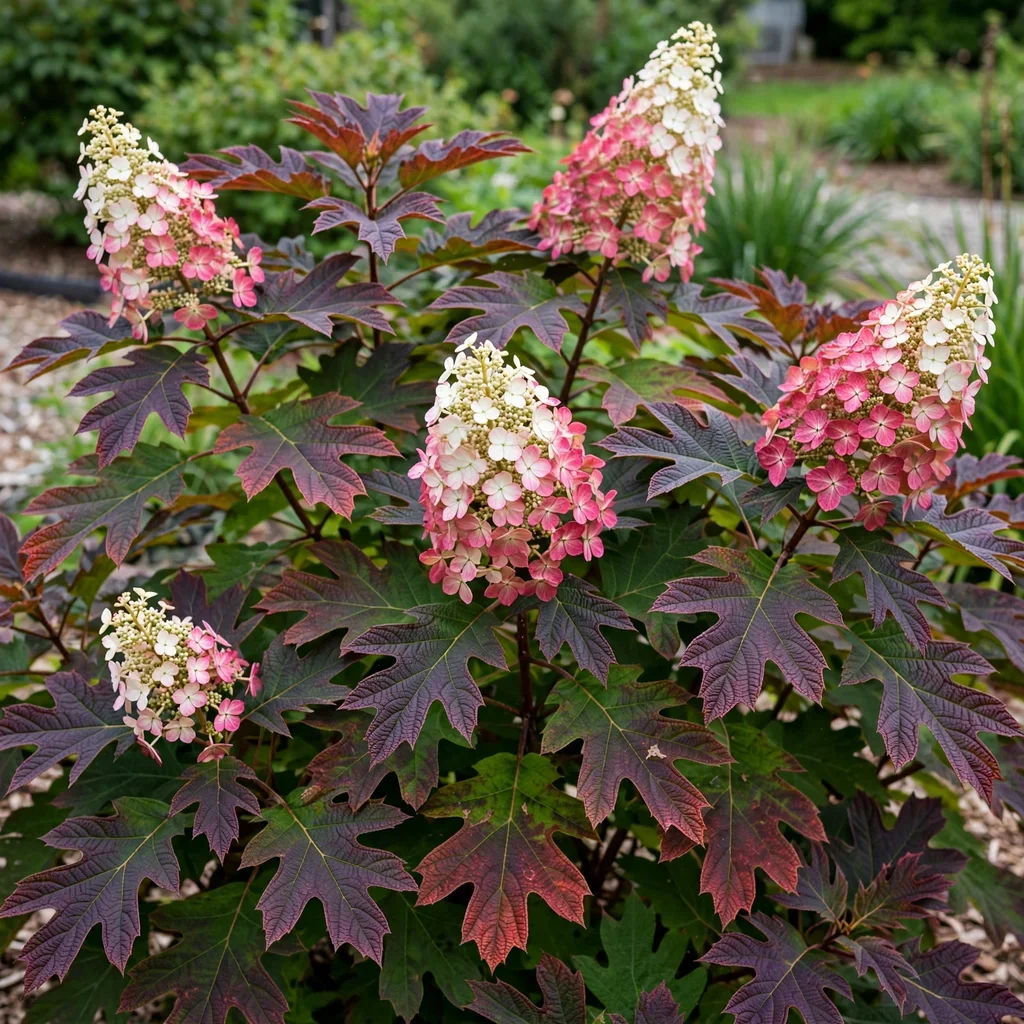
Companions from real gardens
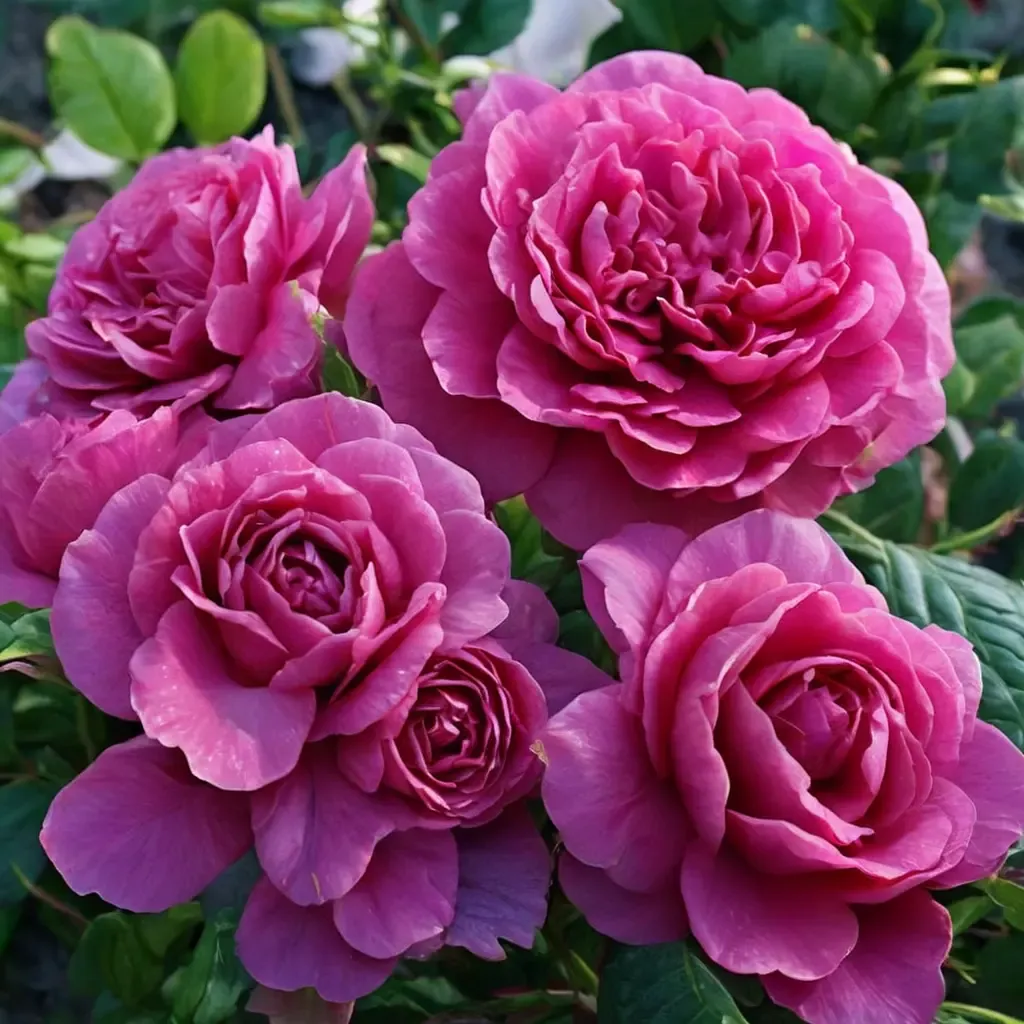
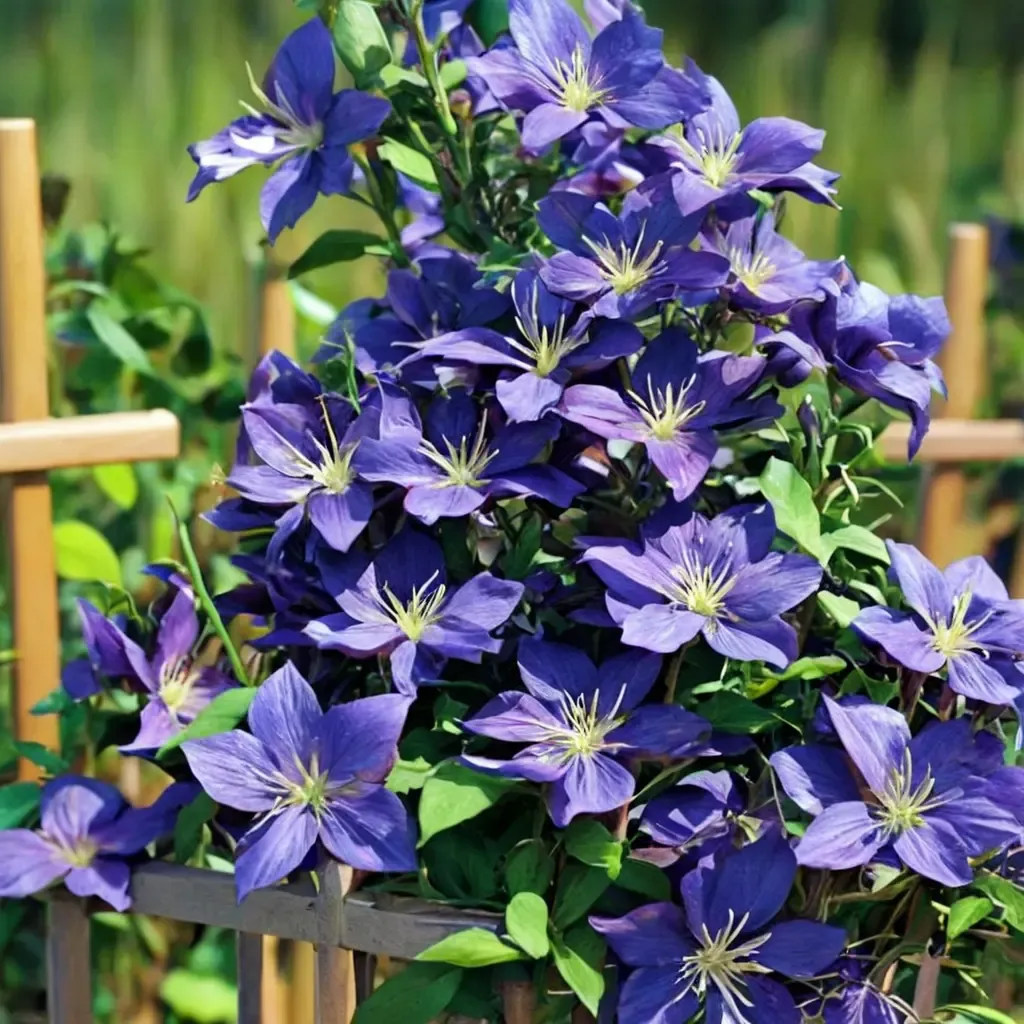
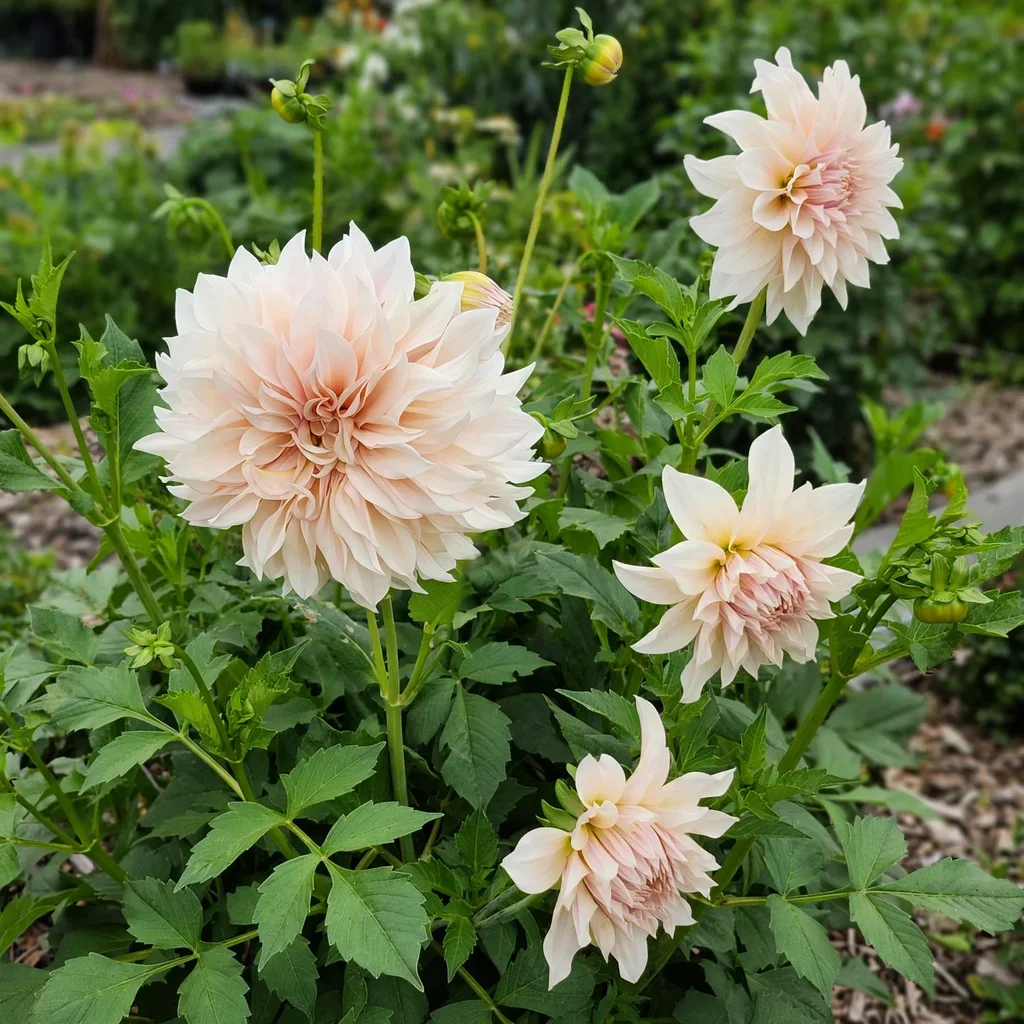
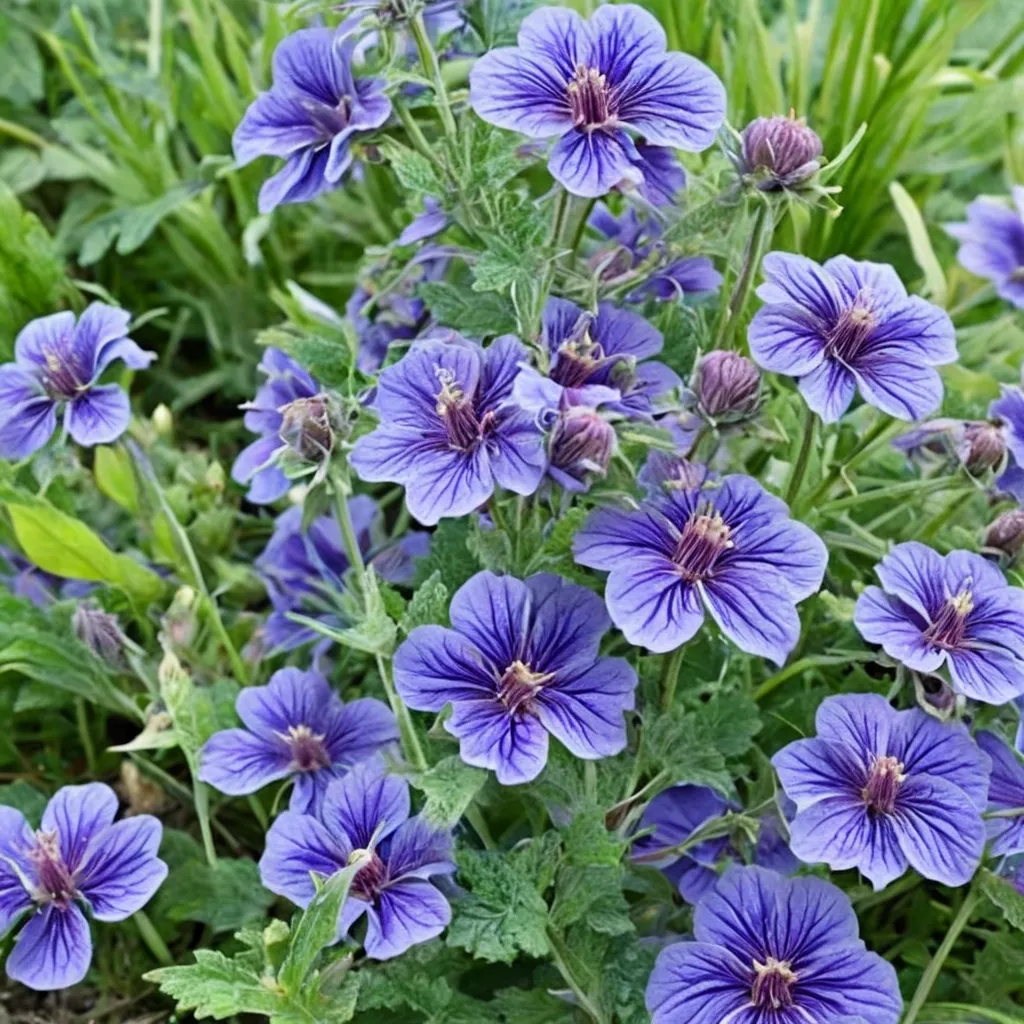
Among the 5.3k gardeners who designed with Hydrangea in Sow, these are the plants they most consistently put beside it. Each was chosen by at least 20 different gardeners, so this is a palette people actually use, not a textbook list.
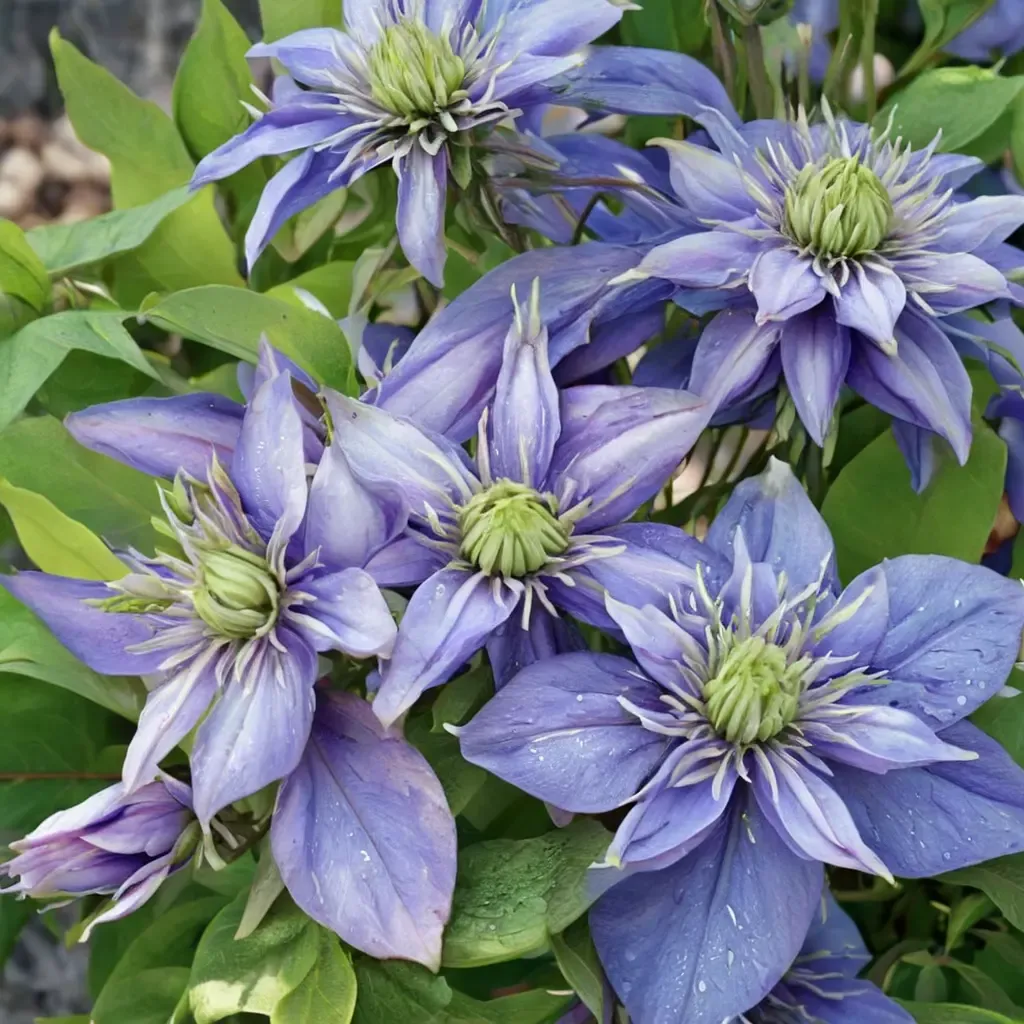
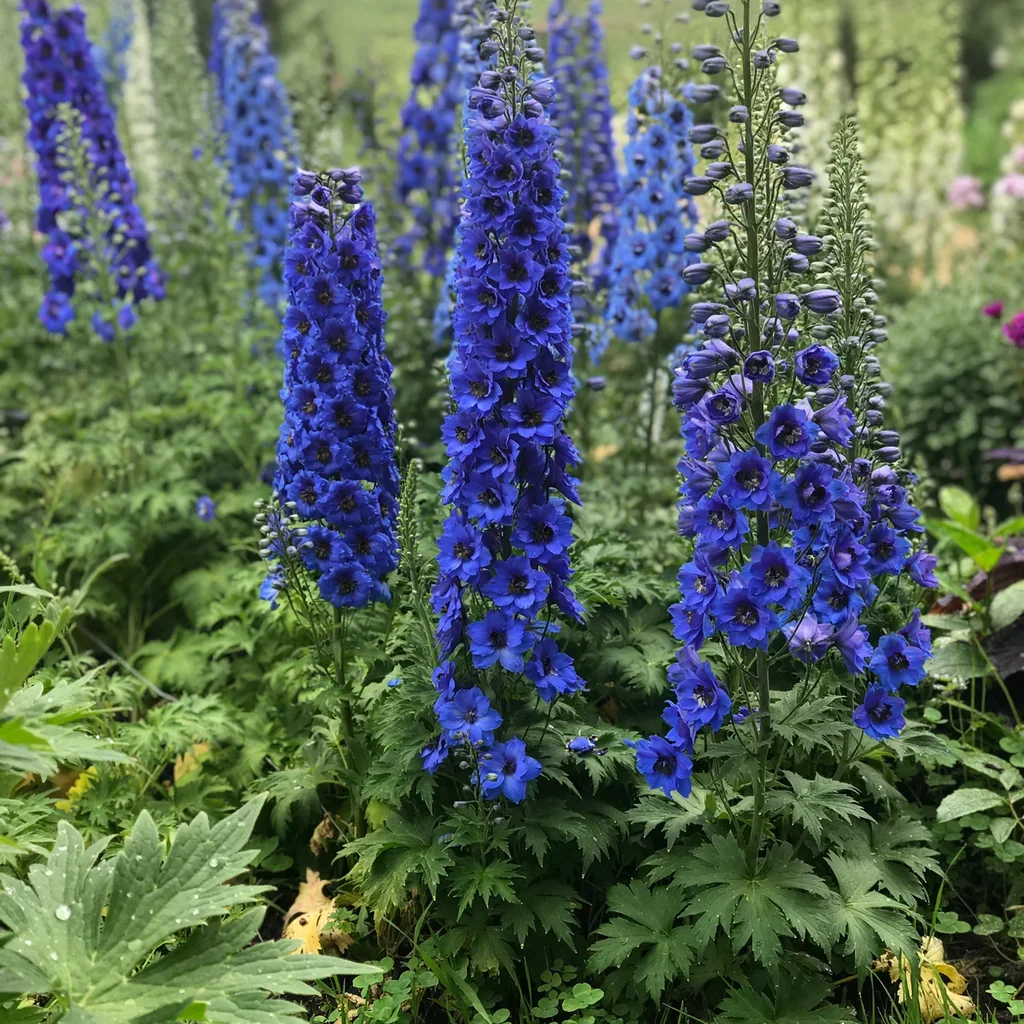
Prices across nurseries
58 Hydrangea varieties are listed by the online nurseries Sow checks every day, from $15.99 to $155.75, with a median of $20.97. The cheapest listing is usually the smallest pot, so compare sizes as well as prices.
Frequently asked questions
Why is my hydrangea growing leaves but no flowers?
Its leaf buds survived but its flower buds did not. Bigleaf, oakleaf and mountain hydrangeas carry next summer's flowers in buds formed on this year's stems in August and September, and flower buds are more tender than leaf buds. Pruning between August and spring, a hard winter or a frost after early leaf-out removes the flowers while leaves keep coming. On any type, deep shade or heavy nitrogen feeding gives the same leafy result.
Is Miracle-Gro good for hydrangeas?
For a hydrangea in the ground, not as a routine feed, least of all for one that is all leaves. Miracle-Gro's water-soluble All Purpose Plant Food is a 24-8-16 formula labeled for shrubs and for feeding every 7 to 14 days. That is a nitrogen-heavy ratio given far more often than hydrangeas need, and nitrogen builds leaves at the expense of flowers. A balanced fertilizer such as 10-10-10 in March, May and July, or nothing at all if a soil test shows enough nutrients, suits hydrangeas better.
Are hydrangeas deer resistant?
No. Bigleaf, smooth, panicle, oakleaf and climbing hydrangeas are all rated as occasionally severely damaged by deer, though pressure varies by region. Deer browse hydrangeas year-round. In winter they eat the flower buds at the stem tips of bigleaf and oakleaf types, and in the growing season they strip the developing flowers from smooth and panicle types. Rabbits also chew hydrangea stems in winter.
What is the Little Lime hydrangea?
Little Lime is a compact panicle hydrangea, Hydrangea paniculata 'Jane'. It grows 3 to 5 feet (0.9 to 1.5 m) tall and wide, is hardy in Zones 3 to 9 and takes part sun to full sun. Because it flowers on new wood from early to late summer, cold winters and late-winter pruning do not stop it. Its lime-green flowers age to pink, and soil pH does not change their color.
What should not be planted near hydrangeas?
Think about the site more than the neighbors. Keep hydrangeas away from lawns that get nitrogen fertilizer, which washes into the bed and produces leaves instead of flowers, and from spots a growing tree will shade, since shade cuts flowering. A warm wall pulls bigleaf types into leaf early, exposing buds to spring frost.
Which hydrangea is better, Annabelle or Little Lime?
Choose by light. Both flower on new wood, so both bloom after hard winters and can be pruned in late winter. Annabelle, a smooth hydrangea, flowers in part shade, grows 3 to 5 feet (0.9 to 1.5 m) tall and 4 to 6 feet (1.2 to 1.8 m) wide, and its heavy white heads droop when wet. Little Lime, a panicle, wants part sun to full sun and carries lime-green flowers that turn pink.
Should I cut back a hydrangea that didn't bloom?
Not as a cure. On a bigleaf, mountain or oakleaf hydrangea, cutting it back in fall or spring removes next year's flower buds and guarantees another flowerless summer. In spring, remove only dead wood once new growth shows which buds are alive, and save shaping for right after the next flowering, by about August 1. Smooth and panicle hydrangeas can be cut back in late winter or early spring without losing flowers.
How long does a new hydrangea take to bloom?
Allow two to three years. A newly planted hydrangea spends its first season building roots and stems, so few or no flowers at first is normal. Climbing hydrangea is the slowest and can take several years to flower. If a young shrub is still green and flowerless after its third summer, look at pruning, shade, nitrogen or winter cold rather than age.
Will my hydrangea still bloom this year if it hasn't yet?
It depends on the type. A reblooming bigleaf such as Endless Summer that lost its old-wood buds can still flower on new shoots, but those flowers arrive late, often in late summer or fall. A bigleaf, mountain or oakleaf hydrangea that does not rebloom and lost its buds will not flower until next year. Smooth and panicle types bloom on this year's shoots during summer, so a late start alone is no sign of trouble.
References
- Washington State University Extension (HortSense). Hydrangea: Failure to bloom. Accessed October 16, 2026.
- Iowa State University Extension and Outreach. Why doesn't my hydrangea bloom?. Accessed October 16, 2026.
- Cape Cod Cooperative Extension. Hydrangea Blues (2023 Hydrangea Injury Fact Sheet). Accessed October 16, 2026.
- University of Maryland Extension. Q&A: What Damaged My Hydrangea?. Accessed October 16, 2026.
- University of Minnesota Extension. Pruning hydrangeas for best bloom. Accessed October 16, 2026.
- Clemson Cooperative Extension Home & Garden Information Center. Hydrangea Care in South Carolina (HGIC 1067). Accessed October 16, 2026.
- UMass Extension Landscape, Nursery and Urban Forestry Program. Why Hydrangea macrophylla Don't Flower. Accessed October 16, 2026.
- UConn Home & Garden Education Center. Hydrangea. Accessed October 16, 2026.
- Ohio State University Extension (Ohioline). Selecting Hydrangeas for the Home Landscape (HYG-1263). Accessed October 16, 2026.
- Mississippi State University Extension. Hydrangeas for Mississippi Gardens (P2574). Accessed October 16, 2026.
- University of New Hampshire Cooperative Extension. Pruning Hydrangeas. Accessed October 16, 2026.
- University of New Hampshire Extension. How do I protect my ENDLESS SUMMER Hydrangea over the winter?. Accessed October 16, 2026.
- International Society for Horticultural Science (University of Georgia research). Cold Hardiness Estimates for Ten Hydrangea Taxa (Acta Horticulturae 618). Accessed October 16, 2026.
- Ask Extension (Cooperative Extension System). Hydrangea not giving many blooms (#841668). Accessed October 16, 2026.
- Rutgers Cooperative Extension (NJAES). Landscape Plants Rated by Deer Resistance. Accessed October 16, 2026.
- ASPCA Animal Poison Control. Hydrangea (Toxic and Non-Toxic Plant List). Accessed October 16, 2026.
- Washington State University Puyallup Research and Extension Center. The Myth of Beneficial Bone Meal. Accessed October 16, 2026.
- Proven Winners. Little Lime Panicle Hydrangea (Hydrangea paniculata 'Jane'). Accessed October 16, 2026.
- Native Plant Trust Plant Finder. Annabelle hydrangea (Hydrangea arborescens 'Annabelle'). Accessed October 16, 2026.
- Scotts Miracle-Gro. Miracle-Gro Water Soluble All Purpose Plant Food (product label). Accessed October 16, 2026.
Sow Editorial
Written by the Sow team from university extension services, botanical gardens, USDA and NOAA data and plant breeders. Every source is listed under References.