Quick answer
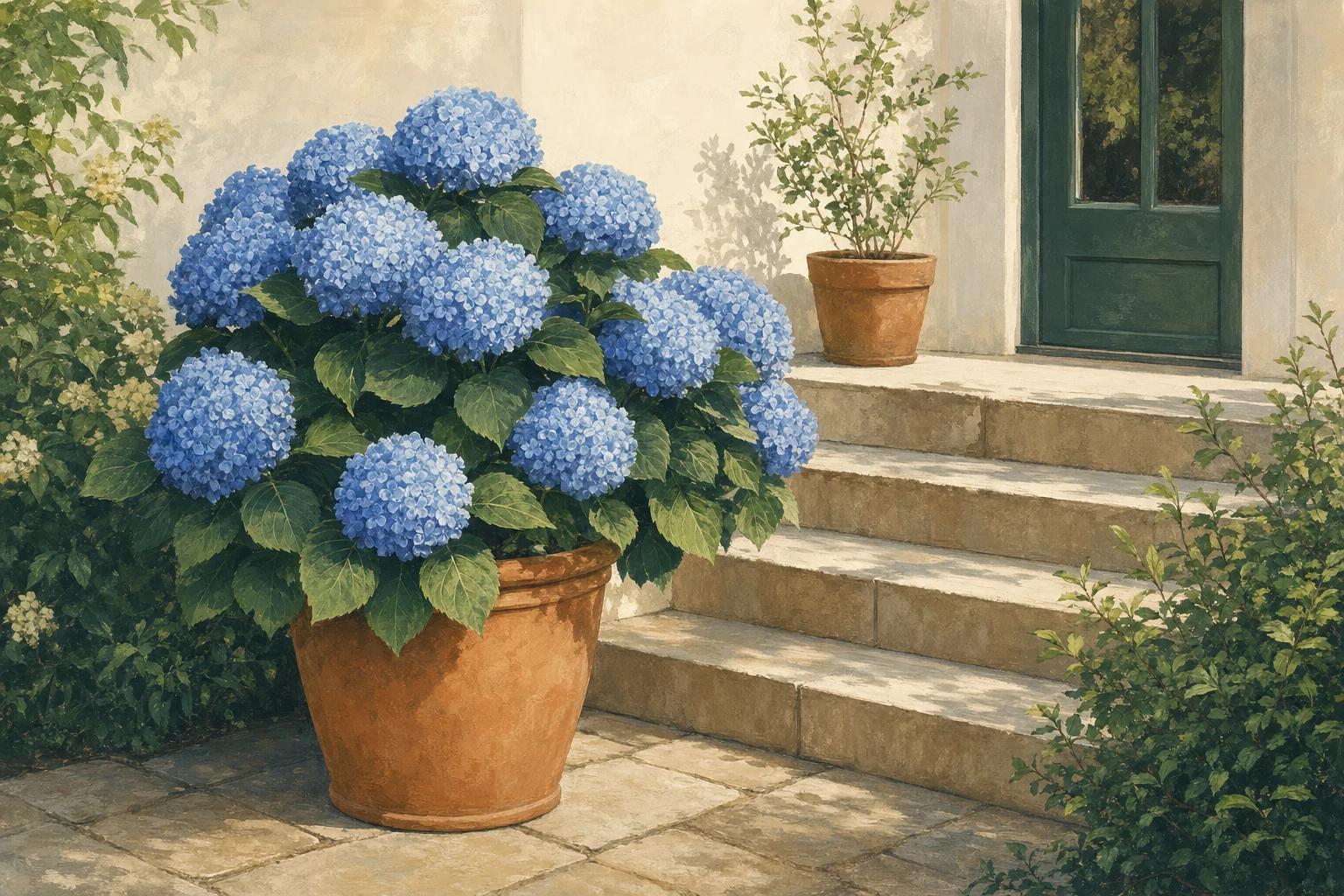
Hydrangeas grow well in pots if you choose a compact cultivar and a container with drainage holes at least 16–18 inches (40–46 cm) across and about as deep, going up to 24 inches (60 cm) for larger shrubs. Check the mix daily in summer. Potted roots are far less cold hardy than stems, so pick a plant rated two zones colder than yours or winter it in an unheated garage.
Key facts
- Pot size
- 16–18 in (40–46 cm) across and as deep; up to 24 in (60 cm) for shrubs that mature at 3 ft (90 cm) or more
- Best types for pots
- Dwarf panicle and smooth (hardiest); compact bigleaf and mountain (color you can steer)
- Keep in the ground
- Oakleaf hydrangea: seldom looks its best in a pot and is very sensitive to waterlogged soil
- Watering
- Check daily; water when dry 2–3 in (5–8 cm) down; up to twice a day in heat waves
- Winter rule
- Rated two USDA zones colder than yours, or an unheated space at 20–45°F (-7 to 7°C)
- Feeding
- One slow-release feed in early spring, a single dilute liquid top-up if needed; none after late July
- Blue flowers
- Acidic (ericaceous) mix at pH 5.0–5.5; test the mix before any aluminum sulfate drench
- Pets
- Toxic to dogs, cats and horses
A hydrangea will flower in a container for many years, but the pot changes which details matter most. A small volume of mix can dry out in one hot afternoon, and in winter it can chill to the temperature of the air around it, far colder than roots in garden soil usually get. On a patio, watering and winter storage decide success more than soil, fertilizer or pruning do.
In practice that means feeling the mix daily through the growing season. Before the first hard freeze, it means moving any plant not rated two zones colder than your garden into a space that holds about 20–45°F (-7 to 7°C), such as an unheated garage.
Which hydrangeas grow best in pots
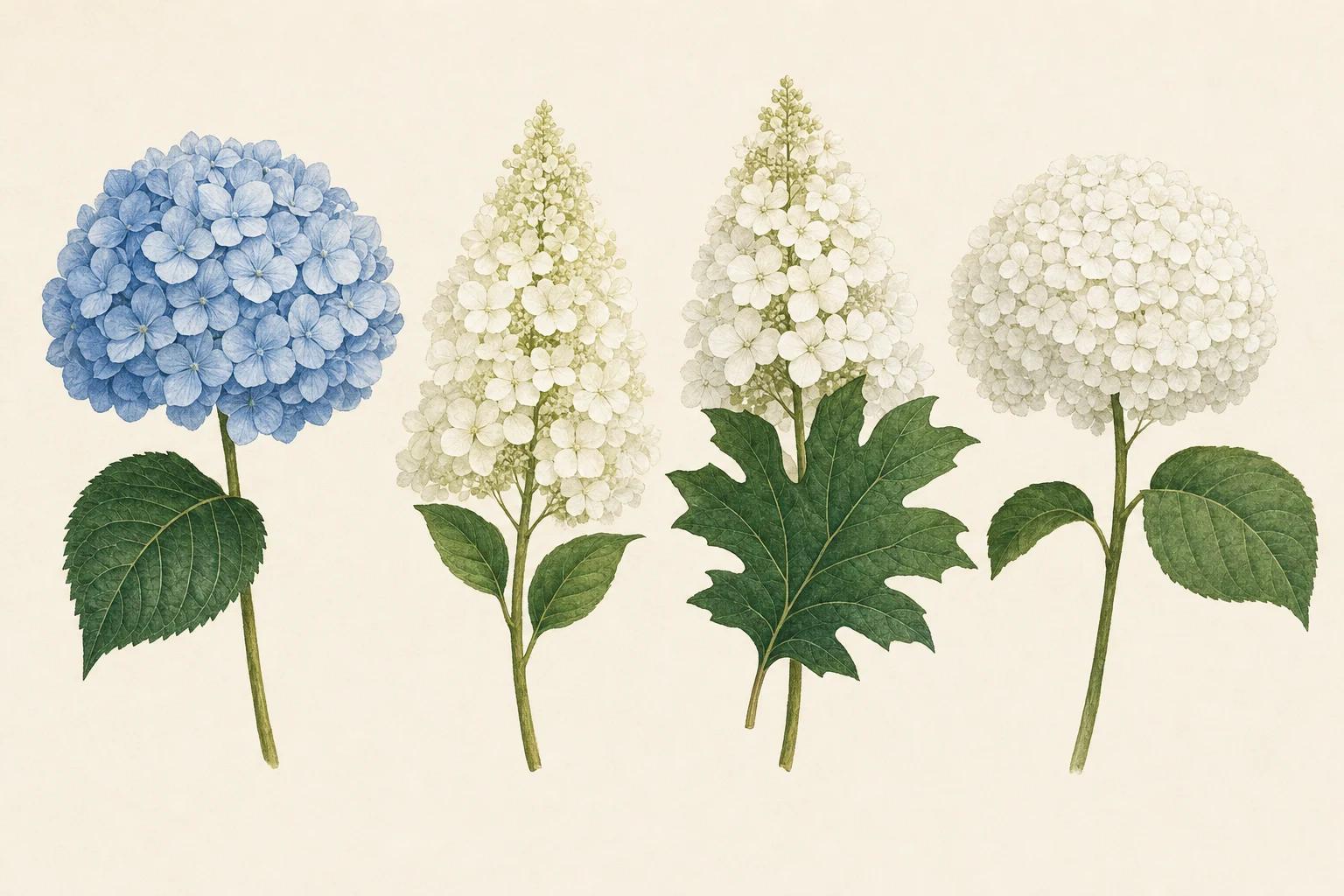
Compact cultivars of panicle, smooth, bigleaf and mountain hydrangeas all do well in containers; oakleaf hydrangea is the one type to keep in the ground.
| Type | Flowers on | Light in a pot | Verdict for containers |
|---|---|---|---|
| Bigleaf (H. macrophylla) | Last year's stems | 4–6 hours, morning sun | Good; the type whose color you can steer |
| Mountain (H. serrata) | Last year's stems | 4–6 hours, morning sun | Good; shifts blue or pink like bigleaf |
| Panicle (H. paniculata) | This year's stems | 6 hours or more | Good in dwarf forms; the most sun tolerant |
| Smooth (H. arborescens) | This year's stems | 4–6 hours | Good; very hardy but wilts fast in heat |
| Oakleaf (H. quercifolia) | Last year's stems | Not suited | Poor; seldom thrives in a pot, hates soggy soil |
Bloom wood and light by type. "Last year's stems" means the flower buds have to survive winter on bare wood.
The wood a type flowers on decides how forgiving it is in a pot. Panicle and smooth hydrangeas bloom on shoots that grow in the current season, so even if a hard winter kills the tops back, the plant still flowers that summer. Bigleaf and mountain hydrangeas carry next year's buds through the winter on bare stems, so a bitter winter or a badly timed cut can cost a once-blooming plant a whole season of flowers. The two rebloomers on this page lose only their early flush, because they flower again on new growth later in summer.
Oakleaf hydrangea rarely looks good grown in a container. Even in the ground it resents soggy soil and is prone to root rot, so give it a well-drained bed instead of a pot. For all six main groups, including the climbing vine, see the guide to the main types of hydrangeas.
Compact cultivars that fit a container
Choose by mature size first: a shrub that tops out around 2–3 feet (60–90 cm) stays in proportion with its pot for years.
| Cultivar | Type | USDA zones | Mature size | Light |
|---|---|---|---|---|
| Invincibelle Wee White | Smooth | 3–8 | 12–30 in (30–76 cm) tall and wide | Part sun to sun |
| Bobo | Panicle | 3–9 | 30–36 in (76–91 cm) tall, 36–48 in (91–122 cm) wide | Part sun to sun |
| Tuff Stuff Ah-Ha | Mountain | 5–9 | 2–3 ft (61–91 cm) tall and wide | At least 4 hours of sun |
| Pop Star | Bigleaf, reblooming | 4–9 | 18–36 in (46–91 cm) tall and wide | Morning sun, afternoon shade |
Zones are the breeders' in-ground ratings. The winter section below explains why a pot left outdoors needs a margin of two zones.
Invincibelle Wee White is a miniature smooth hydrangea that flowers from summer into fall, and with Bobo it is the safest choice for a pot in a cold climate. Bobo is a dwarf panicle whose white flowers age to pink in autumn; it grows wider than tall, so give it a broad container. Tuff Stuff Ah-Ha carries double, waterlily-like lacecap florets that come pink or blue depending on the mix, and it reblooms on new growth. Pop Star is a compact reblooming bigleaf that flowers blue or pink with pH. Summer Crush, another compact rebloomer from the same breeder, is also recommended for decorative pots.
Hydrangeas are toxic to dogs, cats and horses. The plants contain a cyanogenic glycoside, and a pet that chews the leaves or flowers can vomit, have diarrhea and seem dull or depressed. Keep pots on decks, steps and balconies out of reach of animals that chew plants.
Choosing the right pot
For a hydrangea you plan to keep for years, choose a pot 16–18 inches (40–46 cm) in diameter and roughly as deep; a cultivar that matures at 3 feet (90 cm) or more wants one up to 24 inches (60 cm). Cramped roots slow growth and cut flowering, so start a permanent planting in its full-size pot rather than graduating it.
For a single season, as in a mixed planter you will empty in fall, a pot a few inches wider than the nursery container is enough. A quart-size hydrangea can anchor a mixed pot of annuals, while a gallon-size plant fills a pot on its own. When you move a plant up later, choose a container 2–3 inches (5–8 cm) wider than the root ball, or one standard size larger.
Drainage holes are not optional. Roots that sit in water rot, and hydrangeas grown in containers are prone to Phytophthora root rot. On a solid patio or deck, where bottom holes can seal against the surface, holes drilled in the side 1/4–1/2 inch (6–13 mm) above the base let water escape.
Material sets the watering pace and the winter plan. Terracotta, clay and unglazed ceramic are porous and dry out faster than plastic, fiberglass, metal or glazed pots. In freezing climates, clay, terracotta and ceramic pots, glazed or not, can crack, so bring them under cover for winter. Plastic, fiberglass and very large wooden or concrete planters can stay out.
Color matters in sun. A dark container absorbs heat, which dries the mix faster and heats the roots. The mix in an outdoor pot can swing by as much as 30°F (17°C) between day and night, so keep dark pots out of full sun or insulate their sides.
A decorative container without drainage can still serve as an outer sleeve. Plant the hydrangea in a plastic pot with holes, set it inside, and tip out any water that pools in the bottom after watering.
How to plant a hydrangea in a container
Plant into fresh potting mix with no gravel layer, set the root ball a couple of inches below the rim, and water until it runs from the holes.
- Position the empty pot. Put the container where it will live before you fill it. A 20-inch (51 cm) pot filled with mix and a plant can weigh 100 pounds (45 kg), and a top-heavy shrub can blow over in wind.
- Fill with potting mix, not garden soil. Garden soil compacts in a pot and squeezes out the air that roots need. Use a soilless mix built on ingredients such as pine bark, peat and perlite, and buy a regular potting mix rather than seed-starting mix, which carries little or no fertilizer. If you blend your own, hold compost to 15–40% of the volume, because many composts run above pH 7.0.
- Skip the gravel layer. Stones in the base do not speed drainage. Water perches in the mix just above them, so the roots end up sitting in a wetter zone than they would in a pot filled with mix all the way down.
- Loosen circling roots. Tease apart roots that wrap around the root ball, or slice shallowly down its sides with a knife. Roots left circling can harden into girdling roots that stunt the plant.
- Set the depth. Place the root ball so its original soil line sits a couple of inches below the rim. That gap holds each watering long enough to soak in instead of sheeting off the top.
- Water in twice. Water until it flows from the drainage holes, let it drain, then water again so the root ball and the new mix are both wet.
- Mulch lightly. Spread 1–2 inches (2.5–5 cm) of shredded bark or similar mulch, kept about 1 inch (2.5 cm) back from the stems, to slow evaporation.
If containers are new to you, container gardening for beginners covers mixes and pot choices for other plants on the same patio.
Sun and water for potted hydrangeas
Give bigleaf, mountain and smooth hydrangeas 4–6 hours of sun, ideally in the morning, and panicles 6 hours or more. Then check the mix every day from late spring to fall, because a mature potted plant can need water once or even twice a day in hot weather.
Light by type and region
Panicle hydrangeas are the sun lovers. The other types do best in part sun or dappled shade, with protection from afternoon sun wherever summers run hot. A bigleaf hydrangea handles full sun only when its roots never dry out, which is hard to guarantee in a pot.
Regional climate shifts the balance. In the Deep South, afternoon shade is essential for bigleaf and smooth hydrangeas, and about 5 hours of direct sun gives the best flowering. Panicle hydrangea is the one type that takes all-day sun there, provided it gets enough water. Wherever you garden, every extra hour of sun adds to the watering. If a pot dries too fast in midsummer, roll it into more shade.
How often to water
Hydrangeas drink more than many container plants because of their large leaves and big flower heads, and their needs rise each year as roots fill the pot. Push a finger 2–3 inches (5–8 cm) into the mix every day, especially on hot or windy days. If it feels dry, water slowly until water runs from the drainage holes. A thorough soak takes roughly half the pot's volume in water, far more than a quick splash from a can.
In summer a mature plant often needs water at least once a day, and during a heat wave it sometimes needs a second soak. Never let the mix dry out completely, because that damages the fine feeder roots. Empty saucers after watering: standing water rots roots, concentrates salts and breeds mosquitoes. If a pot does dry out to the point the plant collapses, sink the whole container in a tub of water until the root ball is soaked through, then let it drain.
Thirst, heat or rot: reading a wilting plant
Bigleaf and smooth hydrangeas droop in strong sun even when the mix is moist, so feel the soil before reaching for the hose.
| What you see | Mix 2 in (5 cm) down | Likely cause | What to do |
|---|---|---|---|
| Flower heads collapse, then leaves; recovers within 30 minutes of watering | Dry | Thirst | Water thoroughly or soak the pot |
| Leaves droop in midday heat | Moist | Heat stress | Skip watering; shade the pot in the afternoon |
| Wilts often, recovers after watering | Dries within a day | Pot too small | Move up a size in early spring |
| Brown leaf edges, leaves dropping | Stays wet | Too much water | Let the top few inches dry between waterings |
| Stays wilted after watering | Wet | Root rot | Check roots; cut back watering |
| White crust on mix or pot | Any | Salt buildup | Run water slowly through the mix for several minutes |
Feel the mix before deciding: wilting on its own does not tell you which problem you have.
Rotted roots are brown, soft and sour-smelling, while healthy ones are firm. Even watering and free drainage are the best defense against root rot in a container.
Feeding and flower color in a container
Feed a potted hydrangea moderately from spring into early summer and stop after late July; for blue flowers, keep the mix acidic and the fertilizer low in phosphorus.
A feeding schedule that suits pots
Fresh potting mix that contains fertilizer usually carries a new planting through its first season. From the second spring, scratch a slow-release fertilizer for flowering shrubs or roses into the surface in early spring and water it in; that one application is the main feed of the year. Controlled-release granules run down after 8–10 weeks, and every watering flushes nutrients out of a pot, nitrogen above all. If growth stalls by early summer, a single dilute liquid feed is enough to carry the plant to late July.
Avoid granular fertilizer that is not time-released, because it can burn roots in the confined mix of a pot. Stop all feeding after late July. Late or heavy feeding pushes soft, leafy growth, fewer flower buds and more frost damage, and most hydrangeas flower better kept slightly hungry than overfed.
Steering bigleaf and mountain hydrangeas blue or pink
Only bigleaf and mountain hydrangeas change color, and white cultivars stay white whatever you add. The blue comes from aluminum in the flower tissue. Roots can take up aluminum when the mix is acidic, and it becomes locked up as pH rises. A pot makes this far easier than a border, because the roots grow only in the mix you chose rather than in native soil.
| Target color | Mix pH | How to get there in a pot |
|---|---|---|
| Blue | 5.0–5.5 | Acidic (ericaceous) mix; aluminum sulfate drench; low-phosphorus fertilizer such as 12-4-8 |
| Purple or mixed | About 5.5–6.0 | In-between pH; color drifts as pH moves |
| Pink | 6.0–6.5 and up | Standard mix; hydrated lime drench |
| White cultivars | Any | No change |
Approximate pH targets; aluminum supply and the cultivar also affect the final shade.
For blue flowers, start the plant in an acidic (ericaceous) potting mix of the kind sold for acid-loving shrubs. No container-specific drench rate is established. If a test shows the mix is still above pH 5.5, use no more than the garden rate of 1 tablespoon (15 mL) of aluminum sulfate per gallon (3.8 L) of water, in March, April and May. Drench only an established plant. For pink, use 1 tablespoon of hydrated lime per gallon on the same schedule. Do not increase either dose: too much aluminum sulfate injures the plant, and too much lime yellows new growth by starving it of iron. Phosphorus binds aluminum, so a high-phosphorus bloom booster works against blue flowers. Water a blue plant with rainwater when you have it, but use tap water rather than let it go dry. The guide to changing hydrangea color goes further into dosing.
Aluminum sulfate and hydrated lime solutions can burn leaves. Wear gloves, pour the drench onto the mix rather than over the plant, and never exceed 1 tablespoon per gallon.
Pruning potted hydrangeas by type
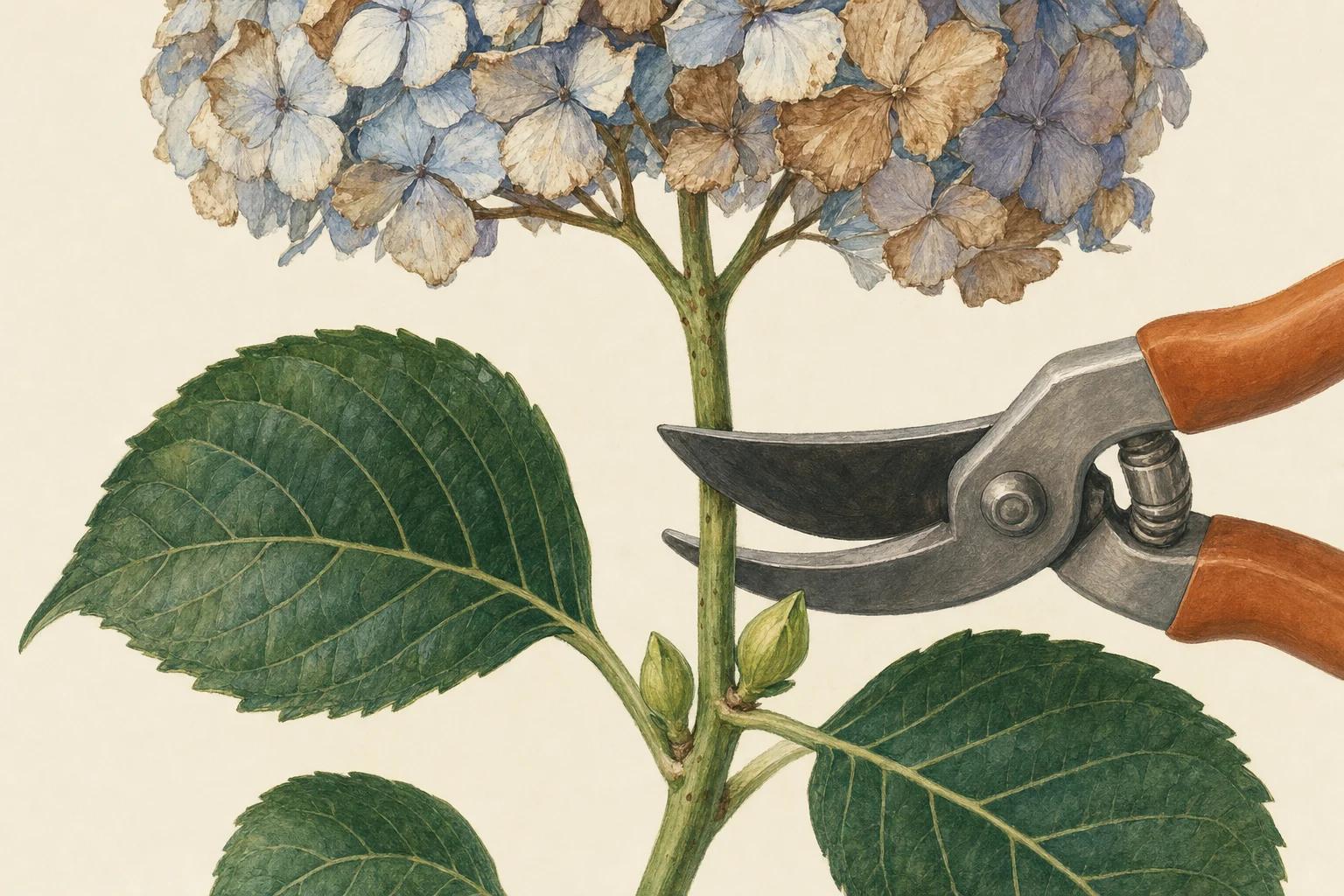
Prune once-blooming bigleaf and mountain hydrangeas right after flowering and before August 1; rebloomers such as Pop Star and Tuff Stuff Ah-Ha need only dead wood removed in spring; cut panicle and smooth hydrangeas in late winter.
Bigleaf hydrangeas form next year's flower buds in August and September on the stems they grew this year. Any cut made between fall and early spring removes those buds, which is why a once-blooming bigleaf pruned at either time leafs out but does not flower. Rebloomers set buds on new growth as well, so a misplaced cut costs them only the early flush. In spring, wait until you can see which buds have survived, then remove only dead or winter-damaged canes.
In cold areas, leave the faded mophead flowers on through winter, where they shield the buds below. Deadhead in spring, cutting back to the first or second strong pair of buds under each old head. Tuff Stuff Ah-Ha needs even less: remove dead wood in early spring and do not cut it back at any time of year.
Panicle and smooth hydrangeas flower on the current season's growth, so prune them in late winter or early spring, before new shoots expand. A smooth hydrangea tolerates a hard cut to the lowest healthy pair of buds, under 10 inches (25 cm), or, for a taller plant, a medium cut to about 2 feet (60 cm). For cut-by-cut detail, see when to prune hydrangeas, and if a plant has stopped flowering, work through why a hydrangea is not blooming.
Overwintering hydrangeas in pots
Leave a potted hydrangea outdoors for winter only if it is rated at least two USDA zones colder than your garden; otherwise move it somewhere cold but sheltered, such as an unheated garage.
Roots in an above-ground pot can drop to the same temperature as the winter air, and in most plants the roots are far less cold hardy than the stems. A larger pot buffers the roots better than a small one, but no pot on a patio matches the insulation of garden soil.
The two-zone rule
Hardiness zones assume a plant is growing in the ground. For a container that stays outdoors all winter, choose a plant rated two zones colder than your own. A Zone 6 garden needs a Zone 4 plant, and central Illinois, in Zones 5 and 6, calls for plants hardy to Zone 3 or 4. Look up your zone with Sow's plant hardiness checker.
| Cultivar | In-ground rating | Can winter outdoors in a pot in |
|---|---|---|
| Invincibelle Wee White | Zones 3–8 | Zones 5–8 |
| Bobo | Zones 3–9 | Zones 5–9 |
| Pop Star | Zones 4–9 | Zones 7–9; garage it in Zone 6 and colder |
| Tuff Stuff Ah-Ha | Zones 5–9 | Zones 7–9 |
The two-zone rule applied to the cultivars on this page; ratings are USDA hardiness zones.
A zone rating describes whether the plant survives, not whether its flower buds do. Pop Star is rated to Zone 4, yet early or late freezes and bitter winters can still kill the buds on last year's stems, leaving only the later flowers on new growth. For any bigleaf or mountain type in Zones 4–6, treat garage storage as the default rather than the backup.
Where to keep the pot
| Method | How | Best for |
|---|---|---|
| Unheated garage, shed or cold basement | Hold roughly 20–45°F (-7 to 7°C); water lightly through winter | Bigleaf and mountain types in cold zones |
| Sink the pot | Bury it to the rim in garden soil and mulch over; lift when hard frost is past | Plastic and other frost-proof pots |
| Group and mulch | Cluster pots against the north or east side of the house, out of wind; pile on straw, shredded leaves or bark | Plants rated two zones colder than yours |
| Enclosure | Set the pot inside a box, larger pot or wire cage packed with straw, bark, bubble wrap or packing peanuts | One large pot that cannot move |
Winter options for container hydrangeas in freezing climates.
A hydrangea stored in a garage or basement gets no rain or snow, so check the mix periodically and water lightly when it is dry. Do not keep it wet, or the roots can rot in the cold.
Soak the pot thoroughly a couple of weeks before the ground freezes. Moist mix freezes more slowly than dry mix, so a well-watered root ball goes into winter better protected.
In spring, pull mulch away once new growth starts, and lift sunk pots after the danger of hard frost has passed. Late cold snaps can kill bigleaf flower buds just as they swell, and here a pot has the advantage of being movable. On nights forecast below 32°F (0°C), roll it into the garage or cover the plant with a sheet, blanket or frost cloth.
Gift hydrangeas from the florist
The hydrangea sold in flower as a gift plant is usually a bigleaf hydrangea. It can go outdoors once it finishes blooming, but in cold regions its roots may survive while the top does not, and severe winters often kill it back so far that it fails to flower.
Indoors the flowers last several weeks in bright light near a sunny window, kept out of direct sun, which fades or burns them. A cool room at night, around 50–60°F (10–16°C), helps them last. Never let the plant dry out: the big leaves and heads use water fast, and the flowers collapse before the leaves show stress. If it wilts badly, plunge the whole pot in water until the root ball is wet, then drain it.
In milder areas, plant it outside after flowering in a protected spot, at the same depth it grew in the pot, and water it in well. In the Southeast, fall is the best season for planting out, and plants set out in hot summer weather struggle; dates for your area are in when to plant hydrangeas.
To keep a gift hydrangea in its pot and flower it again, give it a cold rest. In November, once the leaves are off, hold the plant dry at 35–40°F (2–4°C) for about six weeks. Then move it to a bright room with nights of 55–60°F (13–16°C) to bring it back into growth.
Common mistakes and how to fix them
The costliest container mistake is wintering the pot somewhere warm. In a heated garage or the house the plant misses the cold dormancy it needs, so move it to an unheated garage or shed that stays at roughly 20–45°F (-7 to 7°C).
| Mistake | What happens | Fix |
|---|---|---|
| Coffee grounds to turn flowers blue | Grounds are near neutral, about pH 6.5–6.8, so color does not change | Acidic mix plus aluminum sulfate drenches in spring |
| Relying on a single layer of wrap around an exposed pot | Too thin to keep a root ball from freezing in a US cold-zone winter | Use wrap only as packing inside a box or larger pot, or group, sink or garage the pot |
| Pots sitting flat on wet paving all winter | Water cannot drain and the mix waterlogs | Raise pots on pot feet or bricks |
| Removing every winter cover on the first warm day | Tender growth meets cold before it has adjusted | Uncover gradually so the plant can readjust |
Common container mistakes and their fixes.
Repotting and the years ahead
Repot when flowering or growth slows noticeably, which for most potted hydrangeas comes three to five seasons after planting. Do it in early spring, before growth starts, with fresh mix and a pot one size larger, loosening any circling roots as you did at planting. A plant whose mix dries out and wilts within a day of a thorough soaking has outgrown its pot, and roots that girdle the plant mean it has waited too long.
Potting up has a natural limit, because every size up adds weight. Once the pot is as large as you can manage, keep the plant in it and renew the roots instead. In early spring, before growth starts, slide the root ball out, slice away the outer layer of circling roots and old mix down its sides, and set it back in the same pot with fresh mix around it. Water it in twice, as at planting.
To plan where your pots and in-ground hydrangeas will sit together, try Sow's garden design studio.
From the Sow catalog
Hydrangeas in the Sow catalog
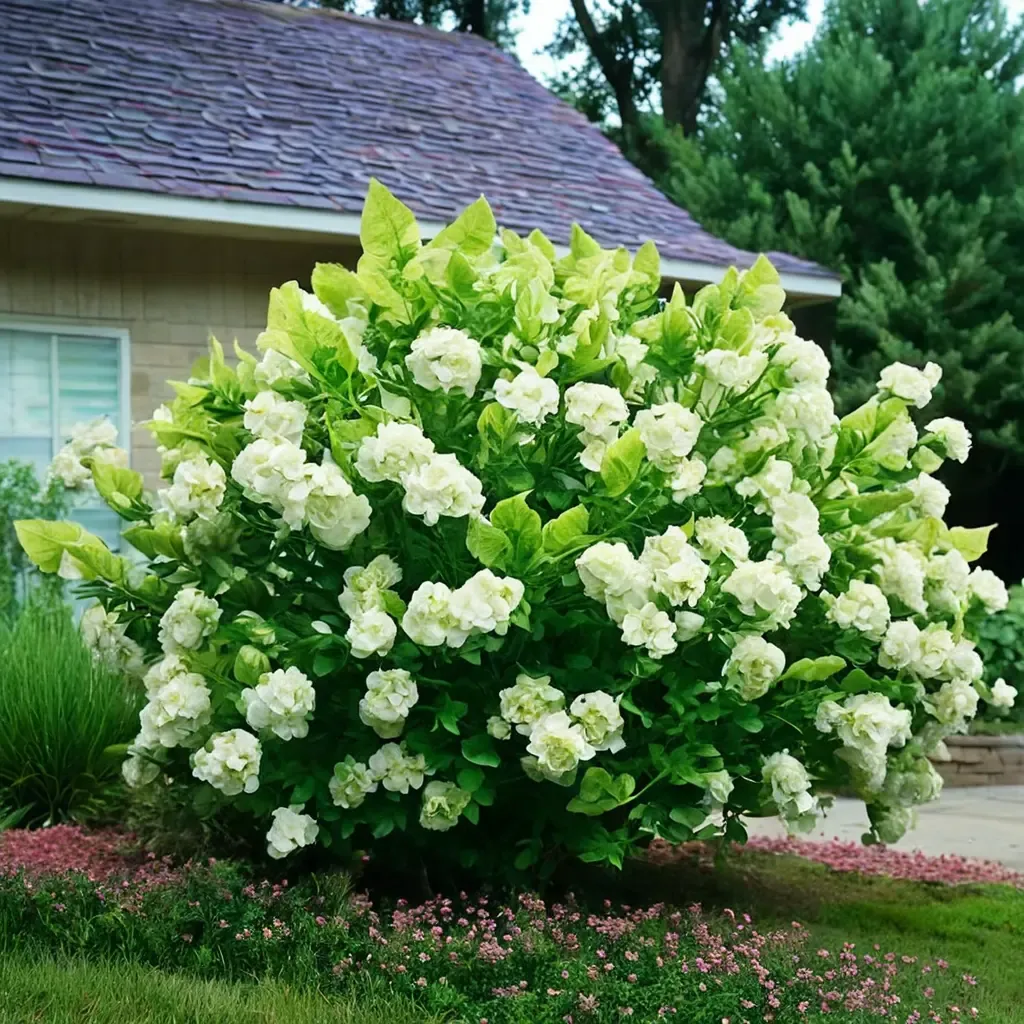
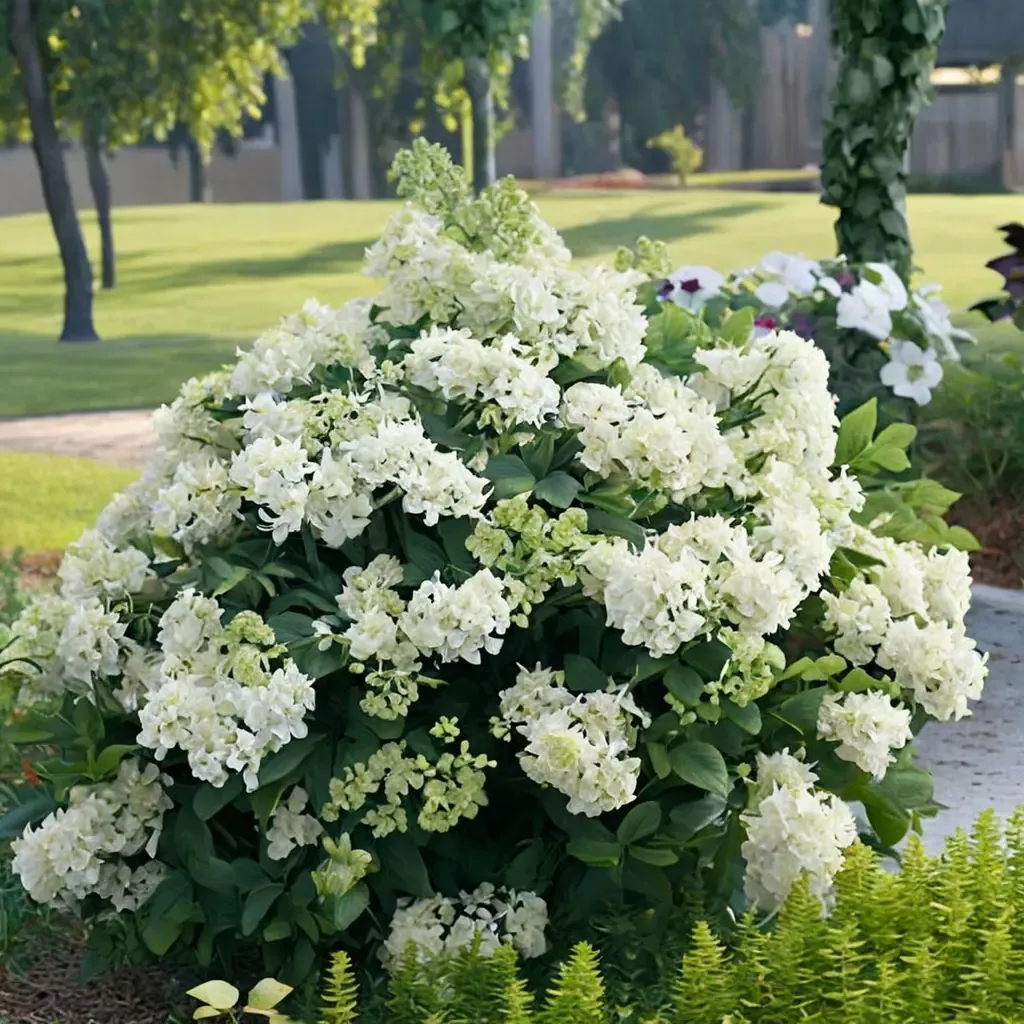
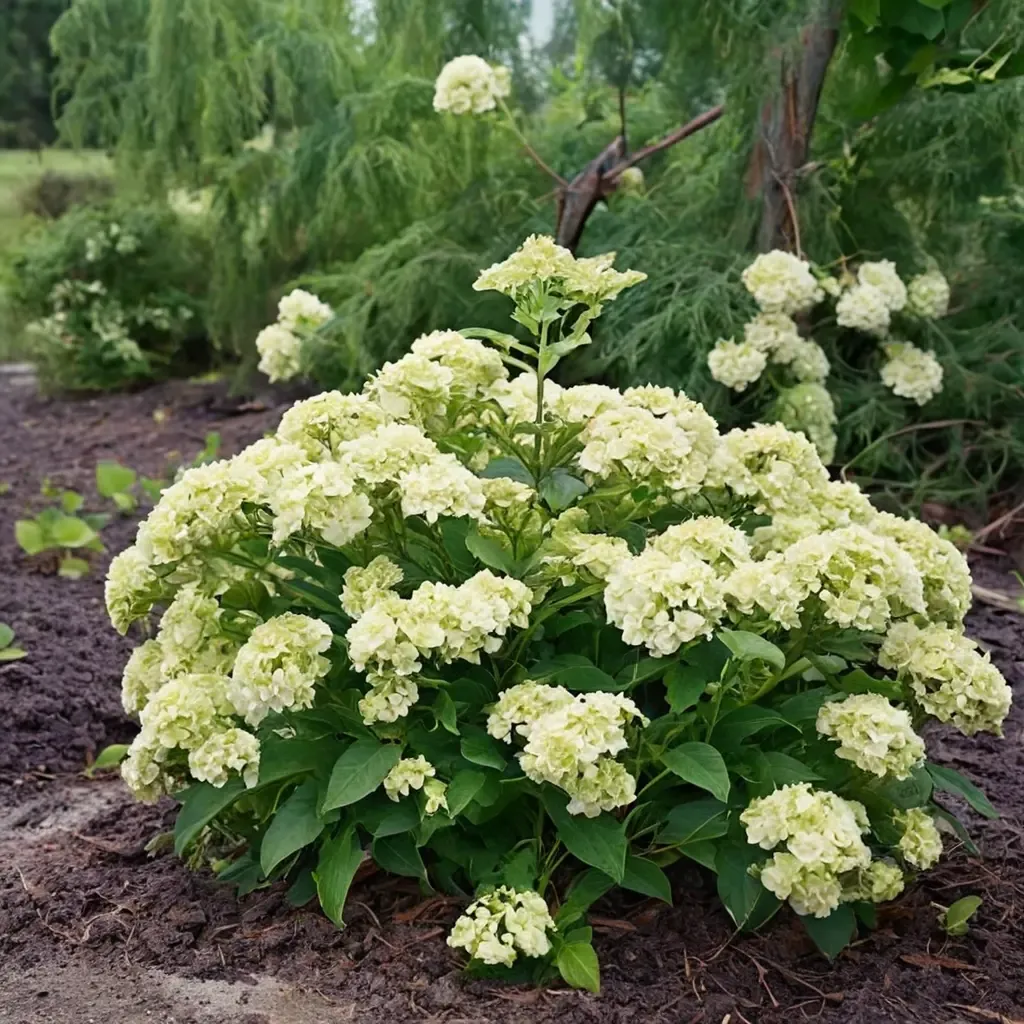
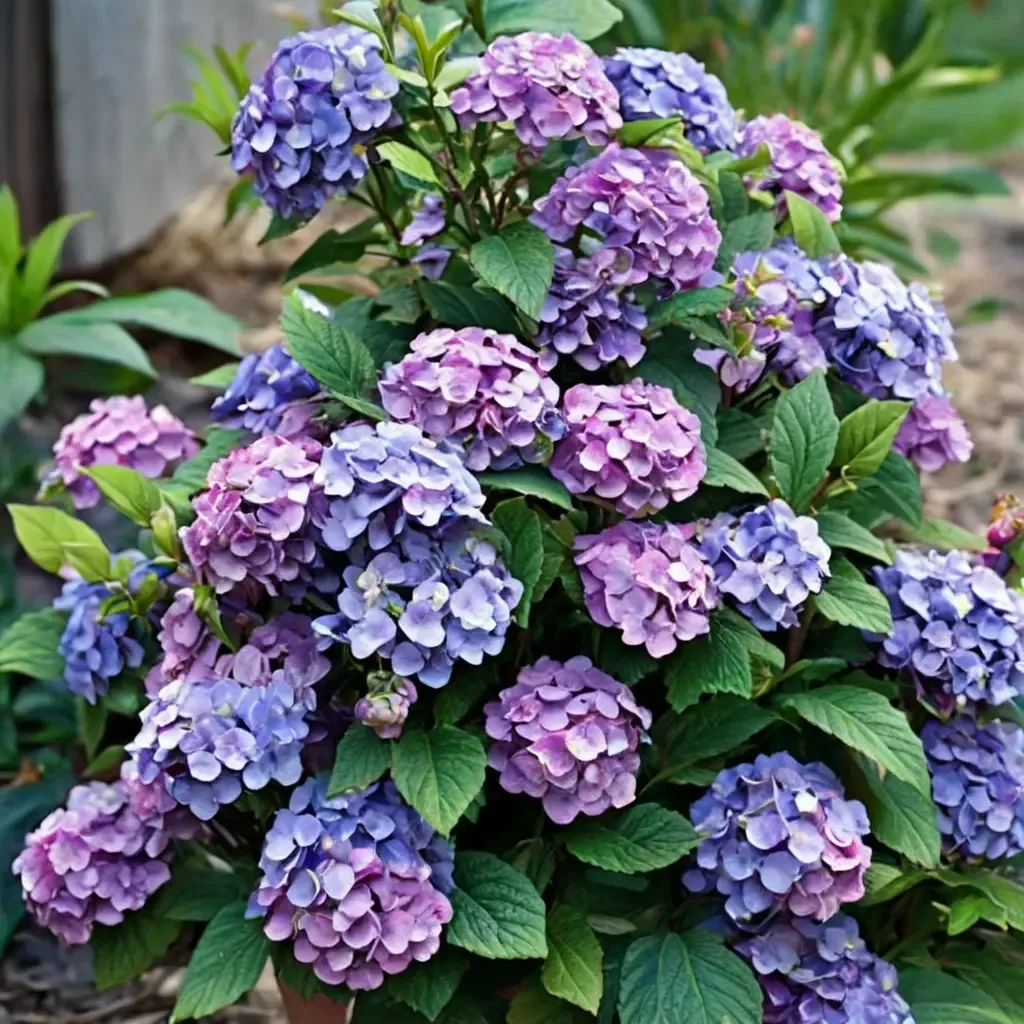
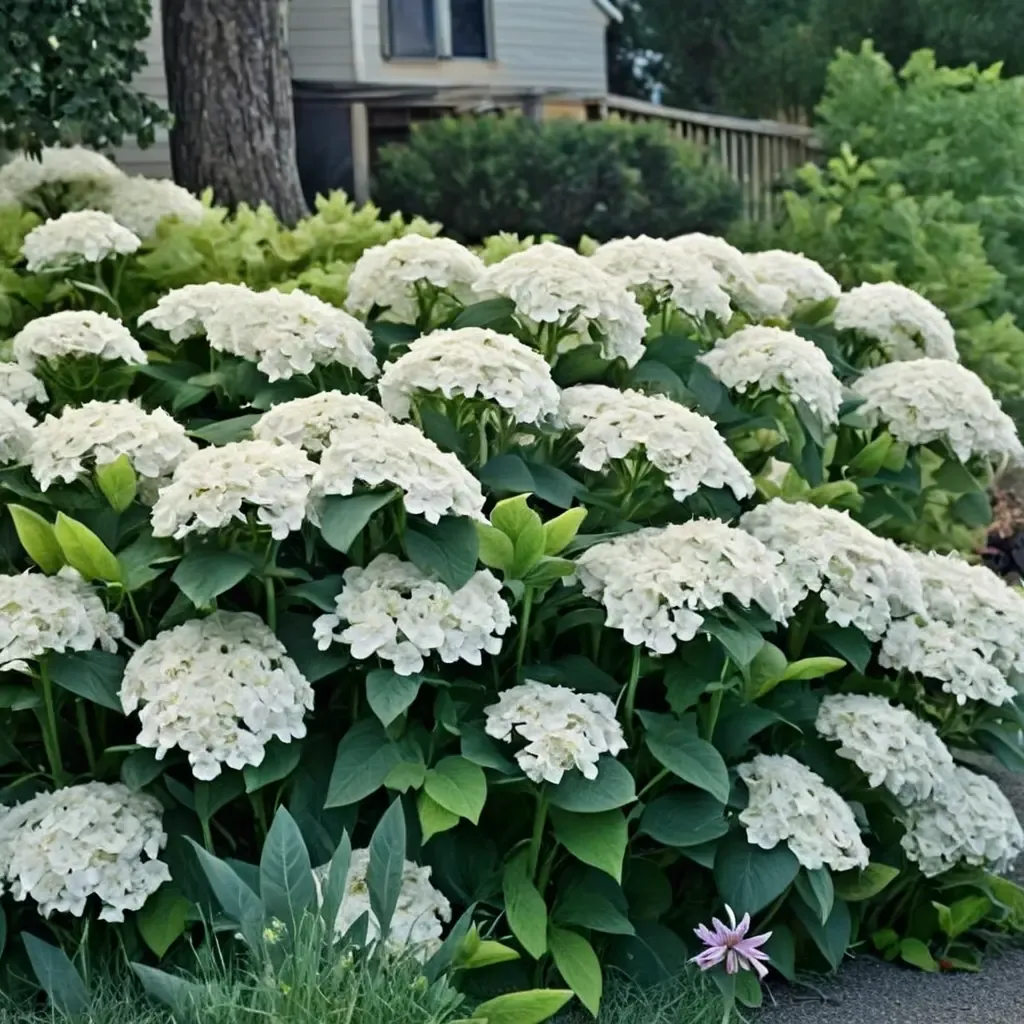
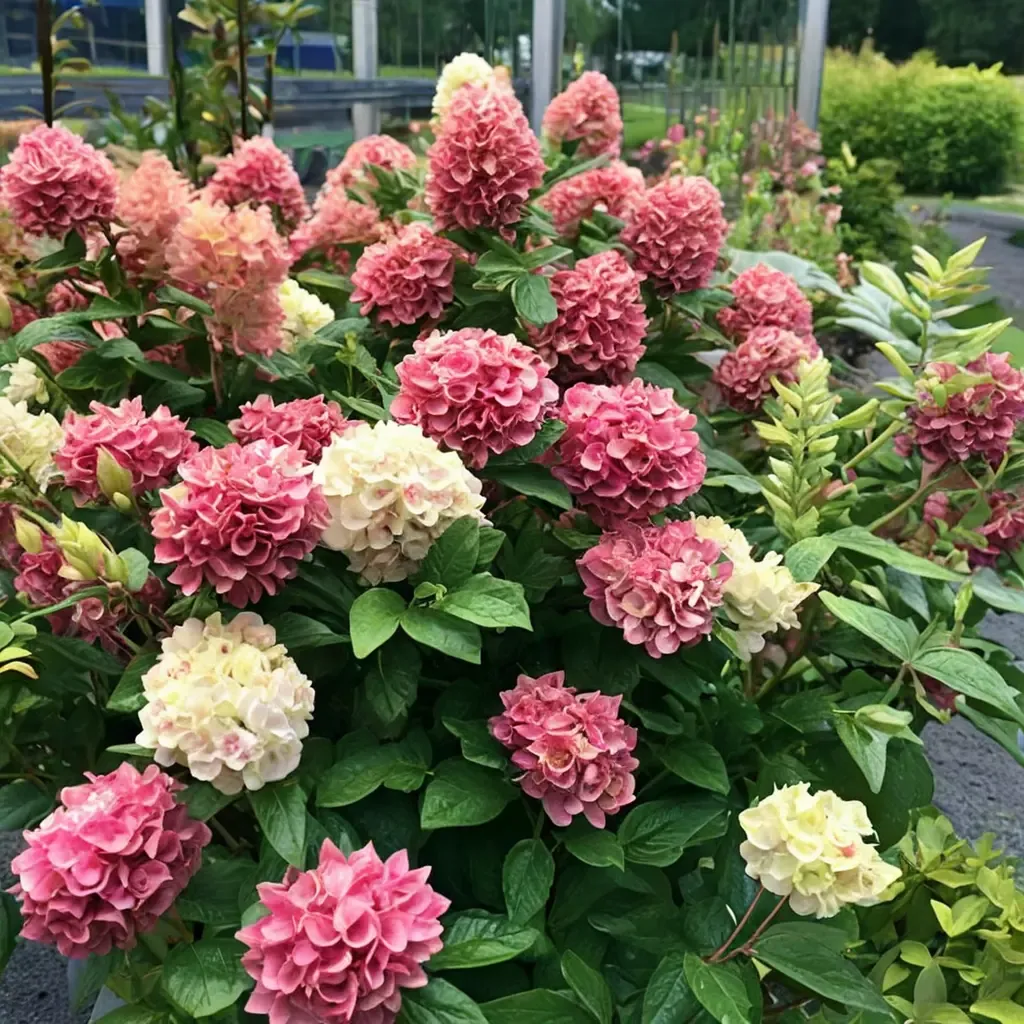
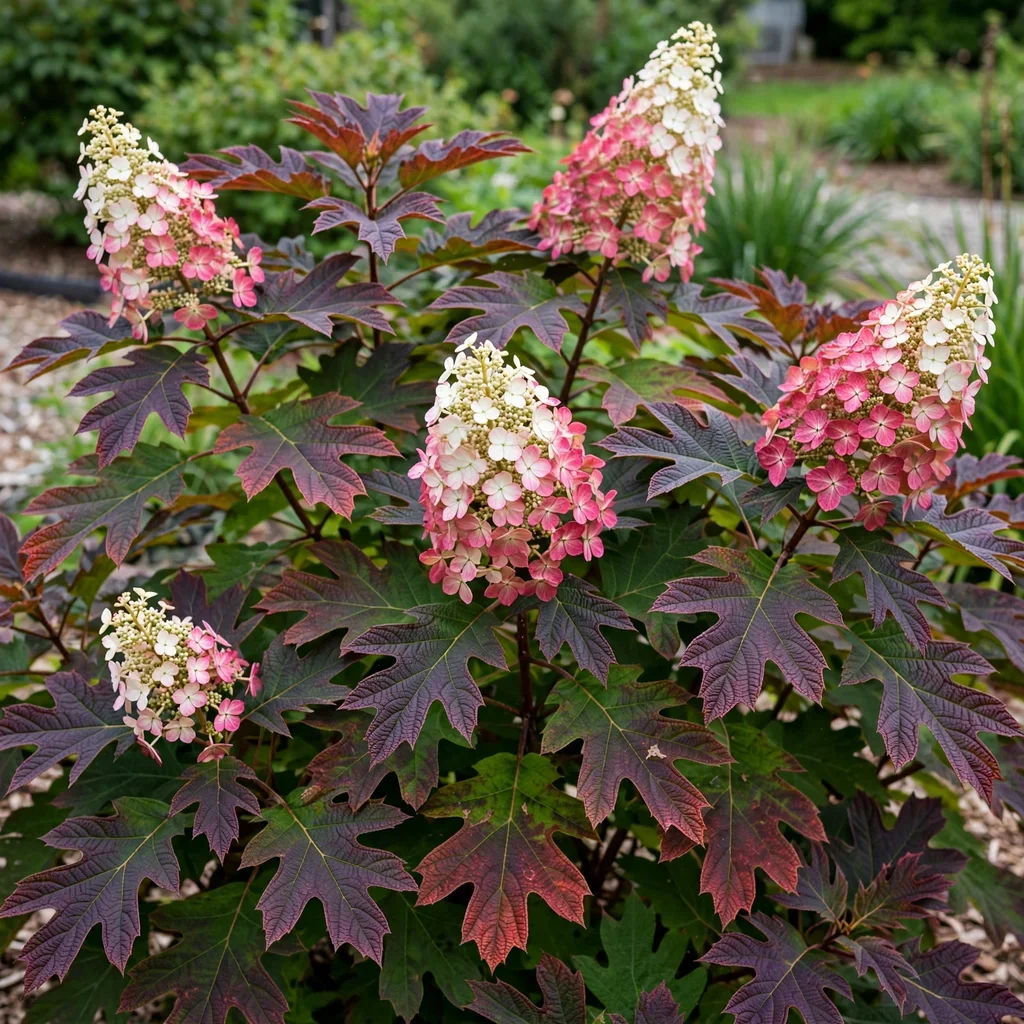
Sow tracks 127 Hydrangea varieties, hardy across USDA Zones 4 to 9 between them. These are the 8 gardeners save most. Each one opens its own page with its zone range, sun, mature size and, where a nursery lists it, today's price.
Companions from real gardens
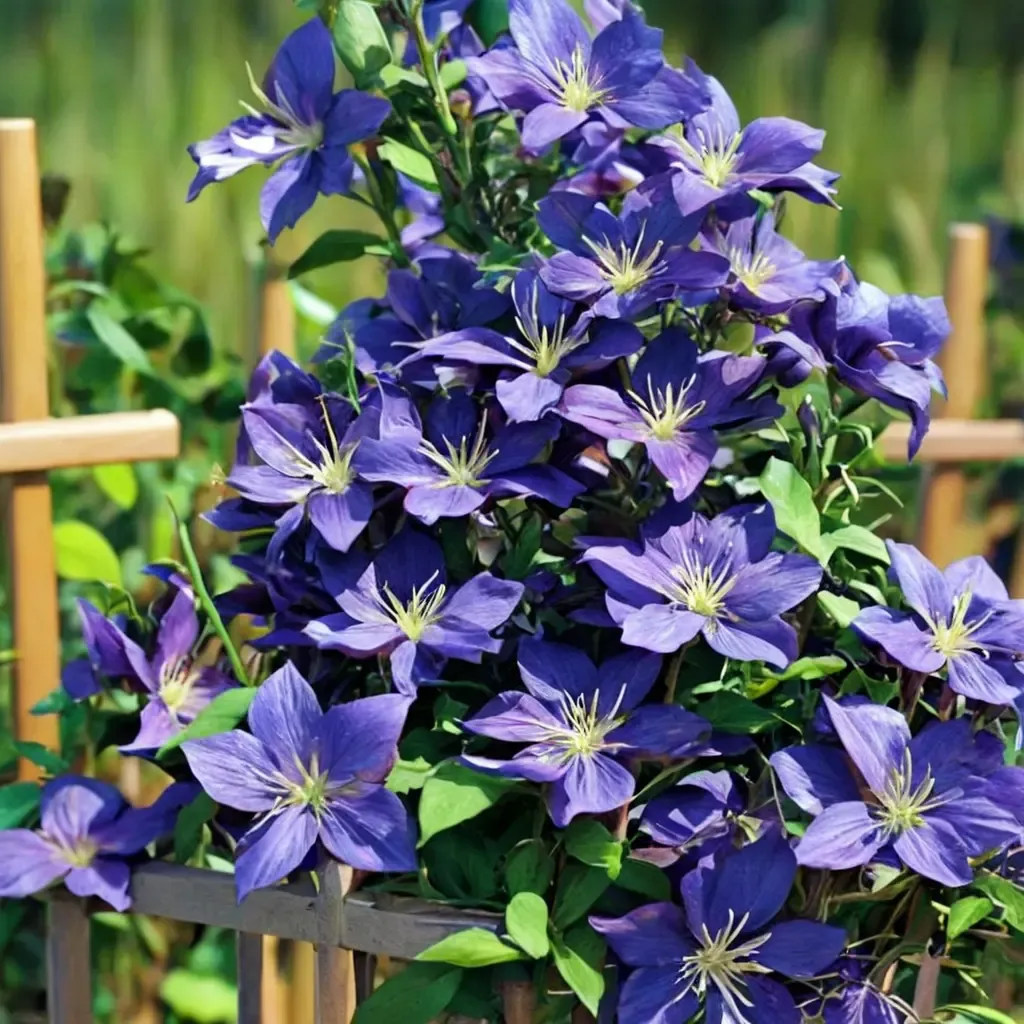
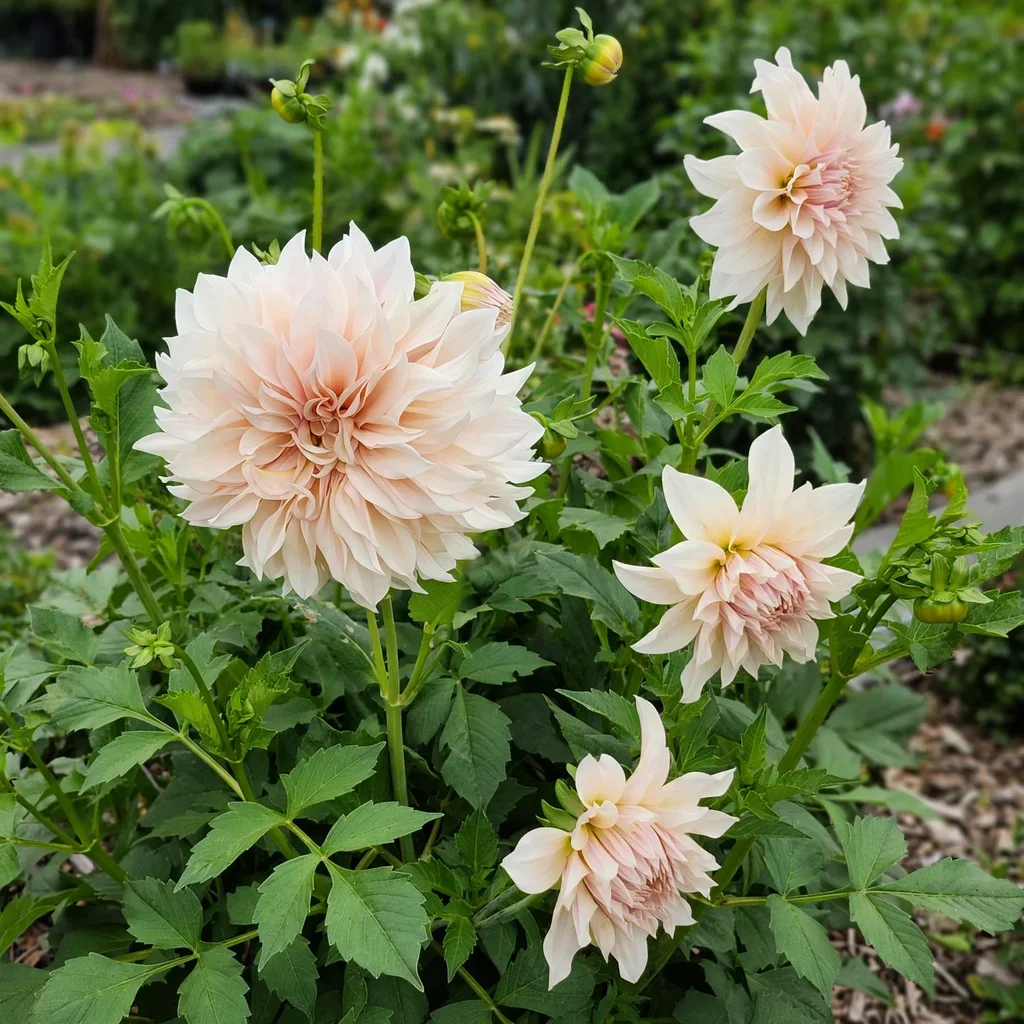
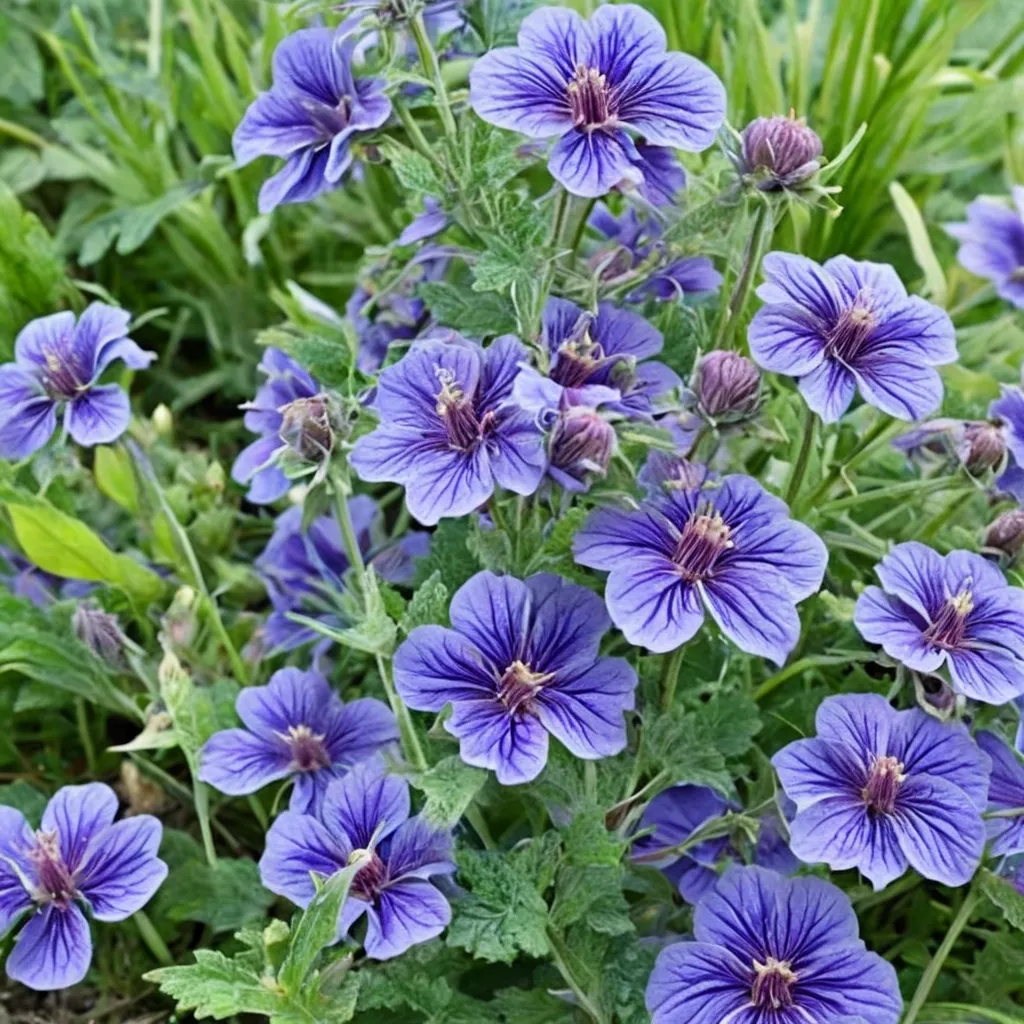
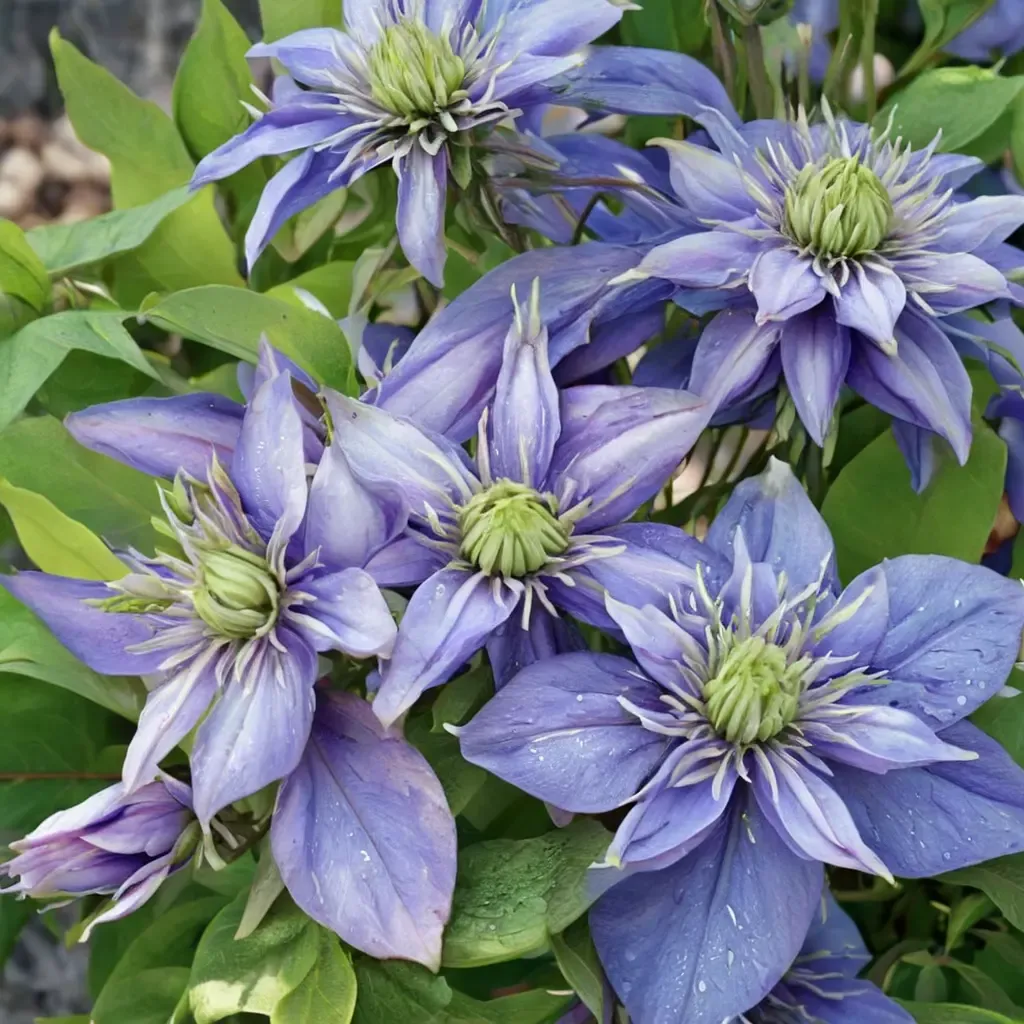
Among the 5.3k gardeners who designed with Hydrangea in Sow, these are the plants they most consistently put beside it. Each was chosen by at least 20 different gardeners, so this is a palette people actually use, not a textbook list.
Prices across nurseries
58 Hydrangea varieties are listed by the online nurseries Sow checks every day, from $15.99 to $155.75, with a median of $20.97. The cheapest listing is usually the smallest pot, so compare sizes as well as prices.
Frequently asked questions
How often do you have to water potted hydrangeas?
Check the pot every day from late spring to fall and water whenever the mix is dry a couple of inches below the surface. In summer that usually means daily, and during a heat wave a pot in sun can need watering twice a day. Older plants with a pot full of roots need more than newly potted ones, so the schedule tightens each year until you repot.
What does a thirsty hydrangea look like?
The flower heads sag first, often before the leaves show any stress, and a plant that was only thirsty perks up within about half an hour of a good soak. If you will be away for a day or two, a clear plastic bag over the plant slows water loss, but use that trick rarely. Limp leaves at midday over damp mix mean heat, not thirst.
What are the signs of overwatering hydrangeas?
Leaves that brown along the edges and drop while the mix stays wet point to too much water, and a plant that stays wilted after watering probably has root rot. In a pot the usual cause is trapped water: a saucer left full, or a decorative outer pot with no hole that collects whatever drains from the inner pot. Tip both out after every watering.
Can I use a water-soluble plant food on a potted hydrangea?
Yes, as a single dilute top-up, not a routine feed. An all-purpose formula with a high first number is nitrogen-heavy, and nitrogen builds leaves at the expense of flowers. Use it to top up a spring slow-release feed rather than as the only source, and stop feeding after late July. If you want blue flowers, skip any bloom booster formula with a large middle number, since phosphorus locks up aluminum.
Do potted hydrangeas need a cold rest?
Yes. A pot wintered in a heated garage or the house misses the cold dormancy the plant needs, so keep it somewhere cold but sheltered, at roughly 20–45°F (-7 to 7°C), such as an unheated garage. A gift hydrangea you want to flower again in its pot needs about six weeks at 35–40°F (2–4°C) once its leaves are off, kept dry, before it goes into a bright room.
Can a potted hydrangea be planted in the ground later?
Yes. Spring and fall are the best seasons, and in the Southeast fall is best, because plants set out in hot summer weather struggle. Plant it at the same depth it grew in the pot and water it in well. Dates for your area and the first-year watering schedule are in the guide to when to plant hydrangeas.
Can hydrangeas stay in pots outside over winter?
Yes, if the plant is rated at least two USDA zones colder than your own. A dwarf panicle or smooth hydrangea rated to Zone 3 can stay out in Zone 5, especially grouped against a wall and mulched. Bigleaf and mountain types rated to Zone 4 or 5 are safer in an unheated garage or shed in Zones 4 to 6.
Which hydrangea is best for a pot?
For a cold climate, a dwarf panicle such as Bobo or the miniature smooth hydrangea Invincibelle Wee White, both rated to Zone 3 and both flowering on new growth. For flowers you can turn blue or pink, a compact rebloomer such as Pop Star or the mountain hydrangea Tuff Stuff Ah-Ha. Avoid oakleaf hydrangea, which seldom looks its best in a pot and is very sensitive to soggy soil.
References
- Penn State Extension. Overwintering Plants in Containers. Accessed October 16, 2026.
- University of Illinois Extension. Overwintering potted plants. Accessed October 16, 2026.
- Penn State Extension. Why Doesn't My Hydrangea Bloom?. Accessed October 16, 2026.
- NC State Extension. Extension Gardener Handbook, Chapter 18: Plants Grown in Containers. Accessed October 16, 2026.
- University of Georgia Extension. Growing Bigleaf Hydrangea (Circular 973). Accessed October 16, 2026.
- University of Missouri Extension. Care of Flowering Potted Plants (G6511). Accessed October 16, 2026.
- Clemson Cooperative Extension Home & Garden Information Center. Hydrangea Care in South Carolina (HGIC 1067). Accessed October 16, 2026.
- University of Minnesota Extension. Keep gardens thriving through the heat. Accessed October 16, 2026.
- Mississippi State University Extension. Hydrangeas for Mississippi Gardens (P2574). Accessed October 16, 2026.
- Oregon State University Extension Service. General care for hydrangeas. Accessed October 16, 2026.
- Oregon State University Extension Service. Coffee grounds boost soil health — and help control slugs. Accessed October 16, 2026.
- UMass Extension. Hydrangeas: Color + Fertilizing. Accessed October 16, 2026.
- Royal Horticultural Society. How to grow shrubby hydrangeas. Accessed October 16, 2026.
- ASPCA Animal Poison Control. Hydrangea (Toxic and Non-Toxic Plants). Accessed October 16, 2026.
- Proven Winners. How to Grow Hydrangeas in Pots. Accessed October 16, 2026.
- Proven Winners. Invincibelle Wee White Smooth Hydrangea. Accessed October 16, 2026.
- Proven Winners. Bobo Panicle Hydrangea. Accessed October 16, 2026.
- Proven Winners. Tuff Stuff Ah-Ha Reblooming Mountain Hydrangea. Accessed October 16, 2026.
- Endless Summer Hydrangeas (Bailey Nurseries). Pop Star Reblooming Hydrangea. Accessed October 16, 2026.
- Endless Summer Hydrangeas (Bailey Nurseries). Garden Gab: Container Planting with Hydrangeas. Accessed October 16, 2026.
Sow Editorial
Written by the Sow team from university extension services, botanical gardens, USDA and NOAA data and plant breeders. Every source is listed under References.