The Story
Plant Bio
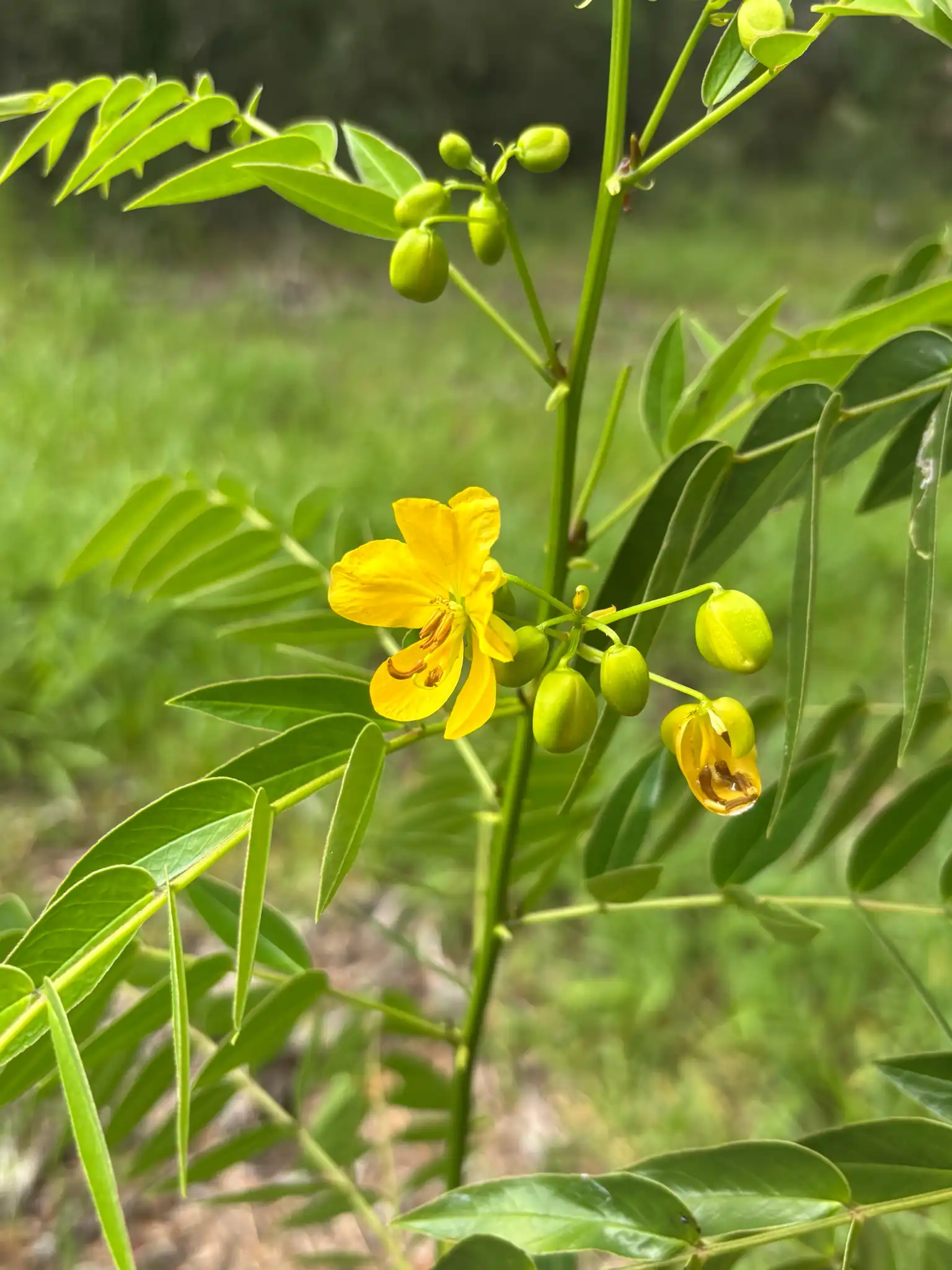
Senna ligustrina is an evergreen shrub in the pea family that reaches four to eight feet tall and three to six feet wide, usually growing taller than wide with multiple stems from the base. The leaves are alternate and pinnately compound, with many dark green linear to lanceolate leaflets borne along a central rachis.
The flowers are bright butter-yellow with five petals, borne in axillary clusters of five to ten or more from fall through spring when nights lengthen. Pollination is by buzzing bees, and the thin bean pods that follow ripen to deep brown; the foliage feeds cloudless sulphur and sleepy orange caterpillars.
Uses & Benefits:
Essentials
At a Glance
Plant Type
Shrub
Height
94"
Width
71"
Light
Full Sun, Partial Sun
Zones
9, 10
Water
Low
Humidity
Unknown
Lifespan
Perennial
Native To
Peninsular Florida to West Indies and Panama
Toxicity
Toxic to horses
Bloom period
Fall – Spring
In flower about 9 months of the year
Planting
How to Grow
- Plant in full sun to light shade in sand or well-drained poor soil with pH 6.1 to 7.8.
- Water to establish, then water sparingly; established plants handle drought and low nutrients.
- Deadhead spent clusters before pods ripen to reduce self-seeding and remove brown pods.
- Prune lightly in spring to shape, keeping the multi-stemmed frame at four to eight feet.
Pro Tip
Clip spent clusters before pods ripen to limit seedlings; bloom needs long nights, so keep night lighting off the plant and expect ants at the leaf glands where caterpillars feed.
Keep It Thriving
Care Guide
Do
- Plant in full sun to light shade with sharp drainage.
- Deadhead to limit prolific self-seeding.
- Leave fall to spring flowers for buzz-pollinating bees and sulphur larvae.
Don't
- Do not plant where horses graze; foliage and pods are highly toxic to horses.
- Do not flood with salt or brackish water; it does not tolerate salt.
- Do not place under bright night lights; short days trigger fall bloom.
Seasonal Care Calendar
| Task | Jan | Feb | Mar | Apr | May | Jun | Jul | Aug | Sep | Oct | Nov | Dec |
|---|---|---|---|---|---|---|---|---|---|---|---|---|
| Deadhead | ||||||||||||
| Pest Check | ||||||||||||
| Plant | ||||||||||||
| Propagate | ||||||||||||
| Prune |
Watch Out For
Pests & Diseases
Common Pests
Common Diseases
In the Garden
Landscape Uses & Companions
Landscape Uses
Multiply
Propagation Methods
Good to Know
Common Questions
Privet Senna questions
What zones can Privet Senna grow in?
Privet Senna is hardy in USDA Zones 9–10: in that range it survives winter in the ground. Colder than Zone 9, grow it in a container you can move to shelter for the winter.
When does Privet Senna bloom?
Privet Senna typically blooms from fall to spring. Exact timing shifts a week or two with your zone — Sow's bloom calendar maps it to your garden.
Does Privet Senna need full sun?
Privet Senna does best in full sun to part shade. In hot climates, afternoon shade keeps blooms fresher longer.
Is Privet Senna drought tolerant?
Yes — once established (usually after the first full season), Privet Senna handles dry spells with minimal watering. Water deeply its first year to build the root system that makes that possible.
More Senna to compare
Keep exploring
Explore the genus
Hardy in your zone?
Grow Privet Senna with confidence
See it in a design of your actual yard, get zone-matched care reminders, and track it season by season in your garden journal.