The Story
Plant Bio
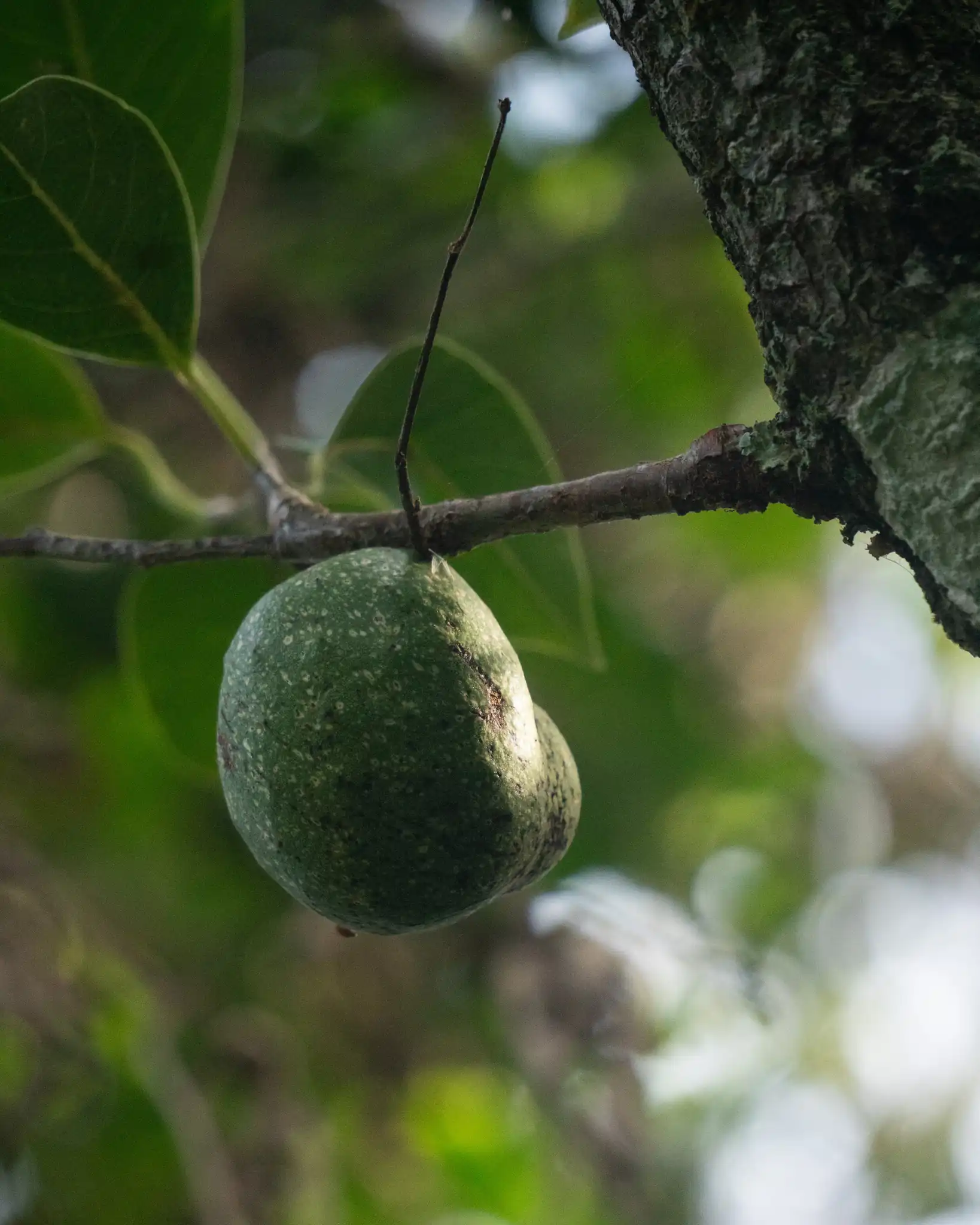
Annona glabra, the pond apple, is a small semi-deciduous tree of fresh and slightly saline swamps, reaching 15 to 35 feet with gray-barked single or multi-stemmed trunks that sucker into mangrove-like thickets. The leaves carry a prominent midrib and yellow before dropping in the dry season, while roots persist in standing water and tolerate saltwater where most fruit trees fail.
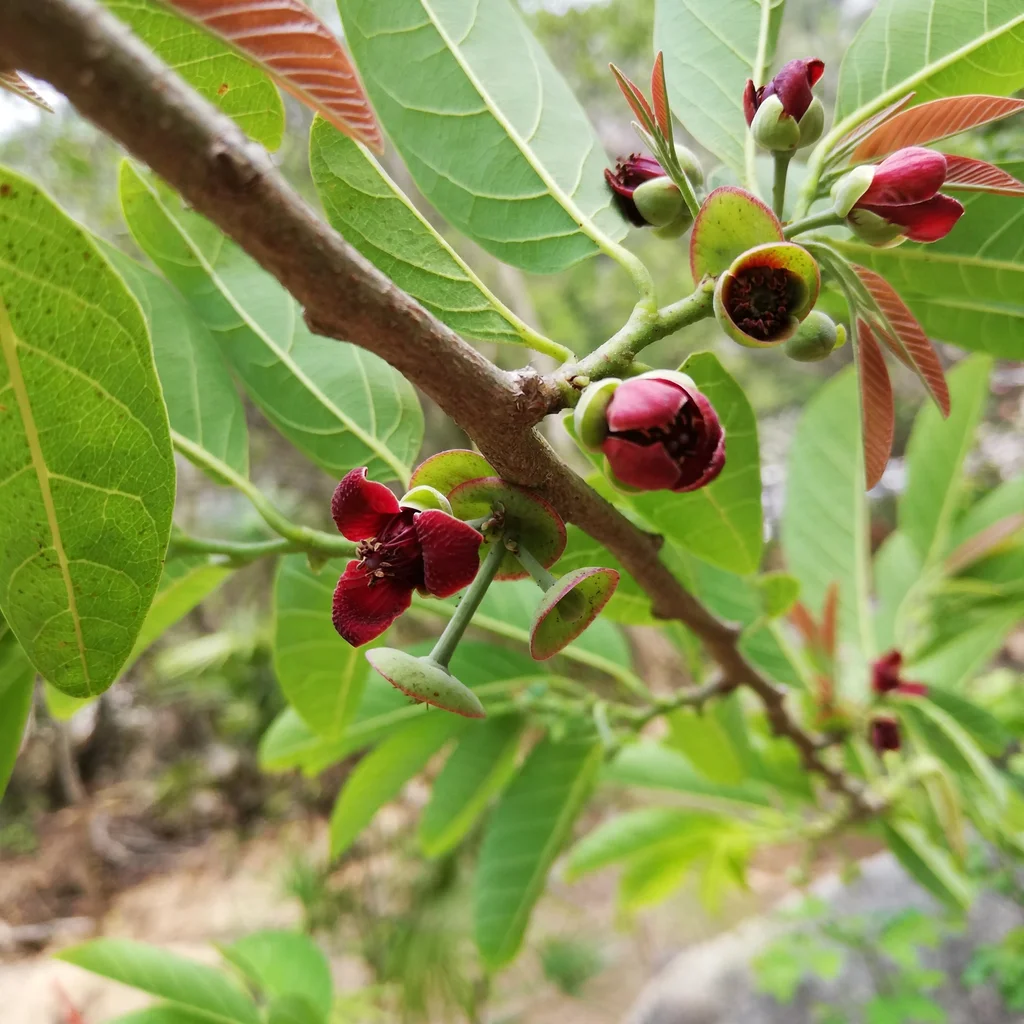
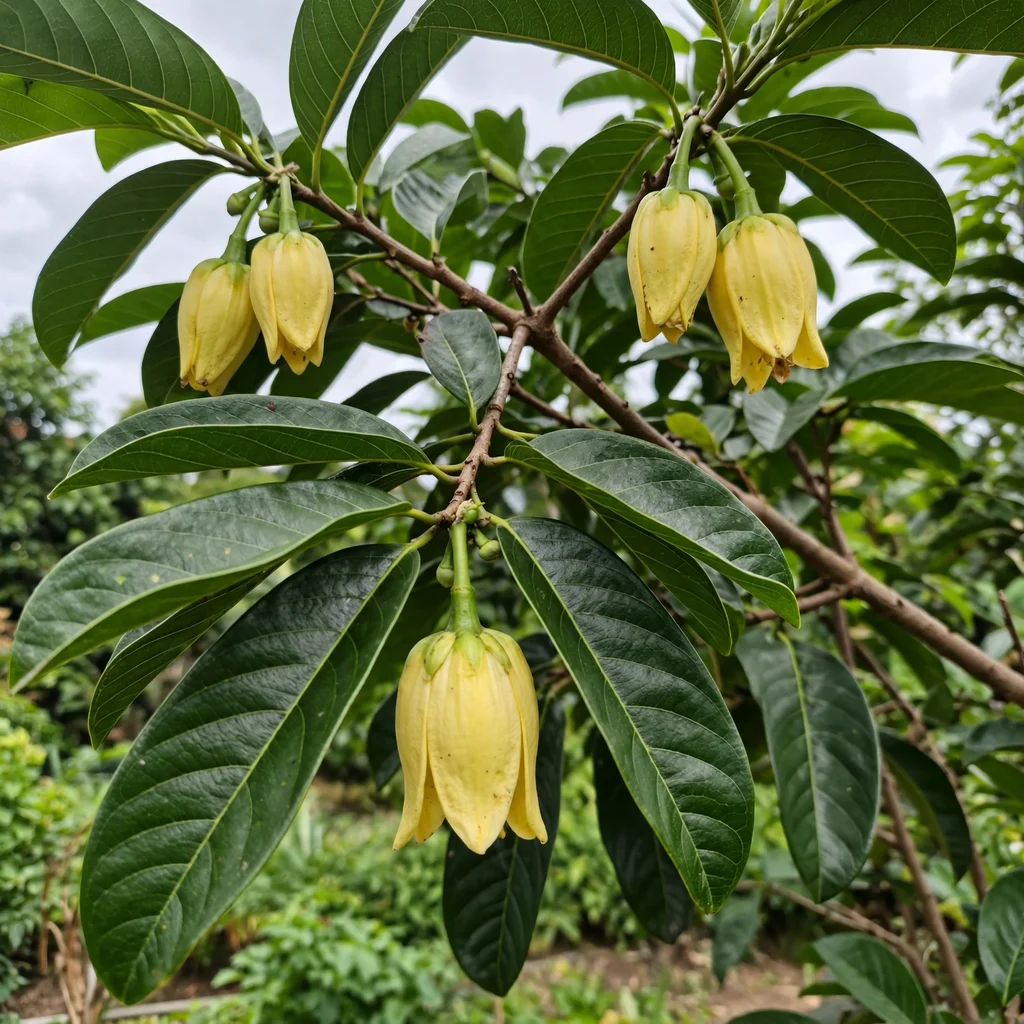
The flowers are pendent, 2 to 3 inches across, with three thick outer and three inner fleshy petals that are cream to pale yellow outside and bright yellow with a red base inside. The fruit is a very large round yellow-fleshed apple that floats for dispersal but is scarcely desirable to eat, a combination that separates pond apple from sugar apple, soursop and atemoya.
Uses & Benefits:
Essentials
At a Glance
Plant Type
Tree
Height
420"
Width
240"
Light
Full Sun
Zones
10
Water
High - needs constantly wet soil
Humidity
High
Lifespan
Long-lived tree in wet sites
Native To
Florida Everglades, Caribbean, Mexico, Central and South America, West Africa
Toxicity
Unknown - fruit scarcely desirable, seed extracts insecticidal
Bloom period
Late spring – Summer
In flower about 4 months of the year
Planting
How to Grow
- Set in full sun in USDA 10A-12B in a pond margin, slough, or ditch where roots stay wet year-round.
- Dig the hole at grade in sandy or peaty acidic soil and backfill with native muck, then water in to settle.
- Mulch 2 to 3 inches with pine bark, keeping mulch off the trunk, and keep soil saturated through establishment.
- Do not move to dry upland soil; supplement water in any dry spell to prevent leaf drop and stunting.
Pro Tip
Plant only where soil stays wet year-round; on dry ground growth stalls and the tree fails.
Keep It Thriving
Care Guide
Do
- Keep roots constantly wet, including brief saltwater flooding
- Remove fallen fruit if you do not want seedlings
- Use as graft stock for atemoya where wet soil limits other stocks
Don't
- Do not plant in dry soil or well-drained beds
- Do not cut back into old leafless wood expecting dense regrowth
- Do not move fruit to wild wetlands outside south Florida
Seasonal Care Calendar
| Task | Jan | Feb | Mar | Apr | May | Jun | Jul | Aug | Sep | Oct | Nov | Dec |
|---|---|---|---|---|---|---|---|---|---|---|---|---|
| Harvest | ||||||||||||
| Mulch | ||||||||||||
| Pest Check | ||||||||||||
| Plant |
Watch Out For
Pests & Diseases
Common Pests
In the Garden
Landscape Uses & Companions
Landscape Uses
Multiply
Propagation Methods
Good to Know
Common Questions
Pond Apple questions
What zones can Pond Apple grow in?
Pond Apple is hardy in USDA Zone 10: in that range it survives winter in the ground. Colder than Zone 10, winters are too cold for it to survive outdoors.
When does Pond Apple bloom?
Pond Apple typically blooms from late spring to late summer. Exact timing shifts a week or two with your zone — Sow's bloom calendar maps it to your garden.
Does Pond Apple need full sun?
Pond Apple does best in full sun (6+ hours).
More Annona to compare
Keep exploring
Explore the genus
Hardy in your zone?
Grow Pond Apple with confidence
See it in a design of your actual yard, get zone-matched care reminders, and track it season by season in your garden journal.