The Story
Plant Bio
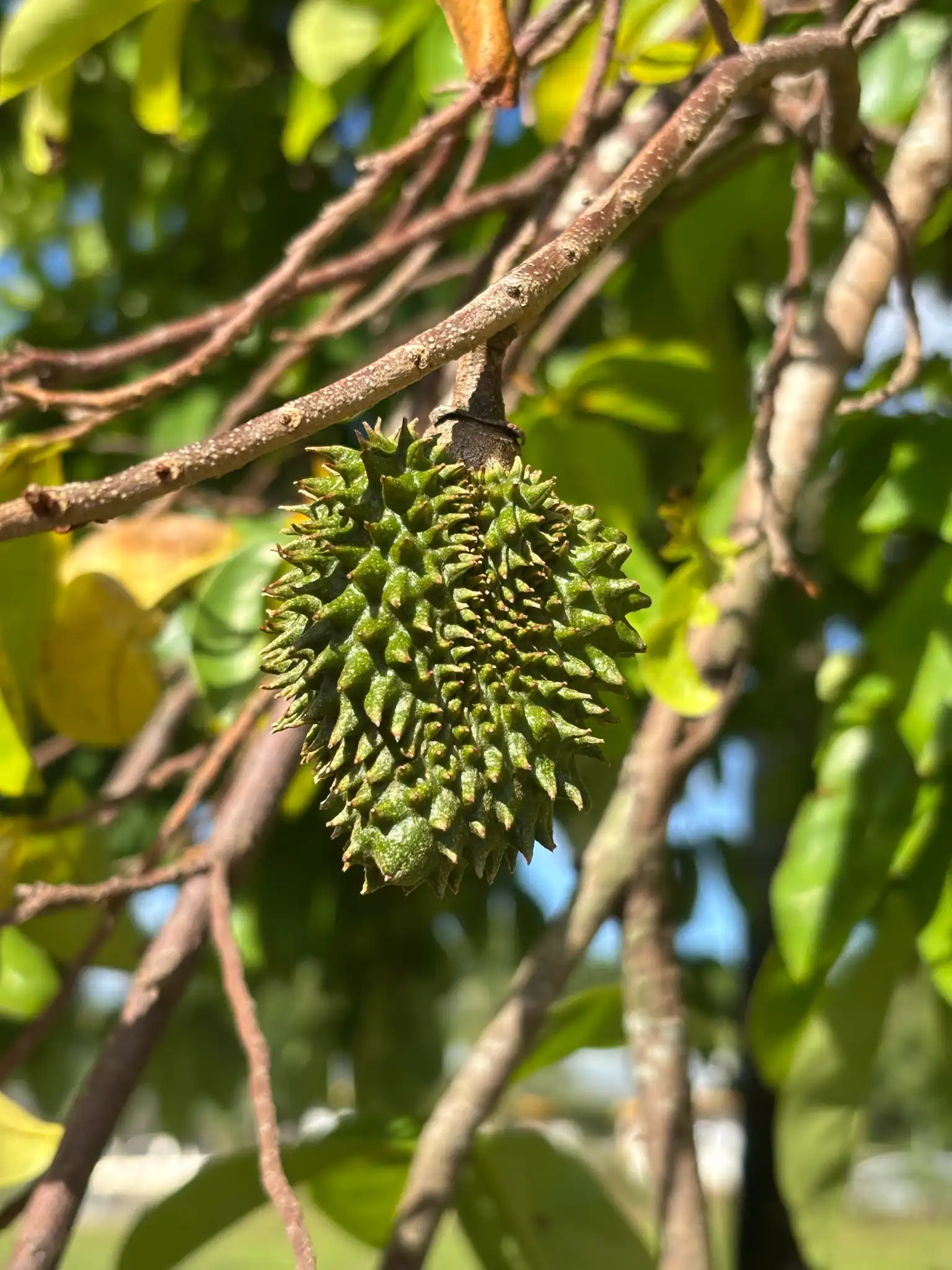
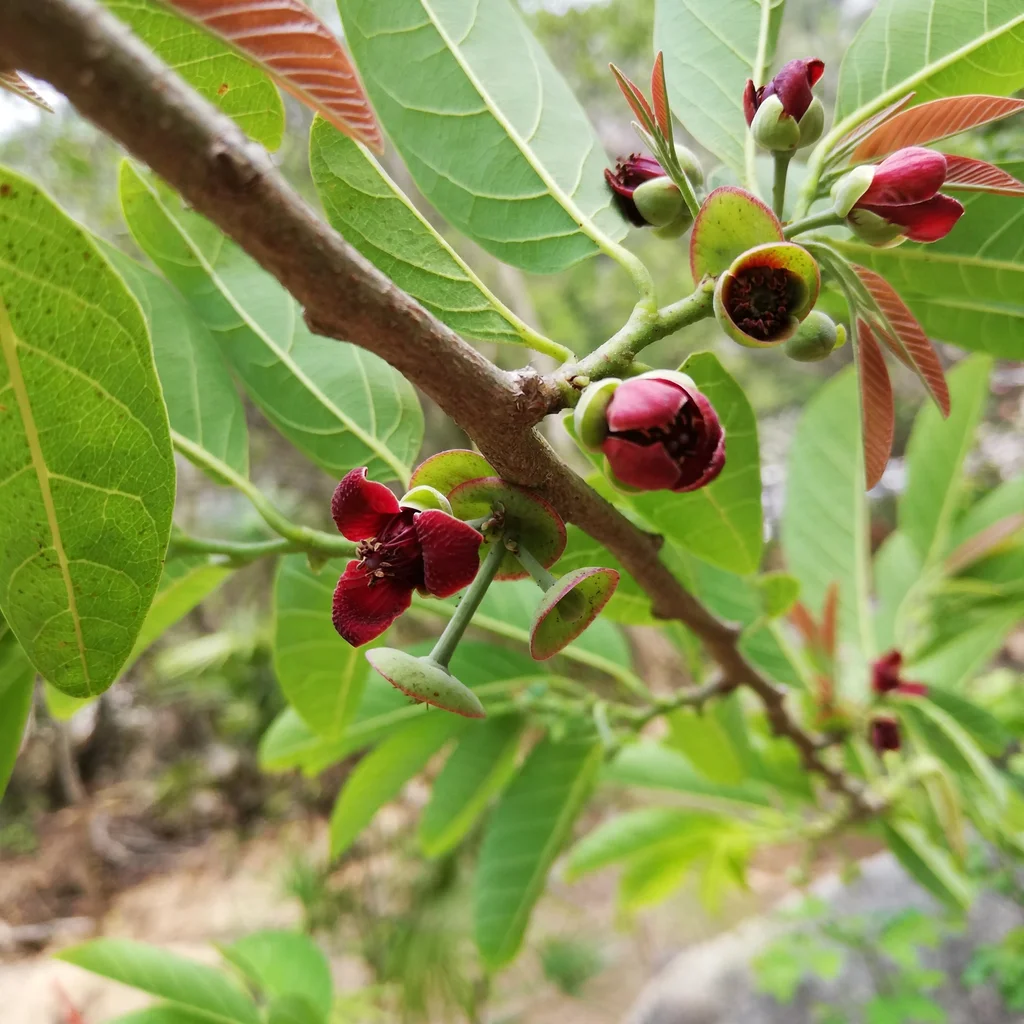
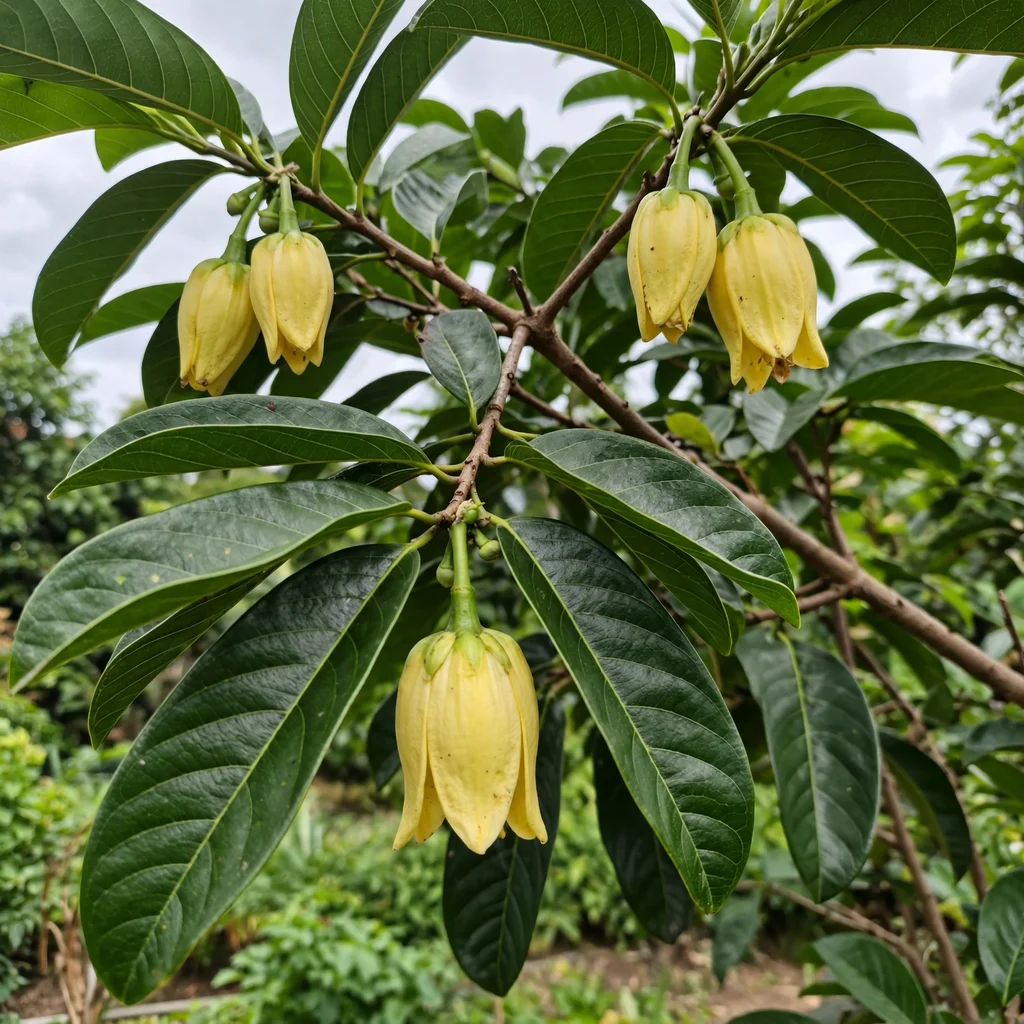
Annona muricata, the soursop, is a small evergreen tree of the custard-apple family reaching fifteen to twenty feet in cultivation, with low down-curved branching and glossy oblong leaves to six inches that smell unpleasant when bruised. The solitary cone-shaped flowers are borne directly on twigs, branches and trunk, each with three yellowish-green outer petals around three smaller dull-yellow inner ones.
It is distinguished within Annona by fruit size alone, producing spiny green fruit to twelve inches and fifteen pounds, far larger than cherimoya or sugar apple, though a mature tree ripens only twelve to twenty-four fruit. It holds its leaves in the true tropics but drops them in prolonged drought or subtropical cool, and any frost kills it outright.
Uses & Benefits:
Essentials
At a Glance
Plant Type
Tree
Height
240"
Width
144"
Light
Full Sun, Partial Sun
Zones
10
Water
High
Humidity
High
Lifespan
Perennial tree
Native To
Tropical Americas
Toxicity
Toxic seeds, leaves and bark
Bloom period
Early summer – Late summer
In flower about 3 months of the year
Planting
How to Grow
- Grow outdoors year-round only in frost-free Zone 10-11; elsewhere keep in a large patio pot moved indoors before cold.
- Plant in rich, evenly moist but well-drained soil in full sun to part shade, sheltered from cold wind.
- Mulch heavily over the shallow fibrous roots, keeping mulch off the trunk, and water consistently for fruit set without waterlogging.
- Feed with balanced 8-3-9 fertilizer every 2-3 months in spring-summer, reducing in fall-winter.
- Prune only to shape and open the canopy for air; do not hard-prune annually.
Pro Tip
Keep it frost-free in a large pot you can move indoors; fruit only sets with consistent water and heavy mulch over the shallow roots.
Keep It Thriving
Care Guide
Do
- Mulch heavily to protect shallow roots and hold even moisture
- Water consistently during flowering and fruit development
- Feed lightly through spring-summer and shelter from any cold wind
- Thin crowded branches to improve air circulation
Don't
- Do not expose to frost or freezing wind
- Do not hard-prune annually into old bare wood
- Do not let soil stay dry for long periods
- Do not eat seeds or use leaf teas in high doses; seeds, leaves and bark are poisonous
Seasonal Care Calendar
| Task | Jan | Feb | Mar | Apr | May | Jun | Jul | Aug | Sep | Oct | Nov | Dec |
|---|---|---|---|---|---|---|---|---|---|---|---|---|
| Fertilize | ||||||||||||
| Mulch | ||||||||||||
| Pest Check | ||||||||||||
| Plant | ||||||||||||
| Prune |
Watch Out For
Pests & Diseases
Common Pests
Common Diseases
In the Garden
Landscape Uses & Companions
Landscape Uses
Companion Plants
Multiply
Propagation Methods
Good to Know
Common Questions
Soursop questions
What zones can Soursop grow in?
Soursop is hardy in USDA Zone 10: in that range it survives winter in the ground. Colder than Zone 10, winters are too cold for it to survive outdoors.
When does Soursop bloom?
Soursop typically blooms in summer. Exact timing shifts a week or two with your zone — Sow's bloom calendar maps it to your garden.
Does Soursop need full sun?
Soursop does best in full sun to part shade. In hot climates, afternoon shade keeps blooms fresher longer.
More Annona to compare
Keep exploring
Explore the genus
Hardy in your zone?
Grow Soursop with confidence
See it in a design of your actual yard, get zone-matched care reminders, and track it season by season in your garden journal.