The Story
Plant Bio
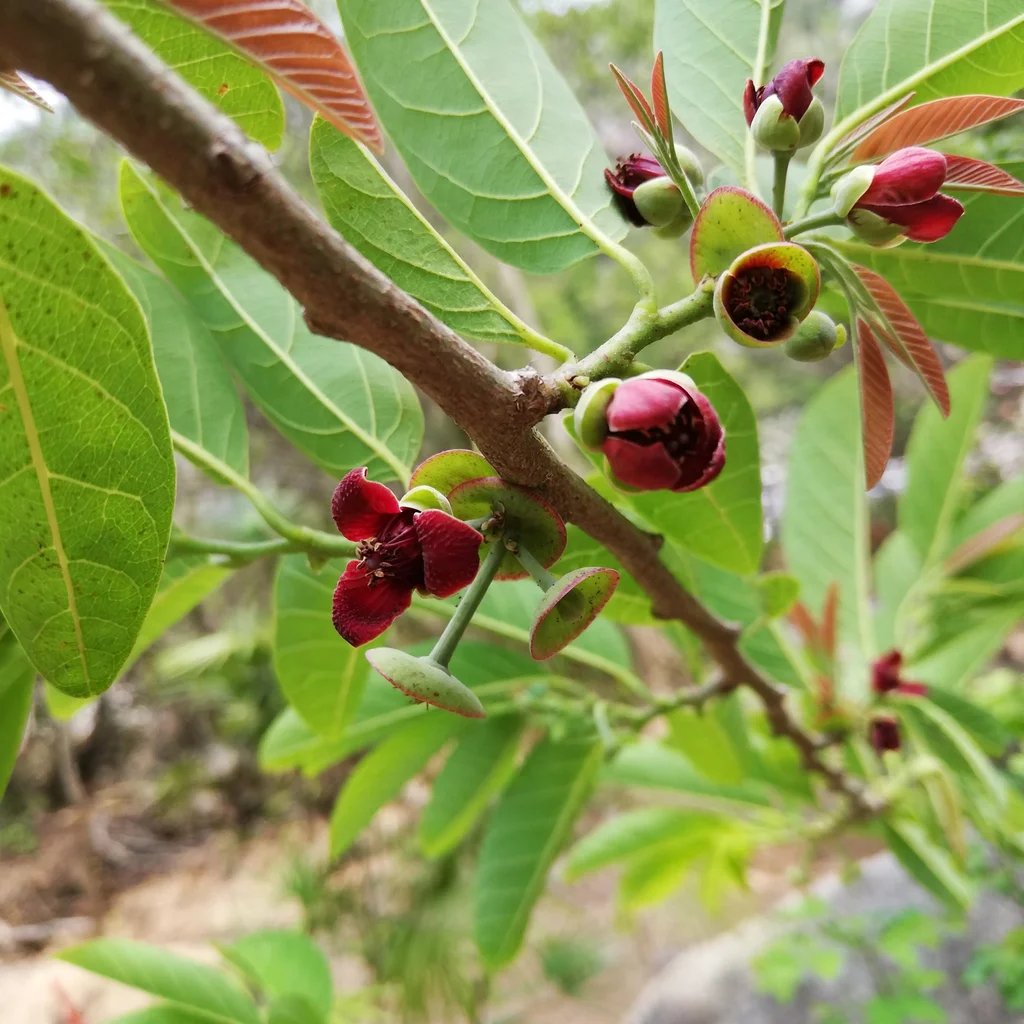
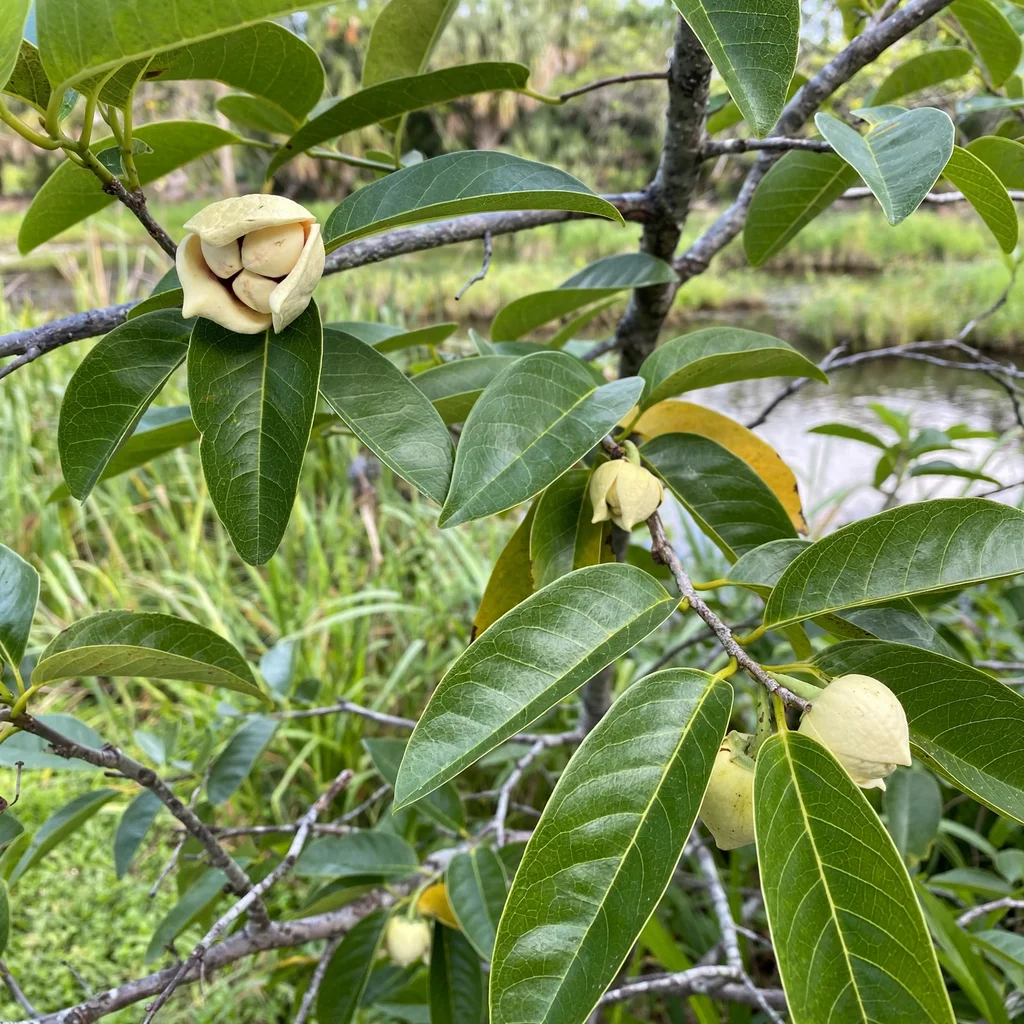
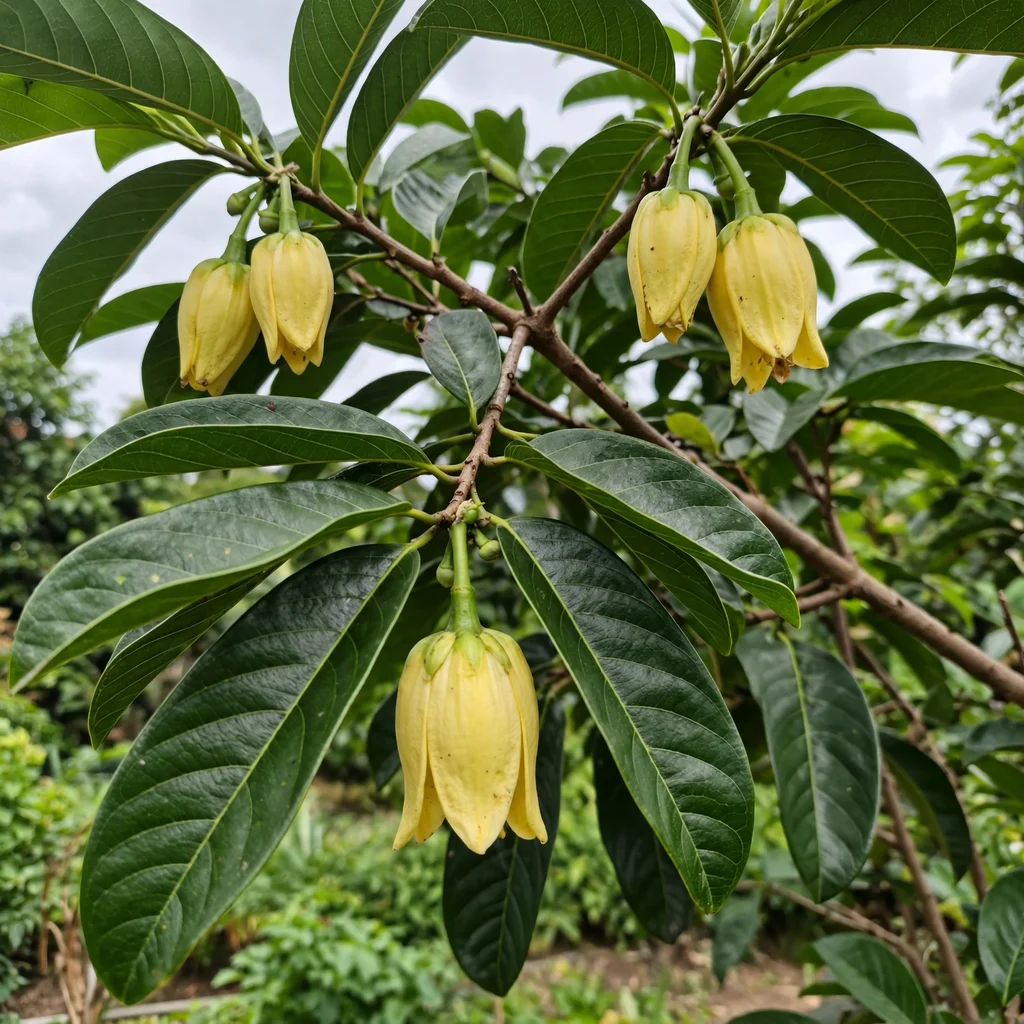
Annona macroprophyllata, still sold as Annona diversifolia, is a spreading small tree to about 25 feet with pale brownish-gray furrowed aromatic bark and glossy thin elliptic to obovate leaves 2 to 6 inches long. Solitary long-stalked maroon to pinkish-red flowers open to the base with small rusty-hairy sepals and narrow blunt minutely hairy outer petals, pollinated by scarab and other small beetles.
It is set apart by clearly veined leaves with reddish coppery new growth and one to two circular 1-inch bracts clasping the flowering branchlets, diversifolia meaning diverse leaves. Fruits on the same tree vary from rough to smooth, and it is often confused with sugar apple, soursop and soncoya.
Uses & Benefits:
Essentials
At a Glance
Plant Type
Tree
Height
295"
Width
197"
Light
Full Sun, Partial Sun
Zones
10
Water
Medium
Humidity
Average
Lifespan
Long-lived tree
Native To
Mexico to El Salvador
Toxicity
Seeds toxic
Bloom period
Spring – Summer
In flower about 6 months of the year
Planting
How to Grow
- Plant a grafted tree in full sun in deep well-drained sandy loam after all frost danger has passed.
- Water deeply during dry spells to mimic a long dry season followed by plentiful rain.
- Give young trees partial shade for the first season, then full sun for fruiting wood.
- Pick fruit as the skin starts to crack from July through fall and hold 3 days to soften.
Pro Tip
Harvest only once the skin starts to crack and hold 3 days to soften; fruit picked hard green will never ripen.
Keep It Thriving
Care Guide
Do
- Plant in rich loose loam or deep sand with good drainage, avoiding shallow oolitic limestone.
- Irrigate where rainfall is scant during fruit development.
- Eat chilled flesh raw with cream and sugar or lime, discarding all seeds.
Don't
- Don't plant where frost occurs or where soil stays wet.
- Don't pick fruit hard and green expecting it to ripen off the tree.
- Don't ingest the hard brown seeds; seed kernels contain neurotoxic acetogenins.
Seasonal Care Calendar
| Task | Jan | Feb | Mar | Apr | May | Jun | Jul | Aug | Sep | Oct | Nov | Dec |
|---|---|---|---|---|---|---|---|---|---|---|---|---|
| Harvest | ||||||||||||
| Mulch | ||||||||||||
| Pest Check | ||||||||||||
| Plant | ||||||||||||
| Winter Prep |
Watch Out For
Pests & Diseases
Common Pests
Common Diseases
In the Garden
Landscape Uses & Companions
Landscape Uses
Companion Plants
Multiply
Propagation Methods
Good to Know
Common Questions
Ilama questions
What zones can Ilama grow in?
Ilama is hardy in USDA Zone 10: in that range it survives winter in the ground. Colder than Zone 10, winters are too cold for it to survive outdoors.
When does Ilama bloom?
Ilama typically blooms from spring to summer. Exact timing shifts a week or two with your zone — Sow's bloom calendar maps it to your garden.
Does Ilama need full sun?
Ilama does best in full sun to part shade. In hot climates, afternoon shade keeps blooms fresher longer.
Is Ilama drought tolerant?
Yes — once established (usually after the first full season), Ilama handles dry spells with minimal watering. Water deeply its first year to build the root system that makes that possible.
More Annona to compare
Keep exploring
Explore the genus
Hardy in your zone?
Grow Ilama with confidence
See it in a design of your actual yard, get zone-matched care reminders, and track it season by season in your garden journal.