The Story
Plant Bio
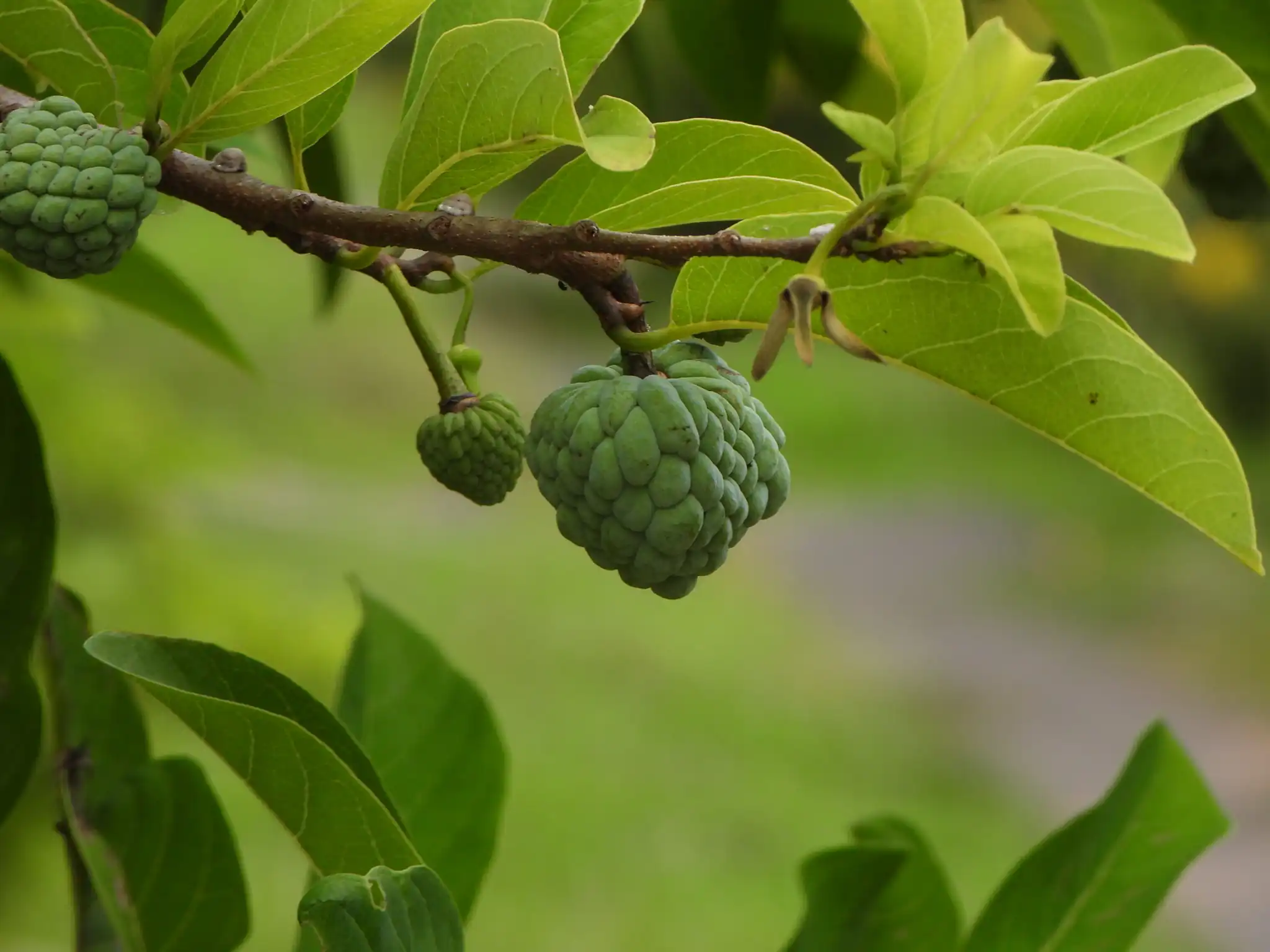
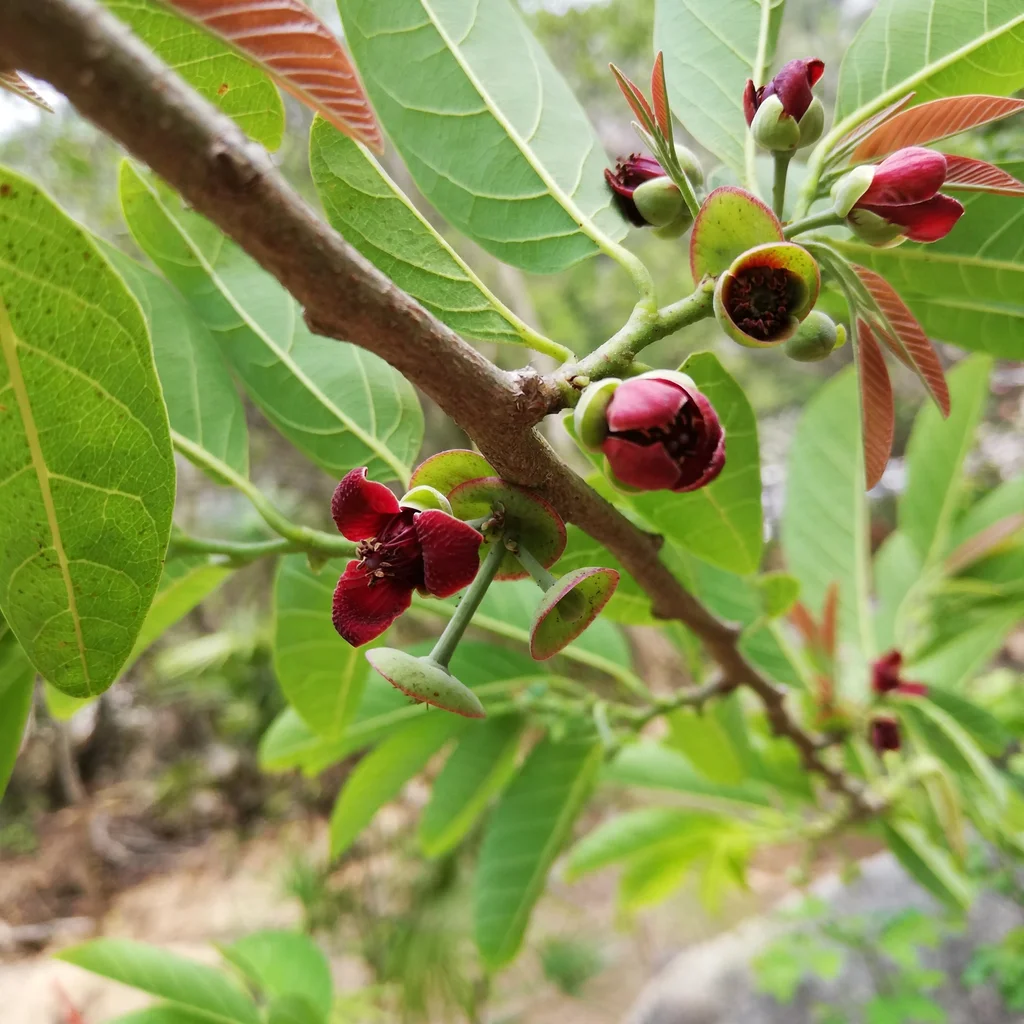
Annona squamosa is a small semi-deciduous shrub to small tree to 15-20 foot in Florida, with a short trunk, much-branched irregular spreading crown and shallow weak roots. The alternate narrow-elliptic to oblong-lanceolate leaves are brilliant green and thin, 2 to 7 inches long, with pendent puberulent green flowers with a purple base borne singly or in clusters of 2 to 4 in the leaf axils.
The fruit is the sweetsop: a rounded green aggregate with a knobby segmented skin around soft custard-like pulp studded with large black seeds. It differs from atemoya, its cherimoya hybrid, by that loose scaly segmentation, and it sets little fruit in Florida without intervention because its nitidulid beetle pollinators are scarce.
Uses & Benefits:
Essentials
At a Glance
Plant Type
Fruit Vegetable
Height
240"
Width
236"
Light
Full Sun
Zones
9, 10
Water
Moderate
Humidity
High
Lifespan
Woody perennial
Native To
Tropical Americas
Toxicity
Seeds toxic if ingested, eye irritant
Bloom period
Spring
In flower about 3 months of the year
Marketplace
Where to Buy
Shipping costs Year-round shipping Free shipping
Planting
How to Grow
- Plant in full sun in sandy or loam ground or a large container, in well-drained soil that never stays wet.
- Water deeply through the growing season and let the surface dry between waterings; established plants take drought but not waterlogging.
- Fertilize in small amounts 3 to 4 times in the growing season, including magnesium.
- Hand-pollinate spring flowers in the evening and thin or support the crop; fruit ripens 90 to 100 days after flowering.
Pro Tip
Hand-pollinate open evening flowers with a soft brush; leave a fallen peel under the tree to attract the sap beetles that do the work.
Keep It Thriving
Care Guide
Do
- Tip-prune after harvest to force new fruiting wood and keep an open shape.
- Remove fallen fruit promptly to break seed borer and rot cycles.
- Grow in heat with a winter mean above 59F; protect from frost below 27F.
Don't
- Do not plant in low wet soil or overwater; roots fail in standing water.
- Do not eat the seeds and keep seed juice out of eyes; it is insecticidal and highly irritant.
- Do not expect a crop from neglect in Florida; without hand-pollination fruit set stays poor.
Seasonal Care Calendar
| Task | Jan | Feb | Mar | Apr | May | Jun | Jul | Aug | Sep | Oct | Nov | Dec |
|---|---|---|---|---|---|---|---|---|---|---|---|---|
| Fertilize | ||||||||||||
| Harvest | ||||||||||||
| Pest Check | ||||||||||||
| Plant | ||||||||||||
| Prune |
Watch Out For
Pests & Diseases
Common Pests
Common Diseases
In the Garden
Landscape Uses & Companions
Landscape Uses
Multiply
Propagation Methods
Good to Know
Common Questions
Sugar Apple questions
What zones can Sugar Apple grow in?
Sugar Apple is hardy in USDA Zones 9–10: in that range it survives winter in the ground. Colder than Zone 9, grow it in a container you can move to shelter for the winter, or as an annual.
When does Sugar Apple bloom?
Sugar Apple typically blooms in spring. Exact timing shifts a week or two with your zone — Sow's bloom calendar maps it to your garden.
Does Sugar Apple need full sun?
Sugar Apple does best in full sun (6+ hours).
Is Sugar Apple drought tolerant?
Yes — once established (usually after the first full season), Sugar Apple handles dry spells with minimal watering. Water deeply its first year to build the root system that makes that possible.
More Annona to compare
Keep exploring
Explore the genus
Hardy in your zone?
Grow Sugar Apple with confidence
See it in a design of your actual yard, get zone-matched care reminders, and track it season by season in your garden journal.