The Story
Plant Bio
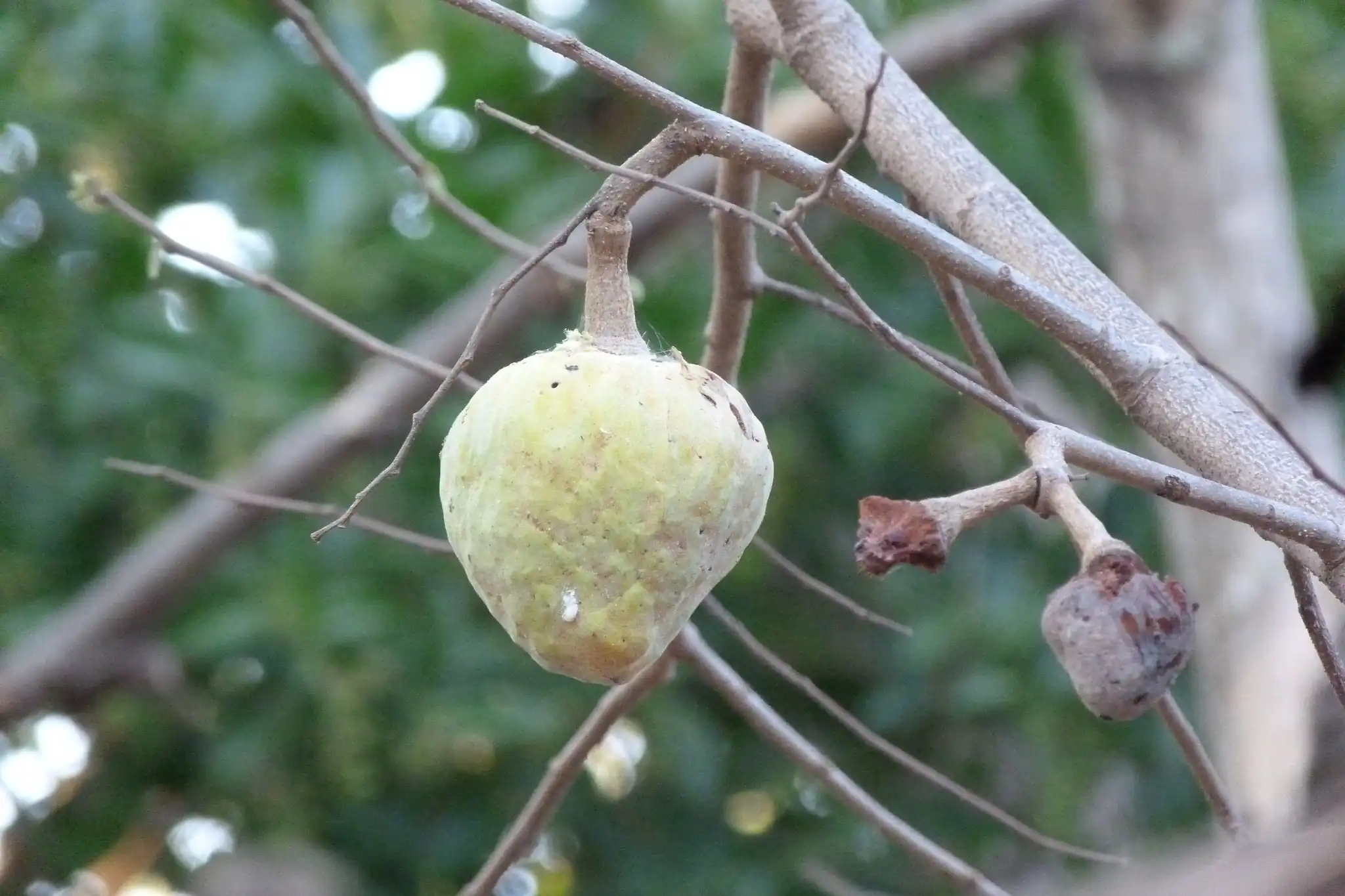
Annona reticulata, the netted custard apple, is a small fast-growing deciduous to semi-evergreen tree reaching fifteen to thirty-five feet in cultivation with an open irregular crown and a trunk ten to fourteen inches thick. Leaves are alternate oblong to narrow-lanceolate four to eight inches long with conspicuous veins and an ill smell when crushed.
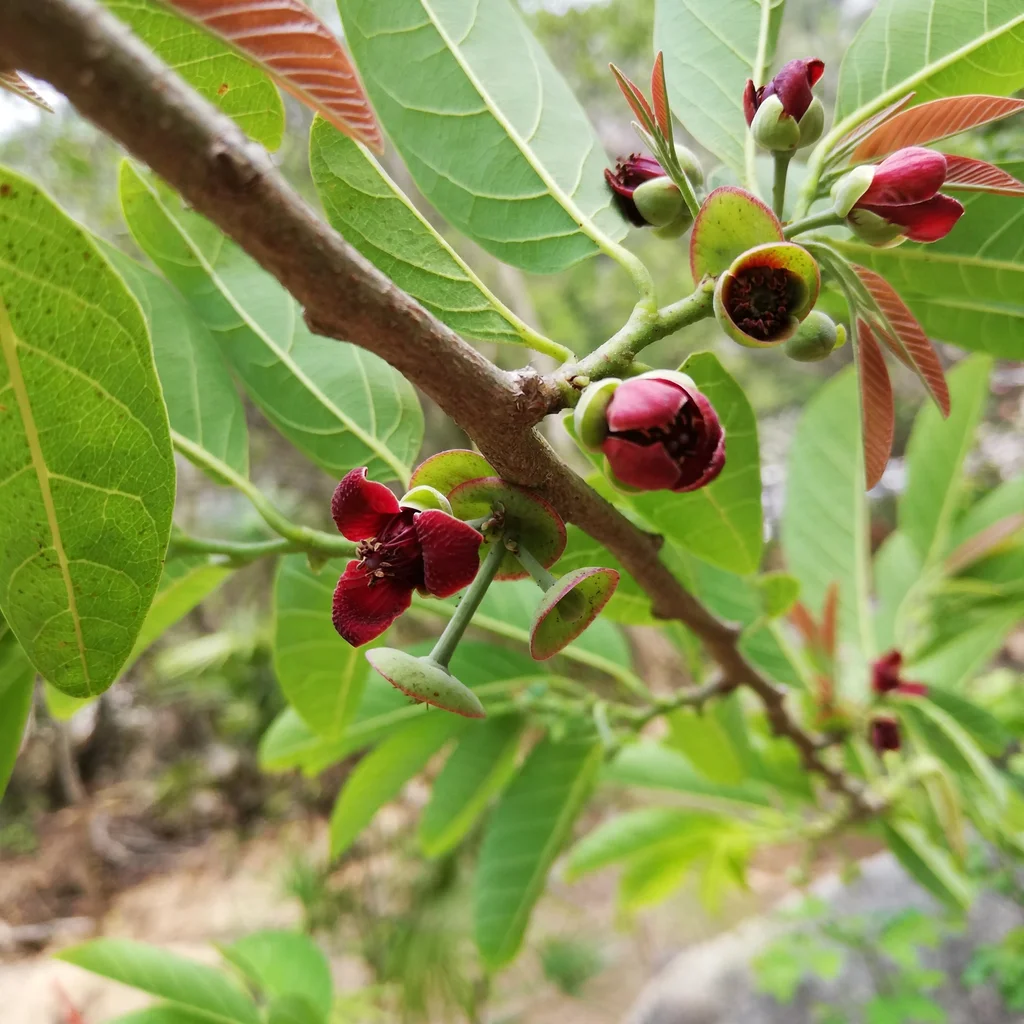
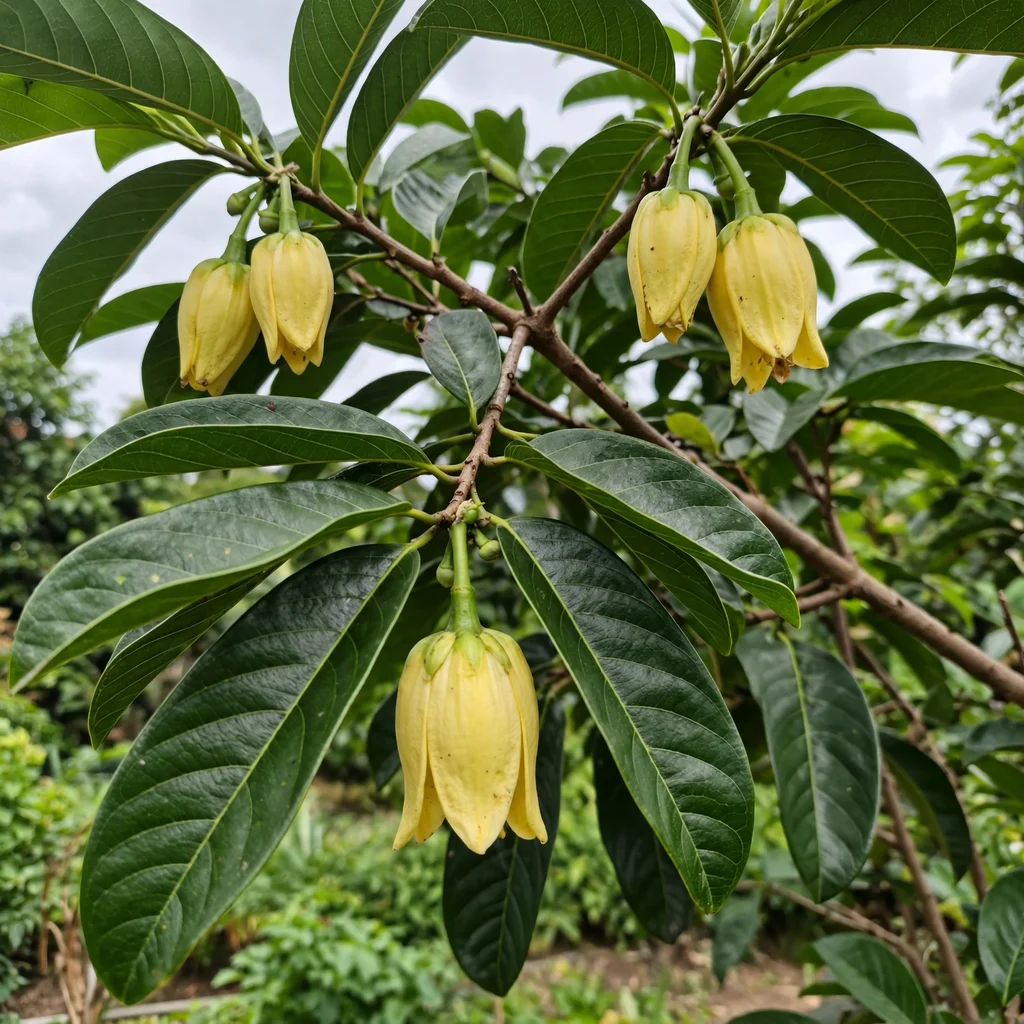
Flowers hang in drooping clusters of three to four, light green outside and pale yellow inside with a dark red to purple spot at the base, with three long fleshy outer petals that never fully open. Fruit is heart-shaped with netted red-brown skin and creamy custard flesh around very toxic black seeds; fruit picked green never colors well, and yellow-skinned forms are juicier and superior in flavor.
Uses & Benefits:
Essentials
At a Glance
Plant Type
Tropical
Height
360"
Width
240"
Light
Full Sun
Zones
9, 10
Water
Moderate to moist
Humidity
High
Lifespan
Long-lived tree
Native To
West Indies to southern Mexico
Toxicity
Toxic seeds and leaves, eye-irritant sap
Bloom period
Spring – Summer
In flower about 6 months of the year
Planting
How to Grow
- Plant in full sun in deep, rich, moisture-retentive but well-drained soil after all frost danger, at the same depth it grew in the pot.
- Water deeply and regularly through the growing season; do not let it dry out hard as it is less drought tolerant than sugar apple.
- Mulch widely and feed with organic fertilizer through the warm months to support fast growth and heavy fruiting.
- Harvest when the skin loses all green and the fruit gives slightly; expect 75 to 100 pounds per mature tree in season.
Pro Tip
Shape lightly for form after harvest and never cut back into old leafless wood; short fruiting twigs shed naturally and regrow poorly from old wood.
Keep It Thriving
Care Guide
Do
- Mulch and irrigate frequently in dry weather during active growth.
- Bag developing fruit and clean up fallen fruit to reduce seed borer.
- Harvest at full color break, not green.
Don't
- Do not prune annually into old leafless wood.
- Do not plant in soggy ground with poor drainage.
- Do not eat seeds or allow sap in eyes; seeds, leaves and young fruit are insecticidal.
Seasonal Care Calendar
| Task | Jan | Feb | Mar | Apr | May | Jun | Jul | Aug | Sep | Oct | Nov | Dec |
|---|---|---|---|---|---|---|---|---|---|---|---|---|
| Fertilize | ||||||||||||
| Harvest | ||||||||||||
| Mulch | ||||||||||||
| Pest Check | ||||||||||||
| Prune |
Watch Out For
Pests & Diseases
Common Pests
Common Diseases
In the Garden
Landscape Uses & Companions
Landscape Uses
Multiply
Propagation Methods
Good to Know
Common Questions
Custard Apple questions
What zones can Custard Apple grow in?
Custard Apple is hardy in USDA Zones 9–10: in that range it survives winter in the ground. Colder than Zone 9, grow it in a container you can move to shelter for the winter, or as an annual.
When does Custard Apple bloom?
Custard Apple typically blooms from spring to summer. Exact timing shifts a week or two with your zone — Sow's bloom calendar maps it to your garden.
Does Custard Apple need full sun?
Custard Apple does best in full sun (6+ hours).
More Annona to compare
Keep exploring
Explore the genus
Hardy in your zone?
Grow Custard Apple with confidence
See it in a design of your actual yard, get zone-matched care reminders, and track it season by season in your garden journal.