The Story
Plant Bio
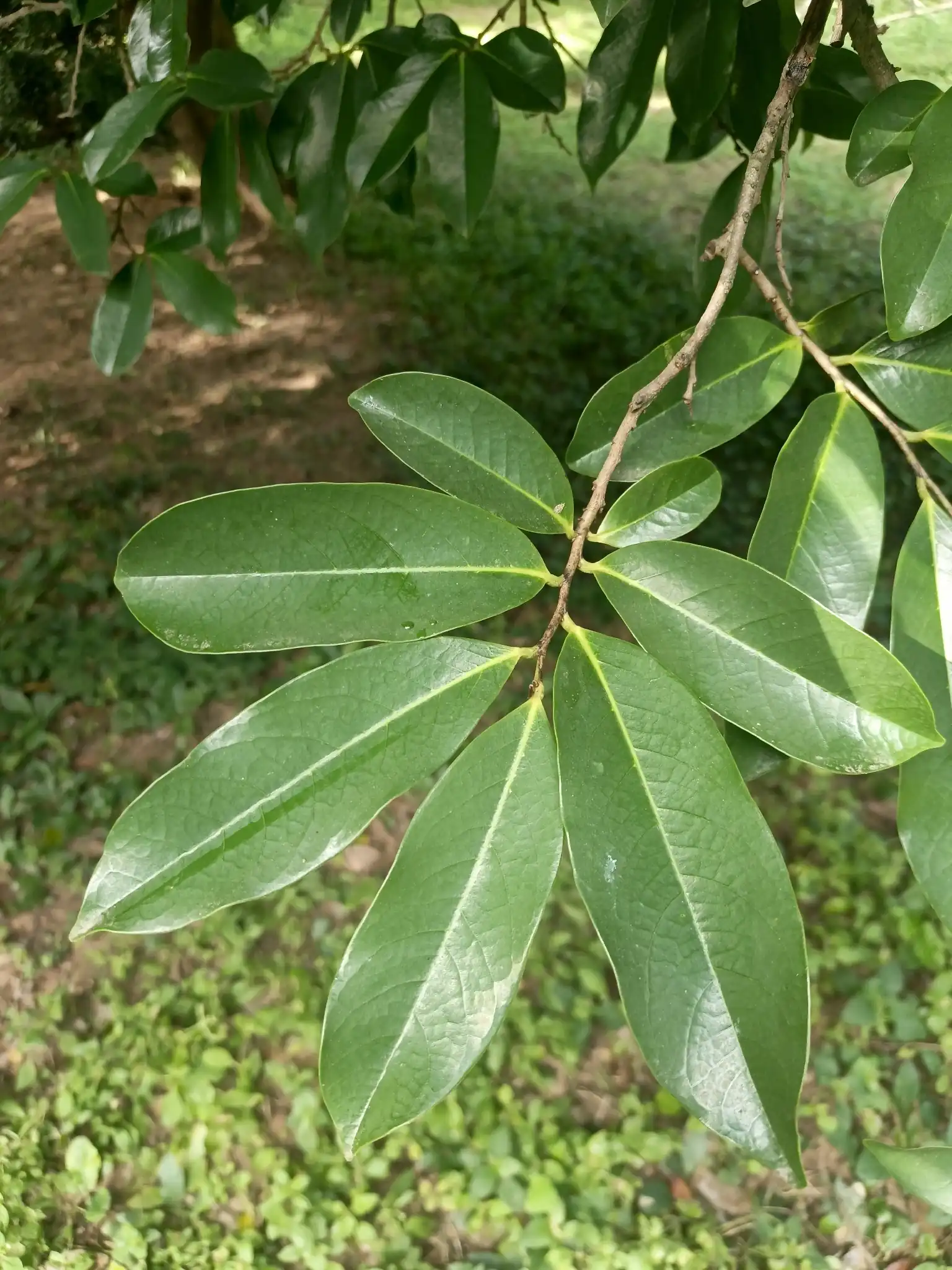
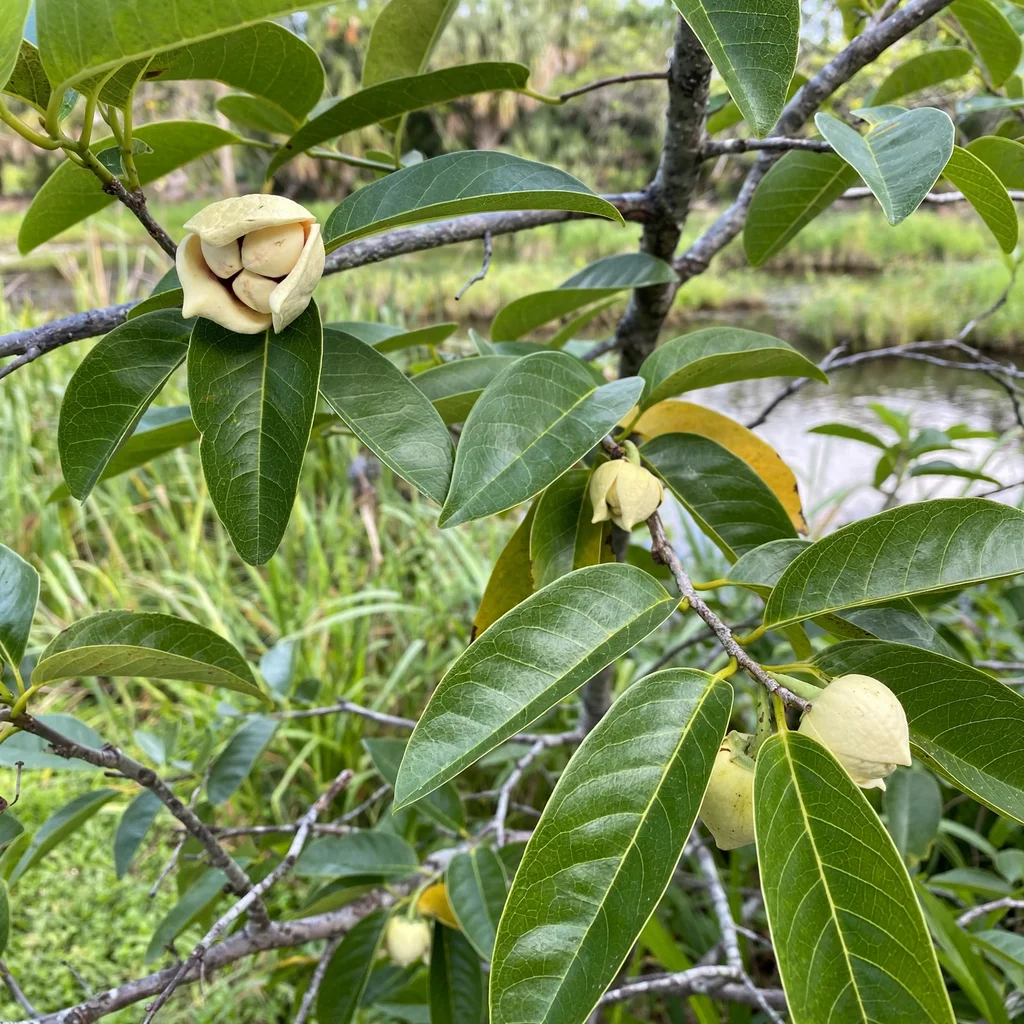
Annona montana is a small to medium evergreen tree from the tropical Americas, reaching 10 to 20 feet in gardens with an irregular spreading crown and rough dark gray-brown bark. The alternate leaves are glossy, leathery and dark green, 3 to 6 inches long, and the fleshy yellow to yellow-green flowers are borne singly or in clusters of two to four on new growth.
It is often confused with soursop but forms a more spreading tree with glossier foliage and fibrous fruit of variable eating quality. The flowers are protogynous and produce no nectar, so night-flying scarab beetles do the pollination and hand pollination markedly improves fruit set and size.
Uses & Benefits:
Essentials
At a Glance
Plant Type
Tree
Height
240"
Width
180"
Light
Full Sun, Partial Sun
Zones
9, 10
Water
Moderate
Humidity
High
Lifespan
Long-lived tree
Native To
Tropical Americas
Toxicity
Toxic seeds and leaves
Bloom period
Summer – Fall
In flower about 6 months of the year
Planting
How to Grow
- Plant in full sun with shelter from strong wind in sandy to clay loam, pH 5.8 to 8, that drains freely.
- Set the rootball level with the soil surface, backfill, water deeply, then mulch 3 inches deep keeping mulch off the trunk.
- Water to keep soil uniformly moist through the warm season; do not let the root zone stay saturated.
- Feed with a high-potassium fertilizer through spring and summer for growth and fruiting.
- Hand-pollinate night-opening flowers with a soft brush to increase set and fruit size.
Pro Tip
Hand-pollinate at night with a soft brush when the petals loosen; without beetles or a hand, flowers drop unpollinated.
Keep It Thriving
Care Guide
Do
- Provide free drainage, ventilation, and uniform moisture to prevent root rot.
- Prune lightly to an open vase to admit light and air.
- Protect from hard frost and strong wind that snaps soft wood.
Don't
- Do not plant in heavy shade or waterlogged soil.
- Do not hard-prune every year or cut into old leafless wood.
- Do not let fallen fruit accumulate under the tree.
Seasonal Care Calendar
| Task | Jan | Feb | Mar | Apr | May | Jun | Jul | Aug | Sep | Oct | Nov | Dec |
|---|---|---|---|---|---|---|---|---|---|---|---|---|
| Fertilize | ||||||||||||
| Harvest | ||||||||||||
| Mulch | ||||||||||||
| Pest Check | ||||||||||||
| Prune |
Watch Out For
Pests & Diseases
Common Pests
Common Diseases
In the Garden
Landscape Uses & Companions
Landscape Uses
Multiply
Propagation Methods
Good to Know
Common Questions
Mountain Soursop questions
What zones can Mountain Soursop grow in?
Mountain Soursop is hardy in USDA Zones 9–10: in that range it survives winter in the ground. Colder than Zone 9, winters are too cold for it to survive outdoors.
When does Mountain Soursop bloom?
Mountain Soursop typically blooms from summer to fall. Exact timing shifts a week or two with your zone — Sow's bloom calendar maps it to your garden.
Does Mountain Soursop need full sun?
Mountain Soursop does best in full sun to part shade. In hot climates, afternoon shade keeps blooms fresher longer.
Is Mountain Soursop drought tolerant?
Yes — once established (usually after the first full season), Mountain Soursop handles dry spells with minimal watering. Water deeply its first year to build the root system that makes that possible.
More Annona to compare
Keep exploring
Explore the genus
Hardy in your zone?
Grow Mountain Soursop with confidence
See it in a design of your actual yard, get zone-matched care reminders, and track it season by season in your garden journal.