The Story
Plant Bio
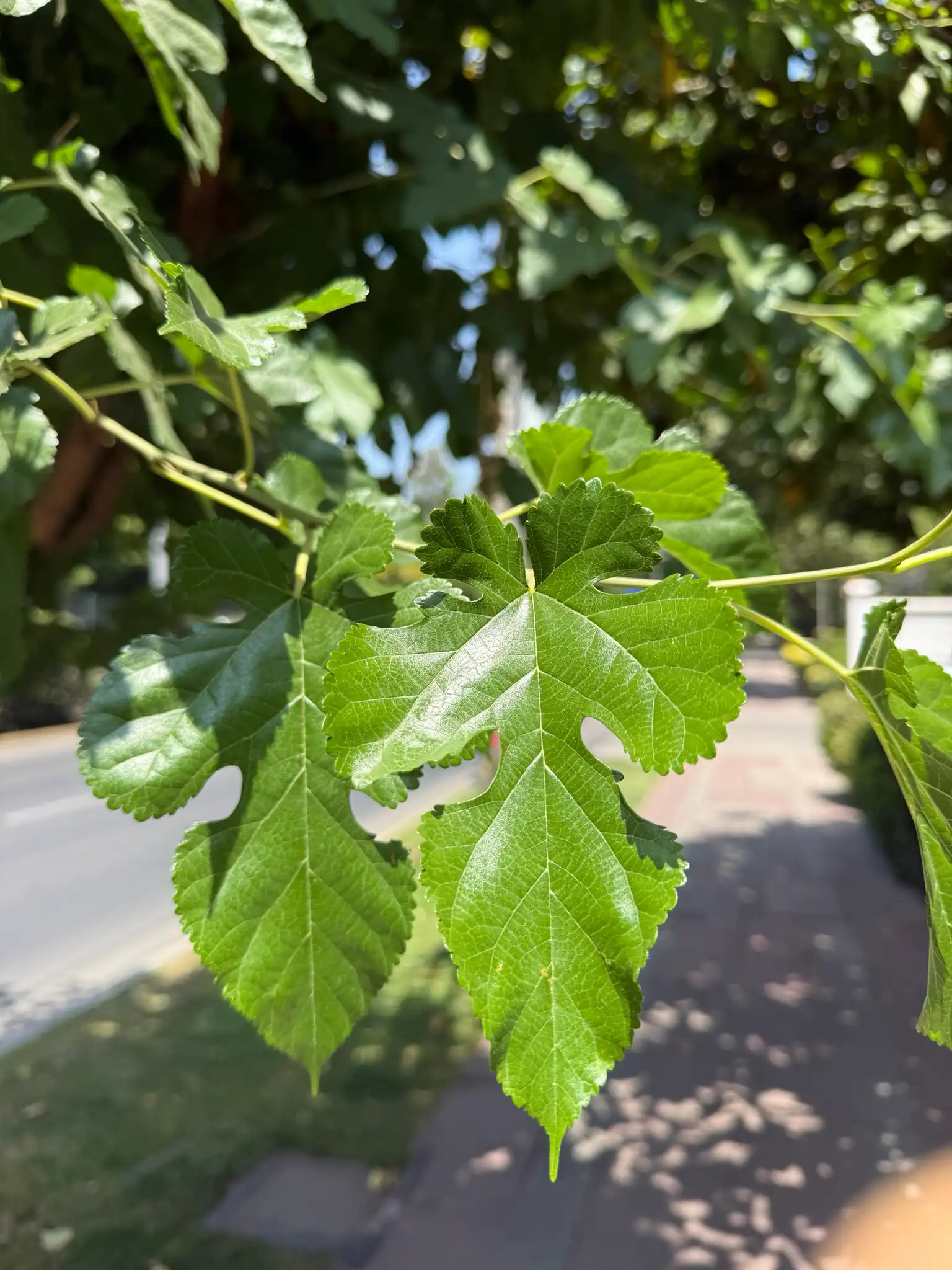
Morus alba, the white mulberry, is a fast-growing deciduous tree reaching 30 to 50 feet with a short crooked trunk and a broad rounded crown of many fine twigs. Leaves are rich green and prominently veined, lobed on young vigorous shoots and unlobed on older wood, turning yellow in fall.
Glossy upper leaf surfaces separate it from the dull-leaved native red mulberry, with which it hybridizes freely where ranges overlap. Separate fertile and sterile spikes ripen to ovoid white to pink-purple to black soroses about an inch long that are sweet and edible but readily bird-sown.
Uses & Benefits:
Essentials
At a Glance
Plant Type
Tree
Height
480"
Width
480"
Light
Full Sun, Partial Sun
Zones
4, 5, 6, 7, 8
Water
Medium
Humidity
Average
Lifespan
Short-lived
Native To
China and eastern Asia
Toxicity
Allergenic pollen; messy fruit; unripe fruit and milky sap may irritate
Bloom period
Spring – Early summer
In flower about 4 months of the year
Planting
How to Grow
- Choose a sunny to lightly shaded site away from walks, driveways and pipes with room for a 30 to 40 foot crown.
- Dig a hole as deep as the root ball and twice as wide, set the tree at nursery depth and backfill with native soil.
- Water deeply after planting and keep soil evenly moist through the first growing season.
- Spread a 2- to 3-inch mulch ring clear of the trunk and train a single leader with wide-spaced scaffold limbs.
Pro Tip
Plant only fruitless male selections away from pavement and waterlines and prune when fully dormant in winter to shape the crown and limit bleeding.
Keep It Thriving
Care Guide
Do
- Choose a fruitless male selection if you want to avoid fruit mess and seedlings
- Prune in full dormancy to shape structure and remove dead and crossing wood
- Water young trees reliably until established
Don't
- Do not plant female fruiting trees over patios, cars or sidewalks
- Do not plant where it can escape into natural areas or hybridize with native red mulberry
- Do not shear into tight shapes that trigger dense watersprout regrowth
Seasonal Care Calendar
| Task | Jan | Feb | Mar | Apr | May | Jun | Jul | Aug | Sep | Oct | Nov | Dec |
|---|---|---|---|---|---|---|---|---|---|---|---|---|
| Harvest | ||||||||||||
| Mulch | ||||||||||||
| Pest Check | ||||||||||||
| Plant | ||||||||||||
| Prune |
Watch Out For
Pests & Diseases
Common Pests
Common Diseases
In the Garden
Landscape Uses & Companions
Landscape Uses
Multiply
Propagation Methods
Good to Know
Common Questions
White Mulberry questions
What zones can White Mulberry grow in?
White Mulberry is hardy in USDA Zones 4–8: in that range it survives winter in the ground. Warmer than Zone 8, winter isn't the problem: it prefers colder winters, and summer heat can shorten its life.
When does White Mulberry bloom?
White Mulberry typically blooms from early spring to early summer. Exact timing shifts a week or two with your zone — Sow's bloom calendar maps it to your garden.
Does White Mulberry need full sun?
White Mulberry does best in full sun to part shade. In hot climates, afternoon shade keeps blooms fresher longer.
Is White Mulberry drought tolerant?
Yes — once established (usually after the first full season), White Mulberry handles dry spells with minimal watering. Water deeply its first year to build the root system that makes that possible.
More Morus to compare
Keep exploring
Explore the genus
Hardy in your zone?
Grow White Mulberry with confidence
See it in a design of your actual yard, get zone-matched care reminders, and track it season by season in your garden journal.