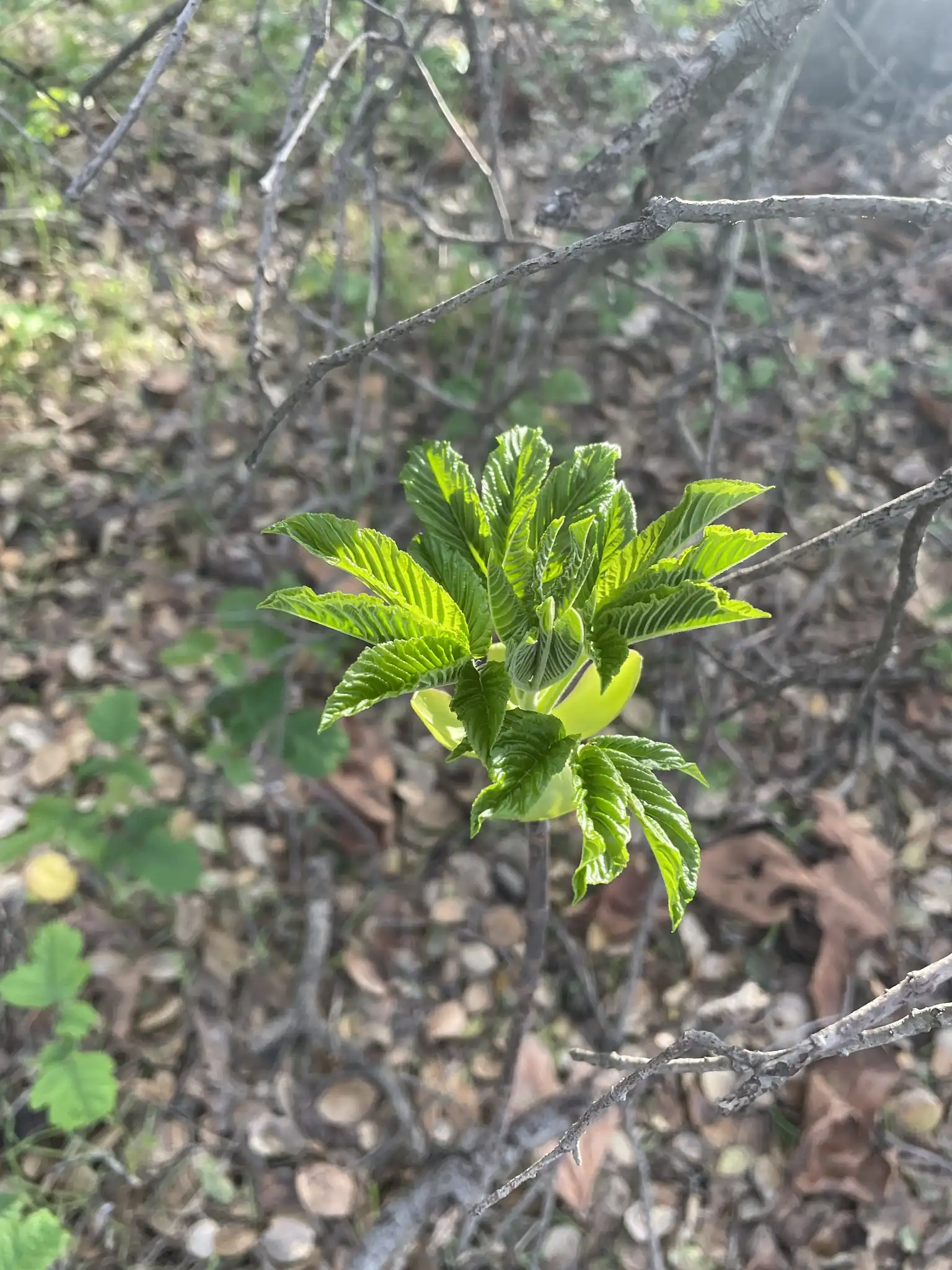
The Story
Plant Bio
Aesculus californica, the California buckeye, is a deciduous multi-stemmed shrub or small tree native to California and southern Oregon that forms a broad, umbrella-shaped crown up to forty-five feet tall. Bright apple-green spring leaves give way to dense cylindrical spikes of fragrant, cream-to-pink flowers with long-exserted stamens, followed by smooth pear-shaped fruits.
Unlike eastern buckeyes, this species drops its palmately compound foliage in mid-to-late summer as a drought-adaptation mechanism, exposing smooth silver bark and large brown seeds. All plant parts contain toxic aesculin and saponins, rendering the foliage highly resistant to browsing deer and rabbits.
Uses & Benefits:
Essentials
At a Glance
Plant Type
Tree
Height
531"
Width
709"
Light
Full Sun, Partial Sun
Zones
7, 8
Water
Low
Humidity
Low
Lifespan
Perennial
Native To
North America (California, Oregon)
Toxicity
Toxic if ingested
Bloom period
Spring – Early summer
In flower about 4 months of the year
Marketplace
Where to Buy
Shipping costs Year-round shipping Free shipping
Planting
How to Grow
- Select a planting site in full sun or light shade with deep, well-draining soil.
- Dig a hole twice as wide as the root ball and equal in depth, ensuring the root crown sits level with the surrounding soil.
- Backfill with native soil, firm gently, and water thoroughly to settle air pockets.
- Provide moderate water during the first two growing seasons until the taproot establishes, then taper irrigation to match natural seasonal cycles.
Pro Tip
Do not increase summer irrigation when foliage drops early, as midsummer leaf loss is a natural drought-avoidance strategy rather than a sign of decline.
Keep It Thriving
Care Guide
Do
- Plant in light, well-draining soils to prevent fungal root diseases.
- Allow the tree to enter natural summer dormancy without forcing excessive summer irrigation.
- Wear gloves when pruning or handling crushed foliage and seeds.
Don't
- Do not overwater during midsummer leaf drop to avoid root rot.
- Avoid heavy pruning into old leafless wood where adventitious buds fail to break.
- Do not plant adjacent to commercial honeybee apiaries, as the nectar is toxic to honeybees.
Seasonal Care Calendar
| Task | Jan | Feb | Mar | Apr | May | Jun | Jul | Aug | Sep | Oct | Nov | Dec |
|---|---|---|---|---|---|---|---|---|---|---|---|---|
| Pest Check | ||||||||||||
| Plant | ||||||||||||
| Propagate | ||||||||||||
| Prune |
Watch Out For
Pests & Diseases
Common Pests
Common Diseases
In the Garden
Landscape Uses & Companions
Landscape Uses
Multiply
Propagation Methods
Good to Know
Common Questions
California Buckeye questions
What zones can California Buckeye grow in?
California Buckeye is hardy in USDA Zones 7–8: in that range it survives winter in the ground. Colder than Zone 7, winters are too cold for it to survive outdoors. Warmer than Zone 8, winter isn't the problem: it prefers colder winters, and summer heat can shorten its life.
Is California Buckeye deer resistant?
Yes — California Buckeye is rated deer-resistant. Deer typically pass it over, though extreme hunger can override any plant's defenses.
When does California Buckeye bloom?
California Buckeye typically blooms from early spring to early summer. Exact timing shifts a week or two with your zone — Sow's bloom calendar maps it to your garden.
Does California Buckeye need full sun?
California Buckeye does best in full sun to part shade. In hot climates, afternoon shade keeps blooms fresher longer.
Is California Buckeye drought tolerant?
Yes — once established (usually after the first full season), California Buckeye handles dry spells with minimal watering. Water deeply its first year to build the root system that makes that possible.
More Aesculus to compare
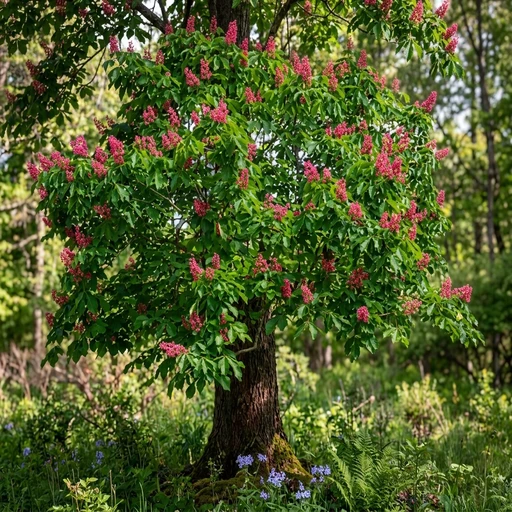
Fort McNair Red Horse Chestnut
Aesculus carnea 'Fort Mcnair'
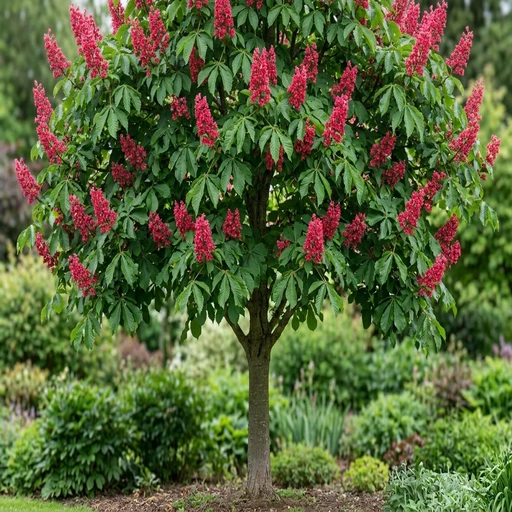
Briotii Red Horsechestnut
Aesculus carnea 'Briotii'
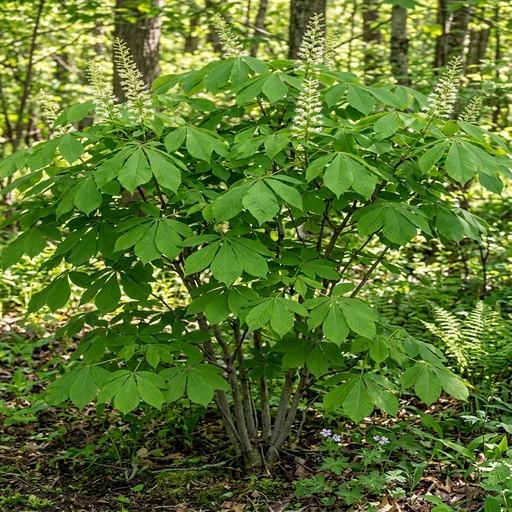
Bottlebrush Buckeye
Aesculus parviflora
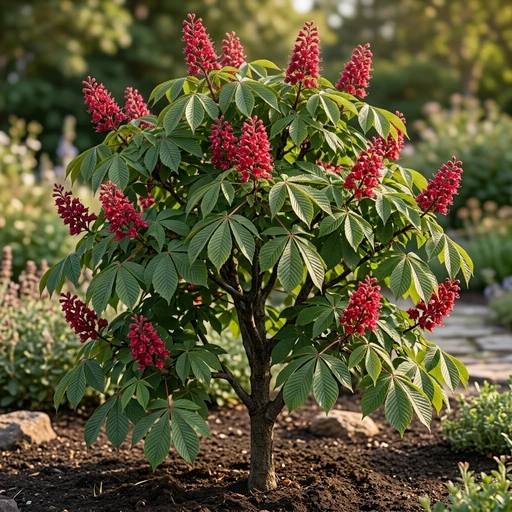
Red Buckeye
Aesculus pavia
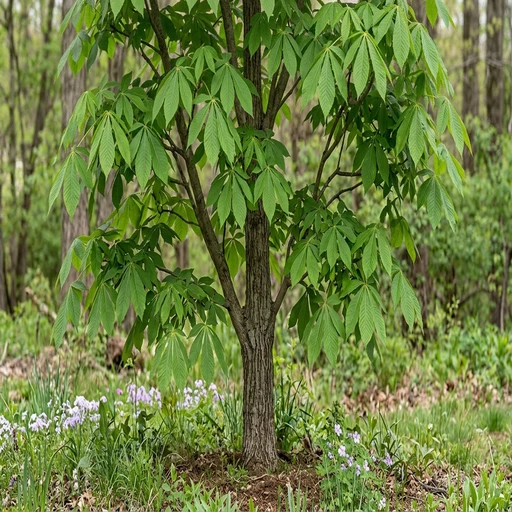
Early Glow Ohio Buckeye
Aesculus glabra 'Early Glow'
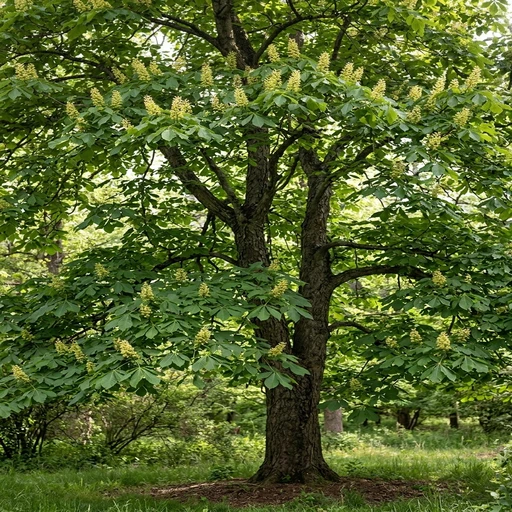
Yellow Buckeye
Aesculus flava
Keep exploring
Explore the genus
Hardy in your zone?
Grow California Buckeye with confidence
See it in a design of your actual yard, get zone-matched care reminders, and track it season by season in your garden journal.