

The Story
Plant Bio
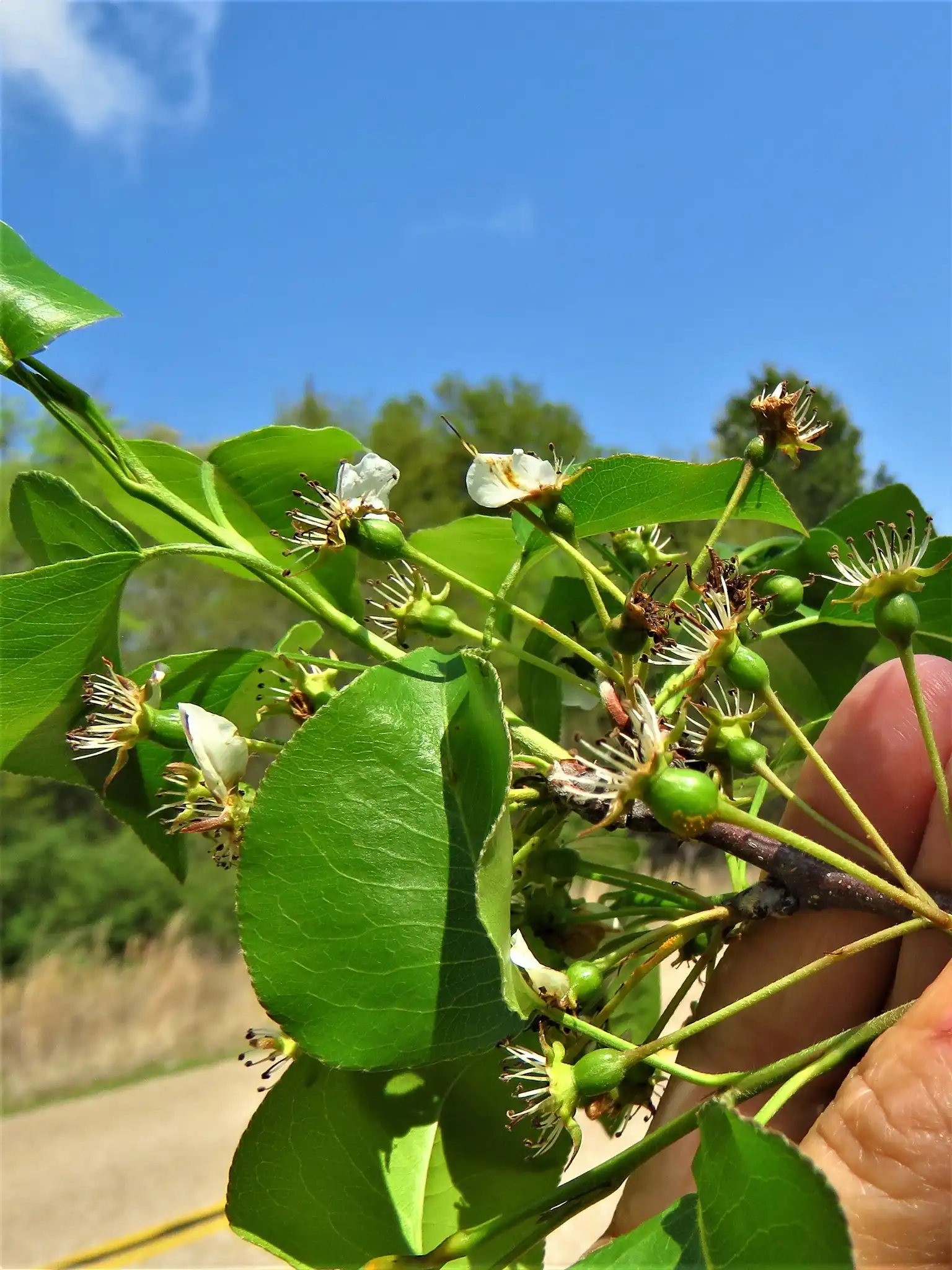
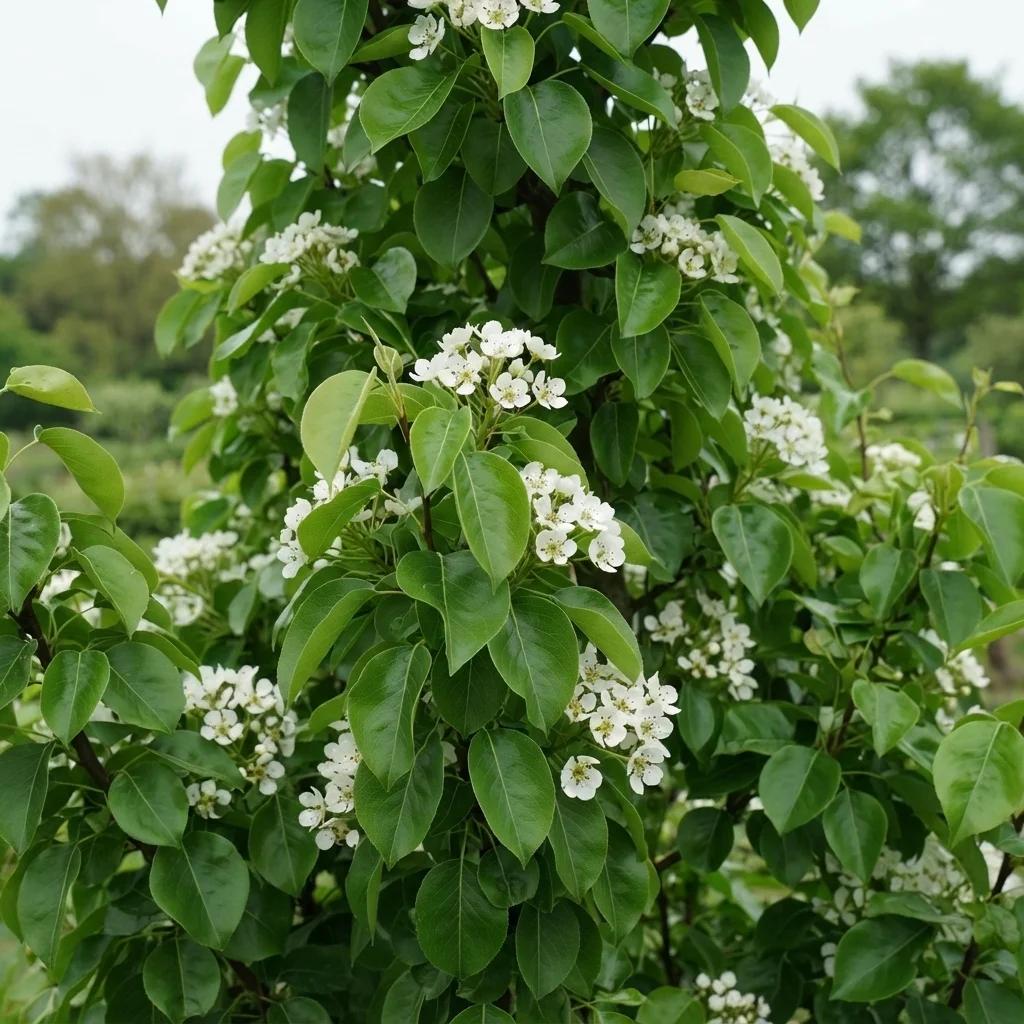
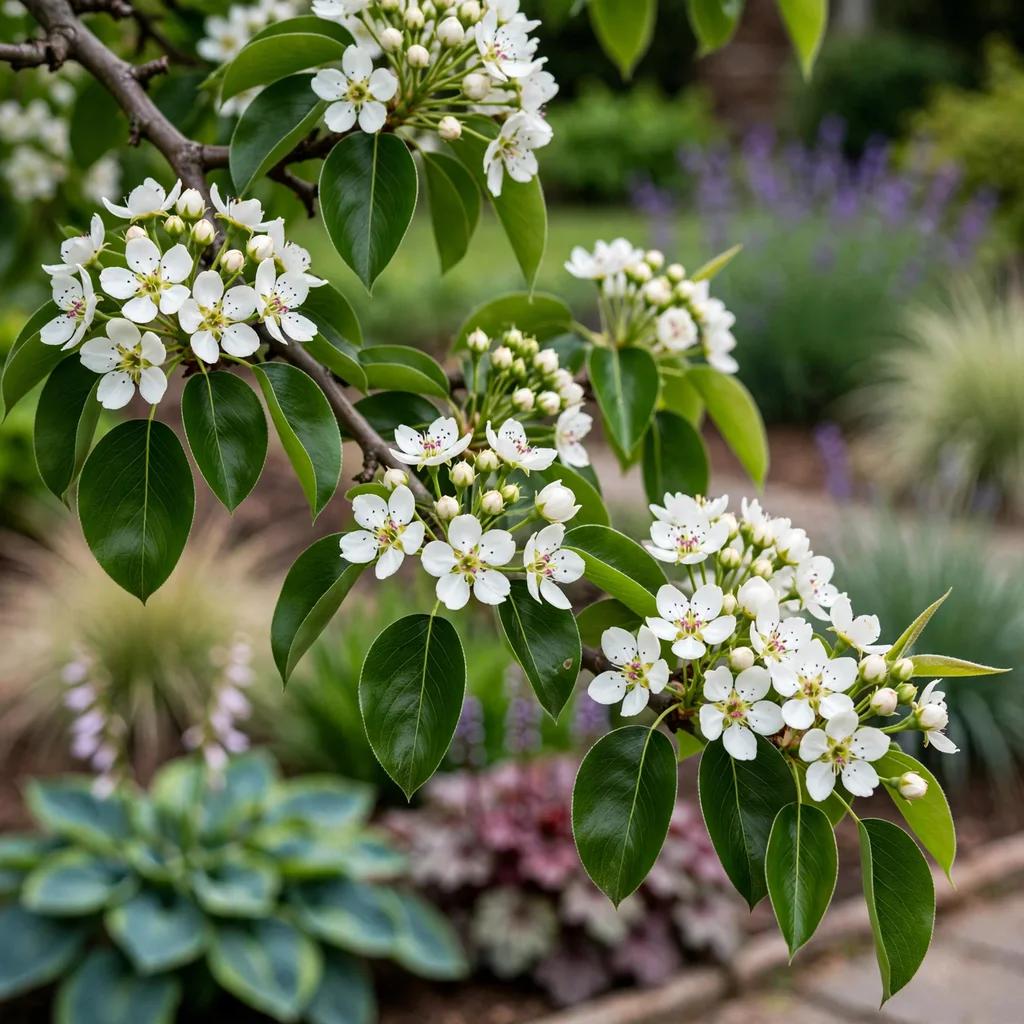
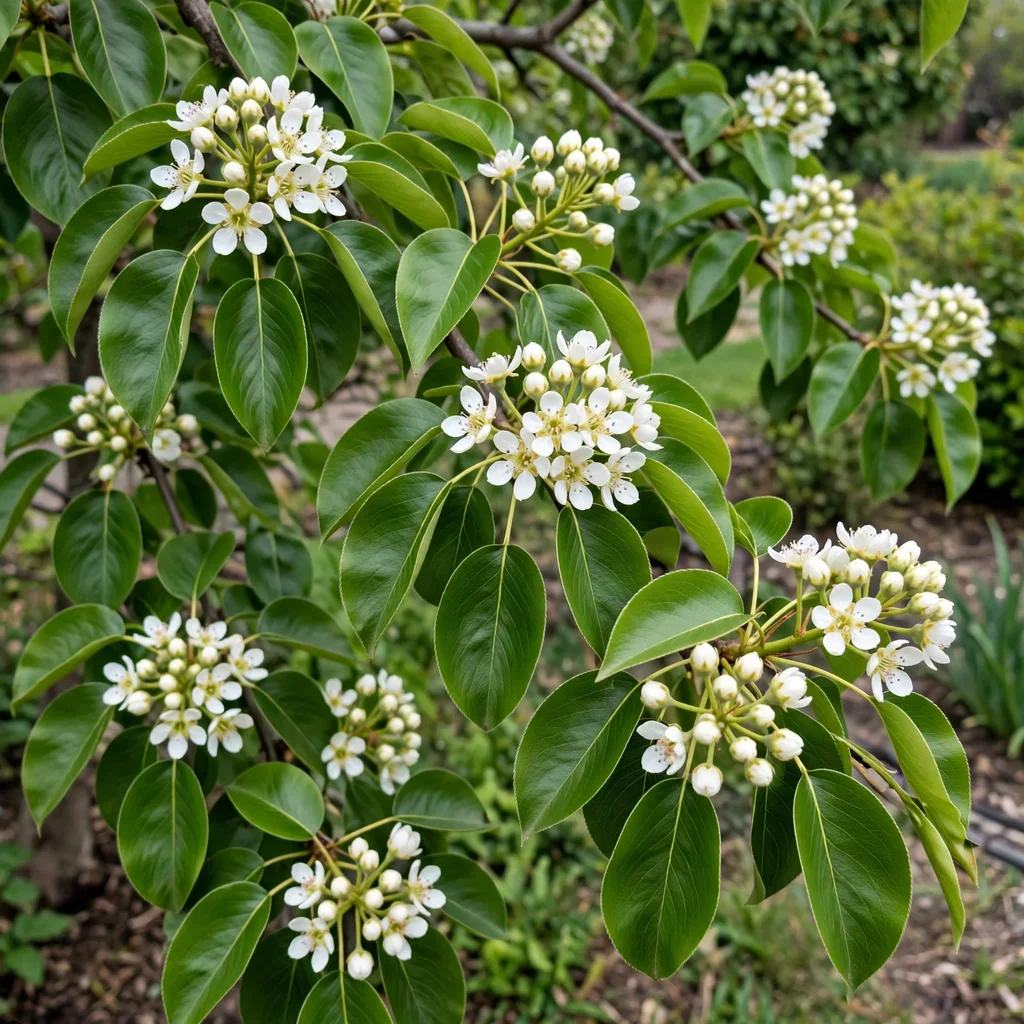
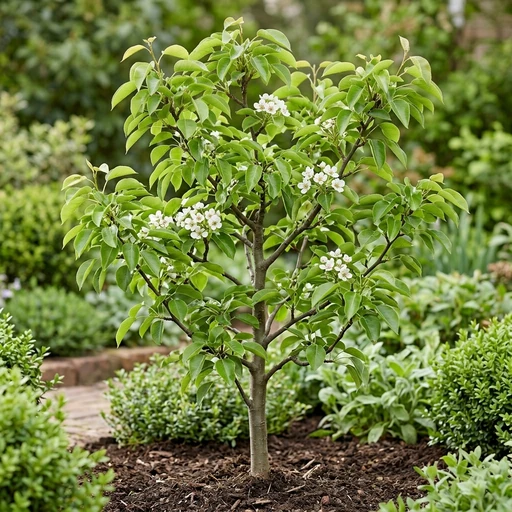
Pyrus calleryana, Callery or Bradford pear, is a fast-growing deciduous tree from China, Vietnam, Japan and Taiwan, reaching 30 to 50 ft tall and 20 to 35 ft wide. Habit varies from columnar to broadly rounded, often multi-trunked. White five-petalled flowers smother the bare branches in early spring, before the glossy leaves expand.
The early blossom carries a distinctly unpleasant smell, and the small hard fruits are inedible to people but eagerly taken by birds. That bird dispersal, combined with cross-pollination between cultivars, has produced thorny wild seedlings that now invade fields and roadsides across the eastern United States. Narrow branch unions also split in storms.
Uses & Benefits:
Essentials
At a Glance
Plant Type
Tree
Height
360"
Width
330"
Light
Full Sun
Zones
5, 6, 7, 8, 9
Water
Low; drought and heat tolerant once established
Humidity
Adaptable to most conditions
Lifespan
Short for a tree; often 20 to 25 years before splitting
Native To
China, Vietnam, Japan and Taiwan
Toxicity
No significant toxicity reported; fruit is inedible
Planting
How to Grow
- Check state and local law first; sale is banned in several states.
- Prefer a native flowering tree such as serviceberry where possible.
- If planting an existing tree, choose full sun and any drained soil.
- Set the root ball level with grade and stake only if exposed.
- Prune young trees to widen narrow branch angles and reduce splitting.
- Remove thorny seedlings and root suckers as soon as they appear.
Pro Tip
The tight upright branch unions are the reason mature trees split in storms; wide-angled scaffolds must be selected in the first five years.
Keep It Thriving
Care Guide
Do
- Check local invasive listings and bans before buying 📋
- Choose a native alternative for new planting 🌱
- Prune young trees for wide branch angles ✂️
- Remove thorny wild seedlings from field edges 🧤
Don't
- Do not plant new Callery pears where they are listed as invasive ❌
- Do not top a storm-damaged tree; regrowth is weaker still ❌
- Do not expect the fruit to be edible; it is not ❌
Seasonal Care Calendar
| Task | Jan | Feb | Mar | Apr | May | Jun | Jul | Aug | Sep | Oct | Nov | Dec |
|---|---|---|---|---|---|---|---|---|---|---|---|---|
| Seedling Removal | ||||||||||||
| Structural Pruning |
Watch Out For
Pests & Diseases
Common Pests
Common Diseases
In the Garden
Landscape Uses & Companions
Landscape Uses
Multiply
Propagation Methods
Good to Know
Common Questions
Callery Pear questions
What zones can Callery Pear grow in?
Callery Pear is hardy in USDA Zones 5–9. Inside that range it survives winter in the ground; outside it, grow it as an annual or a container plant you protect.
Is Callery Pear deer resistant?
Not reliably. Deer may browse Callery Pear, especially tender spring growth — plan on repellents or fencing where pressure is high.
When does Callery Pear bloom?
Callery Pear typically blooms in early spring, before the leaves through mid-spring. Exact timing shifts a week or two with your zone — Sow's bloom calendar maps it to your garden.
Does Callery Pear need full sun?
Callery Pear does best in full sun (6+ hours).
Is Callery Pear drought tolerant?
Yes — once established (usually after the first full season), Callery Pear handles dry spells with minimal watering. Water deeply its first year to build the root system that makes that possible.
More Pyrus to compare
Drippin' Honey Pear
Pyrus calleryana 'Drippin' Honey'
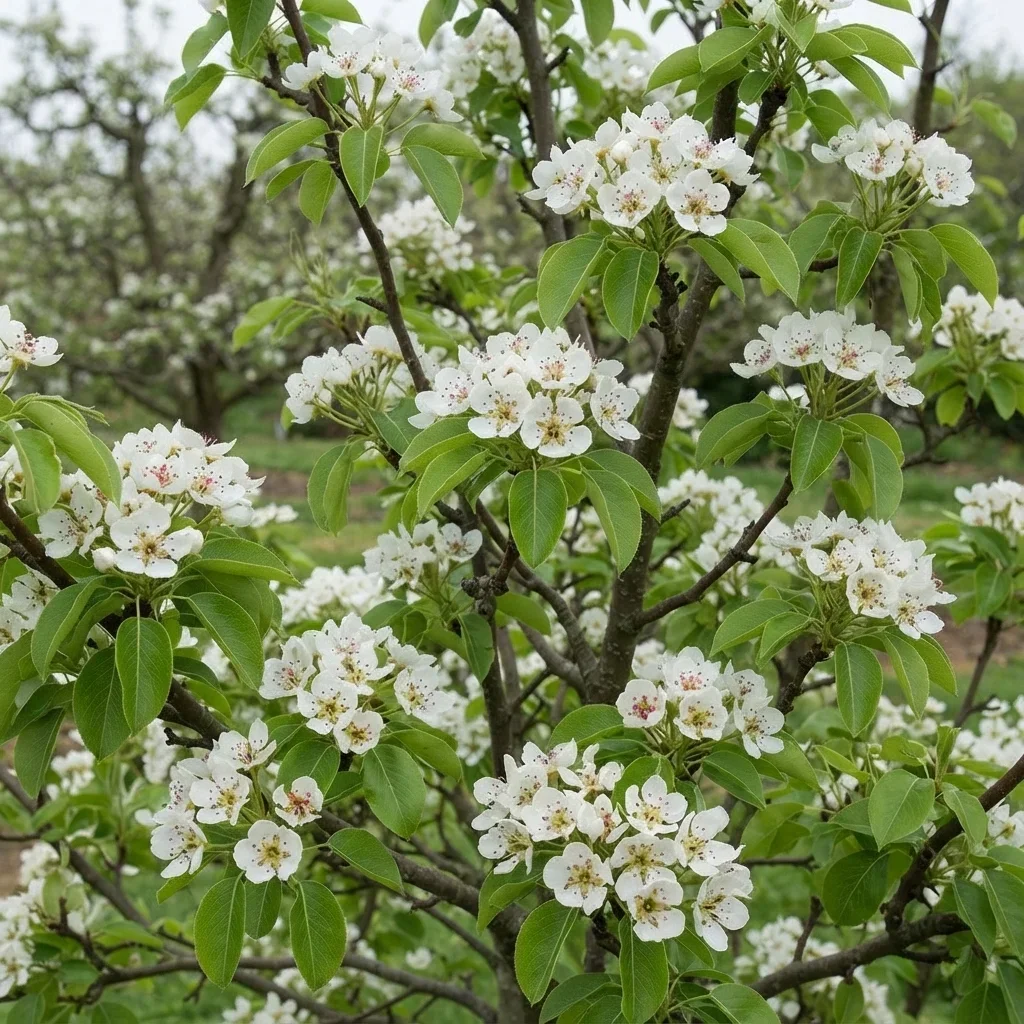
Bartlett Pear
Pyrus communis 'Bartlett'
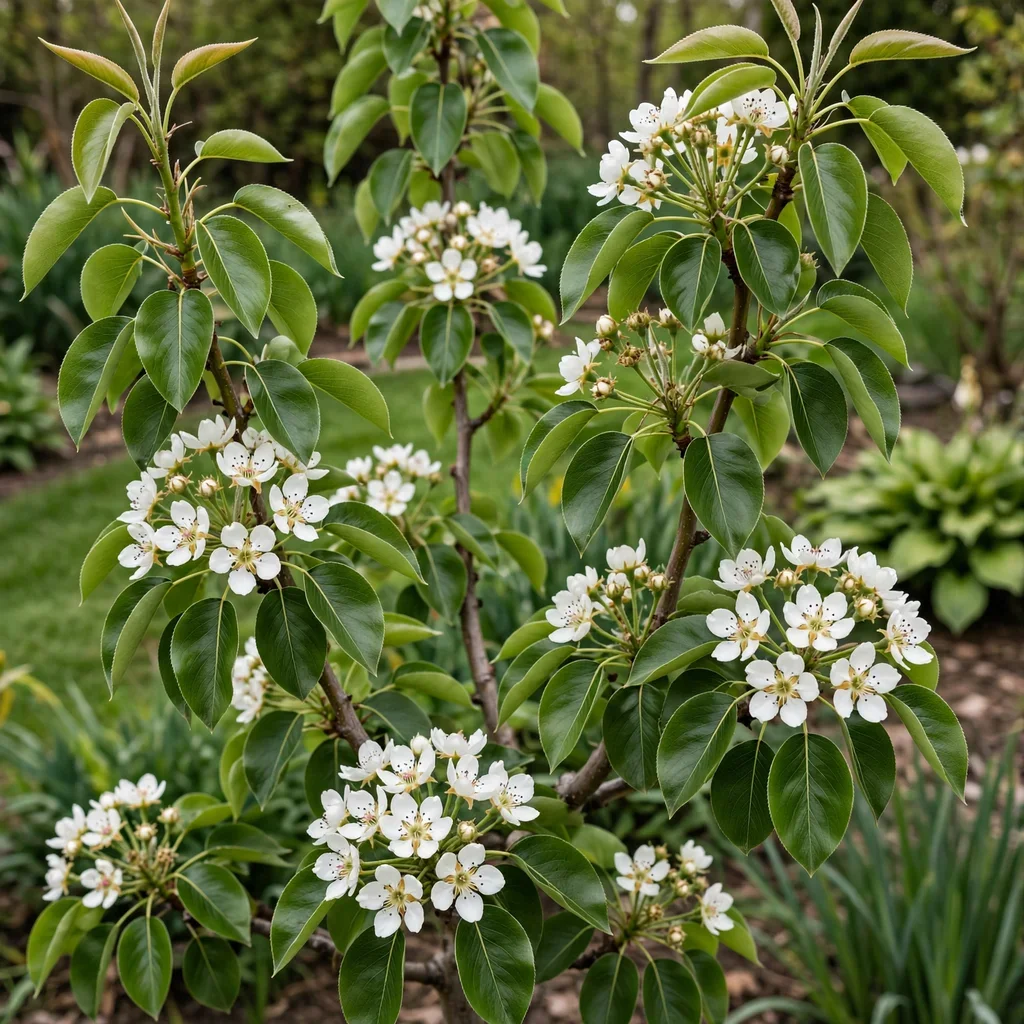
Apricot Sugar Pear
Pyrus communis 'Apricot Sugar Pearls Reachables'
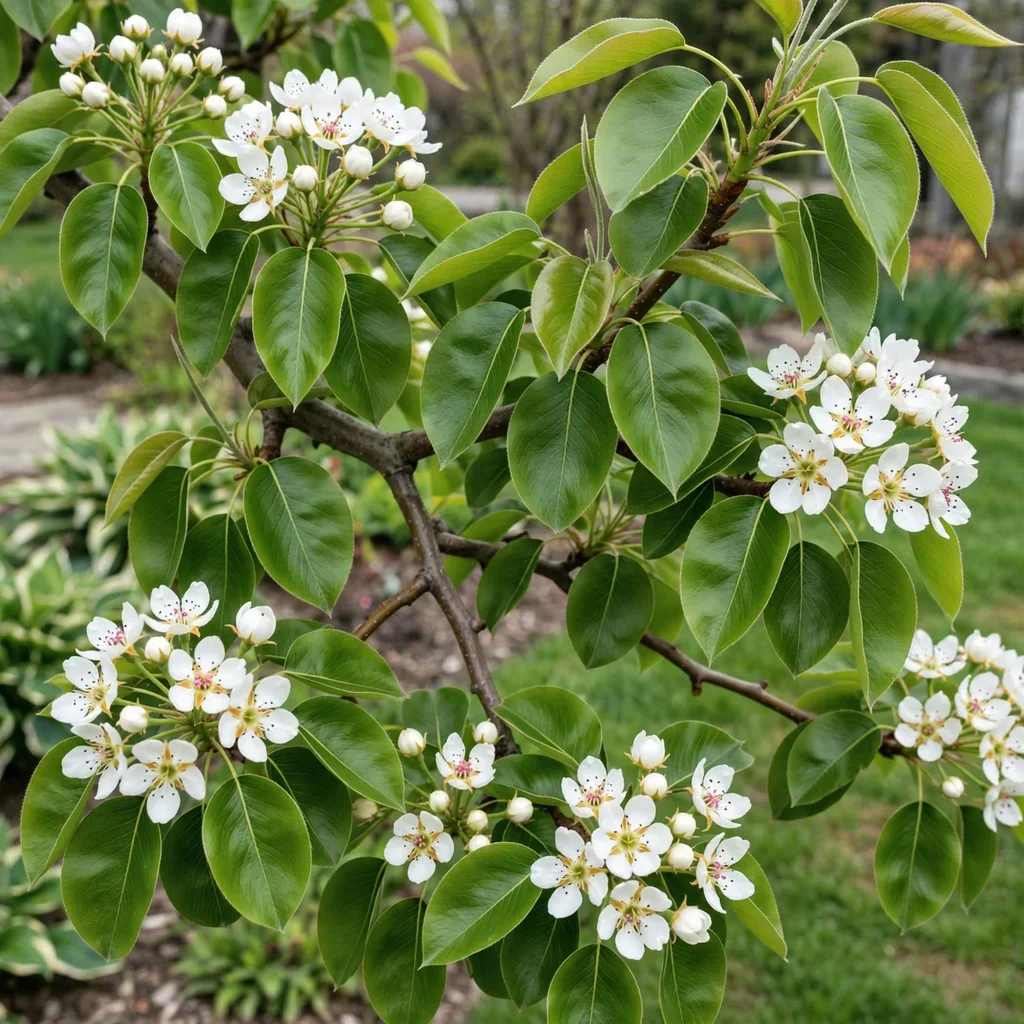
Crisp 'n Sweet Pear
Pyrus communis 'Crisp 'n Sweet'
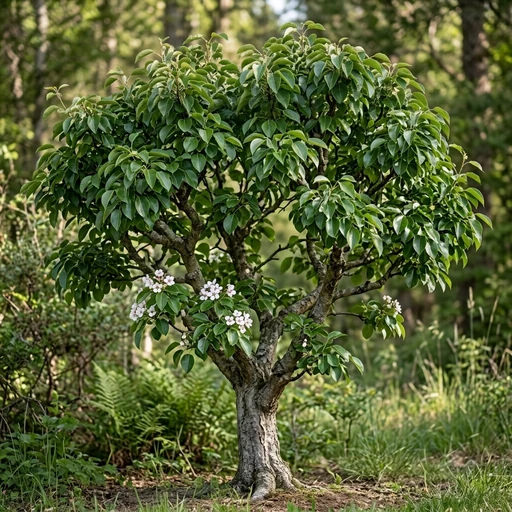
Kieffer Pear
Pyrus x hybrida 'Kieffer'
Hosui Asian Pear
Pyrus pyrifolia 'Hosui'
Keep exploring
Explore the genus
Hardy in your zone?
Grow Callery Pear with confidence
See it in a design of your actual yard, get zone-matched care reminders, and track it season by season in your garden journal.