The Story
Plant Bio
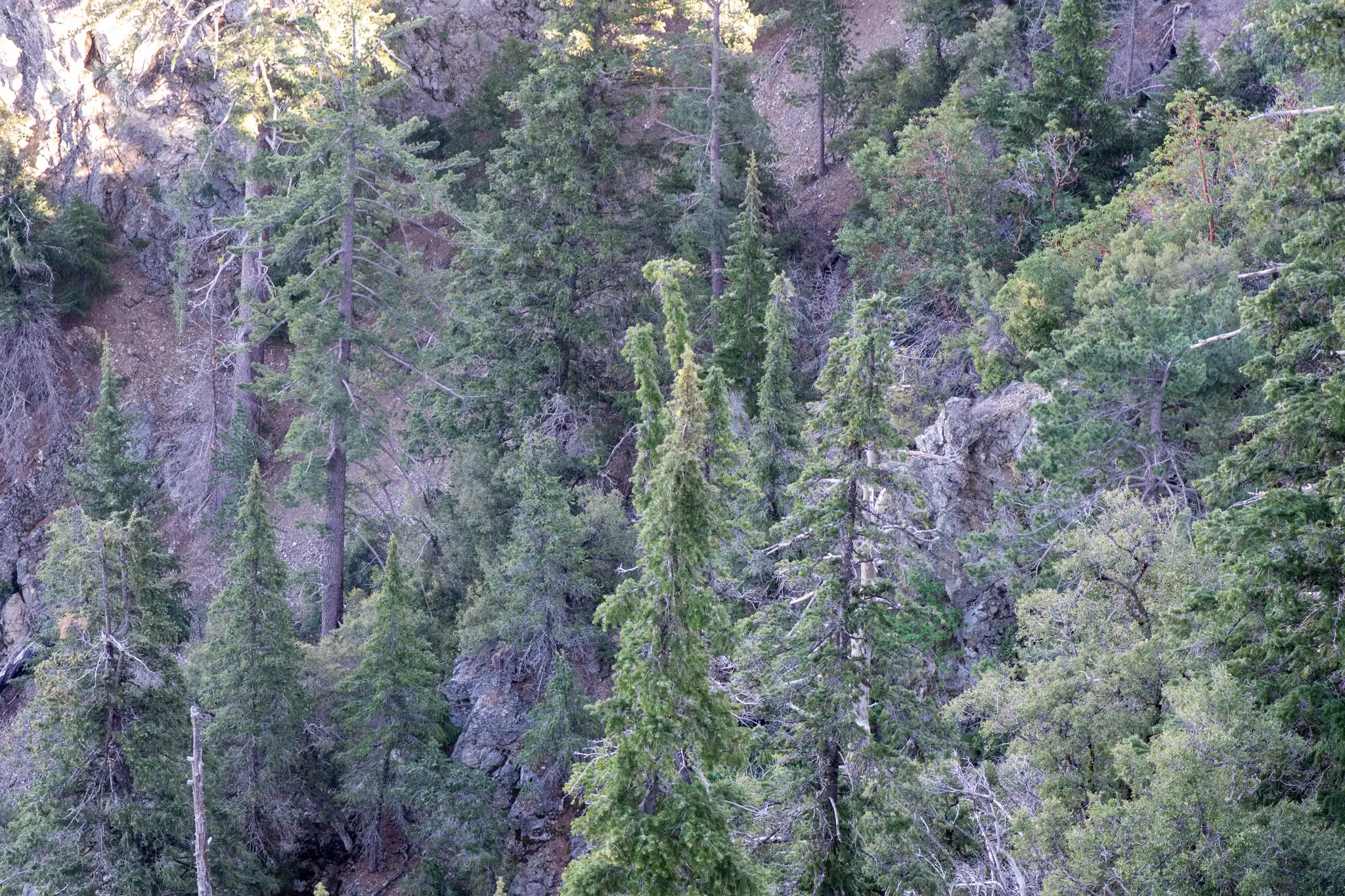
Abies bracteata, the Santa Lucia fir, is a narrow evergreen tree reaching 80 to 100 feet in height with a spire-like crown and rigid, dark green needles featuring spiny tips. Upright female cones near the top of the tree bear long, needle-like bracts that extend dramatically past the scales.
Endemic to coastal canyons in California's Santa Lucia Mountains, this species is distinguished by its sharp foliage and spindle-shaped winter buds. The protruding bristles on its seed cones give them a distinct fringed appearance found in no other fir.
Uses & Benefits:
Essentials
At a Glance
Plant Type
Tree
Height
984"
Width
157"
Light
Full Sun, Partial Sun
Zones
7, 8, 9
Water
Moderate
Humidity
High
Lifespan
Perennial
Native To
California, USA
Toxicity
Skin Irritant
Bloom period
Spring
In flower about 3 months of the year
Planting
How to Grow
- Select a planting site in full sun to partial shade with acidic to neutral, fast-draining soil.
- Dig a hole twice as wide as the root ball and equal to its depth, ensuring the root flare rests flush with the soil line.
- Backfill with native rocky or sandy loam without adding heavy compost, firming the soil gently to remove air pockets.
- Water thoroughly at installation and apply a three-inch layer of coarse bark mulch around the base, keeping mulch clear of the trunk.
Pro Tip
Plant in deep, fast-draining rocky or sandy loam where roots receive maritime air, as heavy clay and stagnant summer moisture cause fatal root rot.
Keep It Thriving
Care Guide
Do
- Ensure soil drainage remains clear throughout wet winter months.
- Wear thick gloves when handling foliage to prevent skin punctures from sharp needle tips.
- Protect young saplings from deer and rabbit browsing with hardware cloth guards.
Don't
- Do not prune back into old, leafless wood, as firs fail to regenerate from bare branches.
- Do not plant in heavy, waterlogged clay or hot, humid continental interior regions.
- Do not over-fertilize, which forces weak growth susceptible to branch cankers.
Seasonal Care Calendar
| Task | Jan | Feb | Mar | Apr | May | Jun | Jul | Aug | Sep | Oct | Nov | Dec |
|---|---|---|---|---|---|---|---|---|---|---|---|---|
| Fertilize | ||||||||||||
| Mulch | ||||||||||||
| Pest Check | ||||||||||||
| Plant | ||||||||||||
| Prune |
Watch Out For
Pests & Diseases
Common Pests
Common Diseases
In the Garden
Landscape Uses & Companions
Landscape Uses
Multiply
Propagation Methods
Good to Know
Common Questions
Santa Lucia Fir questions
What zones can Santa Lucia Fir grow in?
Santa Lucia Fir is hardy in USDA Zones 7–9: in that range it survives winter in the ground. Colder than Zone 7, winters are too cold for it to survive outdoors. Warmer than Zone 9, winter isn't the problem: it prefers colder winters, and summer heat can shorten its life.
Is Santa Lucia Fir deer resistant?
Not reliably. Deer may browse Santa Lucia Fir, especially tender spring growth — plan on repellents or fencing where pressure is high.
When does Santa Lucia Fir bloom?
Santa Lucia Fir typically blooms in spring. Exact timing shifts a week or two with your zone — Sow's bloom calendar maps it to your garden.
Does Santa Lucia Fir need full sun?
Santa Lucia Fir does best in full sun to part shade. In hot climates, afternoon shade keeps blooms fresher longer.
Is Santa Lucia Fir drought tolerant?
Yes — once established (usually after the first full season), Santa Lucia Fir handles dry spells with minimal watering. Water deeply its first year to build the root system that makes that possible.
More Abies to compare
White Fir
Abies concolor
Fraser Fir
Abies fraseri
Horstmann's Silberlocke Korean Fir
Abies koreana 'Horstmann Silberlocke'
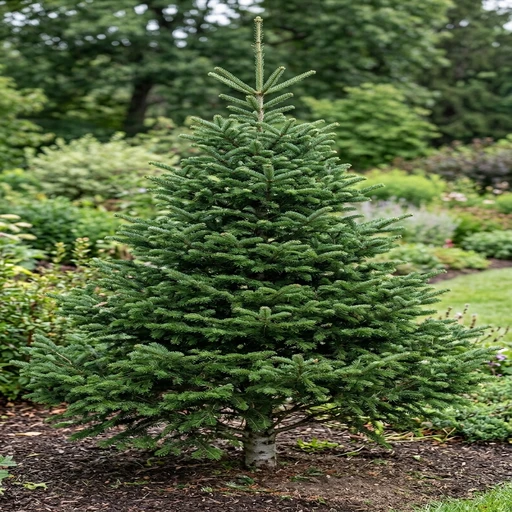
Balsam Fir
Abies balsamea
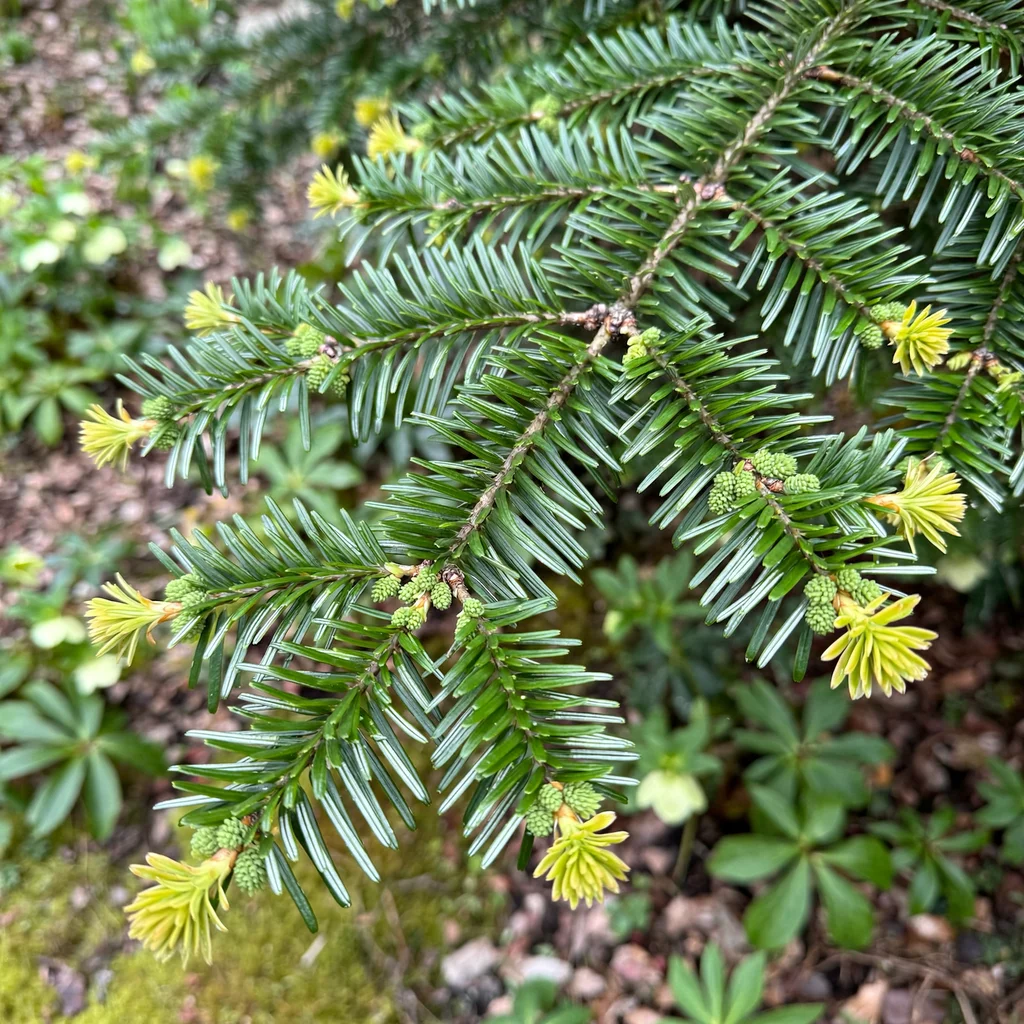
Grand Fir
Abies grandis
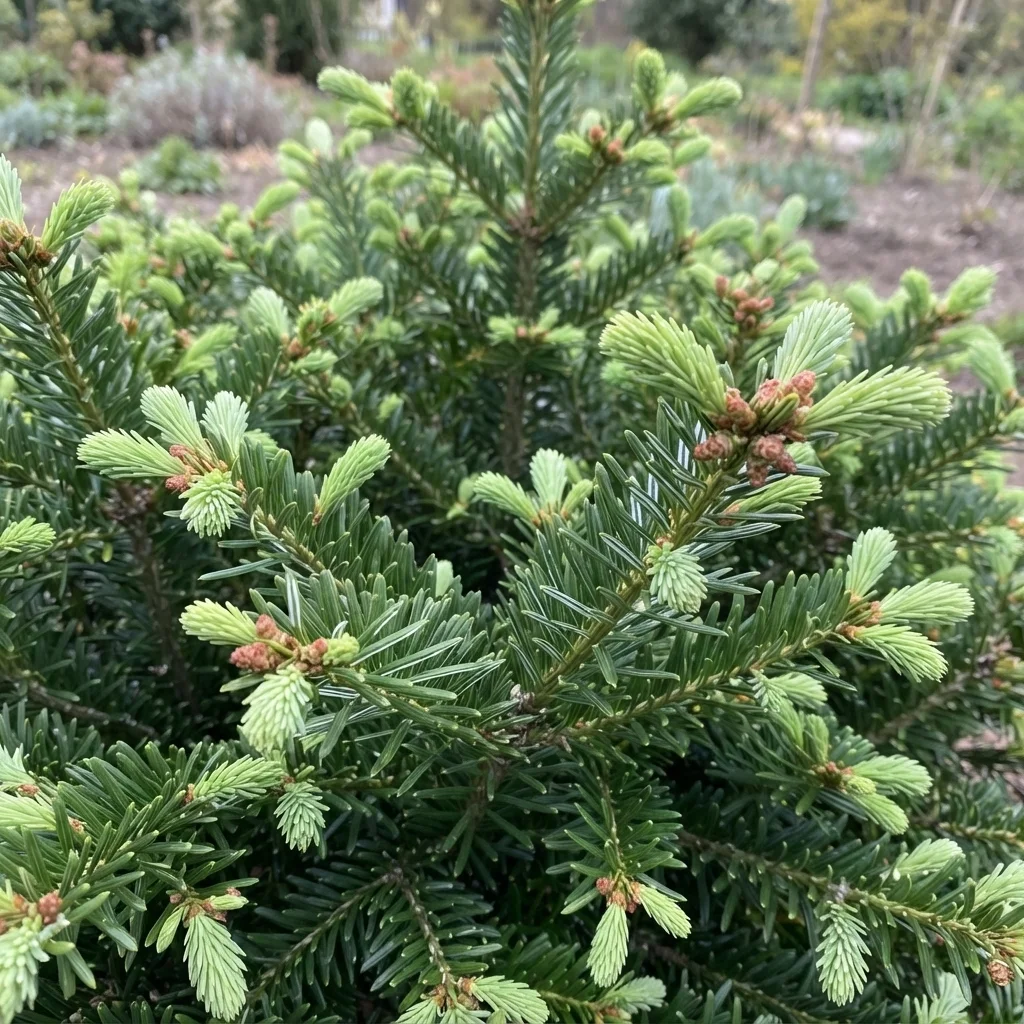
Nordmann Fir
Abies nordmanniana
Keep exploring
Explore the genus
Hardy in your zone?
Grow Santa Lucia Fir with confidence
See it in a design of your actual yard, get zone-matched care reminders, and track it season by season in your garden journal.