The Story
Plant Bio
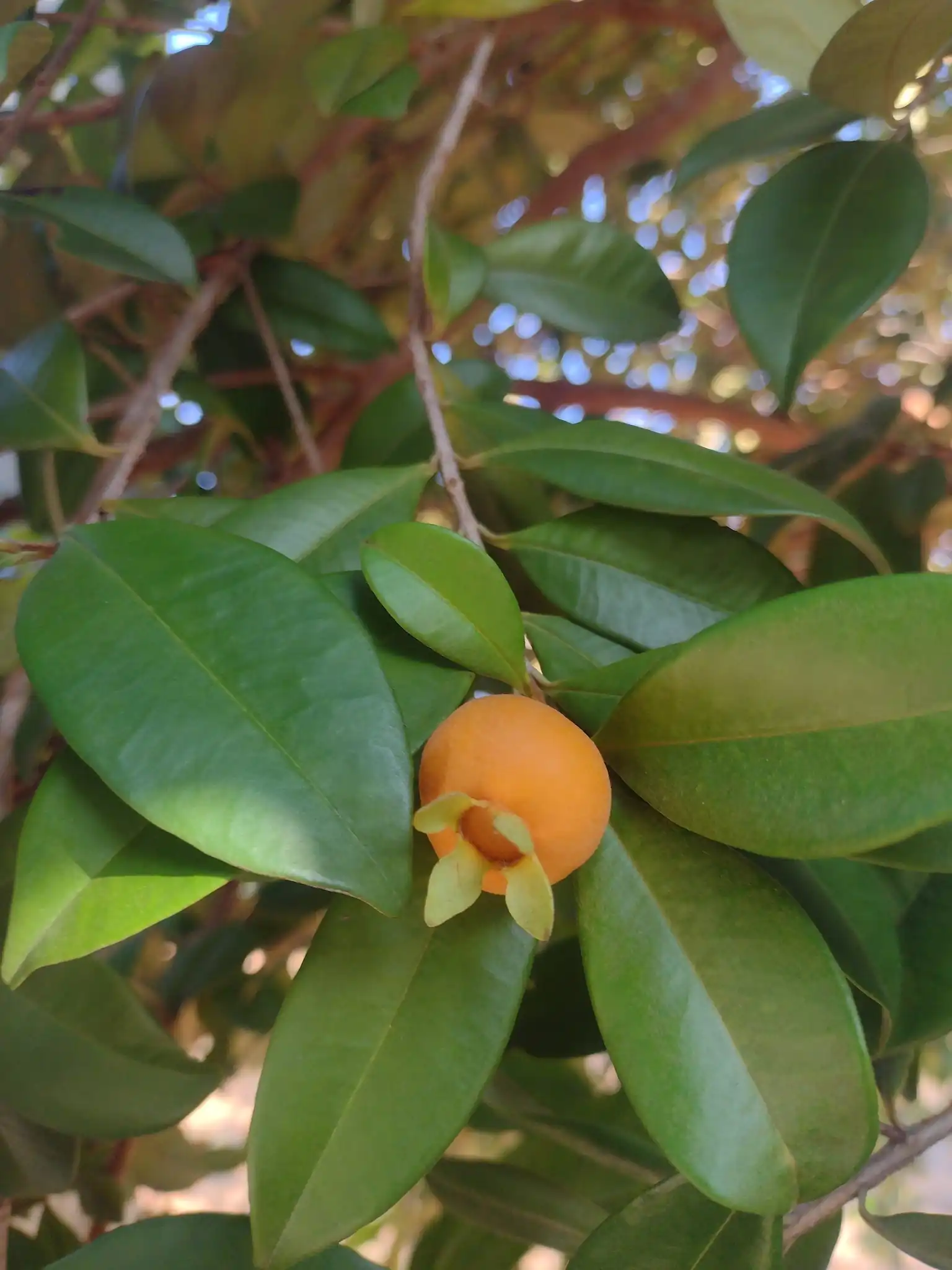
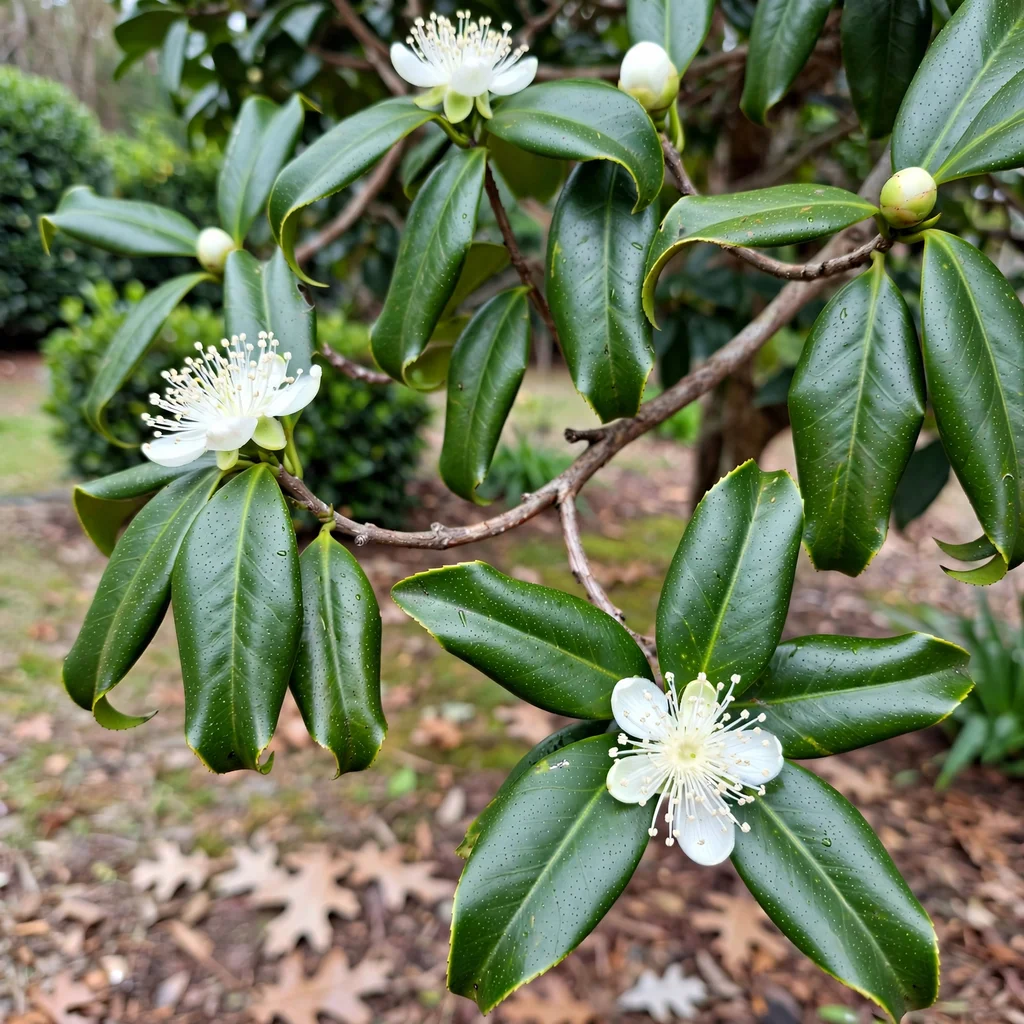
Eugenia luschnathiana is a slow-growing evergreen small tree from coastal Bahia, reaching 20 to 25 feet with a dense spreading crown and opposite glossy dark-green leaves. The white four-petalled flowers open singly in the leaf axils on long stalks, each about one inch across with a tuft of white stamens.
It is grown for golden-yellow apricot-sized fruit with thin tender skin and juicy aromatic pulp that is sweet-acid with a faint resinous note, eaten fresh or made into jelly and preserves. Seedling trees vary widely in fruit size and can flower when under three feet tall, and this Bahia pitomba is a different species from Talisia esculenta also sold as pitomba.
Uses & Benefits:
Essentials
At a Glance
Plant Type
Tree
Height
300"
Width
180"
Light
Full Sun, Partial Sun
Zones
9, 10
Water
High
Humidity
High
Lifespan
Long-lived evergreen tree
Native To
Bahia, Brazil
Toxicity
Non-toxic; edible fruit
Bloom period
Spring – Summer
In flower about 6 months of the year
Planting
How to Grow
- Plant in full sun in moist fertile sandy loam with pH 5.5 to 6.5 and sharp drainage.
- Water deeply and often, especially the first two years, as young trees have low drought tolerance.
- Fertilize regularly through the growing season to support bearing and juicy fruit.
- Protect from frost; mature wood tolerates brief dips near 27F but young growth is injured near 30F.
- Grow in a large container north of zone 9b and move it under cover when a freeze threatens.
Pro Tip
Keep trees well-watered and well-fertilized from flowering through fruit swell; dry or hungry trees hold fruit but form thin dry flesh.
Keep It Thriving
Care Guide
Do
- Do water deeply and frequently in heat and through fruit development.
- Do feed regularly and mulch to hold soil moisture.
- Do tip-prune lightly after fruiting to keep the crown dense.
Don't
- Do not plant in alkaline or waterlogged soil.
- Do not cut hard into old wood before flowering, as flowers form on new growth.
- Do not let containers dry out or sit in standing water.
Seasonal Care Calendar
| Task | Jan | Feb | Mar | Apr | May | Jun | Jul | Aug | Sep | Oct | Nov | Dec |
|---|---|---|---|---|---|---|---|---|---|---|---|---|
| Fertilize | ||||||||||||
| Harvest | ||||||||||||
| Pest Check | ||||||||||||
| Prune | ||||||||||||
| Winter Prep |
Watch Out For
Pests & Diseases
Common Pests
In the Garden
Landscape Uses & Companions
Landscape Uses
Multiply
Propagation Methods
Good to Know
Common Questions
Pitomba questions
What zones can Pitomba grow in?
Pitomba is hardy in USDA Zones 9–10: in that range it survives winter in the ground. Colder than Zone 9, winters are too cold for it to survive outdoors.
When does Pitomba bloom?
Pitomba typically blooms from spring to summer. Exact timing shifts a week or two with your zone — Sow's bloom calendar maps it to your garden.
Does Pitomba need full sun?
Pitomba does best in full sun to part shade. In hot climates, afternoon shade keeps blooms fresher longer.
More Eugenia to compare
Keep exploring
Explore the genus
Hardy in your zone?
Grow Pitomba with confidence
See it in a design of your actual yard, get zone-matched care reminders, and track it season by season in your garden journal.