The Story
Plant Bio
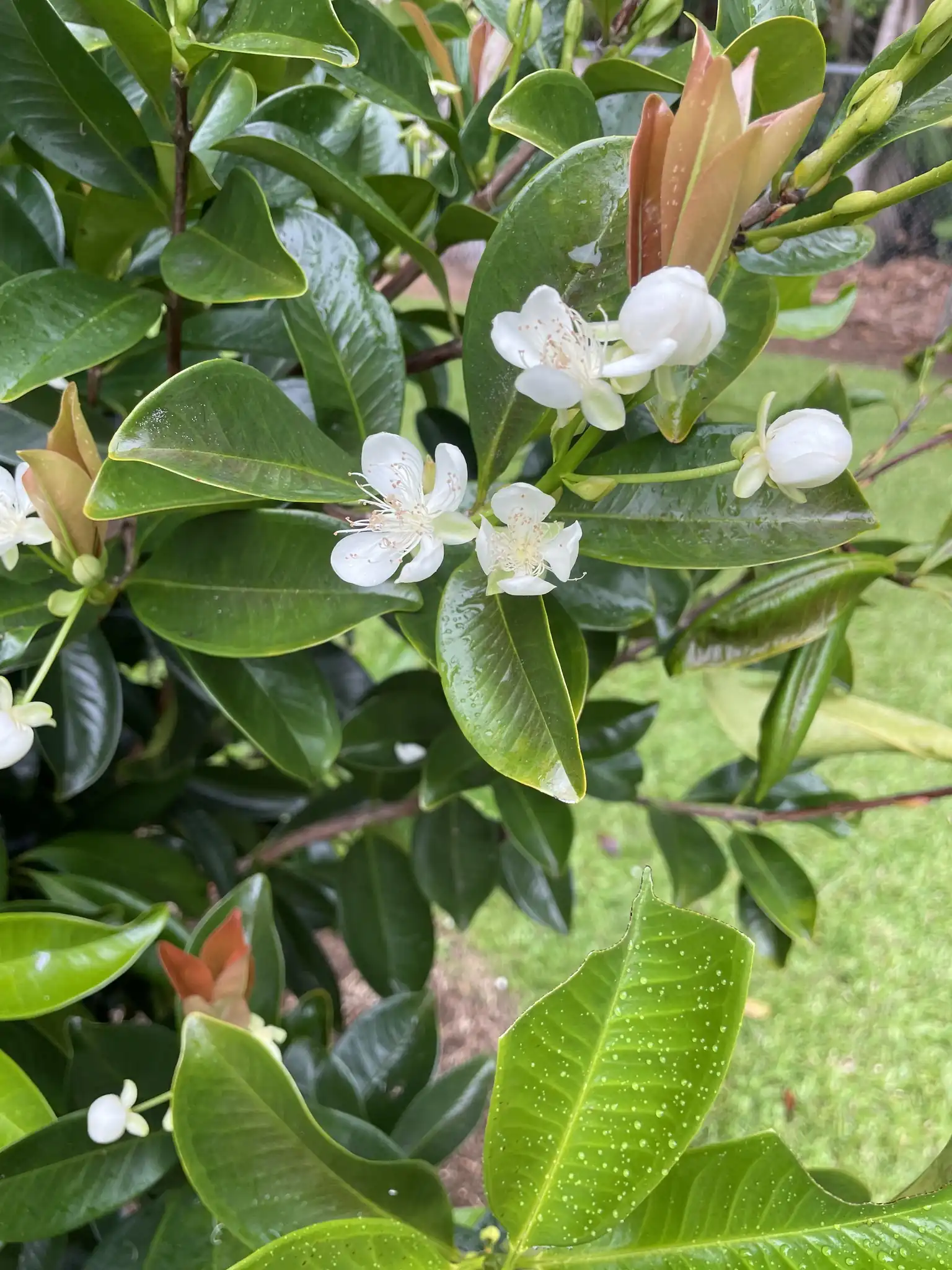
Eugenia brasiliensis is a slender, erect evergreen large shrub to small tree reaching 25 to 35 feet, with a short trunk and dense wind-firm crown. Leaves are opposite, oblong-oval 3.5 to 6 inches long, thick, glossy and leathery with recurved margins and minute pitting on both surfaces.
Flowers are borne singly in the leaf axils, about 1 inch across with four green sepals and about 100 white stamens tipped pale yellow. Fruit follows as long-stalked, oblate berries one-half to three-quarters inch across, ripening from green through bright red to dark purple-black with persistent sepals at the tip and one to four large seeds.
Uses & Benefits:
Essentials
At a Glance
Plant Type
Tree
Height
360"
Width
180"
Light
Full Sun, Partial Sun
Zones
9, 10
Water
High
Humidity
High
Lifespan
Long-lived
Native To
Coastal southern-southeastern Brazil
Toxicity
Non-toxic
Bloom period
Spring – Late spring
In flower about 3 months of the year
Planting
How to Grow
- Plant in full sun in USDA 9b to 11 in deep, well-drained slightly acid to neutral soil.
- Water deeply to establish and keep soil evenly moist; it does not tolerate drought and fruits best with high rainfall.
- Mulch to hold moisture but keep mulch off the short trunk.
- Prune lightly after spring harvest to shape as hedge or small tree.
- Protect from hard frost below 26F; plant in a sheltered spot at the cold edge of its range.
Pro Tip
Give it sun, slightly acid drainage and steady moisture, and cut open a ripe fruit before harvesting in bulk — fruit-fly stings rarely show on the skin.
Keep It Thriving
Care Guide
Do
- Give full sun for best fruiting
- Keep soil evenly moist once established
- Grow in slightly acid to neutral well-drained soil
Don't
- Do not plant in limestone or strongly alkaline soil
- Do not let soil dry out completely
- Do not cut back into old bare wood
Seasonal Care Calendar
| Task | Jan | Feb | Mar | Apr | May | Jun | Jul | Aug | Sep | Oct | Nov | Dec |
|---|---|---|---|---|---|---|---|---|---|---|---|---|
| Fertilize | ||||||||||||
| Harvest | ||||||||||||
| Pest Check | ||||||||||||
| Prune | ||||||||||||
| Winter Prep |
Watch Out For
Pests & Diseases
Common Pests
In the Garden
Landscape Uses & Companions
Landscape Uses
Multiply
Propagation Methods
Good to Know
Common Questions
Grumichama questions
What zones can Grumichama grow in?
Grumichama is hardy in USDA Zones 9–10: in that range it survives winter in the ground. Colder than Zone 9, winters are too cold for it to survive outdoors.
When does Grumichama bloom?
Grumichama typically blooms in spring. Exact timing shifts a week or two with your zone — Sow's bloom calendar maps it to your garden.
Does Grumichama need full sun?
Grumichama does best in full sun to part shade. In hot climates, afternoon shade keeps blooms fresher longer.
More Eugenia to compare
Keep exploring
Explore the genus
Hardy in your zone?
Grow Grumichama with confidence
See it in a design of your actual yard, get zone-matched care reminders, and track it season by season in your garden journal.