Quick answer
The most dependable perennial flowers for US gardens include purple coneflower, 'Goldsturm' black-eyed Susan, 'Walker's Low' catmint, 'Rozanne' geranium, peony, blue false indigo, 'Autumn Joy' sedum and, for shade, hosta and Lenten rose. Most bloom for only 2 to 4 weeks, so choose 2 or 3 kinds for each season, and expect coneflower and Shasta daisy to live just a few years.
Key facts
- Bloom length
- 2 to 4 weeks for most; catmint runs April to September with shearing
- Planning rule
- 2 or 3 kinds per bloom season, in groups of at least 3
- Spacing
- 2 to 3 ft (60 to 90 cm) for plants 3 ft tall or more; 1 ft (30 cm) under 2 ft
- When to plant
- Early spring, or fall at least 6 weeks before hard freezes
- Rarely need dividing
- Peony, hosta, bleeding heart; leave blue false indigo undisturbed
- Short-lived
- Coneflower (often 2 to 3 years), Shasta daisy, blanket flower, columbine
- Pet risk
- Daylilies are toxic to cats; hosta, peony, iris, hellebore, milkweed and yarrow to dogs, cats and horses
Dependable perennial flowers share three traits: they survive a wide spread of US winters, resist the worst diseases better than most of their kind, and keep flowering without yearly rescue. The 30 below, from peony and blue false indigo in spring to Russian sage and asters in fall, meet that bar across most of Zones 3 to 9, and each entry names its weak spot.
Two facts shape every perennial bed. Most perennials flower for only two to four weeks, so a bed that blooms from April to October is a relay of several plants rather than one long performer. And perennial means permanent, not effortless: plan on deadheading, cutting back, dividing and weeding, and on replacing the short-lived favorites every few years.
How these plants were chosen
Each pick was chosen for a wide hardiness range, long or well-timed bloom and good disease resistance, and each entry states how long the plant typically lives. Fourteen are past Perennial Plant of the Year winners. That award is judged on performance across a wide range of climates, low maintenance, pest and disease resistance, more than one season of interest, easy propagation and ready availability. Coneflower ('Magnus', 1998) and coral bells ('Palace Purple', 1991) have also won with other cultivars.
The rest are perennials that recur on university and botanical garden lists for sun and shade from New England to Texas. Plants that escape into fields and wetlands, such as orange daylily and purple loosestrife, were excluded and appear in the section on plants to avoid. "Full sun" below means at least 6 hours of direct sun a day.
| Pick | Bloom | Zones | Height, ft | Light; best for |
|---|---|---|---|---|
| Peony | May to early June | 3–8 | 1.5–2.5 | Sun; fragrant cut flowers |
| Blue false indigo | May–June | 3–9 | 3–4 | Sun–part shade; native anchor |
| Threadleaf bluestar | April–May | 5–8 | 2–3 | Sun–part shade; fall foliage |
| Eastern red columbine (wild columbine) | April–May | 3–8 | 2–3 | Sun–part shade; hummingbirds |
| Siberian iris 'Caesar's Brother' | May | 3–8 | 3–4 | Sun–part shade; clay, wet soil |
| 'May Night' salvia | May–June | 4–8 | 1.5–2 | Sun; cool-summer areas |
| 'Walker's Low' catmint | April–September | 4–8 | 2–2.5 | Sun–part shade; longest bloom |
| 'Rozanne' geranium | Late spring–fall | 5–8 | 1.5–1.7 | Sun–part shade; front of border |
| 'Moonbeam' coreopsis | June–August | 3–9 | 1.5–2 | Sun; fine texture, pet-safe |
| 'Stella de Oro' daylily | May–August | 3–8 (listed to 10; poor in 9+) | 0.75–1 | Sun–part shade; edging |
| 'Arizona Sun' blanket flower | May–August | 3–10 | 0.5–1 | Sun; heat, lean dry soil |
| Purple coneflower | June–August | 3–8 | 2–5 | Sun–light shade; pollinators |
| 'Goldsturm' black-eyed Susan | June–September | 3–9 | 2–3 | Sun; long summer gold, cutting |
| Garden phlox 'David' | July–September | 3–8 | 2–4 | Sun–part shade; fragrance |
| Bee balm | July–August | 4–9 | 2–4 | Sun–part shade; hummingbirds |
| Dense blazing star | July–August | 3–8 | 2–4 | Sun; cutting, clay, heat |
| Butterfly weed | June–August | 3–9 | 1–2.5 | Sun; monarchs, dry soil |
| 'Becky' Shasta daisy | July–September | 5–9 | 3–4 | Sun; white cut flowers |
| 'Moonshine' yarrow | June–September | 3–8 | 1–2 | Sun; lean, dry soil |
| Hardy hibiscus | July–September | 5–9 | 3–7 | Sun; wet spots |
| Russian sage | July–October | 5–9 | 3–5 | Sun; hot, dry sites |
| 'Autumn Joy' sedum (stonecrop) | September–October | 3–9 | 1.5–2 | Sun; drought, late pollinators |
| 'Purple Dome' aster | August–September | 5–8 | 1.5–2 | Sun; compact fall color |
| 'Honorine Jobert' anemone | August–September | 4–8 | 3–4 | Sun–part shade; late white flowers |
| Lenten rose | March–April | 4–9 | 1–1.5 | Part–full shade; earliest flowers |
| Bleeding heart | April–May | 3–9 | 2–3 | Shade; spring flowers |
| 'Jack Frost' brunnera | April–May | 3–8 | 1–1.5 | Part shade; silver leaves |
| Astilbe | June | 4–8 | 2–3 | Shade; moist soil |
| Coral bells | June–July | 4–9 | 0.75–1 | Part shade; leaf color |
| 'Halcyon' hosta | August | 3–8 | 1.5–2 | Part–full shade; blue leaves |
Zones are USDA hardiness zone ratings; check your own zone on the 2023 USDA map. Heights are in feet (1 ft = 30 cm) and vary with cultivar and climate.
Several of these picks are poisonous. Daylilies, including 'Stella de Oro', are toxic to cats and can cause kidney failure, though not to dogs. Hosta, peony, Siberian iris, Lenten rose and butterfly weed are toxic to dogs, cats and horses. Yarrow (Achillea millefolium) is listed as toxic to all three as well, so treat 'Moonshine' with the same care. Butterfly weed roots and sap are poisonous, and Baptisia species are poisonous if eaten, with children most at risk. Coreopsis and coral bells (Heuchera sanguinea) are rated non-toxic to all three animals. If a pet chews a toxic plant, call your veterinarian or the ASPCA Animal Poison Control Center at (888) 426-4435.
Spring bloomers for sun
For April to June color in sun, anchor the bed with peony and blue false indigo, which can stay in place for many years, then fill around them with bluestar, columbine, Siberian iris and 'May Night' salvia.
Peony (Paeonia lactiflora)
A garden peony can stay in one spot for years and does not need dividing. Most cultivars carry fragrant flowers in May and early June on plants 1.5 to 2.5 feet (45 to 75 cm) tall and wide, hardy in Zones 3 to 8. Each plant blooms for only 7 to 10 days, so combine early, midseason and late cultivars to stretch the show to about six weeks. Peonies need a cold winter: they are marginal in central Georgia and not worth planting in south Georgia.
Blue false indigo (Baptisia australis)
This native builds a shrub-sized clump with indigo spikes in May and June, followed by decorative seed pods. Blue false indigo grows 3–4 feet (90–120 cm) tall and as wide, hardy in Zones 3 to 9 in sun or part shade. It takes several years to settle and should not be disturbed afterward, so choose its spot once. Stems tend to splay after flowering; a light trim then keeps the plant upright without stakes.
Threadleaf bluestar (Amsonia hubrichtii)
Also called Arkansas blue star, threadleaf bluestar opens powder-blue flowers in April and May and earns its keep again with strong fall foliage. This Arkansas and Oklahoma native forms a mound 2–3 feet (0.6–0.9 m) high and wide in Zones 5 to 8. In too much shade it flops; cutting stems back by about 6 inches (15 cm) after bloom keeps it dense.
Eastern red columbine (Aquilegia canadensis)
The native eastern red columbine flowers in April and May and draws hummingbirds. It reaches 2 to 3 feet (60 to 90 cm) in sun or part shade, Zones 3 to 8. Hybrid columbines are often riddled by leaf miners; this species resists them well. Like all columbines it is short-lived, but it self-seeds freely enough to replace itself, and its leaves look tired by midsummer.
Siberian iris 'Caesar's Brother' (Iris sibirica)
Deep purple May flowers over upright, grassy leaves make Siberian iris 'Caesar's Brother' the iris for clay and damp ground. Clumps stand 3–4 feet (0.9–1.2 m) high with a 2.5–3 foot (75–90 cm) spread and are hardy from Zone 3 to Zone 8. Deer and rabbits tend to leave it alone. Keep the soil moist through bloom, divide when flowering falls off, and remember that iris toxins concentrate in the rhizomes.
'May Night' salvia (Salvia × sylvestris 'Mainacht')
The 1997 Perennial Plant of the Year sends up deep violet-blue spikes in May and June. May Night salvia makes a clump 18 to 24 inches (45 to 60 cm) tall, hardy in Zones 4 to 8 in full sun, and reblooms sporadically if you cut it back after the first flush. It tolerates drought but likes cool nights and performs best north of Zone 7; in hot, humid summers it sprawls.
Long bloomers, late spring into fall
If you have room for only a few perennials, choose from this group: each flowers for months rather than weeks, provided you shear or deadhead.
'Walker's Low' catmint (Nepeta 'Walker's Low')
With a shearing after the first flush, Walker's Low catmint stays in lavender-blue flower from April to September. It is hardy in Zones 4 to 8 and shrugs off drought, deer and rabbits. Despite the name it is not a low plant: expect 24 to 30 inches (60 to 75 cm) of height and up to 3 feet (90 cm) of spread. It grows in sun or part shade but dislikes the heat and humidity of the Deep South.
'Rozanne' hardy geranium (Geranium 'Gerwat')
Because its flowers are sterile, Rozanne geranium keeps producing violet-blue blooms from late spring into fall instead of setting seed. The mound grows about 20 inches (50 cm) tall and 24 inches (60 cm) wide in Zones 5 to 8, in sun or part shade, and it tolerates heat unusually well for a hardy geranium. In hot summers the big flush comes in late spring and early summer with lighter bloom after; cutting it back during a midsummer lull brings fresh growth, and afternoon shade helps.
'Moonbeam' threadleaf coreopsis (Coreopsis verticillata 'Moonbeam')
Pale yellow daisies cover fine, threadlike foliage from June to August on Moonbeam coreopsis. Plants grow 18–24 inches (45–60 cm) tall in full sun and survive winters in Zones 3 through 9. It is sterile, so it does not seed around, but it can still spread vigorously by rhizomes; a shearing in mid to late summer tidies it and brings fall rebloom. It tolerates heat and humidity, but wet, poorly drained soil rots the crown.
'Stella de Oro' daylily (Hemerocallis 'Stella de Oro')
Each flower lasts a single day, but Stella de Oro daylily keeps opening fragrant yellow blooms from May into August. The clump stays 9 to 12 inches (23 to 30 cm) tall and is listed as hardy in Zones 3 to 10, in sun or part shade, and picking off spent flowers keeps it going. It is winter-dormant and does poorly in Zone 9 and warmer. It is the daylily for edging a walk, and the one to choose over the orange roadside daylily.
'Arizona Sun' blanket flower (Gaillardia 'Arizona Sun')
Arizona Sun blanket flower blooms orange-red from May to August and stands up to heat and drought. It is a low plant, 6 to 12 inches (15 to 30 cm) tall, hardy in Zones 3 to 10. Give it dry, well-drained soil that is not too fertile, and deadhead to keep flowers coming. Blanket flowers are short-lived, rot in wet summers, and can catch aster yellows and powdery mildew.
Summer perennials for full sun and heat
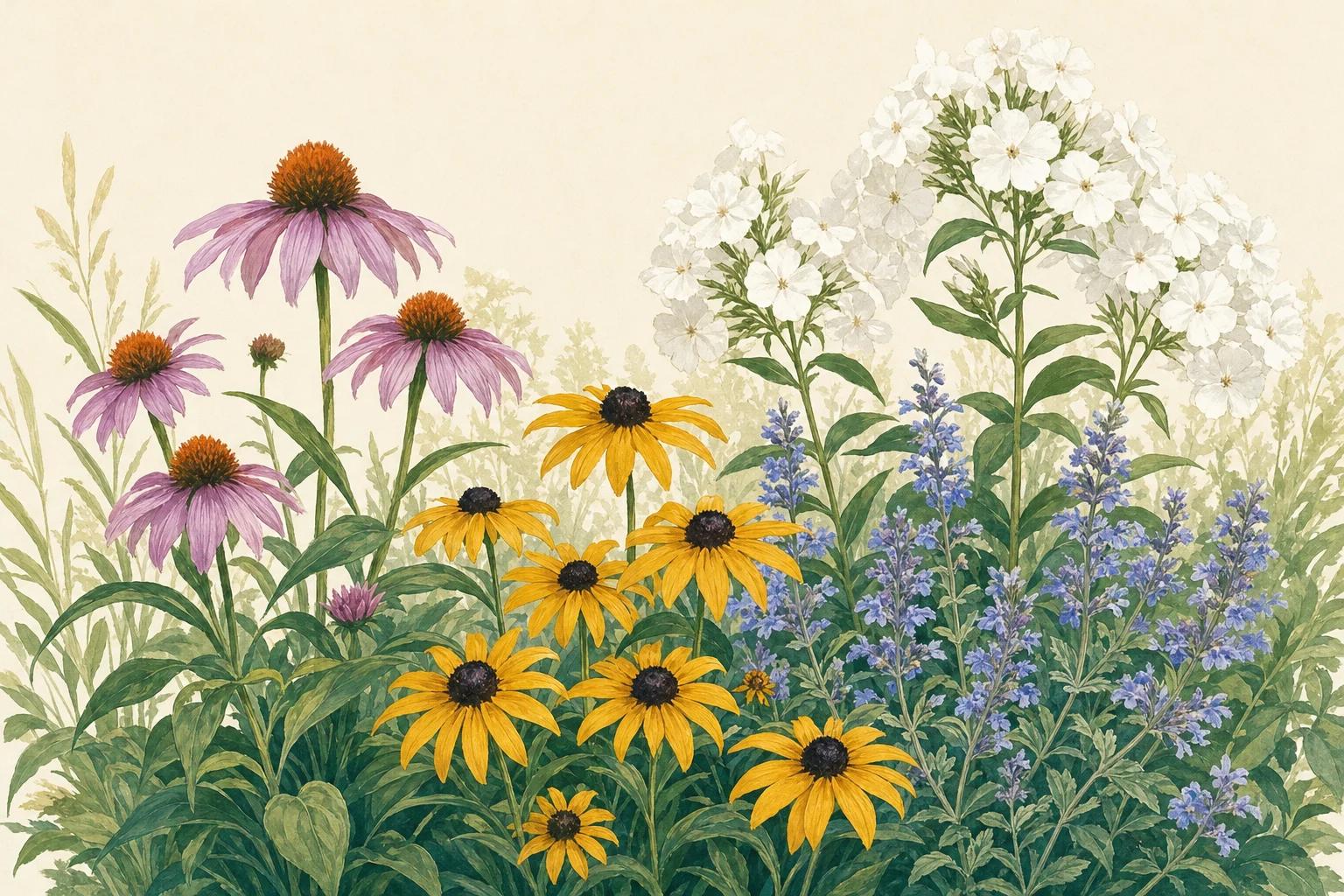
July and August belong to the daisies and spikes: coneflower, black-eyed Susan, phlox, bee balm and dense blazing star, most of them native and nearly all happiest in full sun.
Purple coneflower (Echinacea purpurea)
Native from Ohio and Iowa south to Georgia and Louisiana, purple coneflower flowers from June to August and feeds pollinators and birds. It tolerates drought and clay and grows 2 to 5 feet (0.6 to 1.5 m) tall in Zones 3 to 8, in sun or light shade. The catch is lifespan: two or three years is common, though it reseeds readily, and hybrid coneflowers inherit the same weakness.
'Goldsturm' black-eyed Susan (Rudbeckia fulgida var. sullivantii 'Goldsturm')
The 1999 Perennial Plant of the Year gives gold daisies from June to September, Zones 3 to 9. Goldsturm reaches 2–3 feet (60–90 cm), cuts well, and spreads slowly by rhizomes into a widening clump. Its weak spot is the foliage: bacterial angular leaf spot is common on this cultivar, starting low and climbing the plant, and septoria leaf spot can blacken black-eyed Susan leaves by late summer. For cleaner foliage, choose American Gold Rush, the 2023 winner, which resists septoria.
Garden phlox 'David' (Phlox paniculata 'David')
David phlox carries fragrant white flower heads from July to September and resists the powdery mildew that garden phlox is prone to. Stems reach 2 to 4 feet (0.6 to 1.2 m) in Zones 3 to 8. Give it sun or part shade, water in dry spells, and room for air to move, and deadhead before seed forms, because self-sown seedlings are inferior to the parent. Jeana, the 2024 Perennial Plant of the Year, is another garden phlox to try.
Bee balm (Monarda didyma)
Native to eastern North America, bee balm raises red flowers in July and August that draw hummingbirds and bees. Expect 2–4 feet (60–120 cm) of growth in Zones 4 to 9. It wants consistently moist soil in sun or part shade, and it spreads by rhizomes. Powdery mildew can be serious when plants are crowded, so space generously.
Dense blazing star (Liatris spicata)
Dense blazing star sends up purple spikes in July and August that handle heat, humidity and clay and make good cut flowers. This native grows tall but narrow, 2 to 4 feet high and only 9 to 18 inches wide (60 to 120 by 23 to 45 cm), in full sun, Zones 3 to 8. Tall spikes may need staking, and wet winter soil can kill it.
Butterfly weed (Asclepias tuberosa)
Butterfly weed is a milkweed and a host plant for monarch caterpillars, with orange flowers from June to August. Native from Ontario to Florida and the 2017 Perennial Plant of the Year, it grows 1 to 2.5 feet (30 to 75 cm) tall in full sun, Zones 3 to 9, and tolerates drought. Its deep taproot means it transplants poorly, and it emerges late in spring, so mark the spot.
'Becky' Shasta daisy (Leucanthemum × superbum 'Becky')
Becky Shasta daisy, the 2003 winner, holds white daisies from July to September and tolerates heat and drought. Plants grow 36 to 48 inches (0.9 to 1.2 m) tall in full sun, Zones 5 to 9, and the tall stems may need staking. It is somewhat short-lived, wet winter soil can kill it, and clumps sometimes die with no obvious cause, so give it sharp drainage and divide it every 2 to 3 years to keep it vigorous.
'Moonshine' yarrow (Achillea 'Moonshine')
Flat lemon-yellow heads rise over silvery leaves from June to September on Moonshine yarrow. It grows 1 to 2 feet (30 to 60 cm) tall in Zones 3 to 8 and full sun, handles drought, cuts well and, unlike common yarrow, does not reseed. Grow it lean: rich soil makes it floppy, and in hot, humid climates like St. Louis it tends to melt out by mid to late summer.
Hardy hibiscus (Hibiscus moscheutos)
Dinner-plate flowers from July to September make hardy hibiscus the boldest native on this list. Stems reach 3 to 7 feet (0.9 to 2.1 m); give it full sun, Zones 5 to 9. It tolerates wet soil, needs steady moisture, and each flower lasts one day. It is one of the last perennials to break dormancy in spring, so don't give up on it and dig it out.
Late summer and fall
From August until frost, rely on Russian sage, 'Autumn Joy' sedum, a New England aster and Japanese anemone; between them they cover hot sun, dry soil and light shade.
Russian sage (Perovskia atriplicifolia, now Salvia yangii)
Russian sage, the 1995 Perennial Plant of the Year, makes a silvery, lavender-blue haze from July to October. Its aromatic stems reach 3–5 feet (90–150 cm) in Zones 5 to 9. It needs full sun and sharp drainage; in part shade it flops. Cut it back almost to the ground in late winter or early spring.
'Autumn Joy' sedum (Hylotelephium 'Herbstfreude')
Flat heads of pink buds deepen to red in September and October on Autumn Joy sedum, and pollinators work them late into the season. The plant is very drought tolerant and makes a mound about 1.5 to 2 feet (45 to 60 cm) high and wide, hardy in Zones 3 to 9. Don't amend or feed its soil: in rich ground or shade the stems flop open, and wet soil rots it.
'Purple Dome' New England aster (Symphyotrichum novae-angliae 'Purple Dome')
This compact form of a native aster covers itself in purple flowers in August and September. Purple Dome aster stays 1.5–2 feet (45–60 cm) tall but spreads 2–3 feet (60–90 cm), in full sun, Zones 5 to 8, and cuts well. It is prone to powdery mildew, and to aster wilt in poorly drained clay.
'Honorine Jobert' Japanese anemone (Anemone × hybrida 'Honorine Jobert')
Honorine Jobert anemone, the 2016 Perennial Plant of the Year, carries clean white flowers from August into September. In bloom it stands 3 to 4 feet (90 to 120 cm) tall and grows in Zones 4 to 8, sun or part shade. It is slow to establish, then spreads by rhizomes. It dislikes wet winter soil, its leaves scorch in hot sun, and it does poorly south of Zone 7.
Perennials for shade
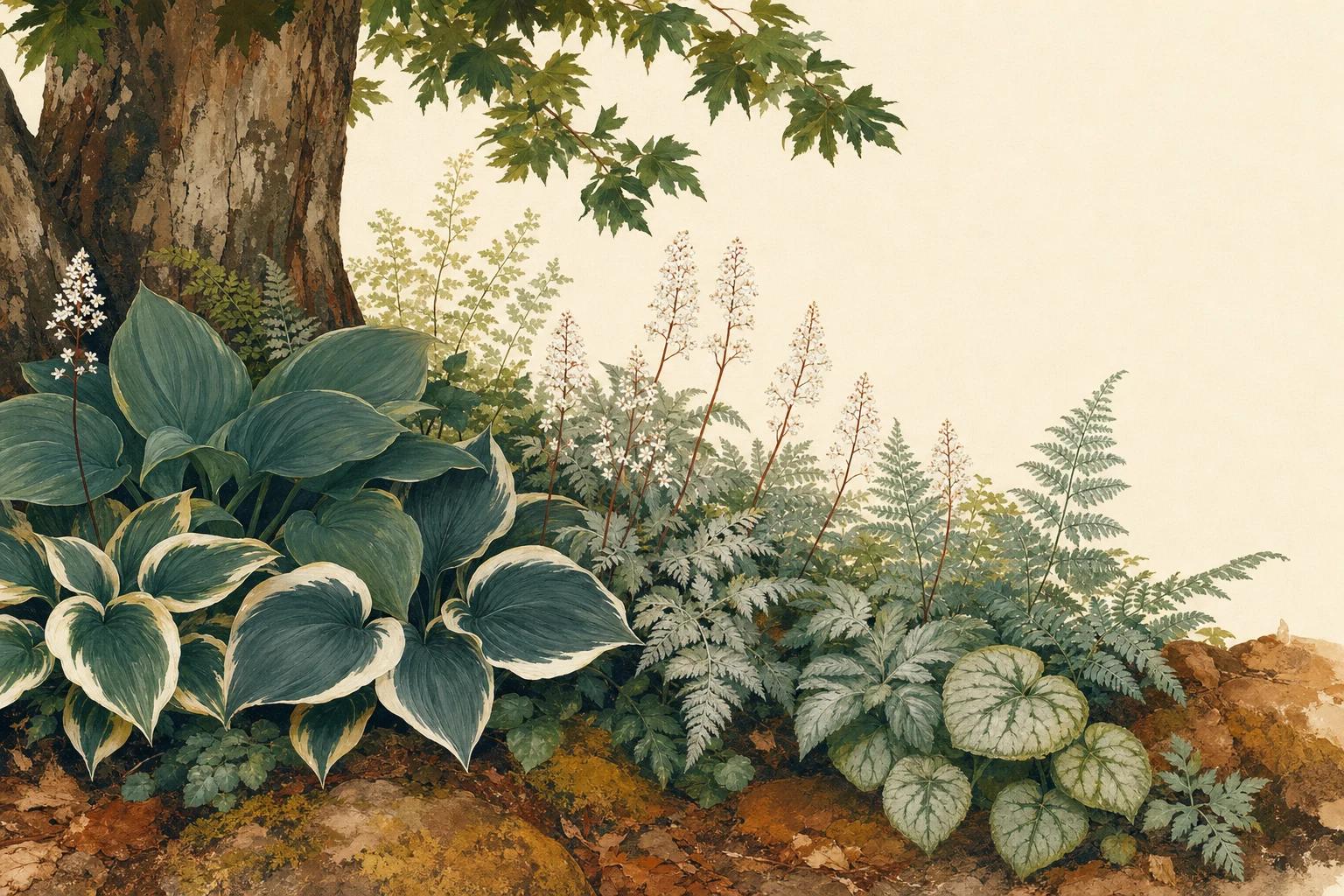
In part to full shade, Lenten rose and bleeding heart carry spring, astilbe and coral bells take early summer, and hosta and brunnera hold the bed with foliage. For more choices by light level, see these perennials and shrubs for shade.
Lenten rose (Helleborus × hybridus)
Lenten rose opens first, in March and April, with nodding flowers over evergreen leaves. Plants stay 12 to 18 inches (30 to 45 cm) high; give them part to full shade, Zones 4 to 9. The 2005 Perennial Plant of the Year is long-lived, deer tolerant and self-seeds. Site it out of winter wind and plant it where you want it, because older clumps are hard to move.
Bleeding heart (Lamprocapnos spectabilis)
Bleeding heart hangs heart-shaped flowers in April and May and rarely needs dividing. It grows 2 to 3 feet (0.6 to 0.9 m) tall, is hardy in Zones 3 to 9, and needs shade and good drainage. Its foliage goes dormant by midsummer and leaves a hole, so set a neighbor that fills out in summer, such as hosta, in front of it.
'Jack Frost' brunnera (Brunnera macrophylla 'Jack Frost')
Silver leaves and sprays of small blue flowers in April and May make Jack Frost brunnera, the 2012 winner, a standout in part shade. Plants stay 1 to 1.5 feet (30 to 45 cm) tall, are hardy in Zones 3 to 8, and spread slowly by rhizomes into a patch, which makes it useful among shade ground covers. It needs consistent moisture, scorches in sun, and fails in the humid South from Zone 7 southward.
Astilbe (Astilbe × arendsii and hybrids)
Astilbe raises feathery plumes in June, and deer and rabbits tend to pass it by. Most garden hybrids stand 2–3 feet (60–90 cm) and are hardy in Zones 4 to 8. The soil must stay moist: in drought or a hot summer the leaves brown.
Coral bells (Heuchera)
Coral bells are grown mainly for leaf color, with airy flower spikes in June and July; 'Palace Purple' was the 1991 Perennial Plant of the Year. The mounds stay 9 to 12 inches (23 to 30 cm) tall and are hardy in Zones 4 to 9. They take sun if the soil stays moist but want shade in southern heat, the leaves scorch when soil dries, and the foliage stays evergreen in mild winters.
'Halcyon' hosta (Hosta 'Halcyon')
Halcyon hosta has blue-gray leaves and lilac-blue flowers in August. Clumps grow wider than tall, about 1.5–2 feet high by 2.5–3 feet across (45–60 by 75–90 cm), in part to full shade, Zones 3 to 8. Hostas are low-maintenance and rarely need dividing; just keep the soil from drying out.
Planning a bed that blooms from spring to frost
Build continuous color by choosing two or three perennials for each bloom season and planting each in a group of at least three. Individual perennials flower for anywhere from one week to about ten, so the sequence matters more than any single plant.
| Season | Months (Massachusetts) | Picks from this list |
|---|---|---|
| Early spring | April–May | Lenten rose, bleeding heart, brunnera, columbine, bluestar |
| Late spring | May–June | Peony, blue false indigo, Siberian iris, 'May Night' salvia |
| Summer | July–August | Coneflower, black-eyed Susan, phlox, bee balm, dense blazing star, Shasta daisy, hibiscus |
| Late summer and fall | September–October | Russian sage, 'Autumn Joy', 'Purple Dome' aster, Japanese anemone |
| Spans seasons | Varies | Catmint, 'Rozanne', 'Moonbeam', 'Stella de Oro', blanket flower |
Bloom blocks follow New England timing; note when each plant opens in your own garden and adjust.
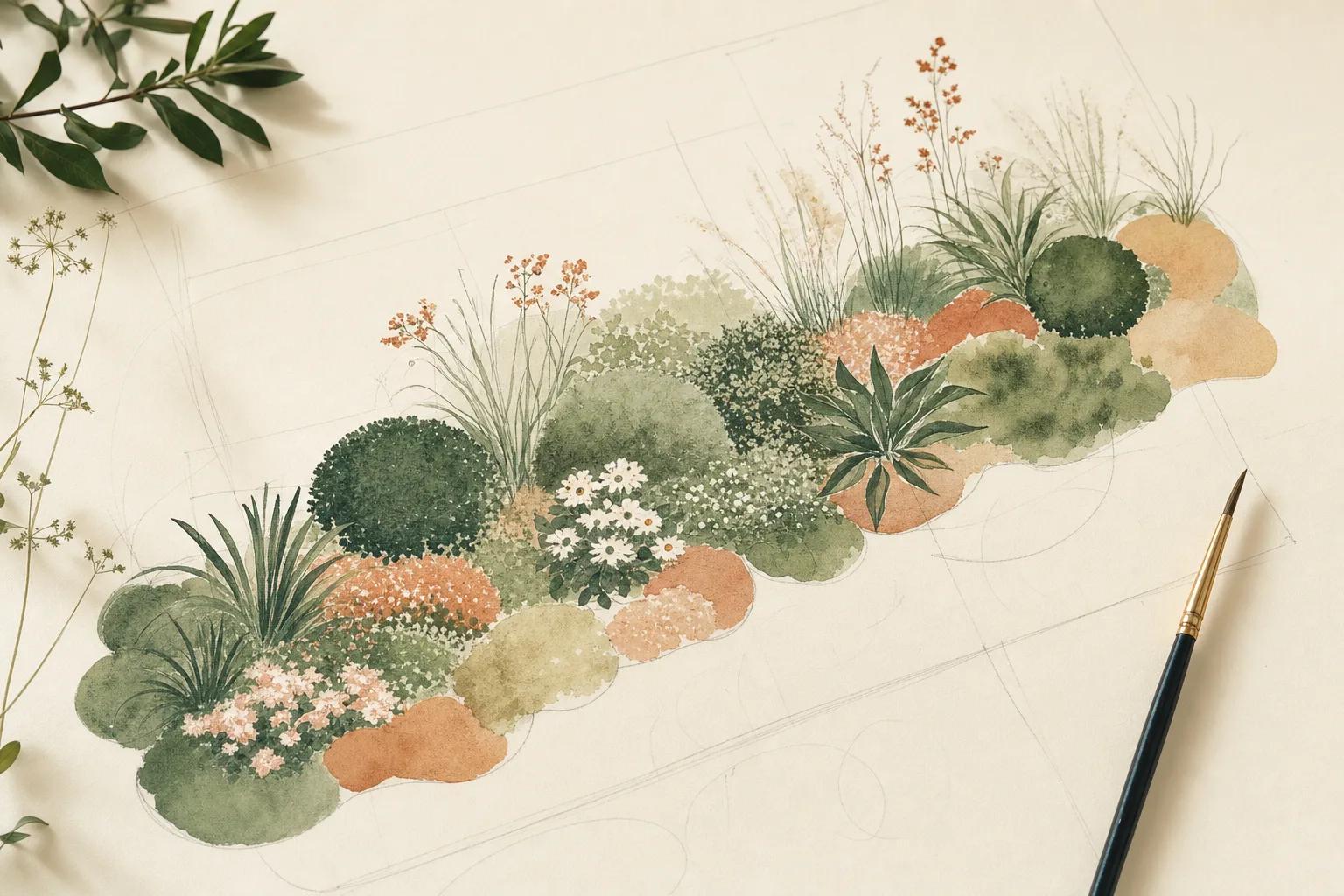
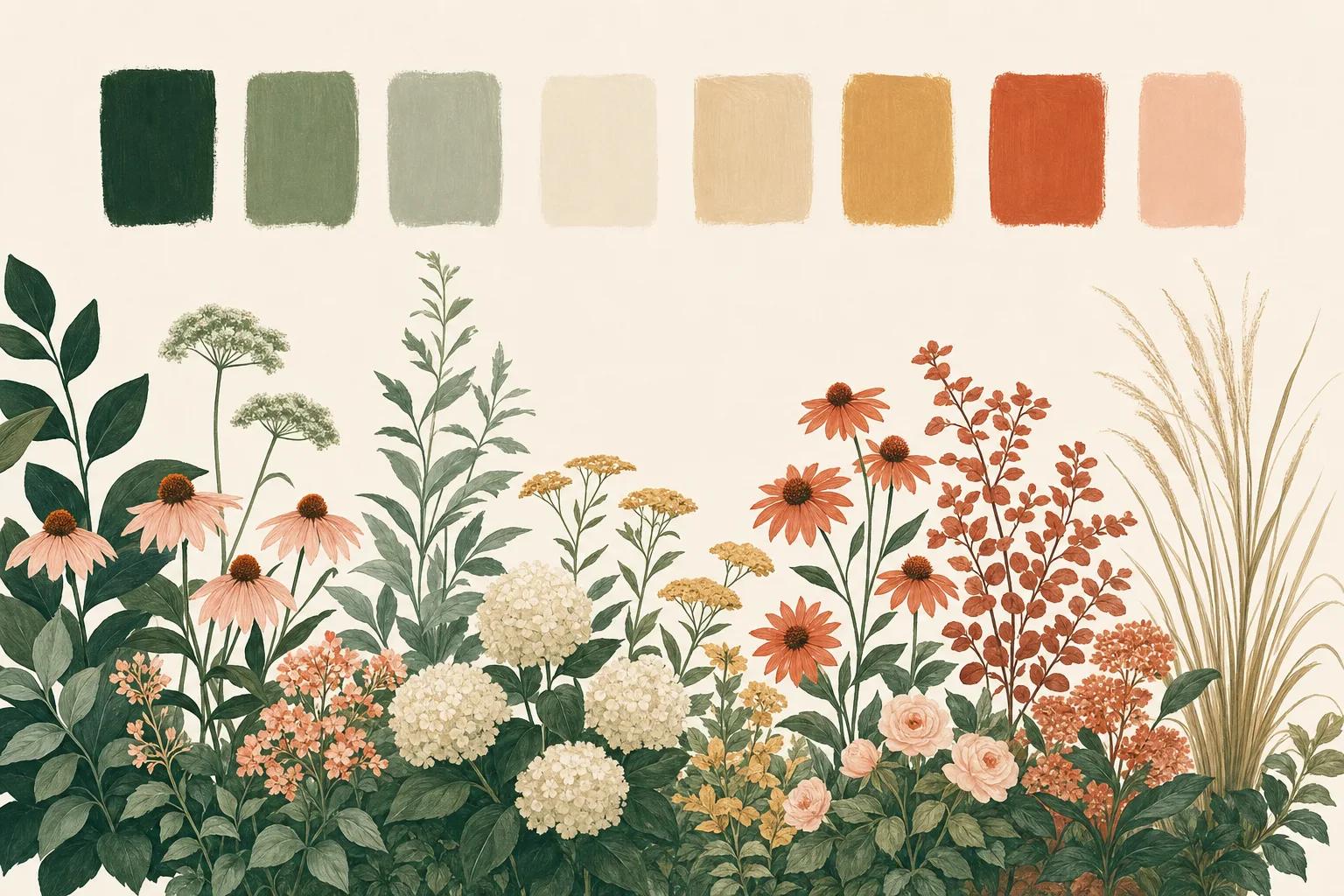
Sort the picks by height before you place them, and repeat the same groups along the bed rather than dotting single plants. For layering heights and bed depths, see how to plan a border, and for a palette that holds together across the seasons, see garden color schemes.
Native or not
Both belong in a good bed. Twelve picks are North American natives or selections of them: purple coneflower, butterfly weed, blue false indigo, dense blazing star, bee balm, garden phlox, black-eyed Susan, hardy hibiscus, eastern red columbine, threadleaf bluestar, New England aster and threadleaf coreopsis, the parent of 'Moonbeam'. Coral bells have native roots as well: Heuchera sanguinea grows wild from Arizona and New Mexico into northern Mexico. Most of the rest, including peony, Russian sage, catmint, hosta, daylily, Lenten rose and Siberian iris, come from Europe and Asia. Natives carry particular wildlife value; butterfly weed, for one, is a host plant that monarch caterpillars need.
Match the plant to your region
- Cold North (Zones 3 and 4): Goldsturm, blue false indigo, butterfly weed, dense blazing star, 'Autumn Joy', Siberian iris, peony and hosta all survive Zone 3 winters. Confirm your zone with the plant hardiness checker.
- Humid Southeast: Wet winters and muggy heat shorten lives, and powdery mildew is common on coneflower, bee balm, asters, phlox and black-eyed Susan. Space those plants widely and favor mildew-resistant cultivars such as 'David' and 'Jeana' phlox.
- South Texas: Purple coneflower, dwarf Indian blanket, summer phlox, fall asters and mealy cup sage are proven heat-takers, and dwarf Indian blanket blooms almost all season there if you remove spent flowers.
- Pacific Northwest: Even low-water perennials need regular irrigation for their first two years. After that, a good soak about every two weeks carries the low-water picks, such as catmint, 'Autumn Joy', yarrow and Lenten rose, through dry summers.
- Frost-free South and West (Zones 9b–11): Most picks here are rated only to Zone 8 or 9, and peony needs a cold winter, so don't count on them in frost-free gardens. Blanket flower is the exception: it can be planted anywhere in Florida and takes extreme heat, sandy soil and salt.
If deer visit your yard, cross-check this list against deer-resistant perennials before you buy.
Perennials to avoid, and what to plant instead
Skip any perennial that escapes into fields, woods or wetlands; in each case a well-behaved plant gives the same effect.
| Avoid | Problem | Plant instead |
|---|---|---|
| Orange or tawny daylily (Hemerocallis fulva) | Treated as invasive in Pennsylvania, Delaware, Georgia, Wisconsin, Kentucky, Maryland, Ohio, Virginia and West Virginia | Named hybrid daylilies such as 'Stella de Oro' |
| Purple loosestrife (Lythrum salicaria) | Over two million seeds per plant; illegal to sell or grow in Wisconsin | Siberian iris for wet soil, dense blazing star for spikes |
| Oxeye daisy (Leucanthemum vulgare) | Can be invasive; often confused with Shasta daisy | Shasta daisy, a different species |
| Common yarrow (Achillea millefolium) | Spreads hard by rhizomes and seed; may become invasive | 'Moonshine' yarrow, which does not reseed |
| Mexican petunia (Ruellia simplex) | Flagged as invasive in Texas | Russian sage for summer purple in heat |
Invasive status is set state by state; check your state's list before planting any spreading perennial.
A few garden plants need containing rather than banning. Hardy ageratum (Conoclinium coelestinum, formerly Eupatorium) is native to the eastern US but spreads hard by rhizomes, so plant it only where it can be kept in bounds. Garlic chives, by contrast, can become invasive and are better left out.
Planting, spacing and long-term care
Plant in early spring or in fall, set crowns at soil level, space for mature size, and expect to deadhead, cut back and divide on a schedule.
When to plant
Fall and early spring both work. Finish fall planting at least 6 weeks before hard-freezing weather; fall planting gives roots extra months to establish before the plant has to support a season of top growth.
Prepare the soil
Test drainage first: fill a hole 10 inches (25 cm) deep with water, and it should empty within 8 to 10 hours. Turn the bed 8 to 10 inches (20 to 25 cm) deep. Work at least 2 inches (5 cm) of composted bark or leaf mold into clay, or 2 to 3 inches (5 to 8 cm) of compost or leaf mold into sand.
Aim for pH 6.0 to 7.0, with 6.0 to 6.5 ideal in the Southeast. Fertilize only on the basis of a soil test: a 10-10-10 or 5-10-5 product is enough, and overfeeding gives leaves instead of flowers.
Space for mature size
The most common mistake in a new border is crowding, because gallon pots hide how big plants become. Space by mature height:
| Mature height | Space plants apart |
|---|---|
| 3 ft (90 cm) or taller | 2–3 ft (60–90 cm) |
| 2–3 ft (60–90 cm) | 1.5–2 ft (45–60 cm) |
| Under 2 ft (60 cm) | 1 ft (30 cm) |
A typical bed plan sets Russian sage 30 to 36 inches (75 to 90 cm) apart, peony and daylily 24 inches (60 cm), and coneflower, black-eyed Susan, Shasta daisy and yarrow 18 inches (45 cm).
The plant spacing calculator turns those distances into plant counts for your bed. While the bed fills in over its first two years, plug the gaps with annual flowers rather than extra perennials.
Plant, water and mulch
Set each crown at or just below the soil surface; buried crowns rot. Peony eyes are the exception and go 1 to 2 inches (2.5 to 5 cm) below the surface. Water in well. Established perennials need about 1 inch (2.5 cm) of water a week, given as deep, infrequent soakings so roots grow down. Spread mulch 2–3 inches (5–8 cm) deep and pull it back from the crowns.
Deadhead, pinch and stake
Removing spent flowers extends bloom on yarrow, coreopsis, blanket flower, garden phlox and 'Stella de Oro'. Stake tall plants such as Shasta daisy and dense blazing star early in spring, before they lean. Pinch the tips of tall fall asters several times before mid-July for bushier plants that need less support.
Divide on schedule
Most perennials need dividing every 3 to 4 years, sooner if flowers shrink, the center of the clump hollows out, or the lower leaves thin. Divide spring and summer bloomers in fall and fall bloomers in spring, and allow 4 to 6 weeks before the ground freezes for roots to settle.
| Plant | Divide every | Best time |
|---|---|---|
| Asters | 1–2 years | Spring |
| Blanket flower, coreopsis | 1–2 years | Early spring (coreopsis also fall) |
| Yarrow, astilbe | 2–3 years | Spring or fall |
| Bee balm | 3 years | Spring or fall |
| Black-eyed Susan, garden phlox | 3–4 years | Early spring or fall |
| Purple coneflower | 4 years | Spring or fall |
| Daylily | 3–6 years | After bloom |
| Peony, hosta, bleeding heart | Rarely | Peony September–October; others early spring |
| 'Autumn Joy' sedum | Only to make more plants | Spring |
Divide when a plant shows decline; a clump that grows and flowers well can be left alone.
Leave butterfly weed, blue false indigo, Japanese anemone and columbines undivided; they resent it, as do oriental poppies, baby's breath and euphorbias.
What to expect
In late summer, expect some leaf spot on black-eyed Susan and mildew on phlox, bee balm and asters; cutting phlox to the ground and clearing the stems in fall reduces mildew the next year. Leave coneflower and 'Goldsturm' seedheads standing into winter, because birds eat the seeds and fallen coneflower seed gives you volunteers to replace short-lived parents. Columbine renews itself the same way, so let a few pods ripen before you cut back its tired foliage. When you are ready to lay out the bed, Sow's garden planner lets you place each plant at its mature spread before you dig.
Frequently asked questions
Which perennial flowers come back every year?
Any perennial hardy in your zone returns each spring, but lifespans differ widely. Peony and Lenten rose are long-lived, and peony, hosta and blue false indigo can stay in one spot for years without dividing. Purple coneflower, Shasta daisy, blanket flower and columbine are short-lived, often lasting two or three years, and stay in the garden mainly by reseeding. Check your zone on the 2023 USDA map before buying, then match each plant's range to it.
What are the most fragrant perennial flowers?
For scented flowers, grow peony (most cultivars), garden phlox such as 'David', 'Stella de Oro' daylily and cheddar pinks (Dianthus gratianopolitanus). Many perennials carry their scent in the leaves instead: catmint, 'May Night' salvia, Russian sage, anise hyssop, calamint and yarrow release it when you brush past. Put the leafy ones along a path edge or beside a step, where legs and hands touch them every day.
Which perennials make good cut flowers?
Peony, purple coneflower, 'Goldsturm' black-eyed Susan, dense blazing star, 'Becky' Shasta daisy, 'May Night' salvia, 'Purple Dome' aster, threadleaf bluestar and 'Honorine Jobert' anemone all cut well, and 'Moonshine' yarrow also dries well for winter arrangements. If you cut heavily, grow a few extra plants of each in a back row or vegetable bed so the display border keeps its color.
What perennials can take full sun and heat?
For hot, humid summers, dense blazing star, 'Rozanne' geranium, 'Stella de Oro' daylily and 'Moonbeam' coreopsis are the most heat- and humidity-tolerant picks. Russian sage and 'Arizona Sun' blanket flower want hot, dry sun, and blanket flower rots in wet summers. Coneflower, phlox and asters take heat but need wide spacing against mildew. In South Texas, dwarf Indian blanket and mealy cup sage are dependable. Skip 'May Night' salvia, 'Walker's Low' catmint, 'Moonshine' yarrow, brunnera and Japanese anemone in the Deep South, where they flop, melt out or decline.
Is there a perennial that blooms all year?
No hardy perennial flowers for 12 months. Even catmint, one of the longest bloomers, runs only from April to September, and only with shearing. Year-round color comes from sequence: Christmas rose (Helleborus niger) can flower from November into early spring in Georgia, Lenten rose follows in March and April, and asters and 'Autumn Joy' sedum carry color into October.
What are the easiest perennials for beginners?
No perennial is maintenance-free, but the least demanding are those that seldom need dividing: peony, hosta, blue false indigo and 'Autumn Joy' sedum. 'Walker's Low' catmint and 'Rozanne' geranium were named Perennial Plant of the Year partly for low maintenance and disease resistance across a wide range of climates. Whatever you choose, budget time each season for weeding, deadheading and cutting back.
Why did my coneflowers die after two or three years?
Mostly because purple coneflower is naturally short-lived. Winter losses come more from weak plants and wet soil than from cold, and plants that go into winter with a full mound of basal leaves survive better. Aster yellows, which struck 13 percent of plants in a five-year comparison of 52 coneflowers, has no cure. Let some heads set seed so volunteers replace old plants, or choose a top-rated cultivar such as 'Cheyenne Spirit'.
How long do perennials take to fill in?
Plan on two to three years for most perennials to reach full size, which is why a new bed looks sparse at the correct spacing. Some are slower: peonies and blue false indigo take several years to settle in, and butterfly weed needs two to three years from seed to flower. Fill early gaps with annuals rather than extra perennials you will later have to move.
References
- Missouri Botanical Garden. Plant Finder: individual plant profiles. Accessed October 16, 2026.
- Penn State Extension. Exceptional Perennials. Accessed October 16, 2026.
- Penn State Extension. Care and Maintenance of Perennials. Accessed October 16, 2026.
- Clemson Cooperative Extension Home and Garden Information Center. Growing Perennials. Accessed October 16, 2026.
- Clemson Cooperative Extension Home and Garden Information Center. Dividing Perennials. Accessed October 16, 2026.
- University of Georgia Cooperative Extension. Flowering Perennials for Georgia Gardens (Bulletin 944). Accessed October 16, 2026.
- UMass Amherst Center for Agriculture, Food and the Environment. Perennials for Continuous Color. Accessed October 16, 2026.
- Kansas State University Research and Extension. A Perennial Flower Bed Design (MF2327). Accessed October 16, 2026.
- University of Kentucky Cooperative Extension. Perennials for Sunny Locations (HO-76). Accessed October 16, 2026.
- Texas A&M AgriLife Extension, Bexar County. Perennial Plants for South Texas Landscapes. Accessed October 16, 2026.
- Oregon State University Extension Service. Fire-resistant plant profiles: Perennials. Accessed October 16, 2026.
- Oregon State University. 10 low-water perennials that thrive in dry situations. Accessed October 16, 2026.
- Chicago Botanic Garden. A Comparative Evaluation of Echinacea Cultivars. Accessed October 16, 2026.
- Lady Bird Johnson Wildflower Center, University of Texas at Austin. Native Plants Database: Echinacea purpurea, Asclepias tuberosa, Baptisia australis, Aquilegia canadensis. Accessed October 16, 2026.
- ASPCA Animal Poison Control. Toxic and Non-Toxic Plants. Accessed October 16, 2026.
- Purdue University Extension, Horticulture and Landscape Architecture. Perennial Plant of the Year winners 1990-2012. Accessed October 16, 2026.
- EDDMapS, University of Georgia Center for Invasive Species and Ecosystem Health. Hemerocallis fulva (tawny daylily). Accessed October 16, 2026.
- University of Wisconsin-Madison Division of Extension. Purple loosestrife. Accessed October 16, 2026.
- UF/IFAS Gardening Solutions, University of Florida. Gaillardia. Accessed October 16, 2026.
- USDA Agricultural Research Service. USDA Plant Hardiness Zone Map (2023). Accessed October 16, 2026.
Sow Editorial
Written by the Sow team from university extension services, botanical gardens, USDA and NOAA data and plant breeders. Every source is listed under References.
The plants Sow gardeners save most