Quick answer
Sow green beans outdoors once frost has passed and the soil holds at least 60°F (16°C). That comes from late March in North Texas to mid-May around New York and Boston and late May in Minnesota. Bush beans crop for only a few weeks, so resow every 2 to 3 weeks until 80 to 100 days before your first fall frost.
Key facts
- Timing rule
- After frost, once soil holds 60°F (16°C) at 4–6 in (10–15 cm)
- Soil temperature
- At least 60°F (16°C); about 80°F (27°C) is optimum
- Days to maturity
- Bush 50–60 days; pole 55–70 days from seed
- Frost tolerance
- None; frost damages or kills plants
- Succession
- Bush beans every 2–3 weeks
- Last fall sowing
- 80–100 days before the median first fall frost
- Seed depth
- 1–1.5 in (2.5–4 cm)
Green beans are sown straight into the garden once frost has passed and the soil holds at least 60°F (16°C). That point arrives from late March in North Texas to mid-May around New York and Boston and late May in Minnesota, often weeks after the last frost.
The soil reading matters more than the calendar, because beans have no frost tolerance and stall in cold ground. Bush beans crop for only a few weeks, so the spring sowing is the first of several, with the last one timed against your first fall frost.
Green bean planting dates by city
Find the nearest city: the fourth column is the spring sowing window, and the fifth is the last sowing that still gives a harvest before fall frost.
| City (USDA zone) | Median last frost | Median first frost | Direct sow | Last sowing for fall harvest |
|---|---|---|---|---|
| Fargo, ND (4a) | May 10 | Sep 30 | May 23 – Jun 13 | Jun 22 – Jul 12 |
| Minneapolis, MN (5a) | Apr 23 | Oct 18 | Late May – mid-Jun | Jul 10 – Jul 30 |
| Chicago, IL (5b) | Apr 16 | Oct 28 | May 1 – May 22 | Jul 20 – Aug 9 |
| Denver, CO (6a) | May 5 | Oct 9 | May 19 – Jun 9 | Jul 1 – Jul 21 |
| Detroit, MI (6b) | Apr 20 | Oct 27 | May 8 – May 29 | Jul 19 – Aug 8 |
| Kansas City, MO (6b) | Apr 13 | Oct 24 | Apr 29 – May 20 | Jul 16 – Aug 5 |
| Boston, MA (7a) | Apr 4 | Nov 9 | Mid-May – early Jun | By early Aug |
| Salt Lake City, UT (7b) | Apr 8 | Oct 31 | Apr 30 – May 21 | Jul 23 – Aug 12 |
| New York, NY (7b) | Mar 30 | Nov 20 | Mid-May – early Jun | By early Aug |
| Nashville, TN (7b) | Mar 31 | Nov 3 | Apr 16 – May 7 | Jul 26 – Aug 15 |
| Raleigh, NC (8a) | Mar 31 | Nov 4 | Apr 16 – May 7 | Jul 27 – Aug 16 |
| Atlanta, GA (8a) | Mar 15 | Nov 20 | Mid-Apr – mid-May | By about Aug 1 |
| Dallas-Fort Worth, TX (8b) | Mar 8 | Nov 24 | Mar 26 – Apr 16 | Aug 1 – Sep 1 |
| Seattle, WA (9a) | Mar 2 | Nov 23 | Late May – early Jun | No separate fall sowing |
| Sacramento, CA (9b) | Feb 2 | Dec 2 | Apr – May | Jul – Aug |
| Houston, TX (9b) | Feb 13 | Dec 9 | After last frost, in 60°F (16°C) soil | September |
Frost dates are medians from NOAA 1991–2020 climate normals for each city's main weather station. Dated spring windows begin when frost risk at that station falls to 1 in 10; worded cells follow local planting calendars.
For any other town, start checking the soil at your median last frost date and sow once it holds 60°F (16°C). Across the South and the lower Midwest that usually comes within about 4 weeks of the median frost; around New York, Boston and Minneapolis it takes 4 to 7 weeks. For the fall deadline, count back 80 to 100 days from your median first fall frost.
New York and Boston show early frost dates at their Central Park and Logan Airport stations, yet the regional calendars there do not sow beans until mid-May, and Long Island ends bush sowings in early August. Minnesota waits for late May or early June. Atlanta sits north of middle Georgia, so it sows 1 to 3 weeks after that region's April planting and stops about 2 weeks earlier in summer.
Fargo is the short-season case: its fall window opens about a week after the spring window closes, so it fits a couple of follow-up rows rather than a separate fall crop. Denver's window opens late because its frost risk lingers into May, so check the thermometer before sowing at the early end.
The three Zone 9 cities follow soil warmth and summer heat rather than frost. Sacramento sits in California's interior valleys, which sow in April and May and again in July and August. Seattle's cool springs hold back germination, so beans go in from late May to early June and are picked from late July to mid-October, with no second sowing. Houston sows once frost has passed and the soil has reached 60°F (16°C), then again in September, 10 to 12 weeks before its first frost.
How to tell the soil is ready
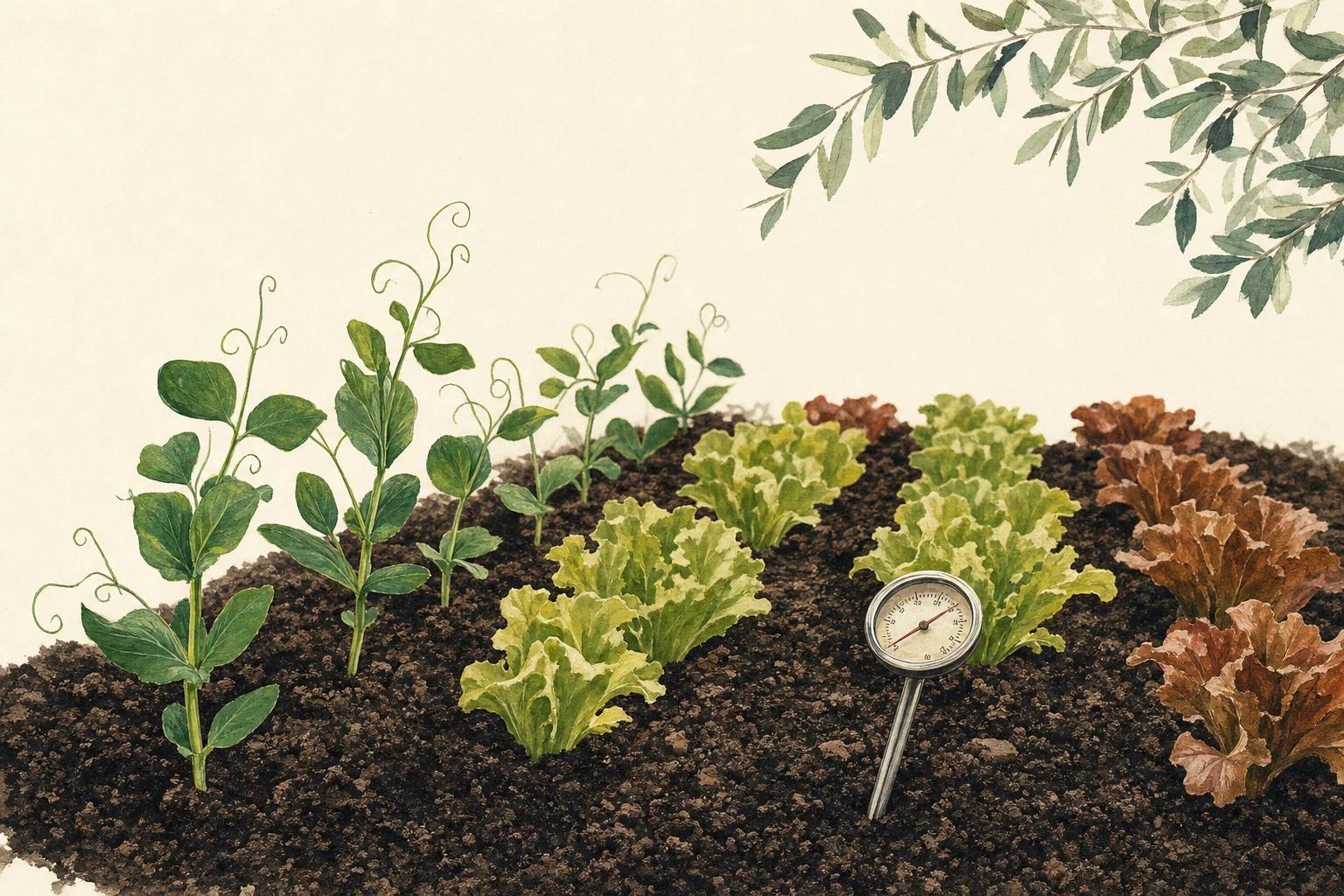
Sow when a soil thermometer pushed 4 to 6 inches (10–15 cm) into the ground reads at least 60°F (16°C) on several mornings in a row. The frost date only tells you when to start checking.
Take the reading around 8 a.m. rather than in the afternoon, so one warm day does not mislead you. Waiting costs less time than it seems. At 60°F (16°C) seedlings take 10 to 15 days to appear, but at 65 to 85°F (18–29°C) they are up in 7 to 10.
| Soil or air temperature | What happens |
|---|---|
| Soil below 55°F (13°C) | Seed fails to germinate |
| Soil below 60°F (16°C) | Slow, uneven sprouting; seed may rot |
| Soil 60°F (16°C) | Minimum for sowing; seedlings take 10–15 days |
| Soil 65–85°F (18–29°C) | Seedlings up in 7–10 days |
| Soil about 80°F (27°C) | Optimum for germination |
| Air at or below 32°F (0°C) | Frost damages or kills plants |
| Hot days and hot nights | Flowers drop and yields fall |
Soil readings set the sowing date; air temperatures decide how planted beans fare.
The cold-soil problem is rot. The longer a seed sits in cool, damp ground waiting for enough warmth to push a root, the more likely it is to decay first. Overwatered, cloddy or poorly drained soil makes it worse, because the seed is short of air as well as warmth.
You can warm a bed sooner. Plastic mulch or a row cover laid over the bed lets you sow 2 to 3 weeks ahead of the last frost, provided the soil under it already reads 60°F (16°C).
Green bean planting times by region
The farther north you garden, the more soil warmth alone sets the start date. In the Deep South, the low desert and California's interior and desert valleys, calendars leave a midsummer gap between a spring sowing and a late-summer one, because heat makes bean flowers drop; coastal California sows straight through summer.
| Region | Spring sowing | Late summer or fall |
|---|---|---|
| Minnesota | Late May to early June | Bush every 2 weeks to early August |
| Utah | About 1 week before last frost, in soil above 60°F (16°C) | Repeat sowings to mid-July |
| Long Island, NY | Mid-May | Bush sowings to early August |
| Missouri (south / central / north) | Apr 5–May 10 / Apr 15–May 20 / Apr 25–May 30 | Aug 1–20 / Jul 25–Aug 10 / Jul 25–Aug 5 |
| Middle Georgia | April, again 2–3 weeks later | By Aug 15 (pole by Jul 20) |
| South Carolina coast | Apr 1–Jun 1 | Aug 1–Sep 1 |
| South Carolina Piedmont | Apr 15–Jul 1 | Jul 20–Aug 1 |
| Texas | After the last frost | Jul 15 to Oct 1, by region |
| Arizona low desert | Mid-Mar–mid-Apr | Mid-Jul–early Sep |
| California interior valleys | Apr–May | Jul–Aug |
| California desert valleys | Jan–Mar | Aug |
| Western Washington | Late May–early June | — |
| South Florida | Sep–Apr | Same season |
A dash means the regional calendar gives no separate late sowing.
Upper Midwest and Mountain West. Soil warmth is the limit. Much of Minnesota cannot sow until late May or even June, while Colorado sows around the average last frost and Utah up to a week before it, but only where the soil thermometer already agrees.
Coastal Northeast. Long Island and Massachusetts calendars start beans in mid-May, weeks after the early frost dates recorded at New York's and Boston's weather stations, and Long Island keeps sowing bush beans into early August.
Southeast. South Georgia sows 2 to 3 weeks ahead of middle Georgia in spring, while north Georgia sows 1 to 3 weeks behind it and finishes about 2 weeks earlier in summer. The long spring window on the Carolina coast and Piedmont lets you stagger several bush sowings before summer heat arrives.
Texas and the Gulf Coast. Spring sowing waits only for the frost to pass. Texas sows fall bush snap beans from July 15 in its northernmost region to October 1 in its southernmost; the general Texas rule is 10 to 12 weeks before the first expected frost.
California and the desert. Frost comes late or never, so warmth and heat set the calendar. The North Coast sows from May to July and the South Coast from March through August. The Imperial and Coachella desert valleys skip summer, sowing from January to March and again in August, and the Arizona low desert around Phoenix sows from mid-March to mid-April and again from mid-July to early September.
Pacific Northwest. Cool springs west of the Cascades make warm-soil crops hard to germinate, so sow bush beans in late May or early June and expect to pick from late July to mid-October.
South Florida. Freezes are rare, so beans grow through the mild months, sown from September through April, and the calendar skips the summer heat that makes flowers drop.
How to sow green beans
Sow green beans directly where they will grow, about an inch deep, closer together for bush beans than for pole beans on poles.
- Take the soil temperature. Use a thermometer at 4 to 6 inches (10–15 cm) deep around 8 a.m. on several days, and sow once the soil holds 60°F (16°C). One reading on a warm day can mislead you.
- Prepare a loose, sunny bed. Break up clods and choose ground that drains. Go light on fertilizer, about half the rate you would give other vegetables, because extra nitrogen limits pod production.
- Set up supports first. Pole beans climb to about 6 feet (1.8 m) or more, so put in a trellis or poles 6 to 10 feet (1.8–3 m) tall before sowing rather than driving stakes beside young roots later.
- Sow 1 to 1.5 inches deep. Set seed 1 to 1.5 inches (2.5–4 cm) deep, about 1 inch (2.5 cm) in most beds. Cover it with crumbly soil rather than clods, which leave the seed short of air.
- Space for the type. Drop bush seed 2–4 inches (5–10 cm) apart in rows 18–36 inches (45–90 cm) apart. Sow pole seed 3–5 inches (8–13 cm) apart along a trellis, or 2–4 seeds at the base of each pole.
- Water to moist, not wet. Keep the seedbed evenly moist until the seedlings are up, which takes 6 to 14 days, without leaving it soggy.
| Planting style | Seed spacing | Row spacing or support |
|---|---|---|
| Bush beans in rows | 2–4 in (5–10 cm) | 18–36 in (45–90 cm) between rows |
| Pole beans on a trellis | 3–5 in (8–13 cm) | Trellis 6–10 ft (1.8–3 m) tall |
| Pole beans on poles | 2–4 seeds per pole | Poles at least 6 ft (1.8 m) tall |
Bush beans stay under about 2 feet (60 cm) and need no support; use the wider row spacing where you will walk between rows.
Closely spaced bush rows suit raised bed gardening, and the plant spacing calculator works out how many seeds a larger bed needs.
Skip indoor starts. Beans belong among the crops sown as seed in place; a transplant only works if it is grown in a plug or pot and set out with its root ball undisturbed.
Bush or pole: varieties that change the timing
Bush beans are faster and finish in a few weeks; pole beans take a little longer but keep cropping until frost, which changes how often you sow.
Bush beans mature in about 50 to 60 days. Their pods come in a concentrated flush, so a single row stops producing within weeks, and staggered sowings are the way to keep picking. Provider, at 50 days, suits both ends of the season: it tolerates cool soil for the first spring sowing, matures fast enough for the last summer one, and resists bean common mosaic virus and powdery mildew. TopCrop and Blue Lake 274 are popular bush varieties in Texas.
Pole beans take about 55 to 70 days to their first pods, then keep flowering and producing until frost if you pick steadily, so one spring sowing carries the crop through the season. Kentucky Wonder is the popular pole variety in Texas, and like any pole bean it needs its trellis in place at sowing.
Lima beans are less forgiving. They want soil of about 65°F (18°C) for five days before sowing, and middle Georgia ends lima and pole bean sowing by July 20, nearly a month before bush snap beans. Fava beans are the opposite: a different, semi-hardy species that can go in while the soil is still too cold for green beans.
Succession sowings and fall crops
Sow a new row of bush beans every 2 to 3 weeks from the first spring window, and make the last sowing 80 to 100 days before your median first fall frost.
The fall count adds up four things. A bush bean needs 50 to 60 days to its first picking. Growth slows in the shorter, cooler days of fall, which adds about 2 weeks, and beans die at the first frost, so allow about 2 weeks of margin. Then add roughly 18 days of picking. For a 50-day variety the total is about 96 days. Simpler counts leave out the slow-growth and frost margins: days to maturity plus 18 days, or 10 to 12 weeks, come to about 68 to 84 days. The 80-to-100-day window sits between them, so in a cool or short fall, sow at the early end with a fast variety.
Heat is the other limit. Hot days and warm nights make bean flowers drop before they set, and heat combined with dry soil cuts pod set sharply. In the South and the desert, time the late sowing so that flowering falls after the worst heat, and keep the soil steadily moist once plants bloom, since drought at flowering cuts yield.
When the last beans come out in fall, the bed is free for a cool-season crop; garlic planting times show what can follow.
Planting too early or too late
Planting early carries more risk than planting late: cold soil rots seed and one frost kills seedlings, while a late sowing mostly costs harvest days.
A row sown into soil below 60°F (16°C) comes up thin and patchy, and the survivors grow very slowly in cool weather.
A sowing made too close to fall frost may not set pods before the first freeze. If you are past your window, choose a 50-day bush variety such as Provider rather than a pole bean.
If a late frost is forecast
Lay floating row cover over emerged rows before a cold night. It is the same cover that lets you sow early, and it keeps flea beetles and birds off young plants too; leave it on until the plants have about six leaves if those pests are a problem. Frost that reaches unprotected beans damages or kills them, but seed is quick: a 50-day variety sown again the following week still finishes before fall frost in all but the shortest seasons.
Do not replant into the same cold, soggy row that just failed. If seed rotted once, wait for the soil to dry and warm to 60°F (16°C) before sowing again, or the second sowing will rot the same way.
What to expect after sowing
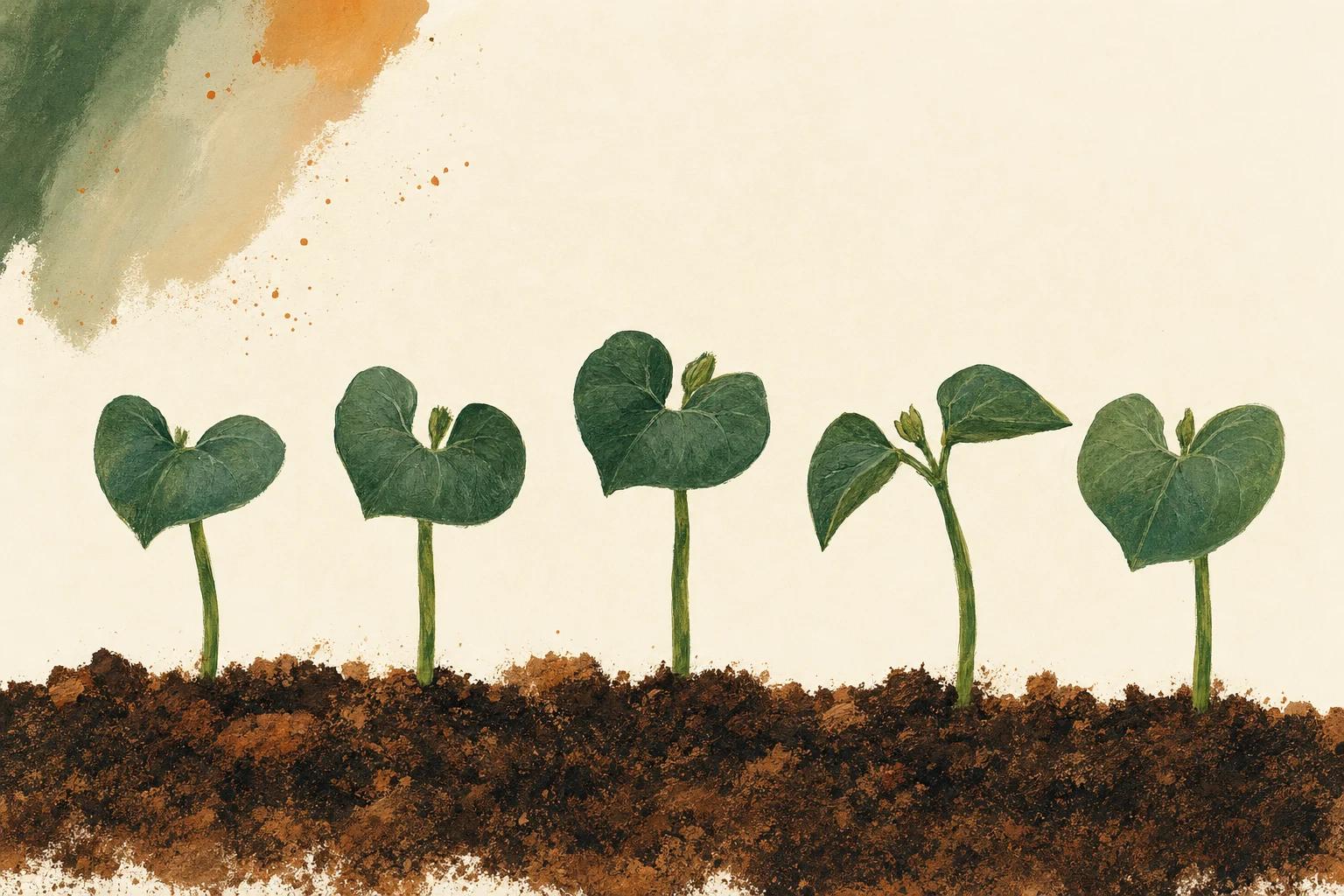
Seedlings come up in 6 to 14 days depending on soil warmth, and pods are ready to pick 7 to 14 days after the flowers open.
Pick snap beans when the pods are about as thick as a pencil and snap cleanly, before the seeds make bumps along the pod. Check the rows every few days, because pods left on the plant turn tough.
A well-grown 10-foot (3 m) row of bush beans gives roughly 4.5 to 12 pounds (2–5.4 kg) of pods, and pole beans 8 to 15 pounds (3.6–6.8 kg) over their longer season. Plan on about 15 feet (4.6 m) of bush row per person.
Damp soil surfaces bring slugs, snails and root disease, so water at the base, by drip if you can, with frequent light watering rather than heavy soakings, and let the surface dry between waterings. To fit beans into the rest of your summer garden, compare tomato planting times and vegetable planting dates, then add your sowing and succession dates to Sow's garden calendar.
Frequently asked questions
What month do you plant green beans?
April or May in most of the country, starting in late March in North Texas, mid-May around New York and Boston, and late May to mid-June in Minnesota. Kansas City's window runs April 29 to May 20, Chicago's May 1 to 22 and Fargo's May 23 to June 13. Across the South and the warm West, a second sowing goes in from July to September for a fall crop.
Is it too late to plant green beans in July?
Not in most of the US. A bush bean sown in July still crops wherever the median first fall frost is 80 to 100 days away or more: Minneapolis can sow until about July 30, Kansas City until August 5 and Chicago until August 9. Fargo's last sowing falls around July 12 and Denver's around July 21. Choose a 50-day variety such as Provider for any sowing close to the deadline.
Will more green beans grow after picking?
Yes. Regular picking keeps both bush and pole plants setting new pods, while pods left on the vine turn tough and production slows. Bush plants crop over a short window and then fade, which is why gardeners resow them every 2 to 3 weeks. Pole beans keep flowering and producing until frost as long as you pick steadily.
How many green beans will I get from one plant?
Expect roughly 1 to 6 ounces (30–180 g) of pods per bush plant, depending on soil, weather and how often you pick. Garden yields run about 4.5 to 12 pounds (2–5.4 kg) per 10-foot (3 m) row of bush beans, and 8 to 15 pounds (3.6–6.8 kg) for pole beans. About 15 to 16 feet (4.6–4.9 m) of bush row supplies one person.
Can you plant green beans in October?
Only where frost comes very late or not at all. South Florida grows beans from September through April, and the southernmost region of Texas sows fall bush beans around October 1. The Arizona low desert closes its fall window in early September. Everywhere else, an October sowing will not have the 50 or more frost-free days a bush bean needs before its first pods, let alone a few weeks of picking.
Can I plant green beans before the last frost?
Only with cover, and only if the soil is already warm. Green beans have no frost tolerance, so an exposed seedling is damaged or killed by a single freeze. A bed under plastic mulch or row cover can be sown up to 2 to 3 weeks ahead of the last frost. For a bean that tolerates cold weather, grow fava beans instead, a separate, semi-hardy species.
Should I pre-sprout bean seeds before planting?
It can help in a cool spring. Seed that has started to germinate before it goes in spends less time sitting in cold, damp soil, which lowers the risk of rot and of seed maggots feeding on it. It does not replace warm soil: still wait for 60°F (16°C), or choose a variety bred to tolerate cool soil, such as Provider.
How tall do pole beans grow, and do bush beans need support?
Pole beans climb to about 6 feet (1.8 m), sometimes more, and need a trellis or poles 6 to 10 feet (1.8–3 m) tall in place at sowing time. Bush beans stay under about 2 feet (60 cm) and stand without support, which makes them the easier choice for small beds and for late-summer sowings that need to crop quickly.
What time of day should you pick green beans?
Pick once dew or rain has dried off the leaves, not while the plants are wet. Bacterial blights spread readily when the foliage is wet, and brushing through damp plants carries them along the row. Choose whatever dry hour suits you, and go round every few days so pods are picked young and tender.
References
- University of Minnesota Extension. Growing beans in home gardens. Accessed October 16, 2026.
- Utah State University Extension. How to Grow Beans in Your Garden. Accessed October 16, 2026.
- Colorado State University Extension. Vegetable Planting Guide (CMG GardenNotes #720). Accessed October 16, 2026.
- University of Maryland Extension. Growing Beans in a Home Garden. Accessed October 16, 2026.
- Clemson Cooperative Extension Home & Garden Information Center. Planning a Garden (HGIC 1256). Accessed October 16, 2026.
- Clemson Cooperative Extension Home & Garden Information Center. Bean & Southern Pea Diseases (HGIC 2200). Accessed October 16, 2026.
- University of Missouri Extension. Vegetable Planting Calendar (G6201). Accessed October 16, 2026.
- University of Georgia Cooperative Extension. Vegetable Garden Calendar (C 943). Accessed October 16, 2026.
- Cornell Cooperative Extension of Nassau County. Home Garden Vegetable Planting Chart: Long Island (B-1-30). Accessed October 16, 2026.
- UMass Extension Center for Agriculture. Vegetable Planting Chart. Accessed October 16, 2026.
- Virginia Cooperative Extension, Virginia Tech. Fall Vegetable Gardening (426-334, SPES-801P). Accessed October 16, 2026.
- UF/IFAS Extension. Florida Vegetable Gardening Guide (SP 103/VH021). Accessed October 16, 2026.
- UC Statewide IPM Program (UC ANR). Cultural Tips for Growing Beans. Accessed October 16, 2026.
- University of Arizona Cooperative Extension. Vegetable Planting Calendar for Maricopa County (AZ1005). Accessed October 16, 2026.
- Washington State University Extension. Home Vegetable Gardening in Washington (EM057E). Accessed October 16, 2026.
- Texas A&M AgriLife Extension (Path to the Plate). Green Beans: Grow, Buy, Store, Use. Accessed October 16, 2026.
- Texas A&M AgriLife Extension. Fall Vegetable Gardening Guide for Texas. Accessed October 16, 2026.
- Texas A&M AgriLife Extension, Dallas County. Recommended Vegetable Cultivars for North Central Texas. Accessed October 16, 2026.
- Kansas State University Research and Extension. Vegetable Garden Planting Guide (MF315). Accessed October 16, 2026.
- Johnny's Selected Seeds. Provider Bean Seed. Accessed October 16, 2026.
- NOAA National Centers for Environmental Information. U.S. Climate Normals 1991–2020: Annual/Seasonal freeze data. Accessed October 16, 2026.
Sow Editorial
Written by the Sow team from university extension services, botanical gardens, USDA and NOAA data and plant breeders. Every source is listed under References.