Quick answer
Sow zucchini outdoors 1 to 4 weeks after the date your spring frost risk drops to 1 in 10, once the soil reads at least 60°F (16°C) at 4 inches (10 cm), ideally 70°F (21°C). That means May to early June across the North and late April to mid-May in the mid-South. Sow again every 2 to 3 weeks, with a last sowing 90 to 115 days before fall frost.
Key facts
- Timing rule
- 1–4 weeks after the 1-in-10 last-frost date
- Soil temperature
- At least 60°F (16°C) at 4 in (10 cm); 70°F (21°C) is the target
- Days to maturity
- 42–52 days in seed-catalog trials; allow 45–65 days in the garden
- Frost tolerance
- None; frost kills the plants
- Repeat sowings
- Every 2–3 weeks, two or three times a season
- Fall crop
- Last sowing 90–115 days before the median first fall frost
- Indoor start
- 2–3 weeks before setting out, in 3-in (7.5 cm) pots
- Seed depth
- About 1 in (2.5 cm)
Zucchini and other summer squash go into the garden after the last spring frost, once the soil 4 inches (10 cm) down reads at least 60°F (16°C) at 8 a.m. A reading of 70°F (21°C) is the better target. Across most of the country that lands 1 to 4 weeks after the date when the chance of another spring frost drops to 1 in 10.
The plant has no frost tolerance, and seed sown into cold ground rots instead of sprouting, so a week of patience rarely costs anything. The first fruit comes about 6 to 9 weeks after sowing, so you get more than one chance. A repeat sowing keeps the harvest going when squash vine borers take the early plants, and a midsummer sowing gives a fall crop.
Zucchini planting dates by city
Find the city nearest you: the fourth column is the spring window for sowing seed or setting out transplants, and the fifth is the window for the last sowing that still ripens before fall frost.
| City (USDA zone) | Median last frost | Median first frost | Direct sow or transplant | Last sowing for fall harvest |
|---|---|---|---|---|
| Fargo, ND (4a) | May 10 | Sep 30 | May 30 – Jun 20 | Jun 7 – Jul 2 |
| Minneapolis, MN (5a) | Apr 23 | Oct 18 | May 14 – Jun 4 | Jun 25 – Jul 20 |
| Chicago, IL (5b) | Apr 16 | Oct 28 | May 8 – May 29 | Jul 5 – Jul 30 |
| Denver, CO (6a) | May 5 | Oct 9 | May 26 – Jun 16 | Jun 16 – Jul 11 |
| Detroit, MI (6b) | Apr 20 | Oct 27 | May 15 – Jun 5 | Jul 4 – Jul 29 |
| Kansas City, MO (6b) | Apr 13 | Oct 24 | May 6 – May 27 | Jul 1 – Jul 26 |
| Boston, MA (7a) | Apr 4 | Nov 9 | After frost, once soil reads 60–65°F (16–18°C) | Jul 17 – Aug 11 |
| Salt Lake City, UT (7b) | Apr 8 | Oct 31 | May 7 – May 28 | Jul 8 – Aug 2 |
| New York, NY (7b) | Mar 30 | Nov 20 | After frost, once soil reads 60–65°F (16–18°C) | Jul 28 – Aug 22 |
| Nashville, TN (7b) | Mar 31 | Nov 3 | Apr 23 – May 14 | Jul 11 – Aug 5 |
| Raleigh, NC (8a) | Mar 31 | Nov 4 | Apr 23 – May 14 | Jul 12 – Aug 6 |
| Atlanta, GA (8a) | Mar 15 | Nov 20 | Apr 11 – May 2 | Jul 28 – Aug 22 |
| Dallas-Fort Worth, TX (8b) | Mar 8 | Nov 24 | Apr 2 – Apr 23 | Aug 1 – Aug 26 |
| Seattle, WA (9a) | Mar 2 | Nov 23 | Transplant early Jun; sow when soil reads 60°F (16°C) | — |
| Sacramento, CA (9b) | Feb 2 | Dec 2 | Apr – Jul (UC interior valleys) | By the end of Jul (UC interior valleys) |
| Houston, TX (9b) | Feb 13 | Dec 9 | After frost, once soil reads 60°F (16°C) | About Oct 1–10 (Texas Zone 9 fall date) |
Frost dates are medians from NOAA 1991–2020 climate normals for each city's main weather station; in half of years the last frost falls later than the date shown. USDA zones are from the 2023 map.
For any other town, find the spring date after which your chance of a 32°F (0°C) freeze falls to 1 in 10 and sow 1 to 4 weeks after it. For a fall crop, count back 90 to 115 days from your median first fall frost. If you know only your median last frost, start about 3 weeks after it, since the dated spring windows above open 20 to 29 days after that date.
Treat each window as the stretch when the soil is usually ready, and let a thermometer pick the day.
Boston and New York show a soil reading instead of spring dates. Their frost figures come from Logan Airport and Central Park, so a count from them says little about a garden's soil. Sow there by the thermometer, once frost is past and the soil reads 60–65°F (16–18°C).
Short seasons squeeze the calendar. Fargo's spring window runs to June 20 while its fall window opens June 7, so there is one long planting season ending in early July. In Denver the spring window closes on June 16, the same day the fall window opens.
The three Zone 9 cities follow soil warmth and summer heat rather than frost. Sacramento uses the California interior valley months, Seattle sets plants out in early June, and Houston sows in spring on the soil reading and in fall around early October. The regional section below covers each.
How to tell the soil is warm enough
Push a soil thermometer 4 inches (10 cm) into the bed at 8 a.m.: 60°F (16°C) is the minimum for sowing, and 70°F (21°C) is the reading worth waiting for.
The thresholds differ by depth and region, so note both when you compare advice. Short-season northern gardens wait for 70°F (21°C) at 2 inches (5 cm), a stricter test than 60°F (16°C) at 4 inches. Seed germinates fastest near 90°F (32°C) and comes up in 3 to 12 days, sooner in warm soil than in cool.
| Temperature | What it means for zucchini |
|---|---|
| Frost, 32°F (0°C) | Kills the plants; no frost tolerance |
| Air 45°F (7°C) | Base temperature; growth stalls below it |
| Soil 60°F (16°C) at 4 in (10 cm), 8 a.m. | Minimum for sowing |
| Soil 70–95°F (21–35°C) | Optimum range for germination |
| Soil 75°F (24°C) | Safe to add straw or compost mulch |
| Soil 90°F (32°C) | Fastest germination; 100°F (38°C) is the upper limit |
Soil readings decide the sowing date; air temperature decides how fast young plants grow once they are up.
Where the season is short, warm the bed before you plant. Black plastic mulch laid over the bed before planting raises the soil temperature, and you sow or transplant through slits cut in it. Spun row cover over the seedlings warms the air around them and shields them on cold nights.
Hold off on straw or compost mulch until the soil reaches 75°F (24°C). Those organic mulches insulate the ground and slow its warming, which is the opposite of what a newly sown bed needs.
Zucchini planting times by region
North of the Gulf Coast, frost and soil warmth set one spring window that stretches into summer; in Florida and the low desert, summer heat splits the year into a late-winter crop and a late-summer crop.
| Region | Spring sowing | Later sowing |
|---|---|---|
| Minnesota | Late May; early June in the north | — |
| Missouri | May 1–30 south; May 10–30 central; May 15–30 north | — |
| Maryland | Once frost danger passes and soil warms | Second crop Jul 1–15 |
| South Carolina Piedmont | Apr 15–Jul 31 | Fall crop Jul 15–Aug 15 |
| South Carolina coast | Mar 15–Jul 31 | Fall crop Aug 1–31 |
| Middle Georgia | April, repeated 2–3 weeks later and in May | July; last by Aug 31 |
| Texas, by USDA zone | After frost, in soil of 60°F (16°C) | Zone 6 Aug 1; Zone 7 Aug 15; Zone 8 Sep 10; Zone 9 Oct 1–10 |
| Florida | North Feb–Apr; central Feb–May; south Aug–Mar | North and central Aug–Sep |
| Western Washington | Transplant at the start of June | — |
| California coast | North Coast May–Jul; South Coast Apr–Jun | — |
| California interior valleys | Apr–Jul | — |
| California desert valleys | Feb–Mar | Aug–Sep |
| Maricopa County (Phoenix) | Feb 15–Apr 1 | Aug 15–Sep 1 |
A dash means the regional calendar gives no separate late date; use the fall count-back from your own first frost. Texas fall dates are statewide averages for each zone.
Upper Midwest and northern Plains. Cold soil, not frost, holds planting back here, and in northern Minnesota sowing slips into early June. With the median first fall frost as early as September 30 in Fargo, a second sowing has to be in the ground by early July.
Midwest. Sowing can go on any time after frost danger, from spring to midsummer. Plan two main plantings, one for early summer and one in late summer for a fall harvest.
Southeast. South Georgia plants 2 to 3 weeks ahead of middle Georgia in spring and about 2 weeks later in fall; north Georgia runs 1 to 3 weeks behind in spring and about 2 weeks earlier in fall.
Texas and the Gulf Coast. Zucchini grows poorly in cool weather, so spring sowing waits until all danger of frost has passed and the soil holds 60°F (16°C). Fall sowing dates step later as winters get milder, from August 1 in Zone 6, at the state's northern tip, to October 1 to 10 in Zone 9. Those zone dates are statewide averages. The North Texas calendar for the Dallas-Fort Worth area sets fall zucchini at August 1 to 25, earlier than the Zone 8 date of September 10 and in line with the city table. Houston's early-October date falls 60 to 70 days before its median first frost.
Florida and the low desert. Summer squash stalls in the heat of a Florida or low-desert summer, which is why the dates above skip June and July. South Florida's mild winters let one long season run from late summer through spring.
Rocky Mountains. Seed can go in around the average last frost, which is May 5 in Denver, if an 8 a.m. reading at 4 inches (10 cm) already shows 60°F (16°C). Transplants wait until frost is no longer possible. The Denver row opens later, on May 26, because the table counts from the 1-in-10 frost date, the safer choice when you have no soil reading.
Pacific Northwest. Frosts end early around Seattle, but cool springs west of the Cascades hold warm-season crops back. Gardeners there sow indoors in mid-April, set plants out at the start of June and pick from late July through September, using row covers, low tunnels and black plastic mulch to gain warmth.
California. The state's planting months are approximate and shift with local conditions, so lean on the soil test where your site runs warmer or cooler than its region.
How to sow zucchini: depth and spacing
Sow seed about 1 inch (2.5 cm) deep in full sun, then thin to 2 or 3 plants per hill or single plants 18 to 36 inches (45–90 cm) apart.
- Choose a full-sun spot. Zucchini needs at least 6 hours of direct sun a day and does best with 8 to 10.
- Sow about 1 inch deep. Press seed about 1 inch (2.5 cm) into the soil. Recommended depths run from 1/2 to 1.5 inches (1.3–4 cm), so anything in that range works.
- Sow extra seed. Drop 5 or 6 seeds in each hill, or several at each single-plant spot. The spares cover losses to cold soil and early pests.
- Thin to the final spacing. When the seedlings are 2 to 3 inches (5–8 cm) tall, cut the extras with scissors rather than pulling them, because squash resents root disturbance. Leave 2 to 3 plants per hill or one plant every 18 to 36 inches (45–90 cm).
- Water deeply each week. Give the bed about 1 inch (2.5 cm) of water a week from rain or irrigation combined. Sandy soil needs water more often in dry weather.
| Layout | Plants | Spacing |
|---|---|---|
| Rows | One plant every 18–36 in (45–90 cm) | Rows about 3 ft (90 cm) apart |
| Hills | 2–3 plants per hill | Hills 3–4 ft (0.9–1.2 m) apart |
| Wide market rows | One plant every 18–24 in (45–60 cm) | Rows 6 ft (1.8 m) apart |
Use the wider spacing for big, bushy varieties and the closer one for open, compact plants.
To fit zucchini into a raised bed or lay out a larger patch, the plant spacing calculator works out how many plants fit at these spacings.
Starting zucchini indoors
Start zucchini indoors only where the season is short or the spring is cool, and sow just 2 to 3 weeks before the date you plan to set plants out.
Direct sowing is the better choice almost everywhere. Squash resents having its roots disturbed, and a transplant set into cold soil grows poorly, so the head start is modest: transplants reach harvest about 14 days sooner than seed sown the day they go out.
Sow in 3-inch (7.5 cm) pots and grow the seedlings with days around 70–75°F (21–24°C) and nights around 60–65°F (16–18°C). Set them out small and young, 2 to 3 weeks after sowing, and slide each root ball out whole. Because the outdoor window opens 1 to 4 weeks after the 1-in-10 frost date, the indoor sowing usually lands near your median last frost. The cool Pacific Northwest is the exception, with a mid-April sowing for an early-June set-out.
Transplants follow the same outdoor calendar as seed, not an earlier one. A seedling set out ahead of the window meets the same frost and cold ground that would have stopped seed, and it cannot be put back in its pot.
Repeat sowings and fall zucchini
Sow zucchini two or three times a season, 2 to 3 weeks apart, so young plants are coming into bearing when the first ones falter.
A simple pattern is to sow part of the row at the start of your window and the rest 3 weeks later. Repeat sowings also keep fruit quality high through the season.
Outlasting squash vine borer
The squash vine borer is the main reason to stagger sowings. The moth lays eggs at the base of the stem, the larvae tunnel inside, and the plant wilts suddenly. In Illinois the adults fly from mid-June into July.
Once a larva is inside the stem, no spray can reach it; Bt works only as a preventive treatment before larvae enter, and any product must be used exactly as its label directs. To save an infested plant, slit the stem lengthwise, remove the larva and heap soil over the wound. Burying a stem joint every foot (30 cm) along a sprawling vine lets it root, so the plant survives even if the base is damaged. At the end of the season, pull spent plants and clear the debris from the bed.
In the South, plant your first crop as early as the soil allows. Squash vine borer and pickleworm are later-season pests there, and an early planting crops before they peak.
The last sowing for a fall crop
For a fall harvest, make the last sowing 90 to 115 days before your median first fall frost, which is the right-hand column in the city table.
The rule comes from counting back from the frost date. Add the variety's days to maturity, about 18 days of picking, and about 14 days because growth slows as fall days get shorter and cooler. A 47-day variety such as Dunja needs 47 + 18 + 14 = 79 days, so a sowing 90 days out leaves about 11 days of margin, and the 52-day Costata Romanesco needs 84. In half of years the first frost comes earlier than the median, so aim for the first half of the window unless you grow a fast hybrid.
Some state calendars set earlier dates. Maryland puts its second crop in from July 1 to 15, and in Georgia the last planting date is August 31 in the middle of the state and about 2 weeks earlier in the north. If your state's calendar gives an earlier date than the table, follow it.
In the Southeast, choose varieties labeled resistant to downy mildew for the last sowings of summer. Once the vines come out, the bed is free for a cool-season crop, and garlic planting times show what can follow.
Varieties that change the timing
Seed catalogs list zucchini at 42 to 52 days from sowing, a 10-day spread that matters most for late and short-season sowings; in a home garden, allow 45 to 65 days.
| Variety | Type | Days from seed | Notes |
|---|---|---|---|
| Maveric | Zucchini | 42 | Intermediate powdery mildew resistance |
| Green Machine | Zucchini | 45 | Intermediate powdery mildew resistance |
| Spineless Perfection | Zucchini | 45 | Intermediate powdery mildew resistance |
| Dunja | Zucchini | 47 | Intermediate powdery mildew resistance |
| Safari | Zucchini | 50 | No disease resistance listed |
| Eight Ball | Round zucchini | 50 | Intermediate powdery mildew resistance |
| Costata Romanesco | Heirloom zucchini | 52 | Spined; Italian heirloom |
| Yellow Crookneck | Yellow squash | 58 | Slowest of this group |
Days count from direct sowing in seed-catalog trials; take off about 14 days for transplants.
For Fargo-style short seasons and for the last sowing anywhere, a 42- to 47-day hybrid gives you more weeks of picking before frost than a 52-day heirloom. Costata Romanesco is an Italian heirloom grown for its flavor, and it suits an early sowing that has the whole summer ahead of it.
Some hybrids are parthenocarpic, meaning they set fruit without pollination. Check the seed packet, because those can stay under row cover all season.
Planting too early or too late
Planting too early usually costs more than planting late: seed rots in cold soil and one frost kills the plants, while a late spring sowing mostly costs picking days.
Seed in soil still below 60°F (16°C) is likely to rot, and transplants set into cold soil stall, so an early start buys frost risk without a reliable gain.
Late sowings have their own costs. In the South, late plantings face more vine borer and pickleworm, and in Florida and the low desert a sowing pushed into summer meets heat the plants cannot grow through. A fall sowing made too close to frost leaves fruit unripe when the first killing frost ends the crop.
Zucchini has no frost tolerance: a single frost kills the top growth of seedlings and mature plants alike. Keep row cover on hand until your 1-in-10 frost date is behind you, and check the forecast before every early sowing.
If a late frost is forecast
Lay spun row cover over the plants in the evening and weigh down the edges. A light or medium cover holds off about 4°F (2°C) of frost, enough down to about 28°F (−2°C); on a colder night, expect losses. Leave it in place until the danger passes, but remove it once the first flowers open so bees can reach them. If frost does kill the seedlings, sow again at once: with harvests 45 to 65 days from seed, there is still time for a full crop almost everywhere.
What to expect after sowing
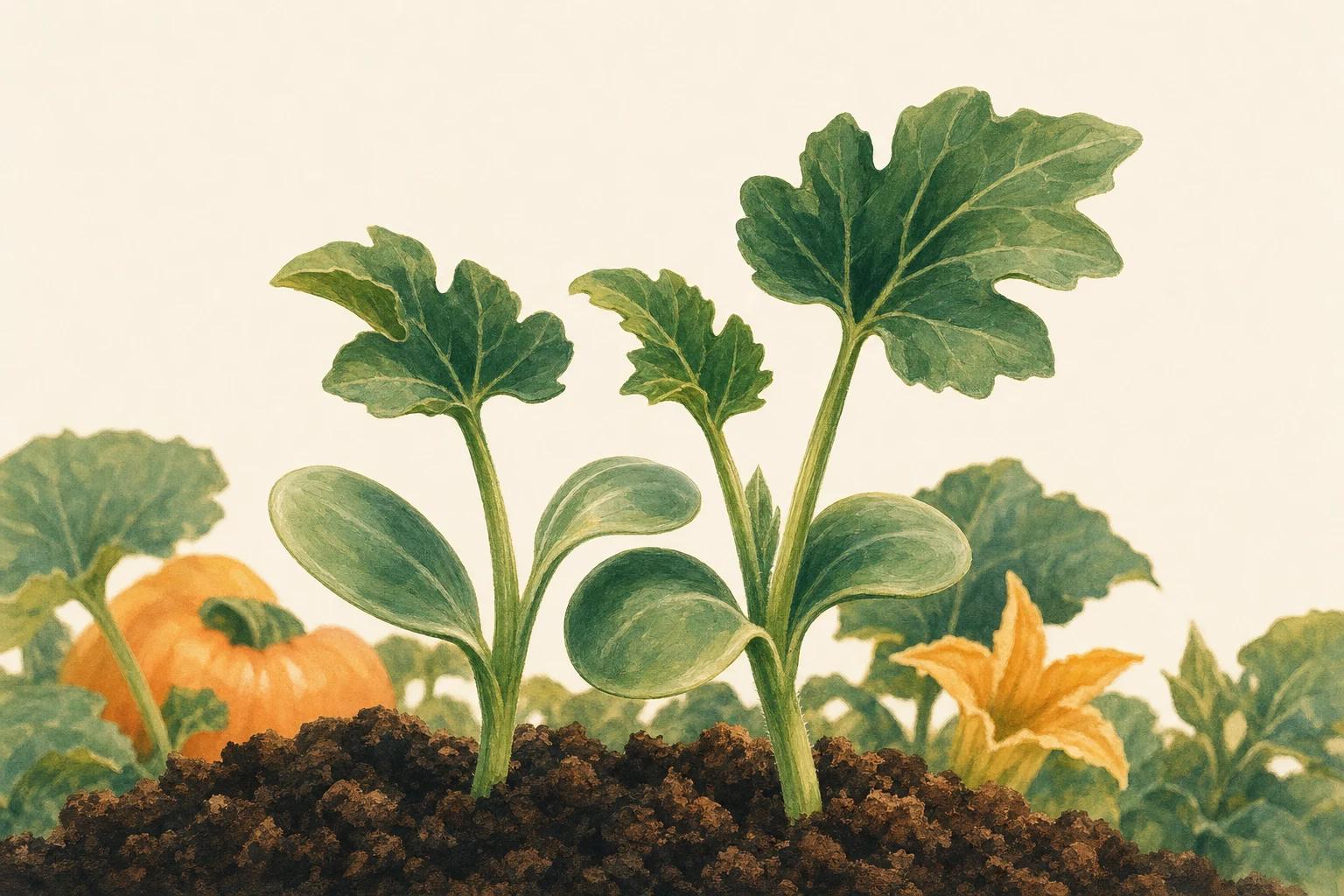
Seedlings come up in 3 to 12 days, the first flowers open a few weeks later, and the first fruit is ready about 6 to 9 weeks after sowing.
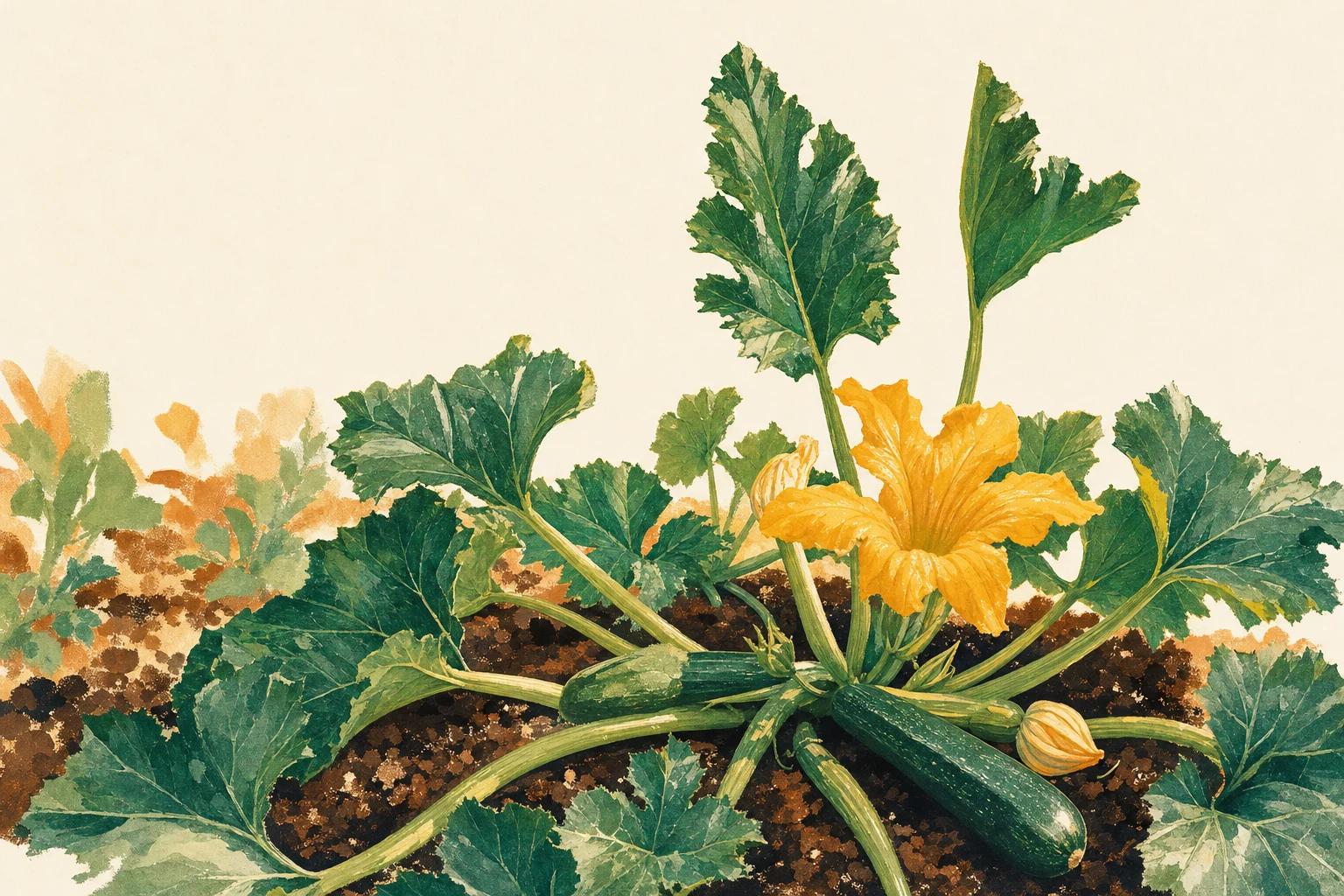
Zucchini carries separate male and female flowers on the same plant, and bees carry pollen between them. Where few bees visit and fruit set is poor, move pollen by hand from a male flower to a female one, which has a small fruit at its base. Male blossoms can be picked for the kitchen without cutting the yield.
Fruit is ready 4 to 8 days after its flower opens. Pick elongated zucchini at 6 to 8 inches (15–20 cm) long and 1.5 to 2 inches (4–5 cm) across, or as small as 4 inches (10 cm) for tender fruit. A rind too hard to dent with a thumbnail means the fruit is over-mature. Check the plants daily once they bear and pick every 2 to 3 days.
To plan zucchini alongside the rest of your warm-season crops, see tomato planting times, pumpkin planting times, cucumber planting dates and vegetable planting dates, then add your sowing dates to Sow's garden calendar.
Frequently asked questions
What month should you plant zucchini?
May to early June across the northern states and late April to mid-May in the mid-South, with April in middle Georgia and North Texas. North and central Florida sow from February and again in August, south Florida from August through March, and the Phoenix area from February 15 to April 1 and August 15 to September 1. Wherever you live, the frost date and a soil reading of at least 60°F (16°C) decide the week.
How long does zucchini take to grow?
Seed catalogs list 42 to 52 days from sowing to first fruit: Maveric in 42 days, Dunja in 47 and the heirloom Costata Romanesco in 52. Those are trial figures, and in a home garden it is safer to allow 45 to 65 days. Transplants reach harvest about 2 weeks sooner than seed sown the same day, because they have already spent weeks growing in a pot.
What should not be planted near zucchini?
No plant is known to harm zucchini when grown nearby, and most companion-planting charts have no research behind them. The useful caution is pest pressure: squash bugs, cucumber beetles and squash vine borers move between squash plants. Nasturtium and marigold grown nearby have cut squash bug and cucumber beetle damage, and a border of blue Hubbard squash works as a trap crop that draws all three pests away from zucchini.
Do zucchini plants come back every year?
No. Zucchini is a very tender warm-season annual, and the first frost kills it, so you sow fresh seed each year. Even in frost-free parts of Florida it does not carry on through summer, because summer squash grows poorly in the heat there; gardeners in those areas sow one crop in late winter or spring and another in late summer or fall.
Do zucchini like shade or sun?
Sun. Give zucchini at least 6 hours of direct light a day, and 8 to 10 if you can. Early in the season, row cover traps extra warmth over young plants, but lift it once the air under it climbs past 75°F (24°C), because trapped heat slows growth. Take it off for good when the first flowers open, so bees can reach them.
Should I water zucchini every day?
No. Give about 1 inch (2.5 cm) a week, counting rain, as a soaking that wets the soil 6 inches (15 cm) down. Steady moisture matters most once fruit starts to set and swell, so do not let the bed dry out then. Water at the base of the plants in the morning, so the leaves are dry before dark.
Is it too late to plant zucchini in July?
Not in most of the country. A July sowing works wherever your median first fall frost is still at least 90 days away, which covers Minneapolis until about July 20 and Atlanta until about August 22. Fargo and Denver close earliest, around July 2 and July 11. Near the deadline, sow a 42- to 47-day hybrid, and in the Southeast pick one resistant to downy mildew.
Can I plant zucchini before the last frost?
Seed sometimes, transplants no. Seed sown around the average last frost is safe only if the soil already reads 60°F (16°C) at 4 inches (10 cm), and transplants should wait until frost is no longer possible. Row cover is thin insurance: a light or medium cover holds off about 4°F (2°C) of frost, so a night colder than about 28°F (−2°C) can still kill the seedlings.
What is the secret to growing zucchini?
Warm soil and young, unchecked plants. Wait for soil of 60–70°F (16–21°C) rather than sowing on the frost date, plant in full sun and water about 1 inch (2.5 cm) a week. Sow a second batch 2 to 3 weeks after the first, then pick fruit at 6 to 8 inches (15–20 cm) every 2 to 3 days so the plants keep setting more.
References
- University of Minnesota Extension. A quick guide to summer squash and zucchini. Accessed October 16, 2026.
- University of Minnesota Extension. Companion planting in home gardens. Accessed October 16, 2026.
- University of Maryland Extension. Growing Summer Squash (Zucchini) in a Home Garden. Accessed October 16, 2026.
- University of Maryland Extension. Fall Vegetable Gardening. Accessed October 16, 2026.
- University of Illinois Extension. Summer Squash (Home Vegetable Gardening). Accessed October 16, 2026.
- University of Missouri Extension. Vegetable Planting Calendar (G6201), Table 2. Accessed October 16, 2026.
- Clemson Cooperative Extension Home & Garden Information Center. Summer Squash (HGIC). Accessed October 16, 2026.
- University of Georgia Cooperative Extension. Vegetable Garden Calendar (C 943). Accessed October 16, 2026.
- UMass Amherst Extension. Planning a Vegetable Garden. Accessed October 16, 2026.
- UF/IFAS Gardening Solutions. Summer Squash/Zucchini (Gardening Solutions). Accessed October 16, 2026.
- Texas A&M AgriLife Extension Service. Easy Gardening: Squash (EHT-041). Accessed October 16, 2026.
- Texas A&M AgriLife Extension Service. Fall Vegetable Gardening Guide (EHT-056). Accessed October 16, 2026.
- Texas A&M AgriLife Extension Service, Wise County. Recommended Planting Dates for North Texas. Accessed October 16, 2026.
- Colorado State University Extension. Vegetable Planting Guide. Accessed October 16, 2026.
- UC Statewide IPM Program, University of California ANR. Cultural Tips for Growing Squash. Accessed October 16, 2026.
- Washington State University Extension. Home Vegetable Gardening in Washington (EM057E). Accessed October 16, 2026.
- University of Arizona Cooperative Extension. Vegetable Planting Calendar for Maricopa County (AZ1005). Accessed October 16, 2026.
- Johnny's Selected Seeds. Summer Squash: Key Growing Information. Accessed October 16, 2026.
- Johnny's Selected Seeds. Zucchini: Key Growing Information. Accessed October 16, 2026.
- Johnny's Selected Seeds. Summer Squash Comparison Chart. Accessed October 16, 2026.
- NOAA National Centers for Environmental Information. U.S. Climate Normals 1991–2020: Annual/Seasonal freeze data. Accessed October 16, 2026.
- USDA Agricultural Research Service. USDA Plant Hardiness Zone Map (2023). Accessed October 16, 2026.
Sow Editorial
Written by the Sow team from university extension services, botanical gardens, USDA and NOAA data and plant breeders. Every source is listed under References.