The Story
Plant Bio
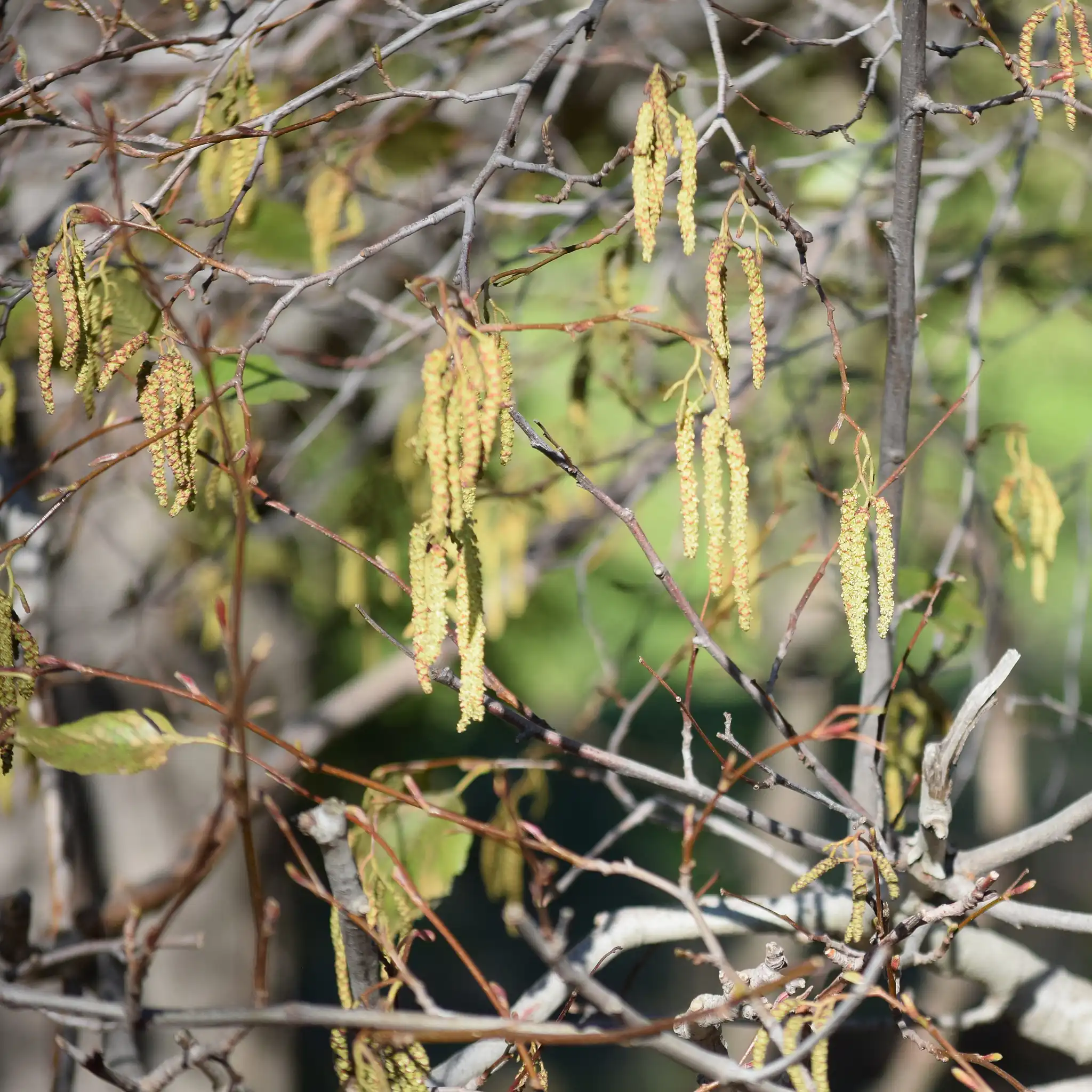
Alnus rhombifolia is a fast-growing deciduous tree native to riparian corridors across western North America, reaching mature heights of fifty to eighty feet. It features an open, broadly rounded crown, light gray bark that darkens and fissures with age, and glossy dark green leaves with finely serrated margins.
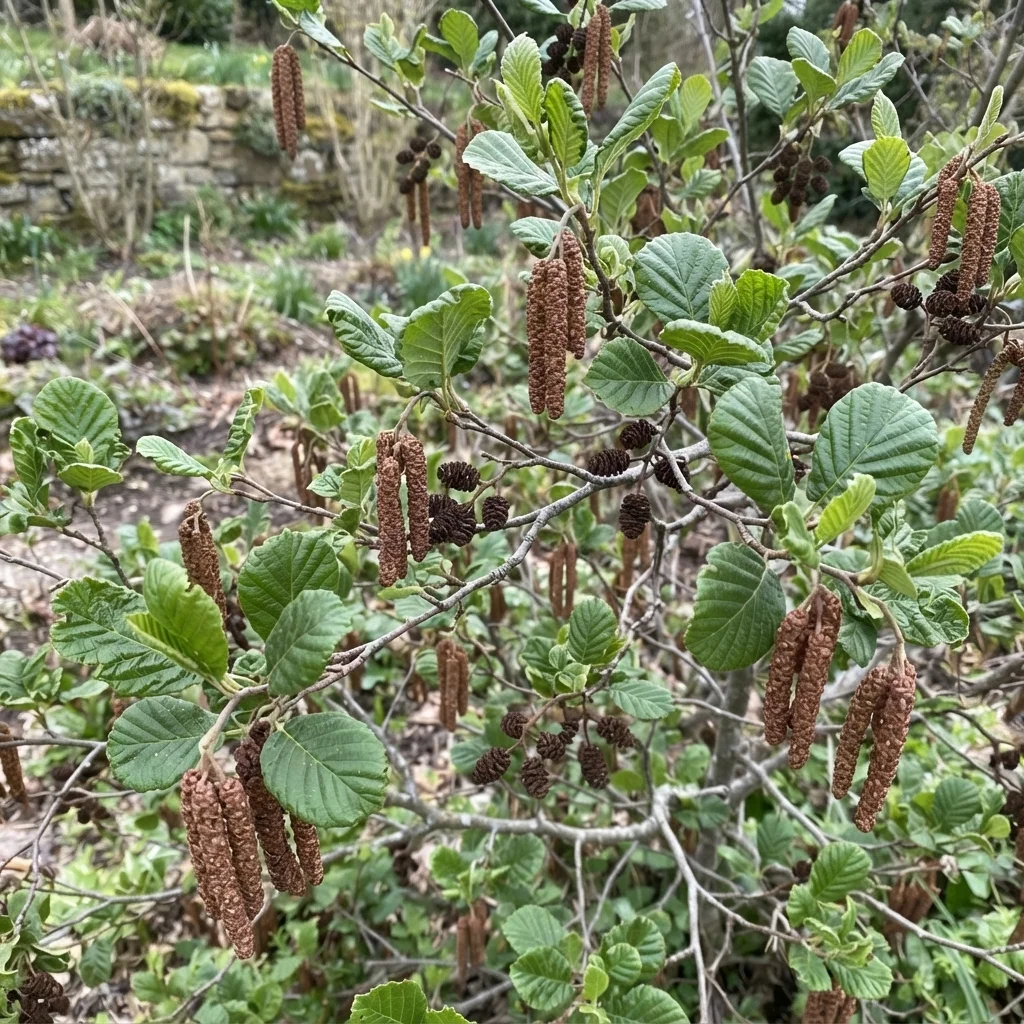
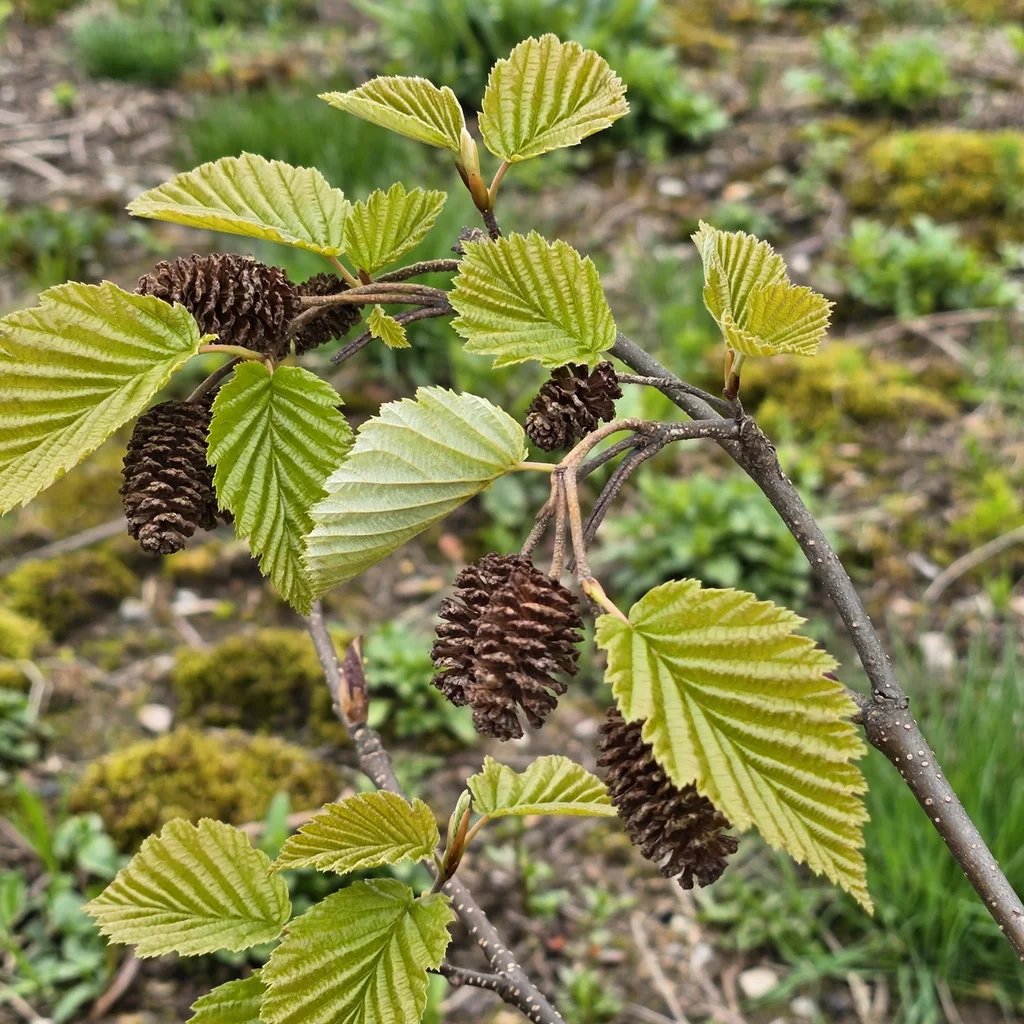
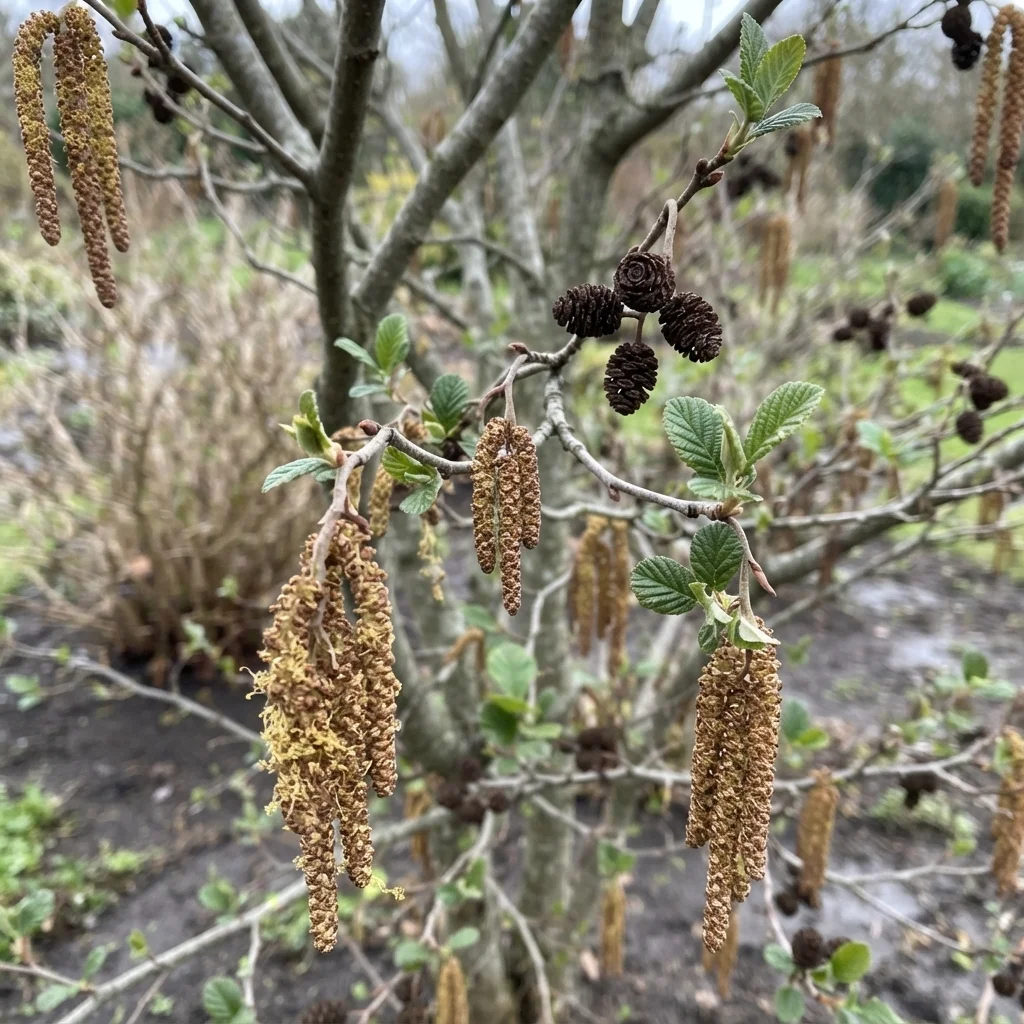
This species is distinguished by pendulous male catkins that open in winter prior to leaf emergence, followed by woody, cone-like strobili that persist into autumn. Its root system hosts symbiotic Frankia bacteria that fix atmospheric nitrogen, allowing it to colonize nutrient-poor alluvial soils along streams.
Uses & Benefits:
Essentials
At a Glance
Plant Type
Tree
Height
827"
Width
472"
Light
Full Sun, Partial Sun
Zones
6, 7, 8, 9
Water
High
Humidity
Moderate
Lifespan
Perennial
Native To
Western North America
Toxicity
Non-toxic
Bloom period
Winter – Early spring
In flower about 4 months of the year
Planting
How to Grow
- Select a planting site in full sun or partial shade near a permanent water source or wet depression.
- Dig a hole twice as wide as the root ball and equal in depth, ensuring the root collar remains level with the surrounding soil.
- Backfill with native soil and soak thoroughly to settle air pockets around the root zone.
- Apply a three-inch layer of organic mulch around the trunk base, keeping the mulch clear of direct bark contact.
Pro Tip
Maintain reliable sub-surface moisture or deep, regular irrigation during dry spells, as this species suffers severe canopy dieback if allowed to dry out.
Keep It Thriving
Care Guide
Do
- Provide constant moisture, especially during heat spikes in summer.
- Prune lightly during winter dormancy to remove crossing or dead branches.
- Mulch heavily around the root zone to retain soil moisture.
Don't
- Do not plant near underground sewer or water pipes, as aggressive roots seek water sources.
- Do not allow the soil to dry out completely around young or establishing trees.
- Avoid heavy pruning into old, leafless wood.
Seasonal Care Calendar
| Task | Jan | Feb | Mar | Apr | May | Jun | Jul | Aug | Sep | Oct | Nov | Dec |
|---|---|---|---|---|---|---|---|---|---|---|---|---|
| Mulch | ||||||||||||
| Pest Check | ||||||||||||
| Plant | ||||||||||||
| Prune |
Watch Out For
Pests & Diseases
Common Pests
Common Diseases
In the Garden
Landscape Uses & Companions
Landscape Uses
Companion Plants
Multiply
Propagation Methods
Good to Know
Common Questions
White Alder questions
What zones can White Alder grow in?
White Alder is hardy in USDA Zones 6–9: in that range it survives winter in the ground. Colder than Zone 6, winters are too cold for it to survive outdoors. Warmer than Zone 9, winter isn't the problem: it prefers colder winters, and summer heat can shorten its life.
When does White Alder bloom?
White Alder typically blooms from early winter to early spring. Exact timing shifts a week or two with your zone — Sow's bloom calendar maps it to your garden.
Does White Alder need full sun?
White Alder does best in full sun to part shade. In hot climates, afternoon shade keeps blooms fresher longer.
More Alnus to compare
Keep exploring
Explore the genus
Hardy in your zone?
Grow White Alder with confidence
See it in a design of your actual yard, get zone-matched care reminders, and track it season by season in your garden journal.