The Story
Plant Bio
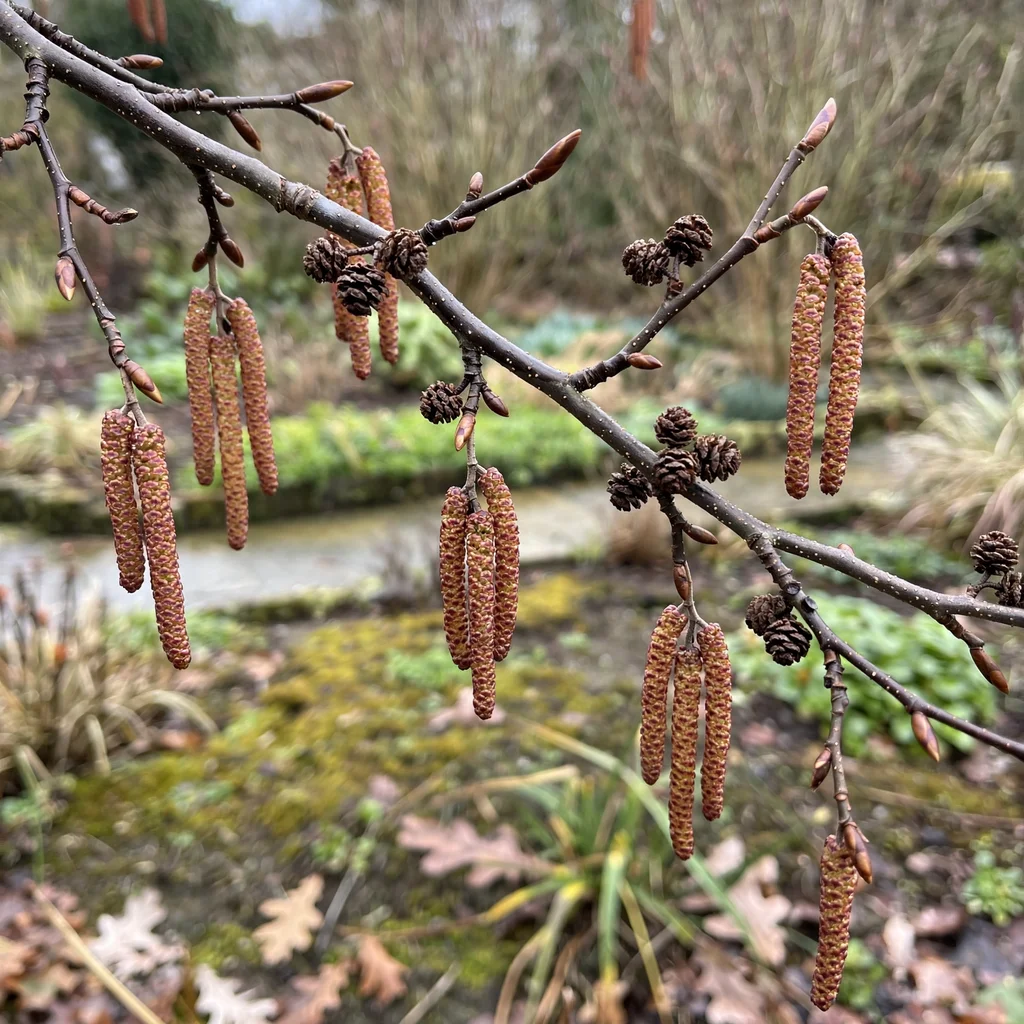
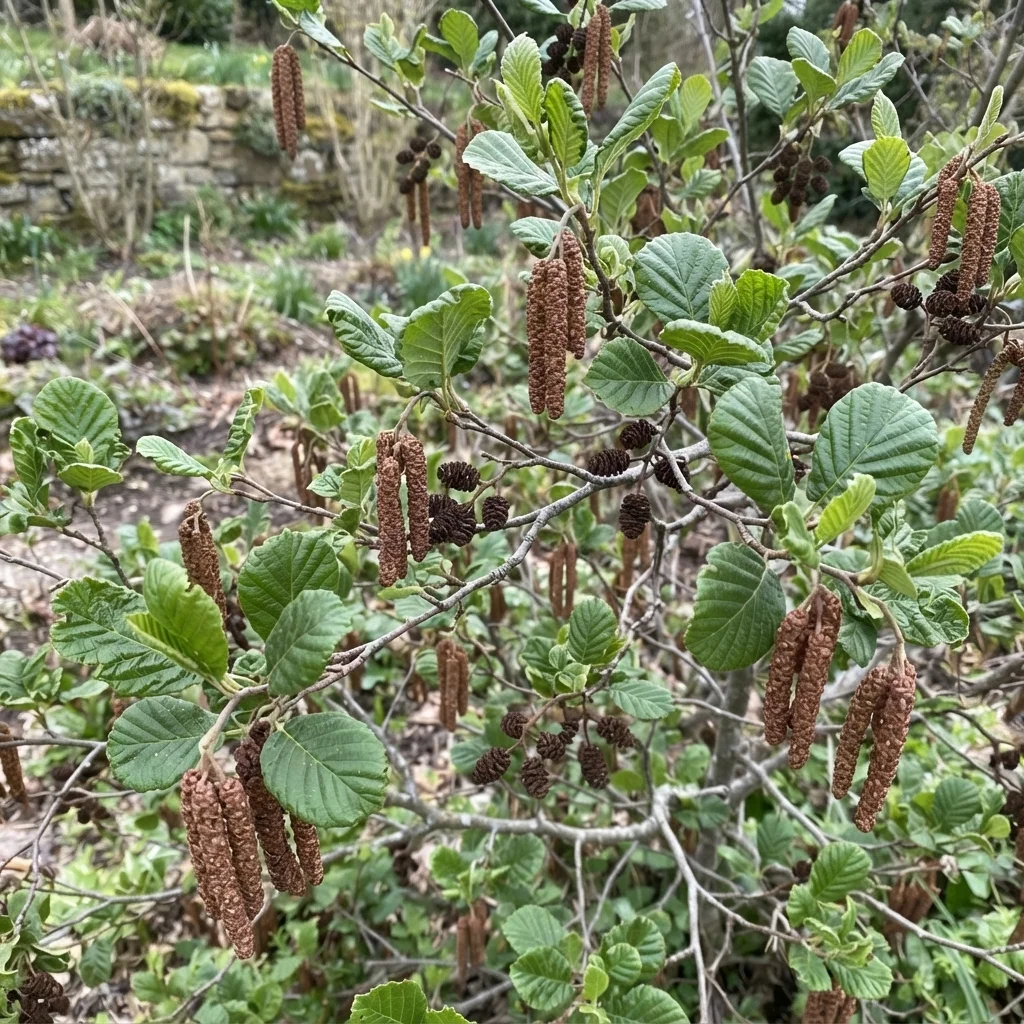
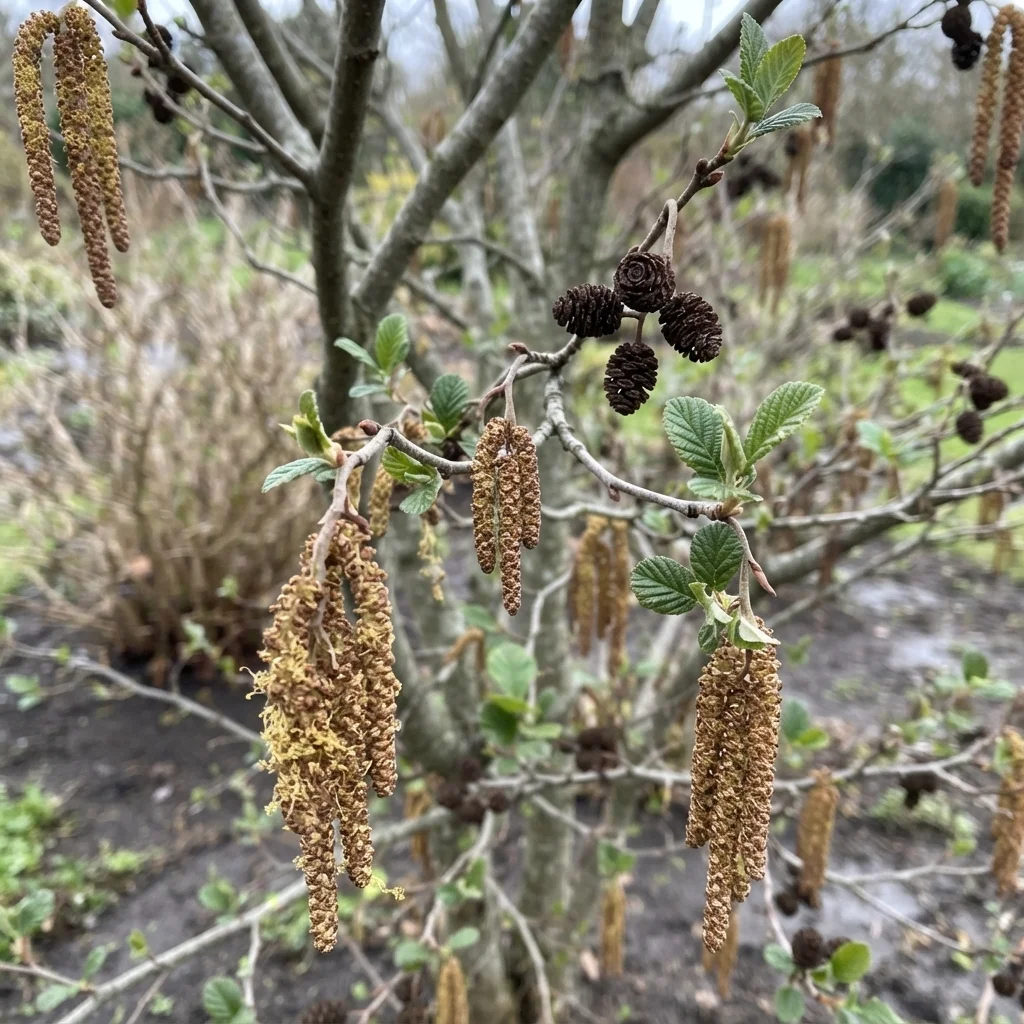
Alnus alnobetula, commonly known as green alder, is a cold-hardy deciduous shrub or small tree native across subarctic and mountainous regions of the Northern Hemisphere. It produces smooth bark marked with scattered lenticels and broad, finely toothed leaves that open shiny yellow-green above and pale green beneath.
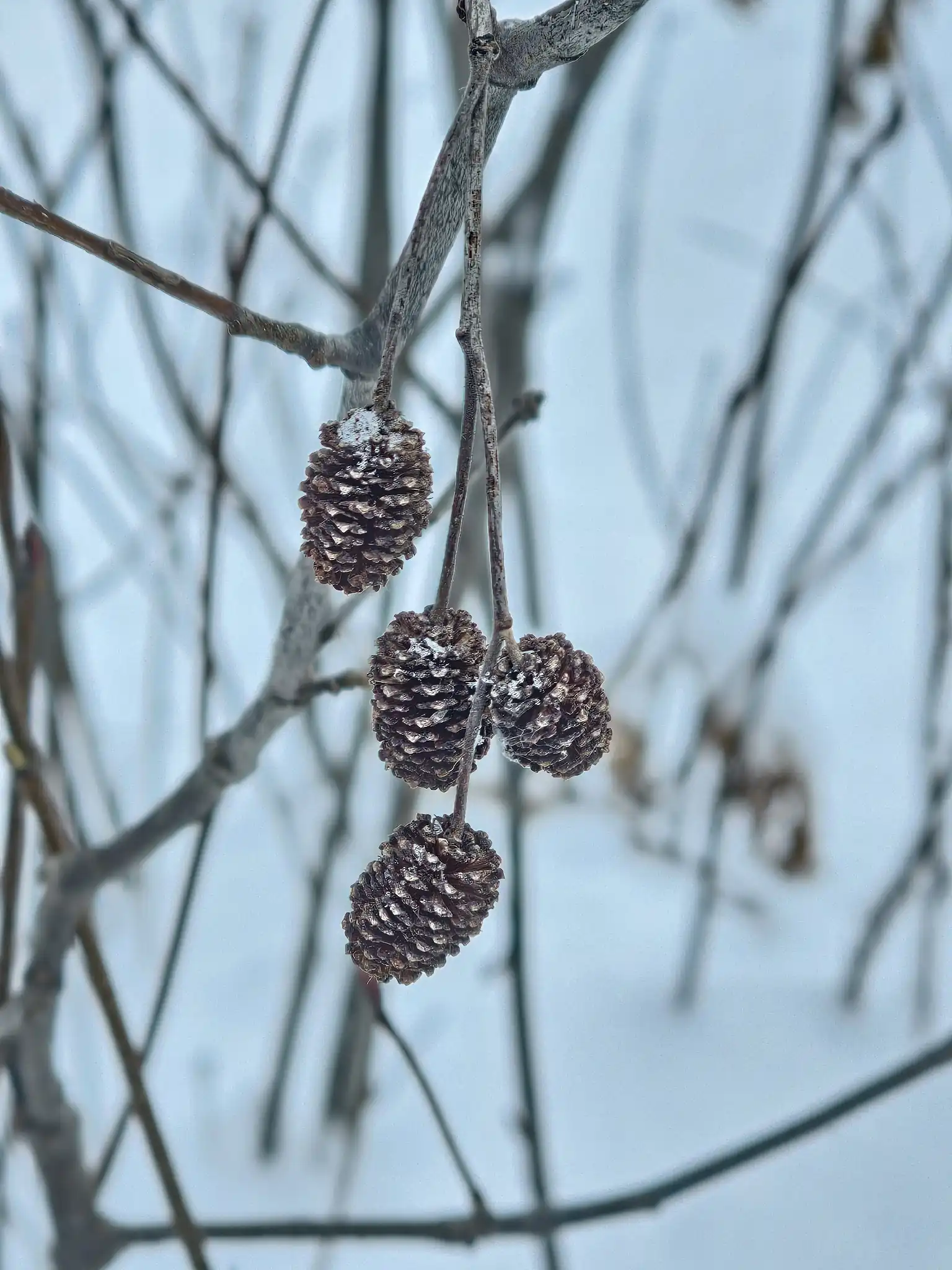
This species forms nitrogen-fixing root symbioses with Frankia bacteria, allowing it to thrive in nutrient-poor gravels, rocky slopes, and avalanche tracks. Pendulous male catkins form in autumn and persist through winter, expanding alongside small green female catkins early each spring.
Uses & Benefits:
Essentials
At a Glance
Plant Type
Shrub
Height
394"
Width
236"
Light
Full Sun, Partial Sun
Zones
4, 5, 6, 7
Water
Moderate to High
Humidity
High
Lifespan
Perennial
Native To
North America, Europe, Asia
Toxicity
Non-toxic
Bloom period
Spring
In flower about 3 months of the year
Planting
How to Grow
- Select a site in full sun or partial shade with moist, acidic to neutral, well-aerated soil.
- Dig a planting hole as deep as the root system and twice as wide, keeping the root collar level with the surrounding soil.
- Backfill with native soil, firming lightly around the base, and water thoroughly to settle air pockets.
- Apply a two-inch layer of organic mulch around the root zone, keeping mulch three inches away from main stems.
Pro Tip
Plant in cool, highly aerated soils with consistent moisture; roots fail in hot, stagnant urban clay or prolonged summer heat.
Keep It Thriving
Care Guide
Do
- Provide consistent soil moisture, especially during hot summer periods.
- Prune strictly during dormant winter months to maintain natural structure.
- Mulch root zones to preserve cool soil conditions.
Don't
- Do not apply supplemental nitrogen fertilizer, as roots fix their own atmospheric nitrogen.
- Do not shear into formal hedges or head back old leafless stems.
- Do not plant in compacted, heavy urban clay or poorly aerated soils.
Seasonal Care Calendar
| Task | Jan | Feb | Mar | Apr | May | Jun | Jul | Aug | Sep | Oct | Nov | Dec |
|---|---|---|---|---|---|---|---|---|---|---|---|---|
| Mulch | ||||||||||||
| Pest Check | ||||||||||||
| Plant | ||||||||||||
| Prune |
Watch Out For
Pests & Diseases
Common Pests
Common Diseases
In the Garden
Landscape Uses & Companions
Landscape Uses
Companion Plants
Multiply
Propagation Methods
Good to Know
Common Questions
Green Alder questions
What zones can Green Alder grow in?
Green Alder is hardy in USDA Zones 4–7: in that range it survives winter in the ground. Warmer than Zone 7, winter isn't the problem: it prefers colder winters, and summer heat can shorten its life.
Is Green Alder deer resistant?
Not reliably. Deer may browse Green Alder, especially tender spring growth — plan on repellents or fencing where pressure is high.
When does Green Alder bloom?
Green Alder typically blooms in spring. Exact timing shifts a week or two with your zone — Sow's bloom calendar maps it to your garden.
Does Green Alder need full sun?
Green Alder does best in full sun to part shade. In hot climates, afternoon shade keeps blooms fresher longer.
More Alnus to compare
Keep exploring
Explore the genus
Hardy in your zone?
Grow Green Alder with confidence
See it in a design of your actual yard, get zone-matched care reminders, and track it season by season in your garden journal.