The Story
Plant Bio
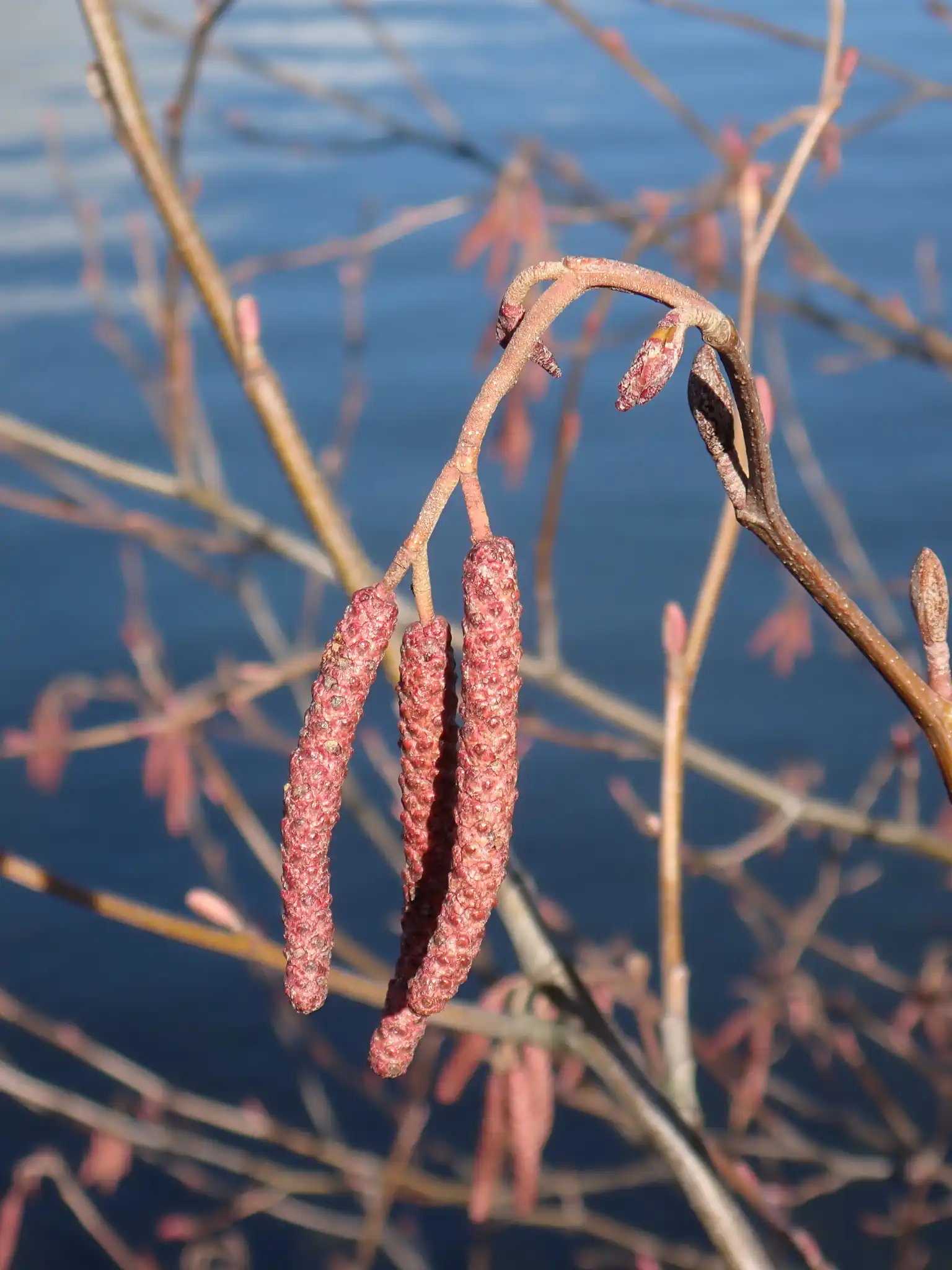
Alnus rubra is a fast-growing deciduous tree native to coastal western North America, featuring a slender trunk and a narrowly pyramidal to rounded crown. Its dark green leaves display distinctly rolled-under margins and prominent veins, accompanied by pendulous brownish-red catkins in early spring.
As a pioneer species, it forms root nodules with Frankia bacteria to fix atmospheric nitrogen, enriching nutrient-depleted soils. It thrives in continuously wet locations, floodplains, and stream banks where poor drainage restricts other canopy trees.
Uses & Benefits:
Essentials
At a Glance
Plant Type
Tree
Height
1181"
Width
591"
Light
Full Sun, Partial Sun
Zones
5, 6, 7, 8
Water
High
Humidity
High
Lifespan
Perennial
Native To
Western North America
Toxicity
Non-toxic
Bloom period
Early spring – Mid spring
In flower about 2 months of the year
Planting
How to Grow
- Select a site in full sun or partial shade with moist, poorly drained, or seasonally flooded soil.
- Plant bare-root or potted stock in fall or early spring while the tree is dormant.
- Water deeply and regularly during the first two growing seasons to ensure root establishment.
- Apply organic mulch around the root zone to retain moisture and keep soil temperatures cool.
- Restrict pruning to light structural correction during winter dormancy when young.
Pro Tip
Plant red alder in sites with permanent soil moisture or high water tables; severe drought causes premature leaf drop and canopy dieback. Avoid planting near hardscapes or small garden beds due to its moisture-seeking roots and heavy catkin litter.
Keep It Thriving
Care Guide
Do
- Maintain consistent soil moisture, especially during warm summer periods.
- Allow fallen leaves to decay under the canopy to build organic soil layers.
Don't
- Do not apply nitrogen fertilizers, as root nodules fix required nitrogen naturally.
- Do not prune mature stems back into old, leafless wood.
Seasonal Care Calendar
| Task | Jan | Feb | Mar | Apr | May | Jun | Jul | Aug | Sep | Oct | Nov | Dec |
|---|---|---|---|---|---|---|---|---|---|---|---|---|
| Mulch | ||||||||||||
| Pest Check | ||||||||||||
| Plant | ||||||||||||
| Prune |
Watch Out For
Pests & Diseases
Common Pests
Common Diseases
In the Garden
Landscape Uses & Companions
Landscape Uses
Companion Plants
Multiply
Propagation Methods
Good to Know
Common Questions
Red Alder questions
What zones can Red Alder grow in?
Red Alder is hardy in USDA Zones 5–8: in that range it survives winter in the ground. Colder than Zone 5, winters are too cold for it to survive outdoors. Warmer than Zone 8, winter isn't the problem: it prefers colder winters, and summer heat can shorten its life.
Is Red Alder deer resistant?
Not reliably. Deer may browse Red Alder, especially tender spring growth — plan on repellents or fencing where pressure is high.
When does Red Alder bloom?
Red Alder typically blooms in early to mid-spring. Exact timing shifts a week or two with your zone — Sow's bloom calendar maps it to your garden.
Does Red Alder need full sun?
Red Alder does best in full sun to part shade. In hot climates, afternoon shade keeps blooms fresher longer.
More Alnus to compare
Keep exploring
Explore the genus
Hardy in your zone?
Grow Red Alder with confidence
See it in a design of your actual yard, get zone-matched care reminders, and track it season by season in your garden journal.