Quick answer
Sow lettuce outdoors from 4 weeks before your median last spring frost to 4 weeks after it, once the soil 4 inches (10 cm) down reads at least 40°F (4°C). For fall, sow 8 to 12 weeks before the median first fall frost. In central and south Florida, the Texas Gulf Coast, coastal Southern California and the low desert, grow lettuce from fall through winter instead.
Key facts
- Spring sowing
- 4 weeks before to 4 weeks after the median last frost
- Soil temperature
- At least 40°F (4°C) at 4 in (10 cm); fastest at 60–70°F (16–21°C)
- Too-warm soil
- Germination drops above 75–80°F (24–27°C)
- Days to maturity
- Leaf 50–60 days from seed; butterhead 60–70; crisphead 55–80
- Fall crop
- Sow 8–12 weeks before the median first fall frost
- Winter-crop regions
- Central and south Florida Sep–Feb; Texas Gulf Coast late Sep–Feb; coastal Southern California Aug–Apr; low desert mid-Aug–Feb
- Frost tolerance
- Young plants take 32°F (0°C); hardened plants survive brief dips to 20°F (−7°C)
- Succession
- A short row every 10–14 days
Sow lettuce seed outdoors from 4 weeks before your median last spring frost to 4 weeks after it. Start as soon as the soil can be raked and reads at least 40°F (4°C) 4 inches (10 cm) down, and stop about a month before early-summer heat arrives. Frost is rarely the problem, since young plants take 32°F (0°C) without serious harm; heat is. Once days grow long and air temperatures pass about 75–80°F (24–27°C), plants stunt, turn bitter and bolt, so every spring sowing is a race to harvest before summer.
That same heat sensitivity makes lettuce a two-season crop. Sow again 8 to 12 weeks before the median first fall frost for heads that mature in cool fall weather. In central and south Florida, the Texas Gulf Coast, coastal Southern California and the low desert, the calendar flips: lettuce grows from late summer or fall through winter, and summer is the season to skip.
Lettuce planting dates by city
Each spring window opens 4 weeks before the city's median last frost and closes 4 weeks after it, and each fall window runs from 12 weeks to 8 weeks before the median first frost. Dallas and Houston follow the Texas spring rule, which opens 2 weeks earlier and closes 2 weeks sooner, and have later fall windows, and Seattle and Sacramento follow their own regional seasons.
| City (USDA zone) | Median last frost | Median first frost | Spring sowing | Fall sowing |
|---|---|---|---|---|
| Fargo, ND (4a) | May 10 | Sep 30 | Apr 12 – Jun 7 | Jul 8 – Aug 5 |
| Minneapolis, MN (5a) | Apr 23 | Oct 18 | Mar 26 – May 21 | Jul 26 – Aug 23 |
| Chicago, IL (5b) | Apr 16 | Oct 28 | Mar 19 – May 14 | Aug 5 – Sep 2 |
| Denver, CO (6a) | May 5 | Oct 9 | Apr 7 – Jun 2 | Jul 17 – Aug 14 |
| Detroit, MI (6b) | Apr 20 | Oct 27 | Mar 23 – May 18 | Aug 4 – Sep 1 |
| Kansas City, MO (6b) | Apr 13 | Oct 24 | Mar 16 – May 11 | Aug 1 – Aug 29 |
| Boston, MA (7a) | Apr 4 | Nov 9 | Mar 7 – May 2 | Aug 17 – Sep 14 |
| Salt Lake City, UT (7b) | Apr 8 | Oct 31 | Mar 11 – May 6 | Aug 8 – Sep 5 |
| New York, NY (7b) | Mar 30 | Nov 20 | Mar 2 – Apr 27 | Aug 28 – Sep 25 |
| Nashville, TN (7b) | Mar 31 | Nov 3 | Mar 3 – Apr 28 | Aug 11 – Sep 8 |
| Raleigh, NC (8a) | Mar 31 | Nov 4 | Mar 3 – Apr 28 | Aug 12 – Sep 9 |
| Atlanta, GA (8a) | Mar 15 | Nov 20 | Feb 15 – Apr 12 | Aug 28 – Sep 25 |
| Dallas-Fort Worth, TX (8b) | Mar 8 | Nov 24 | Jan 25 – Mar 22 | Sep 1 – Oct 10 |
| Seattle, WA (9a) | Mar 2 | Nov 23 | Mid-Apr – early Aug, in rounds | Early Sep (winter lettuce) |
| Sacramento, CA (9b) | Feb 2 | Dec 2 | Nov 1 – Mar 31 (winter crop) | Aug 1 – Aug 31 |
| Houston, TX (9b) | Feb 13 | Dec 9 | Jan 2 – Feb 27 | Sep 30 – Dec 1 |
Frost dates are medians from NOAA 1991–2020 climate normals for each city's main weather station; in half of years the last frost falls later than the date shown. USDA zones are from the 2023 map.
For any other town, look up your median last spring frost, count back 4 weeks to open the spring window and forward 4 weeks to close it. For fall, find your median first fall frost and sow between 12 and 8 weeks before it.
Treat each opening date as the earliest day the soil might be ready, not a fixed appointment. In a late, wet spring the window can open before the bed is dry enough to rake; wait for workable soil. At the other end, wherever early summer turns hot fast, stop sowing a month before that heat even if the window is still open.
Seattle sows from mid-April through early August, then once more in early September for winter lettuce. Sacramento and the rest of California's Interior Valleys sow in August and again from November through March, leaving September and October out. Houston's fall season runs from late September to about December 1, and spring sowing picks up again in early January.
How to tell the soil is ready
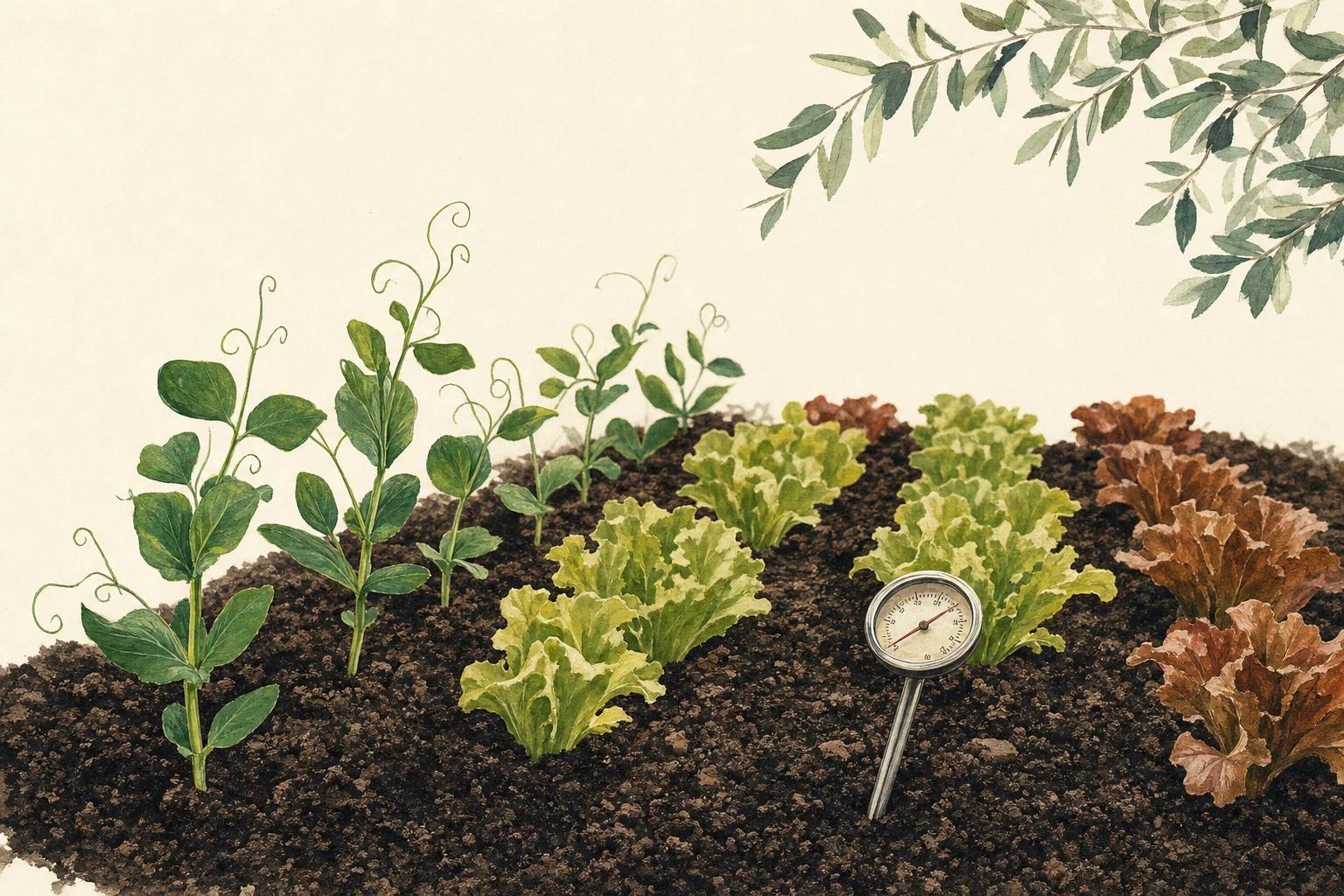
The soil is ready when it crumbles and can be raked, and a soil thermometer pushed 4 inches (10 cm) deep reads at least 40°F (4°C) at 8 a.m.
Take the reading early in the morning, before sun on the surface inflates it. Lettuce seed can sprout in soil as cold as 35°F (2°C), but slowly; it germinates best at about 60–70°F (16–21°C) and comes up in 4 to 10 days in that range.
Warm soil is the opposite problem, and the one that catches more gardeners. Lettuce seed becomes dormant in heat. Germination falls off once soil passes about 75–80°F (24–27°C) and fails between roughly 86°F and 95°F (30–35°C). The exact cutoff depends on the variety and on whether the seed is raw or primed. Pelleted, primed seed tolerates a wider temperature range, which makes it worth buying for late-summer sowings.
Sowing windows by region
The frost-date rule fits the North, Midwest, Mountain West and Mid-Atlantic. Texas starts earlier, the Southeast splits into an early spring and a fall season, and Florida, the low desert and much of California grow lettuce through winter.
| Region | Spring sowing | Fall or winter sowing |
|---|---|---|
| Utah | 2–3 weeks before last frost | Time heads to mature 1–2 weeks before first frost |
| Central Missouri (leaf types) | Mar 15 – May 10 | Aug 1 – 20 |
| Virginia, Zone 7a (baby salad lettuce) | Mar 20 – May 10 | Aug 20 – Oct 1 |
| Eastern North Carolina | Early Feb – mid-Apr | Late Aug – early Oct |
| South Carolina Piedmont | Mar 1 – May 15 | Not recommended |
| South Carolina coast | Feb 1 – Apr 15 | Sep 5 – Nov 1 |
| Texas | 6 weeks before to 2 weeks after last frost | Sep 1 (Zone 6) to Dec 1 (Zone 9b) |
| North Florida | February – March | — |
| Central and south Florida | — | September – February |
| Phoenix area (low desert) | Jan 1 – Feb 15 | Aug 15 – Dec 15 |
| California: north of Monterey | From February | Through August |
| California: south coast | Through April | From August |
| California: interior valleys | November – March | August |
| California: desert valleys | — | September – December |
| Western Oregon and Washington | Mid-Apr to early Aug, in rounds | Early September (winter lettuce) |
Spring and fall or winter windows for each state or region; within a window, soil temperature and the forecast pick the day.
North and Upper Midwest (Zones 3–5). Sow as soon as the soil can be raked and keep sowing until about a month before early-summer heat. Late-summer sowings then mature in the cool weather of fall.
Midwest, Mountain West and Mid-Atlantic (Zones 5–7). In central Missouri, loose-leaf lettuce goes in from mid-March to early May, while butterhead and romaine sowings end earlier, around April 20. In Utah and Colorado, the first sowings go in 2 to 4 weeks before the last frost, as soon as the soil is dry. In Virginia's Zone 7a, lettuce for baby salad goes in from March 20 to May 10 and again from August 20 to October 1, sown in several rounds.
Southeast (Zones 7–9). Fall lettuce is not recommended in most of western North Carolina, where early frost is the risk, or in the South Carolina Piedmont. There, sow in spring, and at higher elevations in western North Carolina, through summer. Eastern North Carolina and the South Carolina coast get both seasons, with spring sowings starting in early February.
Texas (Zones 6–9). Spring sowing runs from 6 weeks before to 2 weeks after the last frost. Fall sowing starts 10 to 14 weeks before the first fall freeze. The average fall date for leaf lettuce moves later from north to south: September 1 in Zone 6, September 15 in Zone 7, October 10 in Zone 8, November 1 in Zone 9a and December 1 in Zone 9b.
Florida, the low desert and coastal California (Zones 9–11). Grow lettuce as a winter crop: September through February in central and south Florida, mid-August through mid-February around Phoenix and August through April on California's south coast. North Florida is the exception, with a short February-to-March season. Summer sowings fail twice over: the seed stays dormant in hot soil, and any plants that do grow turn bitter and bolt.
Pacific Northwest. Mild summers keep the window open for months. Across western Oregon and Washington, sow in rounds from mid-April to early August and sow winter lettuce in early September. On the Oregon coast leaf lettuce goes in February through August, in the western valleys April through August, and in the Columbia and Snake River valleys only February through April.
Starting lettuce indoors
Start transplants 4 to 6 weeks before the last frost and set them out around the frost date, once they have 4 to 6 true leaves.
Indoor starts are optional for leaf lettuce, which sprouts readily outdoors; seed sown in the garden can go in 2 to 3 weeks before transplants could. Crisphead (iceberg), the type quickest to bolt in heat, is the one usually grown from transplants. Harden seedlings for 3 to 5 days before planting by setting them outdoors for longer each day. That short step is what lets a new transplant ride out a frosty night in its first week outside.
Transplants also pay off in fall wherever late summer is hot. In Texas, fall crops generally do better from transplants than from seed. With lettuce, warm late-summer soil also cuts germination.
How to sow lettuce
Sow shallow, sow thin and thin early.
- Open shallow furrows. Make them 1/4 to 1/2 inch (6–13 mm) deep and 12 to 18 inches (30–45 cm) apart. Lettuce needs only a thin cover, and some varieties need light to sprout.
- Sow thinly. Drop about 10 seeds per foot (30 cm) of row, so seedlings come up with room to thin rather than in a mat.
- Press light-needing seed onto the surface. Some varieties, especially white-seeded ones, need light to germinate, so press them onto the soil instead of burying them.
- Keep the seedbed moist. Water gently and keep the top of the soil damp until seedlings appear, usually in 4 to 10 days. Shallow seed sits in the layer of soil that dries fastest.
- Thin when seedlings are 1 to 2 inches (2.5–5 cm) tall. Thin early so each plant has room to reach full size. Leave leaf lettuce 4 to 8 inches (10–20 cm) apart, romaine and butterhead 6 to 12 inches (15–30 cm) and crisphead 10 to 15 inches (25–38 cm).
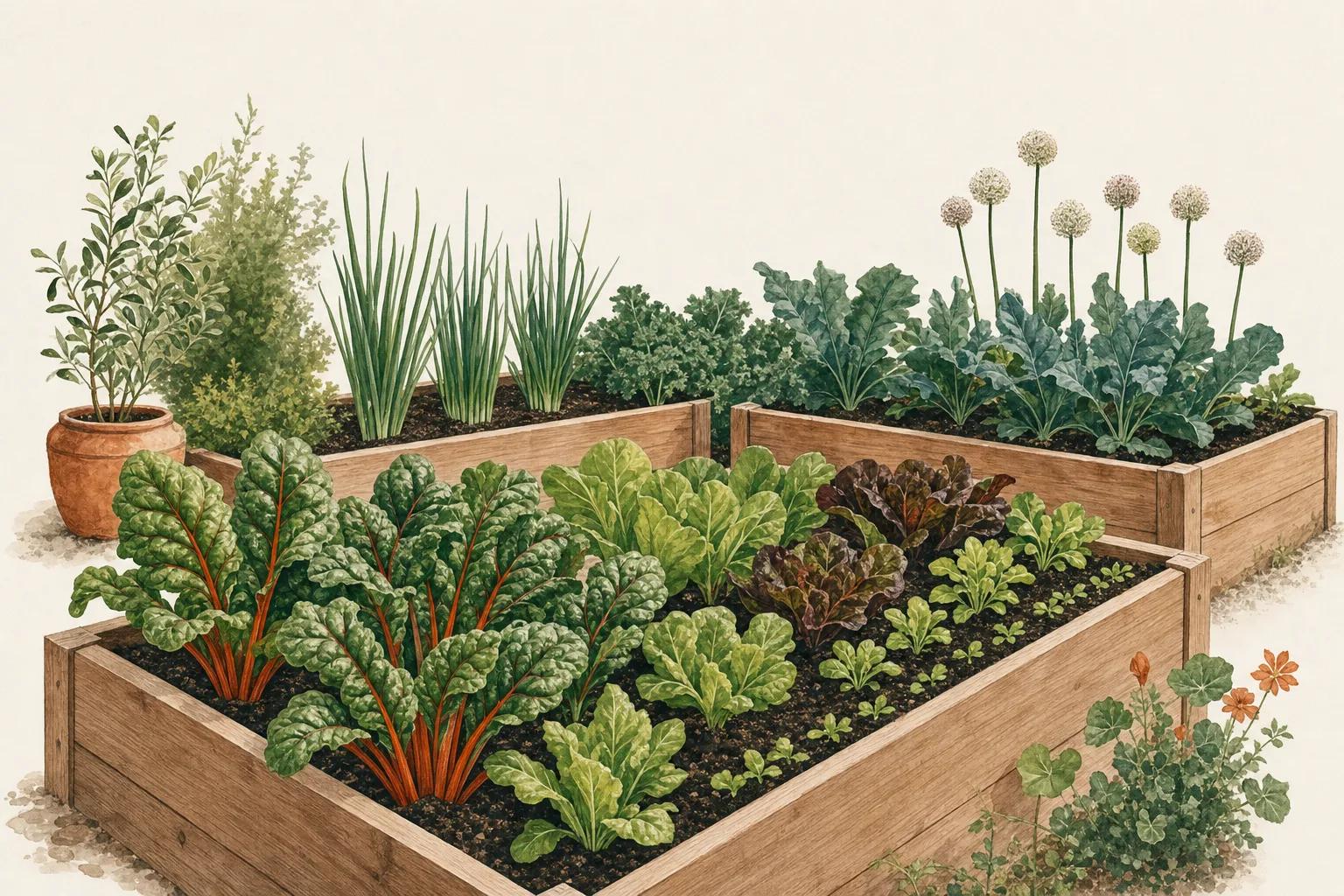
The same depth, spacing and soil-temperature check apply in a raised bed.
Succession sowing and fall lettuce
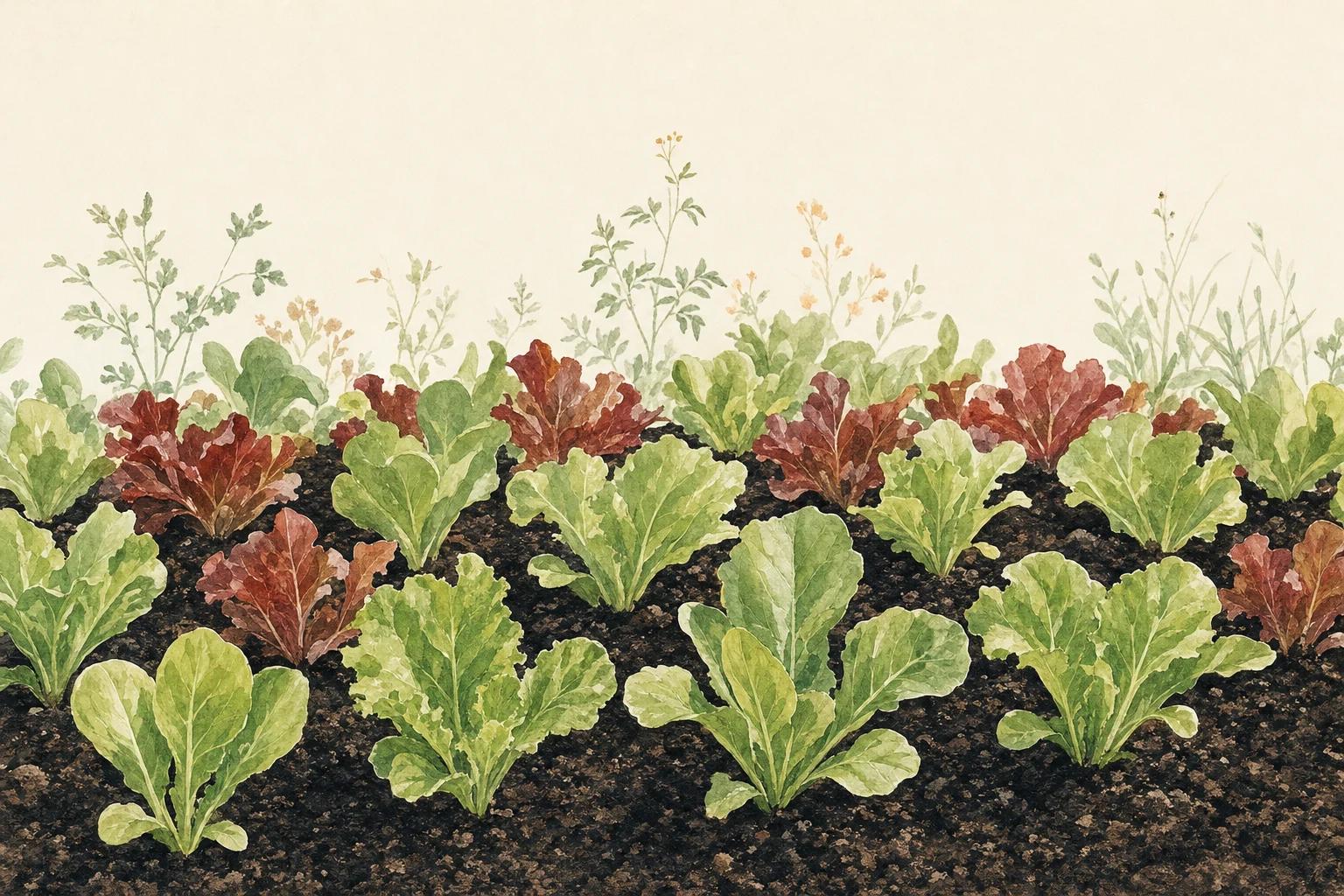
For a steady supply, sow a short row every 10 to 14 days, and stop spring sowings about a month before early-summer heat.
For a smaller, less frequent supply, stretch the gap to 2 to 3 weeks. Switch to heat-tolerant varieties for the last spring sowings, because each later row matures into longer, warmer days. Harvest promptly: heads left standing after they mature bolt, sunburn or take freeze damage, which is why several small sowings beat one big one.
For fall, work backward from the cold. Pick a variety and count back its days to maturity, so the heads are ready 1 to 2 weeks before your first fall frost. If the catalog counts from transplanting and you are sowing seed, add about two weeks. For 50- to 60-day leaf lettuce, that works out to sowing roughly 8 to 12 weeks before the median first fall frost. Plants left in the garden ride through light frosts after that, so the harvest can run past the first frost date.
Fall sowings start in the hottest stretch of the year, so give the seed what it needs to break dormancy. Sow in the cool of the evening into moist soil, use pelleted or primed seed, and shade the bed with 50% shade cloth or floating row cover until seedlings have about six leaves. Shade new transplants at midday for their first week.
In Maryland and similar Mid-Atlantic climates, some varieties overwinter from healthy 3-week-old transplants set out around October 15. They root in before the cold, survive the winter under protection and resume growth in spring for an early harvest.
Lettuce types and varieties that change the timing
Variety decides how many days you need before heat or hard cold arrives, and whether lettuce suits a summer or winter sowing at all.
| Type | Days to maturity | Thin to | Timing note |
|---|---|---|---|
| Leaf (loose-leaf) | 50–60 from seed | 4–8 in (10–20 cm) | Fastest and most heat tolerant; easy from seed |
| Butterhead (Bibb, Boston) | 60–70 from seed | 6–12 in (15–30 cm) | Bibb types turn bitter above 75°F (24°C) |
| Romaine (cos) | 44–58 from transplanting; add about 14 from seed | 6–12 in (15–30 cm) | Spring sowing ends weeks before leaf types |
| Crisphead (iceberg) | 55–80 from seed | 10–15 in (25–38 cm) | Quickest to bolt in heat; usually transplanted |
Ranges vary with climate and with whether the count starts at seeding or transplanting.
Some seed catalogs count days from transplanting into cool spring soil rather than from sowing. Add about 14 days when you sow seed directly, and subtract 10 to 14 days for transplants set out in warm weather, when growth is faster.
For late spring and summer sowings, choose heat-tolerant or slow-bolting varieties, because lengthening days and rising heat together push plants to bolt. Salad Bowl, Oakleaf, Jericho and Summertime handle heat well, and Buttercrunch and Great Lakes are slow to bolt. Salvius, a romaine ready 58 days from transplanting, is bred to resist both bolting and heat.
For fall and overwintering, choose cold-tolerant varieties. Winter Density, a mid-size romaine ready 44 days from transplanting, tolerates frost as well as heat and bulks up quickly in cold weather. For transplants meant to last the winter, the recommended varieties are Black Seeded Simpson, Salad Bowl, Winter Density, Brune d'Hiver, Winter Marvel and Arctic King.
For the main spring and fall seasons, Parris Island Cos romaine, Buttercrunch butterhead and Black Seeded Simpson leaf lettuce are dependable choices from the Mountain West to the Carolinas.
What happens if you plant too early or too late
Too early mostly costs time; too late costs the crop.
Too early. Seed sown into soil below 35°F (2°C) sits without sprouting, and seed near 40°F (4°C) comes up slowly. Unhardened transplants set out before a hard freeze are the bigger risk, since repeated or prolonged subfreezing nights injure or kill them. Wait for the soil reading, harden transplants, and keep a cover ready.
Too late. A spring sowing that runs into heat stunts, sends up a seedstalk and turns bitter, and heads loosen and develop tipburn. A summer sowing may not sprout at all. If you miss the spring window, skip ahead to the fall window rather than sowing into early summer. A fall sowing made too late in a cold-winter zone runs out of season before the plants size up, so count back from your first-frost date or plan on row cover.
If a hard freeze is forecast
Cover lettuce when the forecast calls for a hard freeze (28°F, −2°C, or lower) or several nights below freezing. A light-to-medium spun-bonded row cover adds about 4°F (2°C) of protection. Hardened young plants survive a brief dip to 20°F (−7°C), but a long or repeated freeze does real damage, so keep the cover on through a cold spell and lift it once days warm up.
To schedule lettuce alongside the rest of the cool-season garden, see when to plant peas, radish sowing dates and planting dates for other vegetables, or set a reminder for each succession sowing in Sow's garden calendar.
From the Sow catalog
Planting times in the Sow catalog
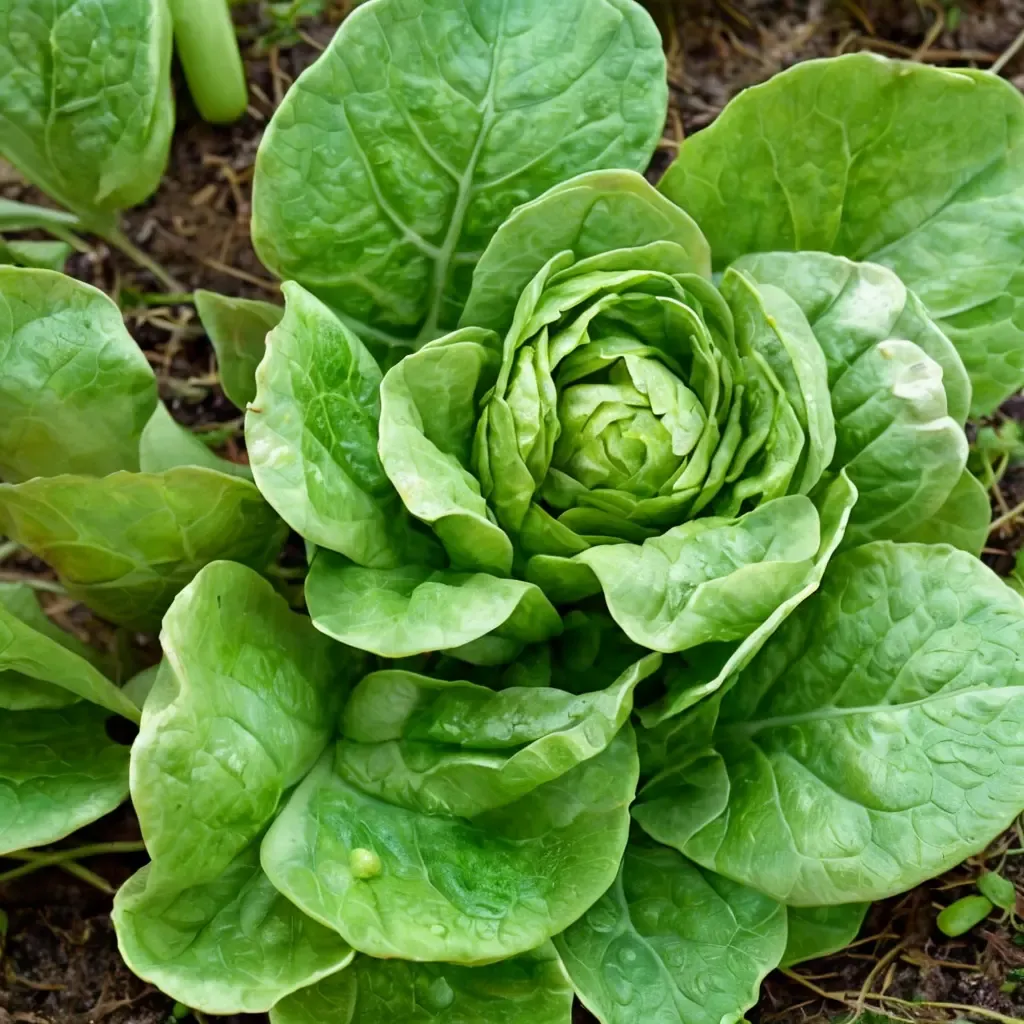
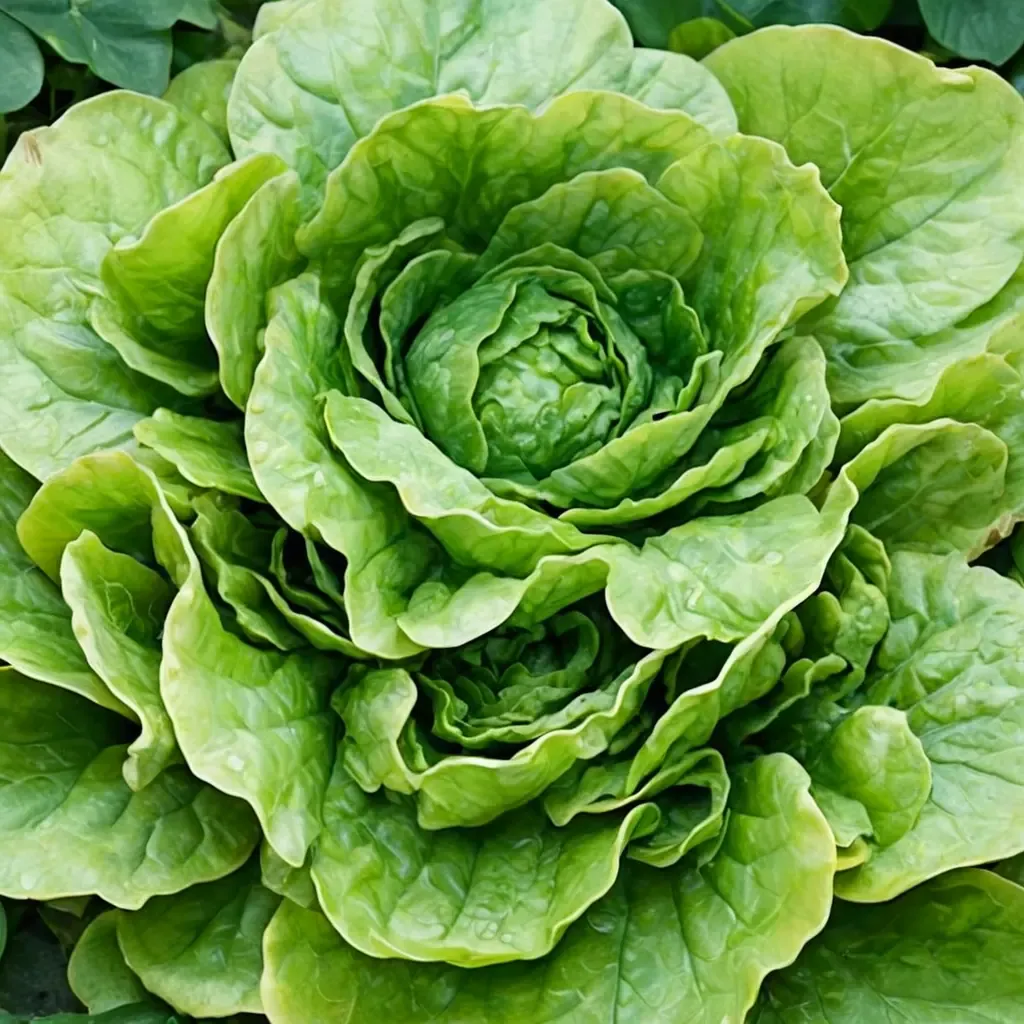
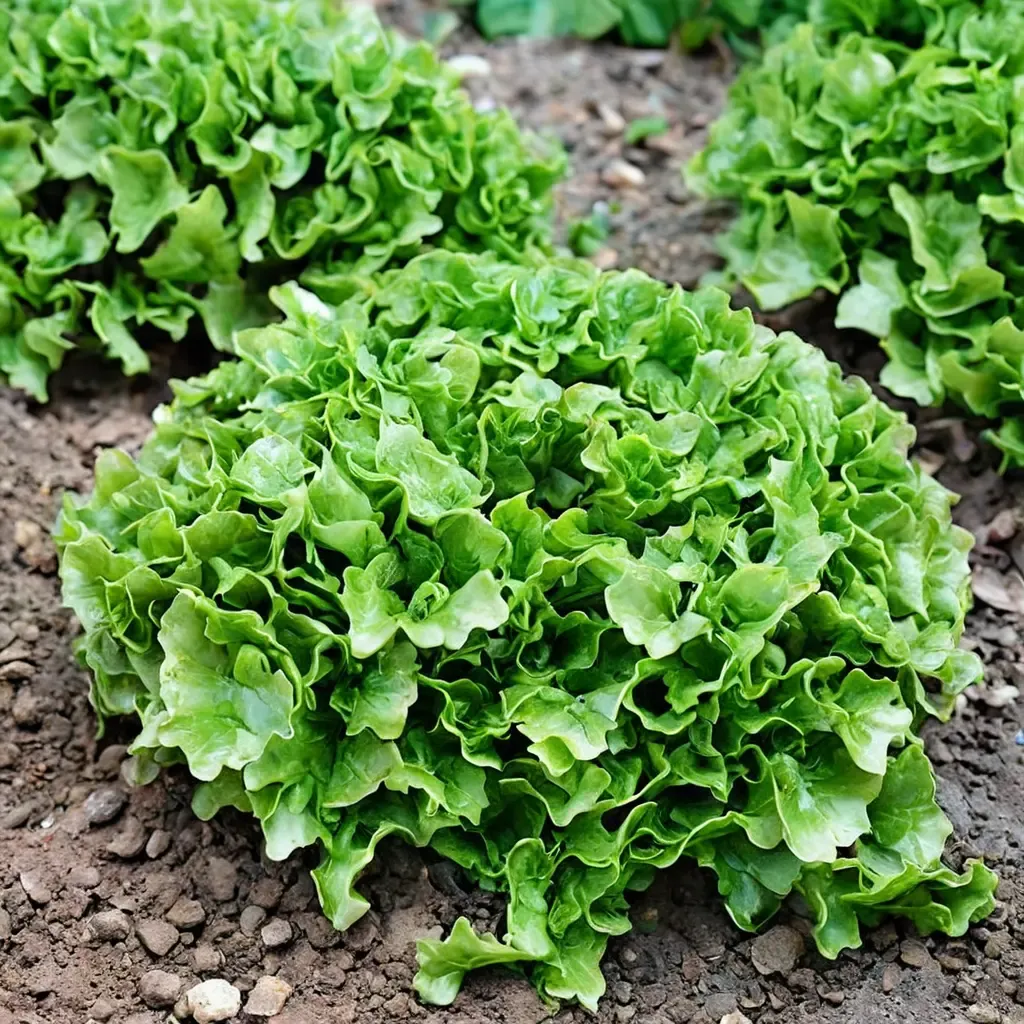
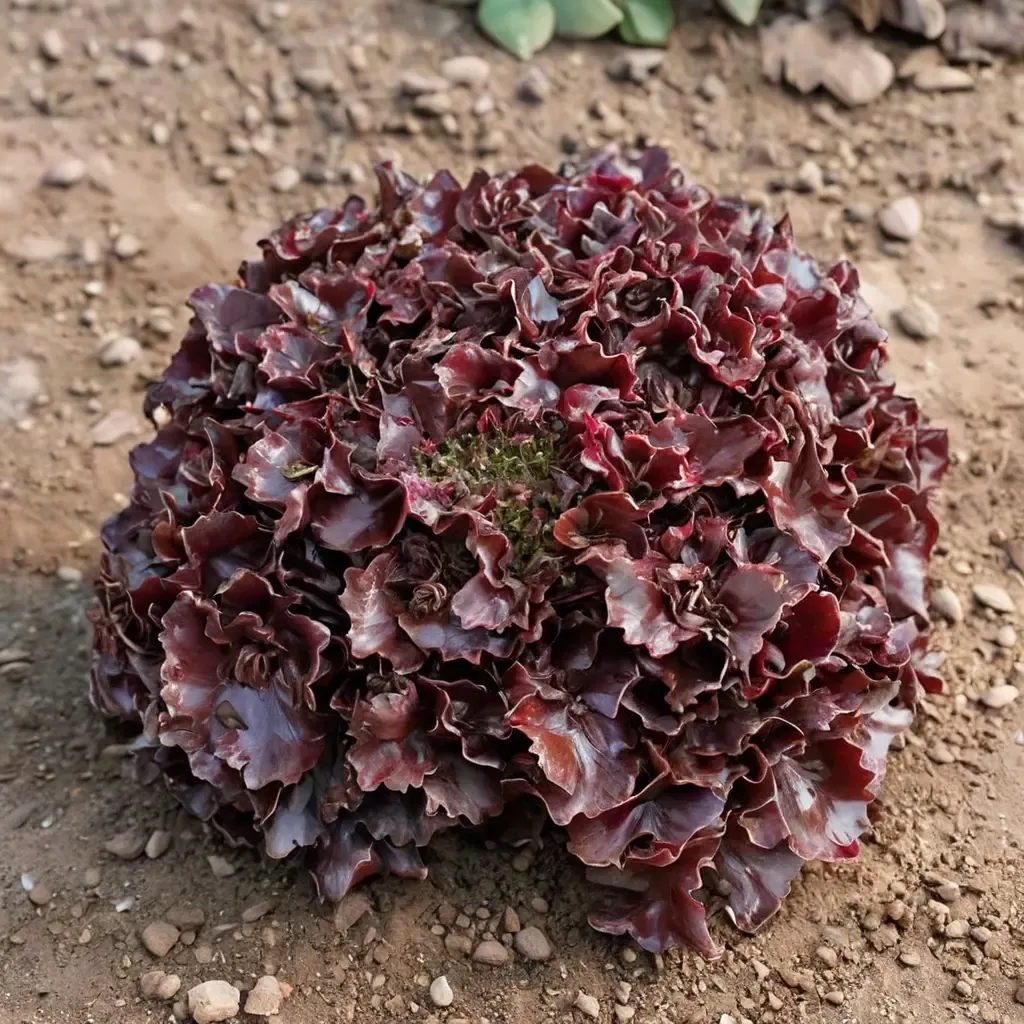
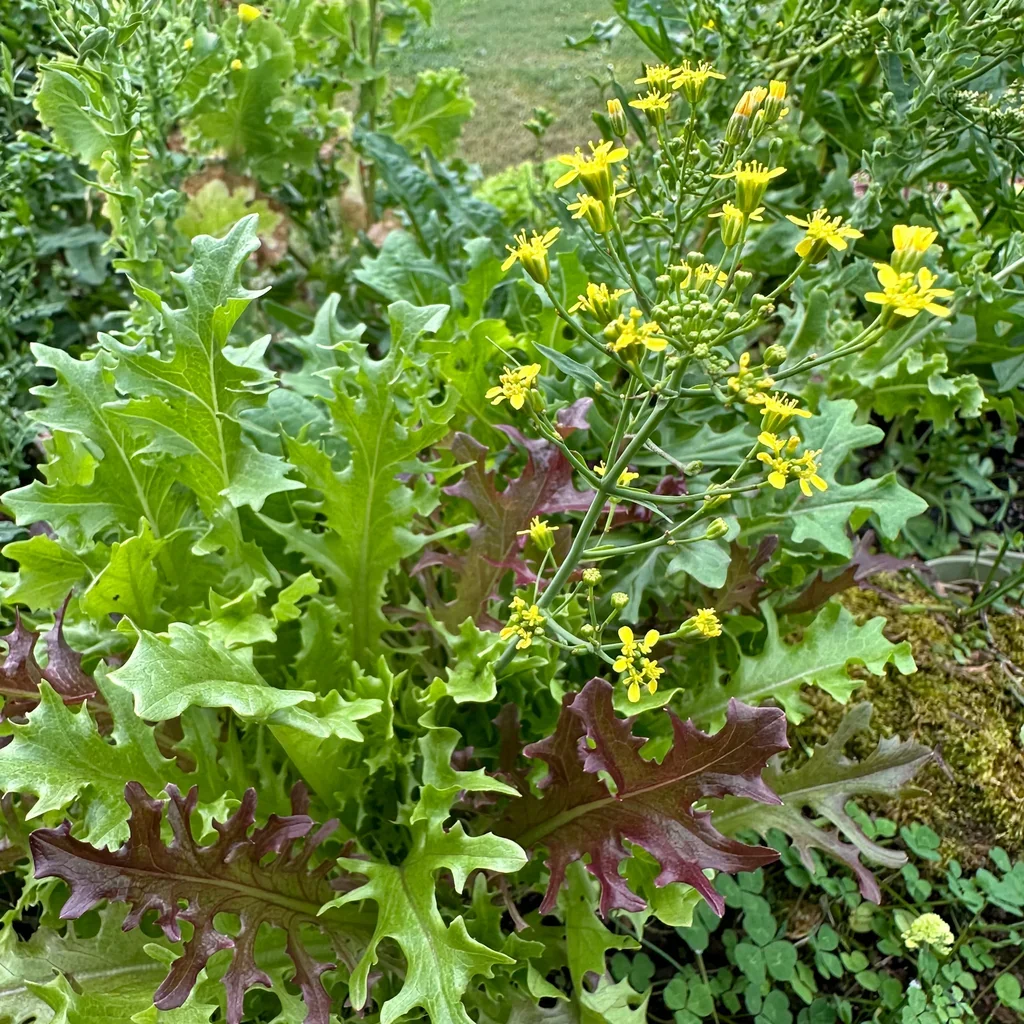
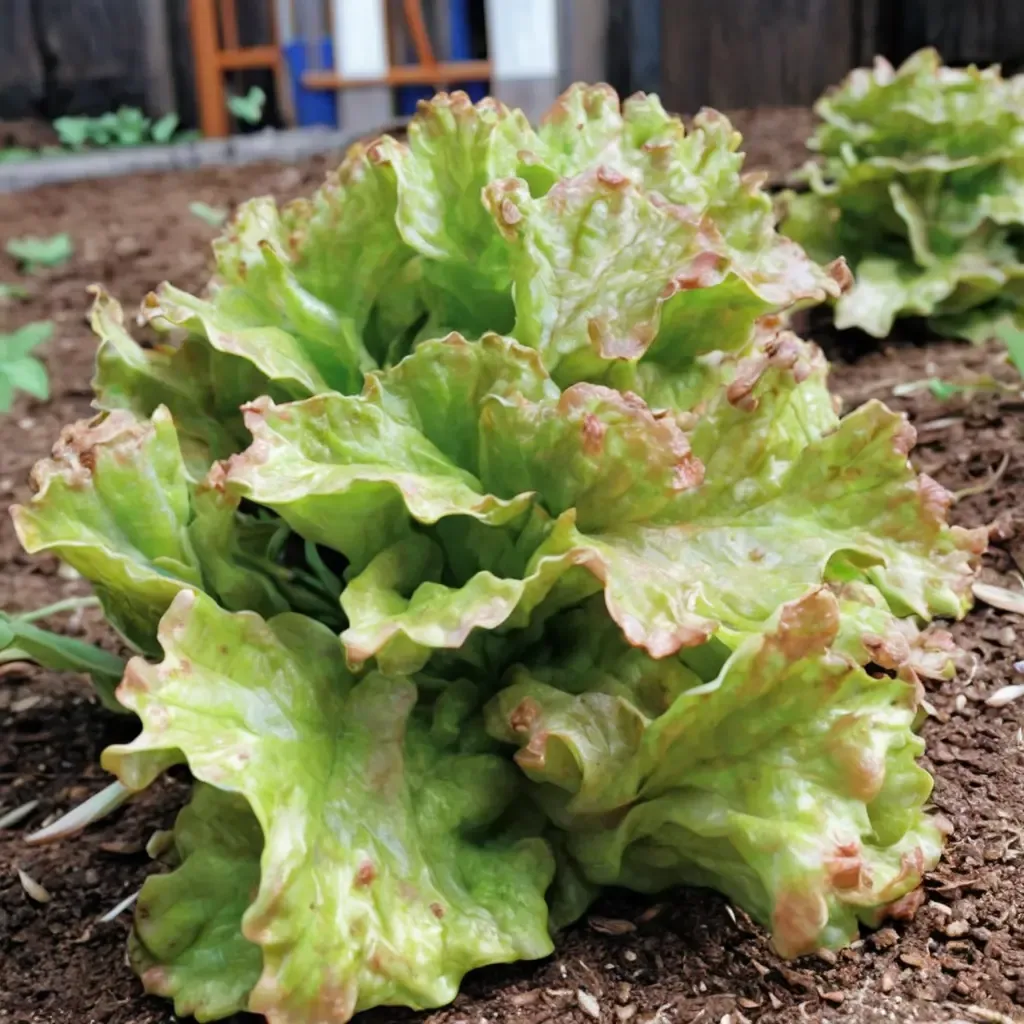
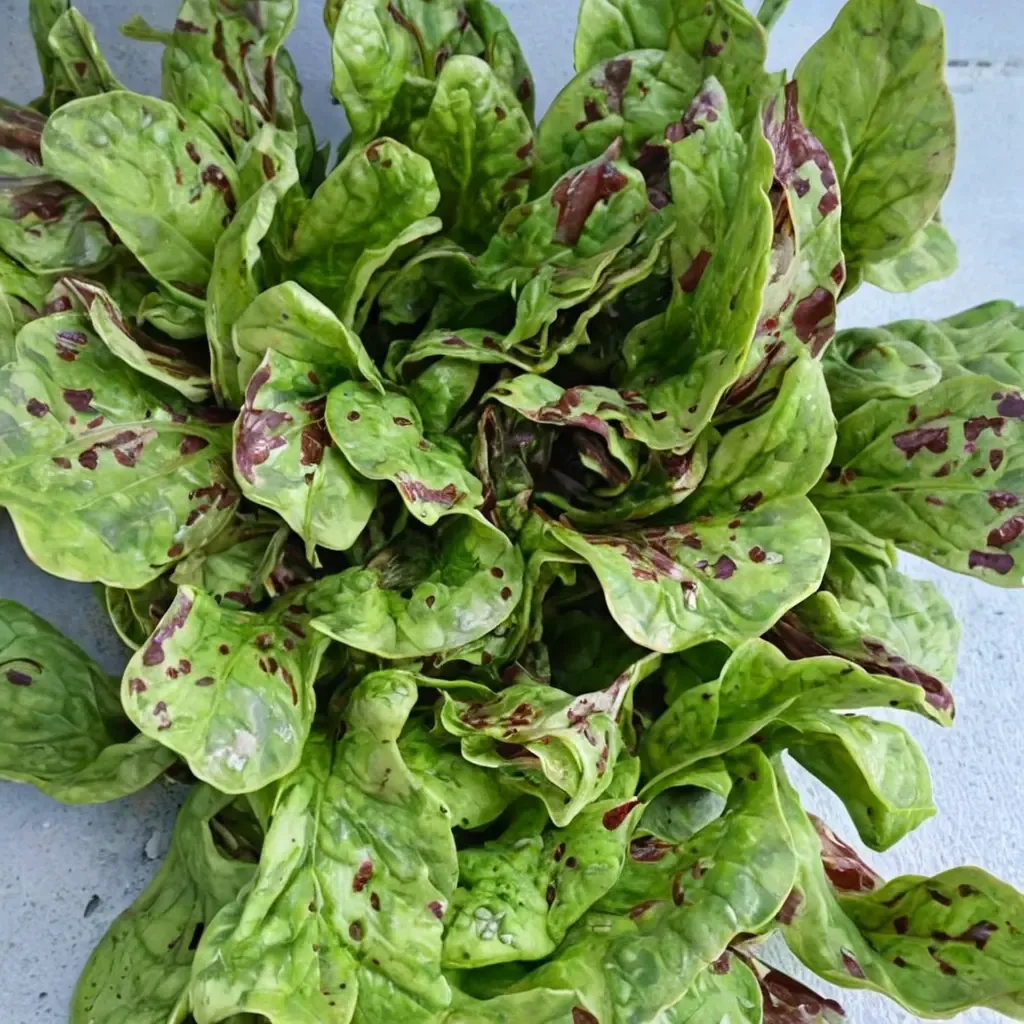
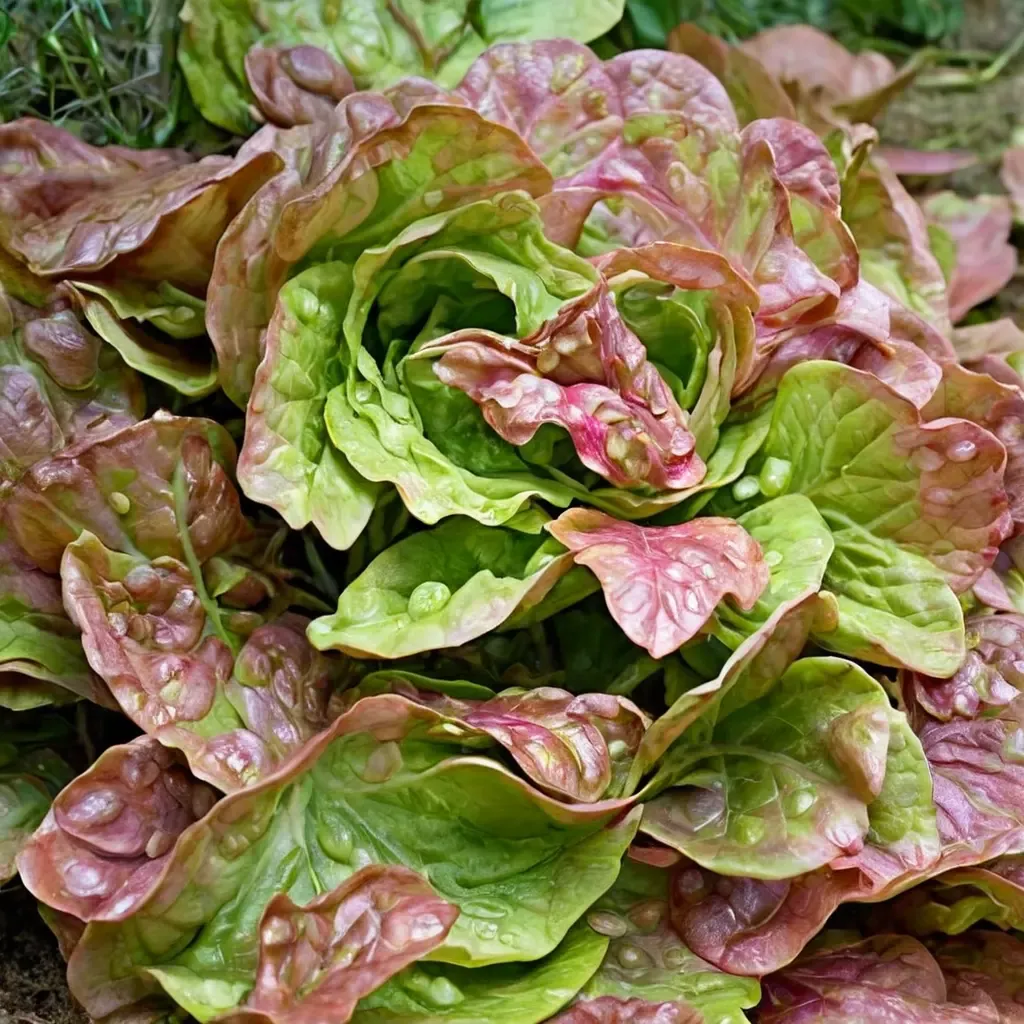
Sow tracks 11 Lactuca varieties, hardy across USDA Zones 4 to 10 between them. These are the 8 gardeners save most. Each one opens its own page with its zone range, sun, mature size and, where a nursery lists it, today's price.
Frequently asked questions
What month should you plant lettuce?
It depends on your frost dates. Across much of the Midwest, Mid-Atlantic and upper South, spring sowing runs from early March into May, starting about 4 weeks before the median last frost. Fall sowing runs from early July in the far North to August and September across the South. In central and south Florida, the Texas Gulf Coast, coastal Southern California and the low desert, lettuce is a cool-season crop sown between August and February.
Can lettuce grow in summer?
Only with help, and not everywhere. Long days and air above about 75–80°F (24–27°C) push plants to bolt and turn bitter, and seed sown into warm soil often fails to sprout. Where summers are mild, as in western Oregon and Washington, sowings continue into early August. Elsewhere, choose a heat-tolerant leaf variety such as Salad Bowl or Oakleaf, sow in the cool of the day and shade seedlings with 50% shade cloth until they have about six leaves.
Can lettuce seedlings survive frost?
Yes, light frost. Young lettuce takes 32°F (0°C) without serious harm, so a frosty morning after sowing is no reason to start over. Transplants are the vulnerable ones in their first week outdoors: set them outside for longer each day for 3 to 5 days before planting, and they can then ride out a brief drop to 20°F (−7°C). For a run of freezing nights, a light-to-medium spun-bonded row cover is the right weight.
Why won't my lettuce seeds germinate?
Soil that is too warm is the usual cause in late spring and summer. Lettuce seed goes dormant in heat: germination falls off above about 75–80°F (24–27°C) and stops entirely somewhere between 86°F and 95°F (30–35°C), depending on variety. Sow in the evening into moist, shaded soil, use pelleted or primed seed, or start transplants indoors. Sowing too deep is the other common cause, since some varieties need light.
How long does lettuce take to grow?
Leaf lettuce reaches full size 50 to 60 days after sowing, or 30 to 45 days after transplanting, and you can pick outer leaves well before that. Head lettuce takes longer: about 70 to 80 days from seed, or 60 to 70 days from transplants. Starting transplants indoors therefore buys two to three weeks of garden time, which matters most for heading types racing early-summer heat.
How do you grow lettuce from seed in a raised bed?
Sow once the bed can be raked and reads at least 40°F (4°C) at 4 inches (10 cm). A bed suits short cross rows: space leaf, romaine and butterhead rows 12 to 24 inches (30–60 cm) apart and leave 4 to 10 inches (10–25 cm) between plants, while crisphead needs 12 to 15 inches (30–38 cm) in rows 20 to 30 inches (50–75 cm) apart. Sow one short row every 10 to 14 days rather than filling the bed at once.
What causes lettuce to bolt?
Lengthening days and summer heat, together. As days grow longer toward midsummer and air temperatures climb past about 75–80°F (24–27°C), plants stretch, form a seedstalk and turn bitter; crisphead types go to seed as soon as the weather turns hot. Mature heads left standing also bolt, so cut them at full size. Finish spring sowings about a month before early-summer heat and choose slow-bolting varieties such as Buttercrunch and Great Lakes.
Can you grow lettuce over the winter?
In mild climates, winter is the main season: September through February in central and south Florida, August through April on California's south coast and mid-August through mid-February in the low desert. In the Mid-Atlantic, young transplants of overwintering varieties can last the winter under protection and start growing again early in spring. Farther north, unprotected lettuce survives only light frost, so row cover is what carries a fall crop past the first freezes.
Should you start lettuce indoors or sow it directly?
Both work. Leaf lettuce grows easily from seed sown straight into the garden, 2 to 3 weeks earlier than transplants could go out. Crisphead types are usually grown from transplants, started 4 to 6 weeks before the last frost. In fall, transplants are the safer bet in hot climates such as Texas, where fall crops generally do better from transplants and warm late-summer soil cuts lettuce germination.
References
- Utah State University Extension. How to Grow Lettuce in Your Garden. Accessed October 16, 2026.
- Colorado State University Extension. Vegetable Planting Guide (CMG GardenNotes). Accessed October 16, 2026.
- University of Illinois Extension. Lettuce (Home Vegetable Gardening). Accessed October 16, 2026.
- University of Maryland Extension. Growing Lettuce in a Home Garden. Accessed October 16, 2026.
- Virginia Cooperative Extension. Virginia's Home Garden Vegetable Planting Guide: Recommended Planting Dates and Amounts to Plant (426-331). Accessed October 16, 2026.
- Clemson Cooperative Extension Home & Garden Information Center. Lettuce (HGIC). Accessed October 16, 2026.
- NC State Extension. Lettuce Production in North Carolina. Accessed October 16, 2026.
- UF/IFAS Extension. Florida Vegetable Gardening Guide (VH021). Accessed October 16, 2026.
- University of Missouri Extension. Vegetable Planting Calendar (G6201). Accessed October 16, 2026.
- Texas A&M AgriLife Extension. Texas Home Vegetable Gardening Guide (EHT-077). Accessed October 16, 2026.
- Texas A&M AgriLife Extension. Fall Vegetable Gardening Guide for Texas. Accessed October 16, 2026.
- UC Statewide IPM Program (University of California Agriculture and Natural Resources). Cultural Tips for Growing Lettuce. Accessed October 16, 2026.
- University of Arizona Cooperative Extension. Vegetable Planting Calendar for Maricopa County. Accessed October 16, 2026.
- Oregon State University Extension Service. Vegetable Gardening in Oregon (EC 871). Accessed October 16, 2026.
- Washington State University Extension. Home Vegetable Gardening in Washington (EM057E). Accessed October 16, 2026.
- Johnny's Selected Seeds. Lettuce: Key Growing Information. Accessed October 16, 2026.
- Johnny's Selected Seeds. Winter Density Organic Lettuce Seed. Accessed October 16, 2026.
- Johnny's Selected Seeds. Salvius Lettuce Seed. Accessed October 16, 2026.
- NOAA National Centers for Environmental Information. U.S. Climate Normals 1991–2020: Annual/Seasonal freeze data. Accessed October 16, 2026.
- USDA Agricultural Research Service. USDA Plant Hardiness Zone Map (2023). Accessed October 16, 2026.
Sow Editorial
Written by the Sow team from university extension services, botanical gardens, USDA and NOAA data and plant breeders. Every source is listed under References.