The Story
Plant Bio
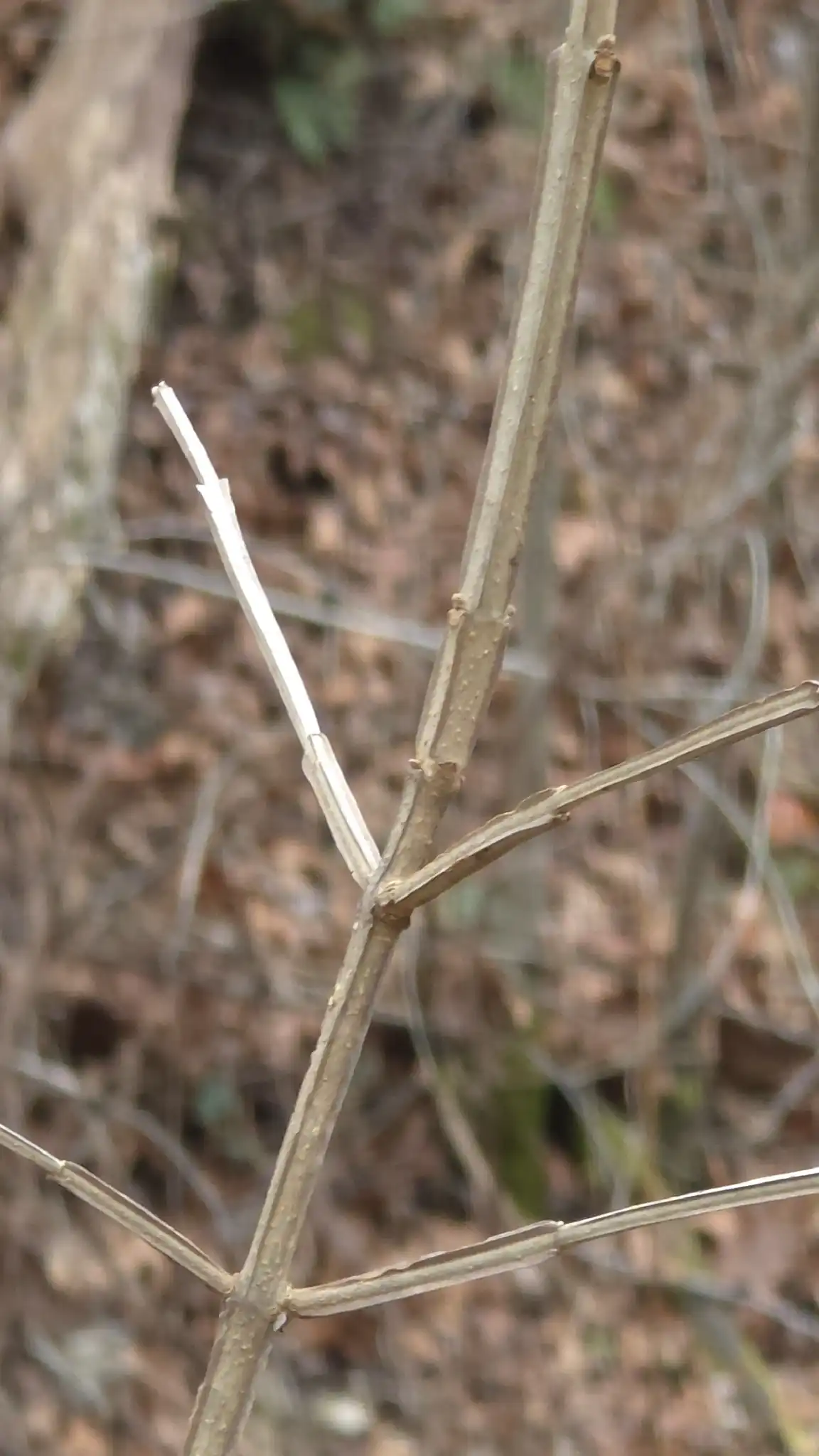
Fraxinus quadrangulata is a deciduous tree native to central North America that reaches heights of 50 to 75 feet with a narrow, upright to rounded canopy. Young twigs feature four prominent longitudinal corky ridges that create a distinct square cross-section.
Unlike most ash species, blue ash naturally inhabits dry limestone glades and bluffs, imparting exceptional drought and alkaline soil tolerance. Air exposure turns the sap from its inner bark a vivid blue color, historically extracted for blue dye.
Uses & Benefits:
Essentials
At a Glance
Plant Type
Tree
Height
900"
Width
720"
Light
Full Sun
Zones
4, 5, 6, 7
Water
Low to Moderate
Humidity
Moderate to High
Lifespan
Long-lived
Native To
North America
Toxicity
Non-toxic
Bloom period
Spring – Late spring
In flower about 3 months of the year
Planting
How to Grow
- Select a planting site in full sun with deep, well-draining soil, ideally neutral to alkaline.
- Dig a hole twice as wide as the root ball and equal in depth, ensuring the root collar remains level with the surrounding grade.
- Backfill with native soil, tamp down gently to eliminate air pockets, and water deeply.
- Apply a 3-inch layer of organic mulch around the root zone, keeping the mulch clear of the trunk bark.
- Water weekly during the first two growing seasons until the taproot establishes fully.
Pro Tip
Prune strictly during winter dormancy to remove crossing or dead branches, and never cut back into old leafless wood lacking active buds.
Keep It Thriving
Care Guide
Do
- Plant in full sun for optimal canopy development.
- Ensure soil drains well to avoid stagnant moisture around roots.
- Prune during dormancy to maintain structural integrity.
Don't
- Do not plant in low-lying areas subject to prolonged standing water.
- Do not trim into old bare wood where buds cannot re-emerge.
- Do not apply heavy nitrogen fertilizers in rich natural soils.
Seasonal Care Calendar
| Task | Jan | Feb | Mar | Apr | May | Jun | Jul | Aug | Sep | Oct | Nov | Dec |
|---|---|---|---|---|---|---|---|---|---|---|---|---|
| Mulch | ||||||||||||
| Pest Check | ||||||||||||
| Prune | ||||||||||||
| Spring Cleanup |
Watch Out For
Pests & Diseases
Common Pests
Common Diseases
In the Garden
Landscape Uses & Companions
Landscape Uses
Multiply
Propagation Methods
Good to Know
Common Questions
Blue Ash questions
What zones can Blue Ash grow in?
Blue Ash is hardy in USDA Zones 4–7: in that range it survives winter in the ground. Warmer than Zone 7, winter isn't the problem: it prefers colder winters, and summer heat can shorten its life.
When does Blue Ash bloom?
Blue Ash typically blooms in spring. Exact timing shifts a week or two with your zone — Sow's bloom calendar maps it to your garden.
Does Blue Ash need full sun?
Blue Ash does best in full sun (6+ hours).
Is Blue Ash drought tolerant?
Yes — once established (usually after the first full season), Blue Ash handles dry spells with minimal watering. Water deeply its first year to build the root system that makes that possible.
More Fraxinus to compare
Keep exploring
Explore the genus
Hardy in your zone?
Grow Blue Ash with confidence
See it in a design of your actual yard, get zone-matched care reminders, and track it season by season in your garden journal.